
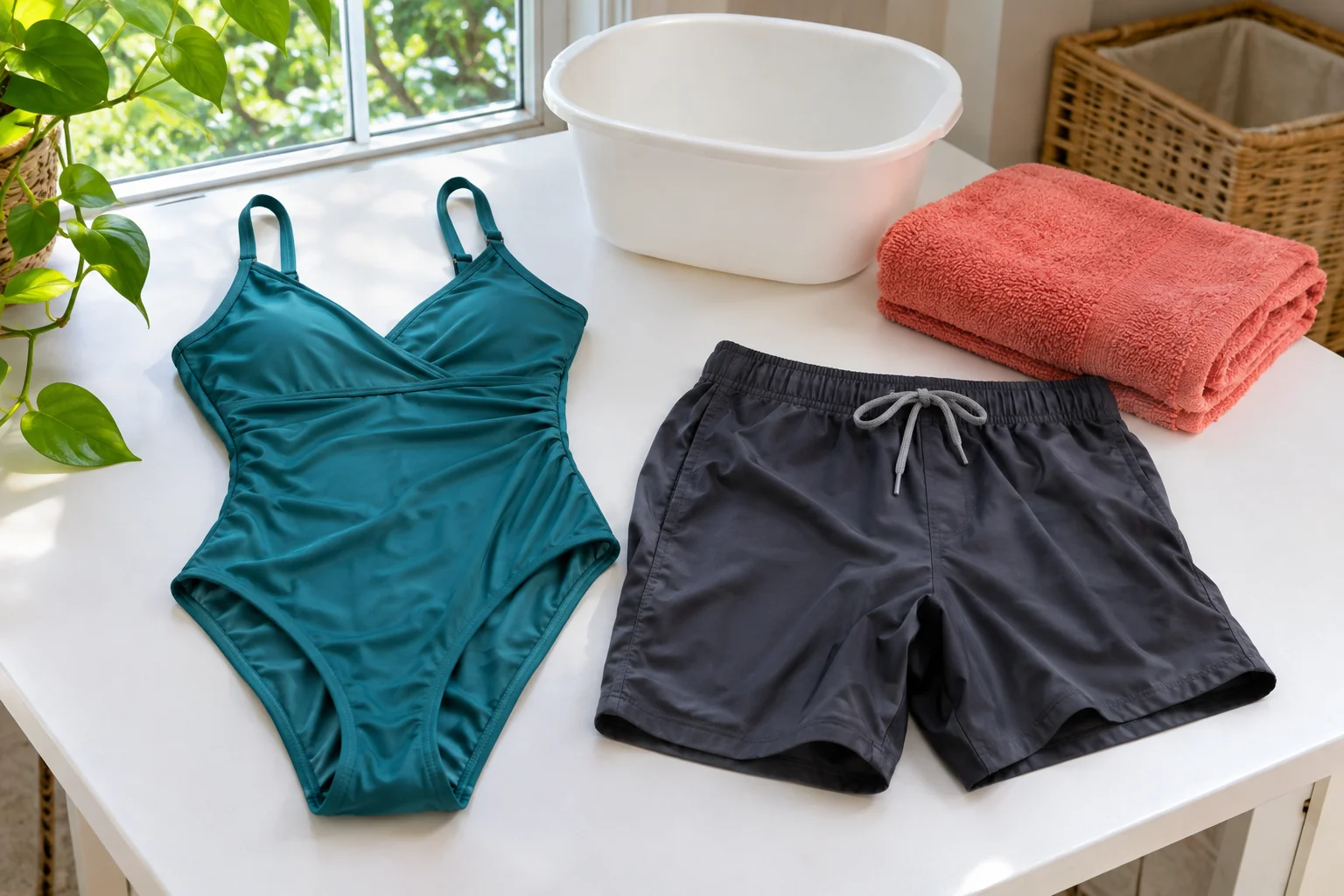
To wash swimwear, first identify the exact suit and read its care instructions. Rinse promptly after swimming as directed, use only the washing method and cleaning product that its manufacturer permits, and complete the specified drying process before storage. Do not assume every swimsuit can use detergent or a delicate machine cycle. A recreational suit, a structured bikini top, and a bonded racing suit can require different treatment even when they look like similar synthetic fabrics.
This guide helps you turn those instructions into a workable routine from the pool bag to the next swim. It covers ordinary swimsuits, bikinis, and swim trunks, with a separate decision path for technical racing suits. Wetsuits, buoyancy aids, reusable swim diapers, and equipment with electronics need their own product instructions; they are not interchangeable laundry items. The examples below are planning examples, not cleaning tests or promises that damaged fabric can be restored.
What should you check before the swimsuit touches wash water?
Find the sewn-in label, product name, and any care card supplied with the suit. Look for the allowed washing method, temperature limit, approved cleaning product, drying instruction, and restrictions on bleach or ironing. Read both pieces of a matching set. A top with support structures and a simple bottom do not automatically have identical instructions just because they share a print.
Identify the construction as well as the fiber. Note molded cups, removable padding, underwires, bonded seams, decorative trim, adjustable straps, clasps, and drawstrings. You are not trying to diagnose the chemistry of every part. You are establishing which instructions belong to the complete finished garment, rather than borrowing a method for an unadorned piece of the same fabric.
If symbols are the obstacle, use our guide to reading laundry care labels before choosing a setting. Photograph the label while it is readable. Save the model name with that photo, particularly if several people in the household own similar black suits. A picture of a generic care chart is less useful than a record identifying the actual item being washed.
Why do swimsuit washing instructions disagree?
Different products have different constructions, finishes, and intended uses. For a concrete example, the arena Diamond Lightdrop Back product page calls for rinsing after use, a detergent suitable for delicate clothing, hand washing, and air drying away from heat. Its care symbols prohibit machine drying. Those are instructions for that product, not permission to treat every racing suit the same way.
By contrast, Dolfin’s technical-suit care instructions exclude machine washing and detergent, specifying a prompt cold-water rinse and hanging the suit away from direct sunlight. The important finding is the difference, not which brand has the most convenient routine. When advice conflicts, identify the product each statement addresses before deciding that one source must be wrong. Save that product category beside the instruction so it remains clear later.
Think of this as a sorting task with three possible answers: the method is explicitly allowed, it is explicitly prohibited, or permission is unresolved. A vague label such as gentle is not enough to move an item out of the unresolved group. Ask the manufacturer about the exact model and the step you want to use. Keep that reply with the care record instead of turning it into advice for every suit you own.
Is rinsing the same thing as washing?
No. A rinse uses clean water to carry away material; a wash may involve an approved cleaning product and a specified process. The terms are sometimes used loosely in conversation, which creates confusion when one person rinses a suit at the pool and another assumes it has completed its care routine. Record what actually happened, not just that the suit was cleaned.
The distinction is especially useful after a swimming lesson followed by a trip home. You might have completed the immediate rinse but still need to perform the model’s permitted wash and drying steps. Alternatively, a technical suit’s instructions may direct a water-only routine. Do not add detergent simply because a rinse seems too simple, and do not replace a required wash with a quick splash because the suit has no visible mark.
Use separate places or labels for recently used, rinsed but awaiting further care, and ready to wear. This is an organizational suggestion, not a hygiene certification. A suit’s location tells the next person which task remains; its smell or apparent dryness does not prove that every required step was completed. The same distinction helps when packing several family members’ gear after a busy lesson.
What is a practical after-swim routine?
Before leaving home, decide where the suit will be rinsed and where it can dry afterward. Bring a suitable container for the journey if needed, but make unpacking it part of arriving home. Keeping a wet garment separate from dry clothes solves a transport problem; it does not finish the garment’s care. Avoid setting the bag aside somewhere it will be forgotten until the next session.
At the rinse stage, follow the suit’s instruction for fresh water and temperature. Do not substitute pool water for a fresh-water rinse. Keep the garment away from rough surfaces while handling it, and avoid pulling it out of the bag by a thin strap. Separate unrelated items so goggles, clips, or other gear are not trapped inside a folded suit when you begin the next step.
At home, open the bag completely and check its compartments. Remove the suit, towel, and anything else that needs attention. Put each item into its own permitted care route rather than making one pile that will automatically enter the washer. This is the point to notice a missing bikini piece, a twisted strap, or a sunscreen mark while the details of that swim are still easy to remember.
How do you choose between water only, soap, and detergent?
Start with the product instructions, not the bottle you happen to have. Dolfin’s care page distinguishes its general swimwear guidance, which mentions mild soap and excludes detergent and fabric softener, from its tech-suit instructions, which call for a cold-water rinse without detergent. Even within a manufacturer’s page, the relevant product category matters.
Speedo’s general suit-care guidance describes cool hand washing with a specialist swimwear detergent or mild soap. That statement should not override the instructions supplied with a different brand or a specialized racing model. Read a specialized care page alongside the product label rather than averaging conflicting advice into a homemade compromise.
Once a cleaning product is permitted, check that product’s own directions for hand washing and the amount of water you will use. Do not scale a full machine dose by guesswork. If a label does not provide a suitable hand-wash method, choose an approved product that does or ask for clarification. The words sport, delicate, or swim on packaging do not by themselves establish compatibility with your particular suit.
How should you set up a hand-wash session?
Prepare the work area before taking the suit out of its transport container. Use a clean basin or sink with room to handle the garment gently. Check the surface for rough edges and make sure it is free of residue from another cleaning job. Set aside a place for the rinsed garment so you are not improvising where to put it with wet hands.
Lay out only the supplies allowed for that suit. If the instructions specify water only, leave cleaning products out of the setup. If they permit a particular wash product, measure according to its directions rather than adding more until the basin looks foamy. Keep the original container nearby so the instructions remain available throughout the task.
Handle one uncertain or newly purchased item separately at first. This does not guarantee colorfastness or prevent every possible problem; it makes it easier to follow that item’s instructions and notice a change without mixing up which garment produced it. Keep the matching pieces together in your notes, but do not assume they must share a basin if their care requirements differ.
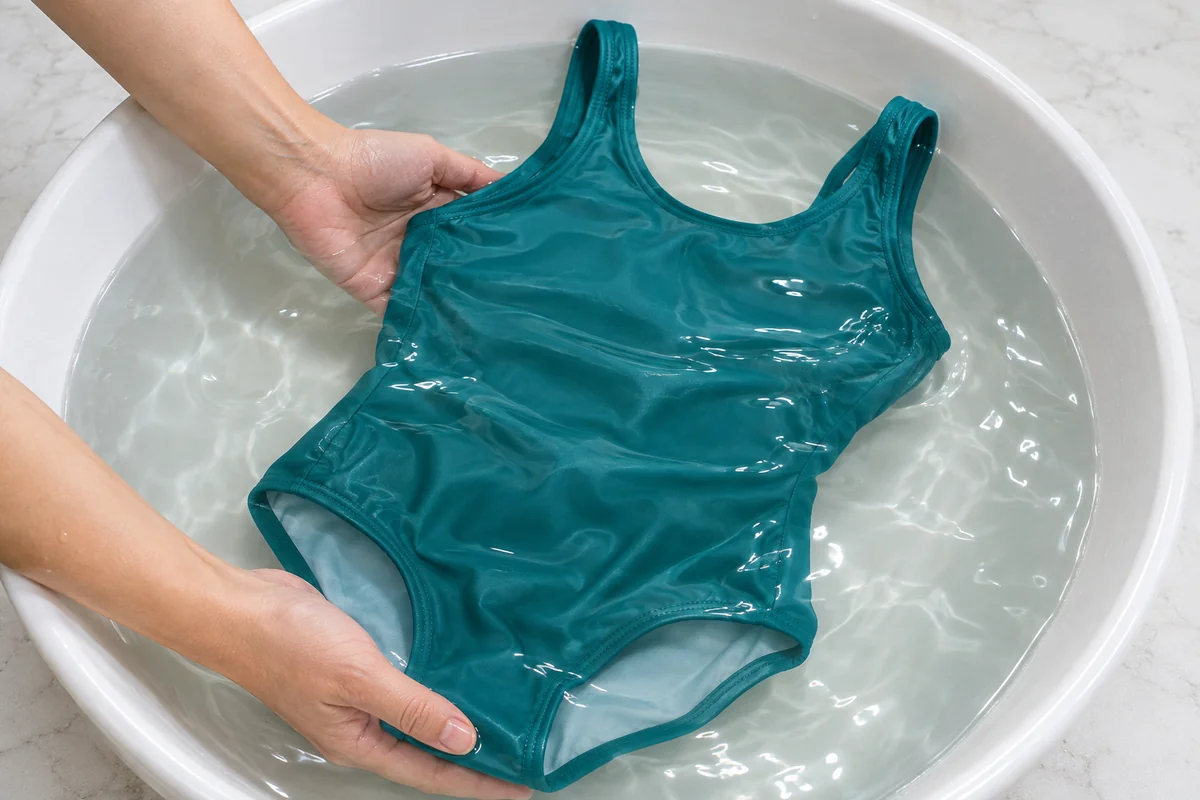
What are the steps for an allowed hand wash?
- Confirm that the garment permits the chosen water temperature and cleaning product, then prepare the basin using those directions.
- Place the suit into the water without stretching it over the edge of the basin. Use the gentle handling specified by its maker rather than vigorous scrubbing.
- Follow any stated washing or soaking duration. If none is given, do not invent a long soak as an extra cleaning treatment; ask when the instructions are unclear.
- Complete the instructed rinse, supporting the garment as you lift and move it. Attend to folded areas and layers without pulling them apart forcefully.
- Remove excess water by the permitted method and transfer the garment directly to its prepared drying area.
For a detergent-compatible garment, Persil’s swimwear guidance describes gentle handling, rinsing, and pressing out water rather than twisting or wringing. Its product suggestions are not a universal recommendation for suits whose manufacturers prohibit detergent. This sequence is a way to organize approved steps, not a substitute for more restrictive instructions supplied with a particular suit.
Stop if you discover a damaged seam or an instruction you cannot interpret. Finishing the process faster is not useful if it means guessing at the very step that determines whether the garment can tolerate it.
When can swimwear go in a washing machine?
Only when the exact garment’s care instructions allow machine washing. A machine program called hand wash does not turn a hand-wash-only garment into a machine-washable one. Persil’s guidance also makes the machine route conditional on the garment’s care label. Treat that condition as the entrance requirement, not as a footnote after choosing a cycle.
For an allowed machine route, translate every relevant instruction into a setting before starting: water temperature, cycle, spin if specified, and cleaning product. Consider the other garments in the load as well. Permission for one pair of swim trunks says nothing about a structured top placed beside it. When items cannot share the same approved process, divide the load instead of selecting a compromise that suits neither.
A protective bag, when recommended, is an accessory within an approved process. It does not cancel a machine-washing prohibition, a detergent restriction, or a drying limit. Put the drying decision on the laundry note before the wash begins. A machine-washable item can still have a different drying requirement from the towels or ordinary clothes that happen to be nearby.
How should racing suits be handled differently?
Keep technical racing suits in their own care category. Do not decide by price alone: identify the model and find its specific care instructions. A suit worn for competition may use a different construction from a durable training suit, and a team’s everyday laundry routine may not apply. The athlete, parent, and person doing laundry should all know which item requires the separate route.
Use the manufacturer’s instructions for both removal and cleaning. Avoid turning this guide’s general hand-wash sequence into permission to soak, rub, or add products to a racing suit. If there is an unusual mark or persistent odor, ask about that exact problem instead of borrowing a stain treatment from ordinary clothing care. Include photographs and a description of anything already applied.
A practical handoff might read: black racing suit, model recorded in the phone album, immediate rinse completed, follow the saved manufacturer drying directions, do not add to the family wash. That note prevents ambiguity without claiming a special technique. A second bag or separate shelf can help, but the location is only useful if everyone understands what it means and keeps the instructions with the item.
How do you care for cups, padding, clasps, and drawstrings?
Read whether a removable part is intended to come out for washing. A visible opening is not automatically permission to pull out a sewn or bonded component. If removal is allowed, keep track of which piece belongs to which garment and follow any separate instructions. Photograph the arrangement first when it will help you put the item back together without forcing it.
Inspect support parts visually while the suit is laid out. Look for a displaced pad, an exposed wire, a broken clasp, or a drawstring that has slipped into its channel. These are handling and repair questions, not evidence that stronger cleaning is required. Avoid trying to solve them by stretching the garment repeatedly or making improvised modifications during the wash.
When care is finished, reassess the assembly before packing. A dry suit is not ready if a necessary clasp no longer works or an insert is still lying separately on the drying surface. Keep unresolved parts with the garment in a clearly marked set-aside area. That makes a later support request easier and prevents an incomplete item from being mistaken for the next swim’s ready outfit.
What should you do about sunscreen or body-oil marks?
Identify the likely substance and check the suit’s stain-treatment instructions before applying anything. Freya’s swimwear guide recommends a prompt cool-water rinse and gentle washing with an appropriate mild detergent for sunscreen marks, while warning against harsh rubbing. Use that advice within the care limits of the actual garment; it does not authorize detergent on a water-only technical suit.
Record what touched the garment and what you have already tried. A photograph in ordinary light is more informative than repeatedly changing the cleaning method because a mark looks different while wet. If the approved wash leaves a stain, ask the maker about the next permitted step. Do not promise yourself that a stronger treatment will remove the stain without affecting the surrounding fabric or finish.
Keep sun protection decisions separate from garment care. This article is not advice to use less sunscreen or change a health-related routine. The laundry question is how to handle accidental product contact using instructions compatible with the suit. Avoid turning a fabric concern into an unsupported recommendation about skin protection, swimming conditions, or medical care.
What if sand is caught between layers?
First establish where the sand is: loose on the surface, inside a pocket, or trapped between the lining and outer fabric. Empty accessible pockets and inspect the garment without stretching a small opening wider. A grain visible through fabric is not necessarily reachable without damaging the construction. Do not cut the lining or open a seam just to get at it.
Follow the maker’s permitted rinse or cleaning method and inspect again afterward. If material remains trapped, describe its location in a support request and include a photograph. A useful question is whether the particular lining has an intended access point or approved method for removing trapped debris. That is more precise than asking how to scrub the entire suit harder.
Before the next trip, separate swimwear from sandy shoes and loose beach equipment when packing. This is a simple sorting choice, not a guarantee that sand will never enter the fabric. It reduces avoidable mixing in the bag and makes it easier to see which items need attention when you unpack, especially when the whole family’s gear arrives home together.
How do you remove water and arrange drying?
Follow the suit’s instructions for removing excess water without assuming that a spinner, towel roll, or dryer is allowed. La Blanca’s care instructions describe gently squeezing moisture out without twisting or wringing, then hanging or laying the suit on a flat surface. The same page excludes the washer and dryer for its swimwear. Do not transfer that brand’s full method to an unrelated garment without checking.
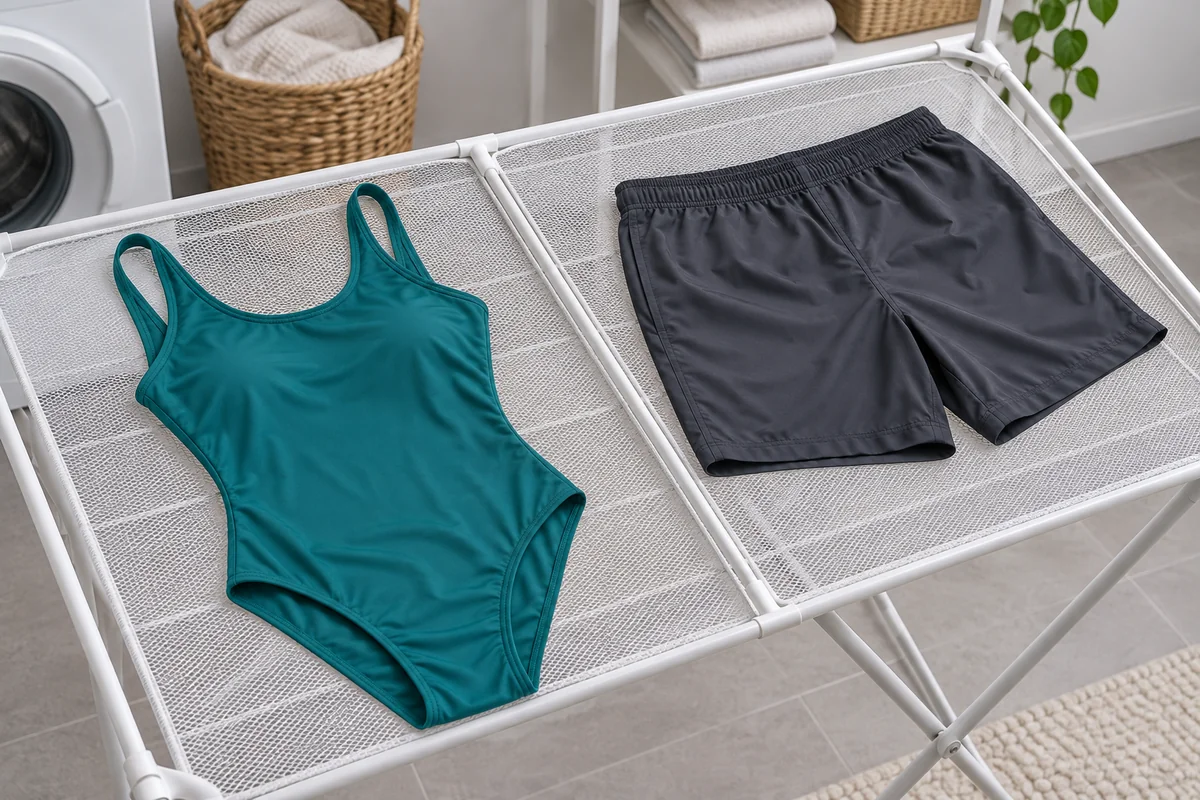
Choose a clean drying location that matches the prescribed position. If flat drying is required, arrange enough space for the garment rather than leaving it folded in a compact bundle. If hanging is permitted, use the support method recommended for the item. Keep the surface free of things that could snag straps, mark light fabric, or fall onto the suit.
Plan around the space you actually have. A crowded bathroom rail, an occupied drying rack, and a travel room with no suitable surface are different constraints. Solve the space problem before beginning a wash that depends on it. Changing the drying method because the rack is full creates a new care decision; it is not merely a faster version of the same plan.
How can you tell when it is ready to put away?
Check the entire garment, including layered areas, waistbands, lining, and any permitted removable parts. A thin outer panel may feel different from a thick seam or padded section. Do not use one quick touch on the most exposed area as a proxy for the whole item. Reposition or continue drying only as the product instructions allow.
Avoid assigning a universal drying time. The garment, its construction, and the available conditions differ. Instead, build the schedule around checking completion before it enters a closed storage space. When the next swim is close, a spare suitable suit is a planning option; unapproved heat is a change to the care method. Neither this guide nor a photograph of a drying setup can establish an exact number of hours for your item.
Once dry, inspect the suit in ordinary light and place all matching parts together. Make sure it has completed the required cleaning steps as well as drying. Keep an item with unresolved damage out of the ready-to-wear group so a family member does not discover the problem only after arriving at the pool.
What if it smells, fades, stretches, or feels different?
Separate the observation from the diagnosis. A smell, pale patch, rough area, or changed fit does not identify a single cause. Write down the model, when the change appeared, the care method used, and any product involved. Compare photographs taken under similar lighting rather than judging a wet garment against a dry memory of how it used to look.
Do not assume another wash can reverse every change. If a seam is coming apart or a support component is exposed, cleaning and repair are different questions. Ask the maker whether there is an appropriate repair or assessment route. Retain purchase and care information if you intend to ask about support, without assuming that a particular condition qualifies for warranty coverage.
If odor remains after the permitted routine, describe that problem specifically and request an approved next step. This guide does not supply a disinfecting, sanitizing, or medical decontamination protocol. Nor does it promise that eliminating a smell proves cleanliness. A repeated unsuccessful process is a reason to reassess the instructions and condition, not to escalate temperature or chemicals by trial and error.
How should you organize family or team swim laundry?
Sort by care requirement before sorting by owner or color. One family can have a machine-washable pair of trunks, a hand-wash-only fashion suit, and a racing suit that excludes detergent. Combining them because they all came from the pool removes the information that matters most. Use the same care note system consistently so the distinction survives a handoff between adults.
Keep towels and ordinary clothing in their own appropriate routines. Our towel-care guide addresses a different laundry item, and the school and sports uniform guide helps with accompanying clothing. Neither replaces swimwear instructions. A towel’s washing or drying requirements should not become the default for a suit just because both fit in the same basket.
For a team, avoid collecting technical suits into a shared wash unless their owners and instructions are individually accounted for. Labeling a bag with an owner’s name solves identification, but it does not establish cleaning permission. Give the person handling the laundry the actual care information and a clear route for setting aside items whose instructions are missing.
How can travel plans avoid unfinished swimsuit care?
Make a departure-day plan before the last swim. Decide whether there is time and space to complete the permitted process, whether you have a spare, and how a used item will remain separate during travel. A transport pouch is useful for containing belongings, but it should not become a place where an item is forgotten after you arrive.
Pack the care information with the garment, especially when using a different laundry setup. A phone photo and the manufacturer’s exact support link take little space and prevent decisions based only on an unfamiliar machine’s program names. Keep any permitted wash product in an appropriate labeled container and follow applicable travel rules; this guide does not advise improvising chemical mixtures or relabeling products.
At the destination, assign someone the unpacking task. Check the wet compartment, side pocket, and towel bundle rather than assuming everything was removed. If the available facilities cannot follow the suit’s instructions, keep the decision explicit and seek a suitable alternative. Do not quietly change from hand washing to machine washing because another person’s clothes are already in the drum.
What do different real-life decisions look like?
Lesson night with two suits: A parent finds a child’s ordinary suit and an older sibling’s racing suit in one bag. The efficient first step is identification, not filling one basin. The parent checks each saved care record, places the items into separate routes, and notes which one has already been rinsed. The benefit is fewer ambiguous decisions, not a claimed time saving or guaranteed fabric outcome.
A hotel checkout morning: A traveler wants to swim shortly before leaving. The room has no suitable drying space and the suit prohibits machine drying. The decision can be made before swimming: use a spare and plan the used item’s care around the journey, change the swim schedule, or find an appropriate facility. None of those choices requires interpreting a dryer prohibition as optional because checkout is approaching.
A new mark on a structured top: The owner has a permitted gentle wash method, but a mark remains beside a molded cup. Rather than selecting a stronger stain remover, the owner photographs the area, records the suspected sunscreen and completed wash, and asks the manufacturer about that combination. The remaining stain is an unresolved care question, not proof that the garment needs more force.
What should you ask before using a laundry service?
Ask whether the provider accepts the exact garment and can follow its washing, product, and drying requirements. Acceptance of ordinary clothing does not establish that a service handles hand-wash-only swimwear, bonded racing suits, or structured tops. Provide the label and model information before the garment enters a general laundry order, and keep items needing a different process separate.
You can contact Fresh Spin with the item’s care instructions to ask about suitability. This article does not promise acceptance of every swimsuit or availability of specialist treatment. If the required method cannot be accommodated, arrange another appropriate option for that item rather than changing its instructions to fit the rest of the order.
What belongs on a short swimwear care checklist?
- Identify: Which model and which matching pieces are here? Do the saved instructions apply to all of them?
- Inspect: Is there a stain, damaged seam, loose part, or trapped debris that needs a separate decision?
- Choose: Is this a water-only, approved hand-wash, or explicitly machine-washable item? Which cleaning products are allowed?
- Prepare: Are the wash setup and required drying space available before starting?
- Finish: Have all required steps been completed, all parts checked, and the entire item dried before storage?
Keep the checklist specific enough to guide the next person but short enough to use. Attach the label photo and product instructions rather than copying a long general article into a household note. Update it when the garment changes. The goal is to preserve a correct decision, not build a permanent routine around an old suit that is no longer in the rotation.
What are the answers to common swimwear questions?
Can I use a delicate cycle instead of hand washing?
Not unless the garment’s manufacturer permits that substitution. A cycle name describes the machine, not a change to the suit’s care label. Where machine washing is allowed, follow the specific settings and drying restrictions rather than treating delicate as a complete instruction.
Is swimwear detergent safe for every swimsuit?
No. The product category does not override a no-detergent instruction for a technical suit. Confirm compatibility with the exact garment and use the cleaning product’s directions for the intended wash setup. Ask the manufacturer when the two sets of instructions cannot be reconciled.
Should every swimsuit be washed with detergent after each swim?
No single detergent routine fits all suits. Follow the specified rinse and wash schedule for the model, distinguishing water-only care from a permitted product wash. Record which step has been completed when someone else will finish the task.
Can I dry the suit with the towels?
Only if its own instructions permit that exact drying process; many swimwear instructions instead require air drying. Keep the suit separate when its requirements differ. The fact that a towel is ready for a dryer does not establish permission for the garment beside it.
What if the label is missing?
Use the model name, purchase record, and manufacturer support to identify the instructions. A similar-looking photograph is not enough to establish the construction or care method. Set the item aside from a general wash until the relevant uncertainty is resolved.
Does this guide cover wetsuits or flotation clothing?
No. Those products can have different materials, closures, and safety-related functions. Use their dedicated manufacturer instructions and inspection requirements. Do not extend an ordinary swimsuit routine to equipment simply because both are used in water.
Can a wash restore stretched elastic or a damaged seam?
This guide does not claim that it can. Identify the change and ask about repair or replacement where appropriate. Keep cleaning decisions separate from condition assessment, and do not treat repeated washing as a guaranteed restoration process.


