
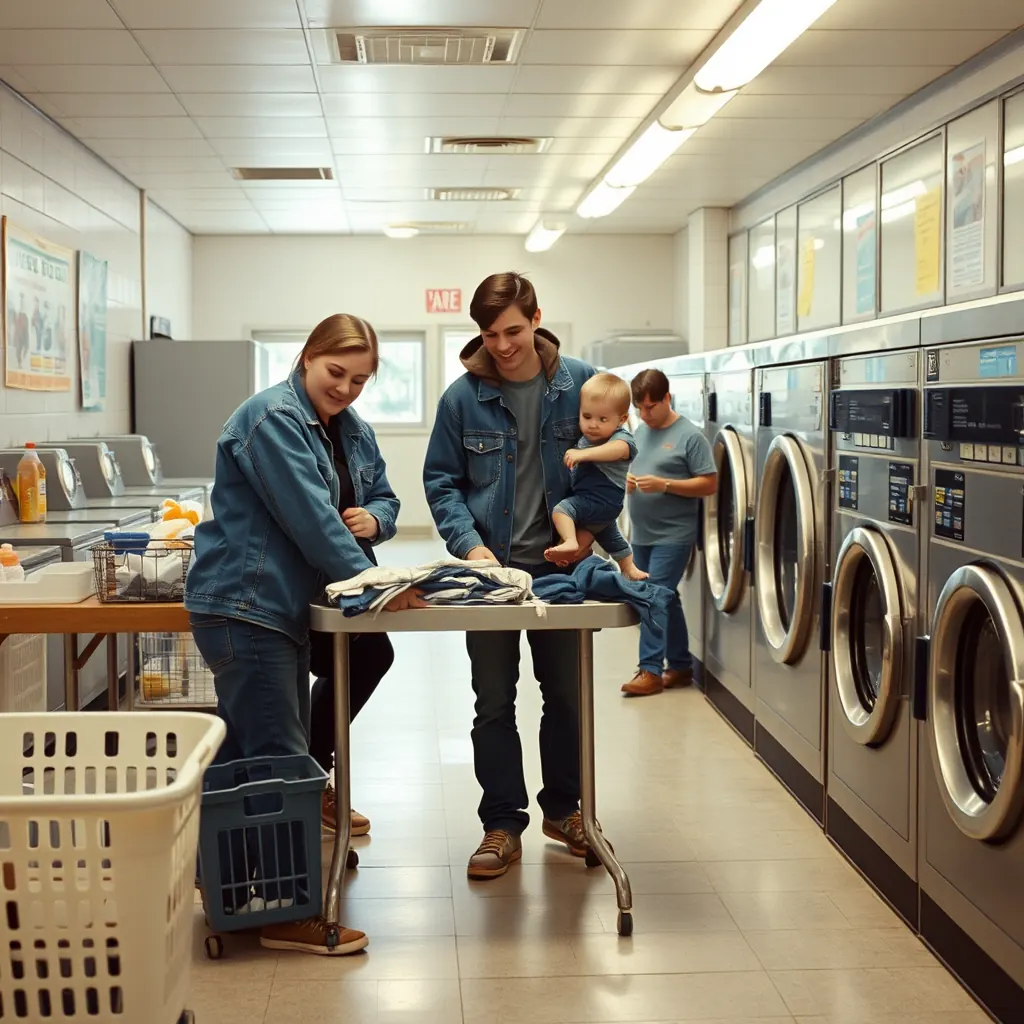
For work-clothes laundry near Blue Summit, start with two questions: what does the garment label allow, and what got onto the clothing at work? Ordinary washable shirts and trousers are not the same as protective clothing or items exposed to hazardous substances. Fresh Spin Laundry offers self-service laundry and in-store drop-off wash-dry-fold in Independence, Missouri. Ask about your specific garments before planning a drop-off; do not assume that a general laundry service provides industrial decontamination or certified protective-workwear care.
What should you check before washing work clothes?
- Read each garment’s washing, drying and product restrictions, including instructions for trims or protective features.
- Identify the soil. A lunch spill is a different problem from unknown jobsite residue.
- Check employer instructions for company-issued uniforms or protective clothing before choosing a cleaning method.
- For ordinary washable clothing, decide whether you want to wash it yourself or ask about drop-off help.
- Confirm garment acceptance, price and collection arrangements before leaving an order.
When is workwear not an ordinary laundry load?
If clothing may contain hazardous workplace contamination, pause before bringing it into a household or shared laundry. Contact your employer or safety officer for the appropriate handling and cleaning process. Do not use a trial wash as a test of whether an unknown substance is safe to remove.
CDC/NIOSH guidance on take-home exposures explains that workplace substances can travel on clothing, shoes and other items. It recommends keeping contamination from leaving the workplace where possible and discussing prevention with an employer or safety officer. Separating clothing is a precaution, not proof that ordinary washing makes a hazardous garment safe.
Tell the person responsible for your workwear what the item was exposed to, when it happened and whether there are written workplace instructions. If you do not know the substance, say so. A larger washer, stronger detergent or longer cycle is not a substitute for that assessment.
How do flame-resistant and high-visibility garments differ?
Protective clothing has care requirements tied to its particular construction and use. Follow the item’s manufacturer guidance and your employer’s procedure, rather than applying a general work-clothes recipe. Do not infer flame resistance, visibility performance or safe reuse simply because a garment looks clean.
For example, Bulwark’s instructions for its flame-resistant clothing warn that residual petroleum-based soil can impair protection and act as fuel. Those instructions prohibit bleach, starch, fabric softeners and detergents containing hydrogen peroxide for the covered garment. This is an example of product-specific care, not a universal instruction for every uniform.
Carhartt’s product-care guide also distinguishes between garment types, including lined and unlined flame-resistant clothing. Find the instructions that match your item. For reflective trim, coatings, insulation or damaged protective features, ask the manufacturer or the person managing your workplace clothing program before improvising.
What is a practical routine for ordinary washable uniforms?
Once you have established that the clothing is suitable for ordinary laundering, use a simple sequence. Keep the care label available through the process instead of choosing a setting from the item’s weight or appearance alone.
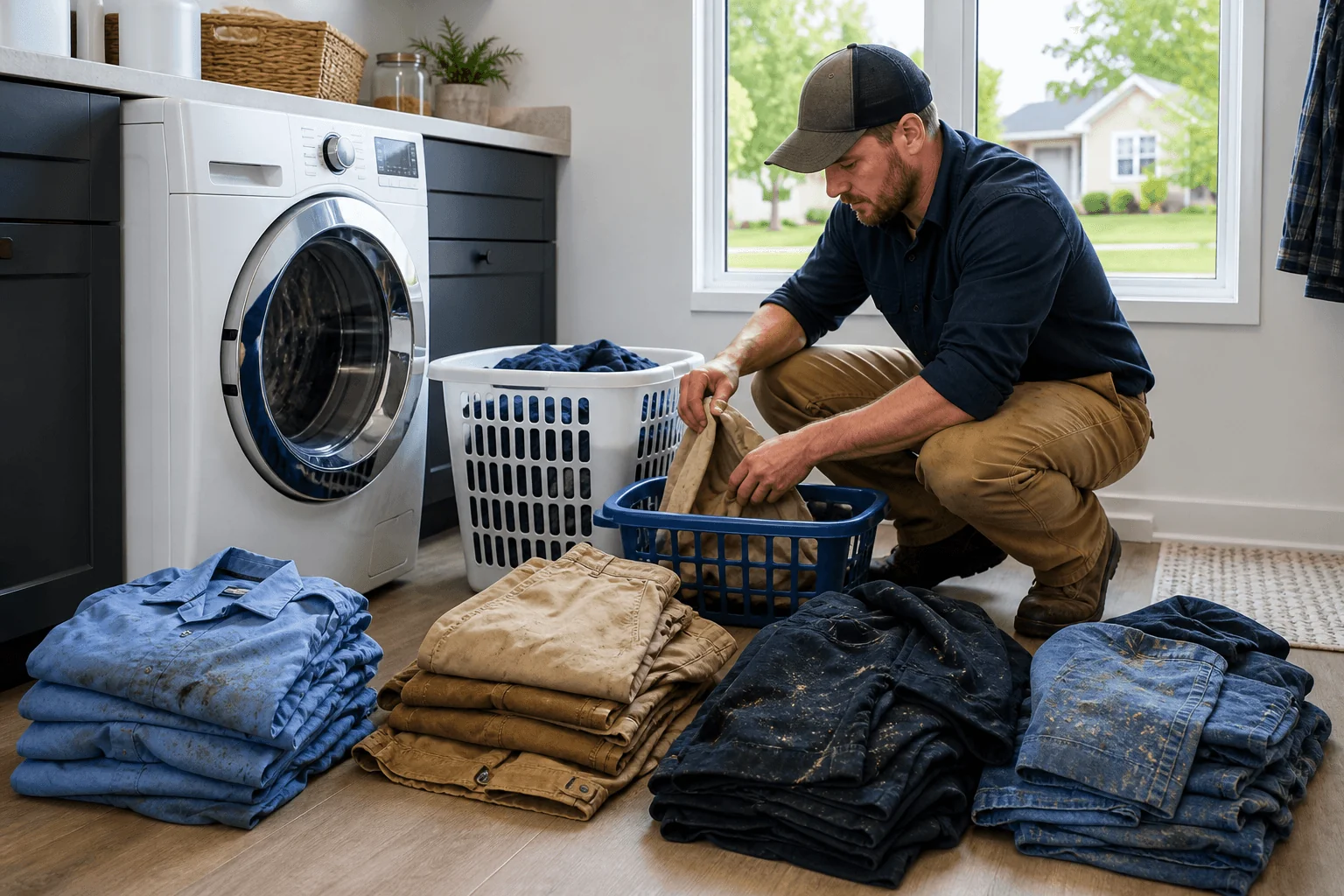
- Check and sort. Empty pockets and separate items that need different care. A work shirt and a heavy jacket may not belong in the same load even if both were worn on the same shift.
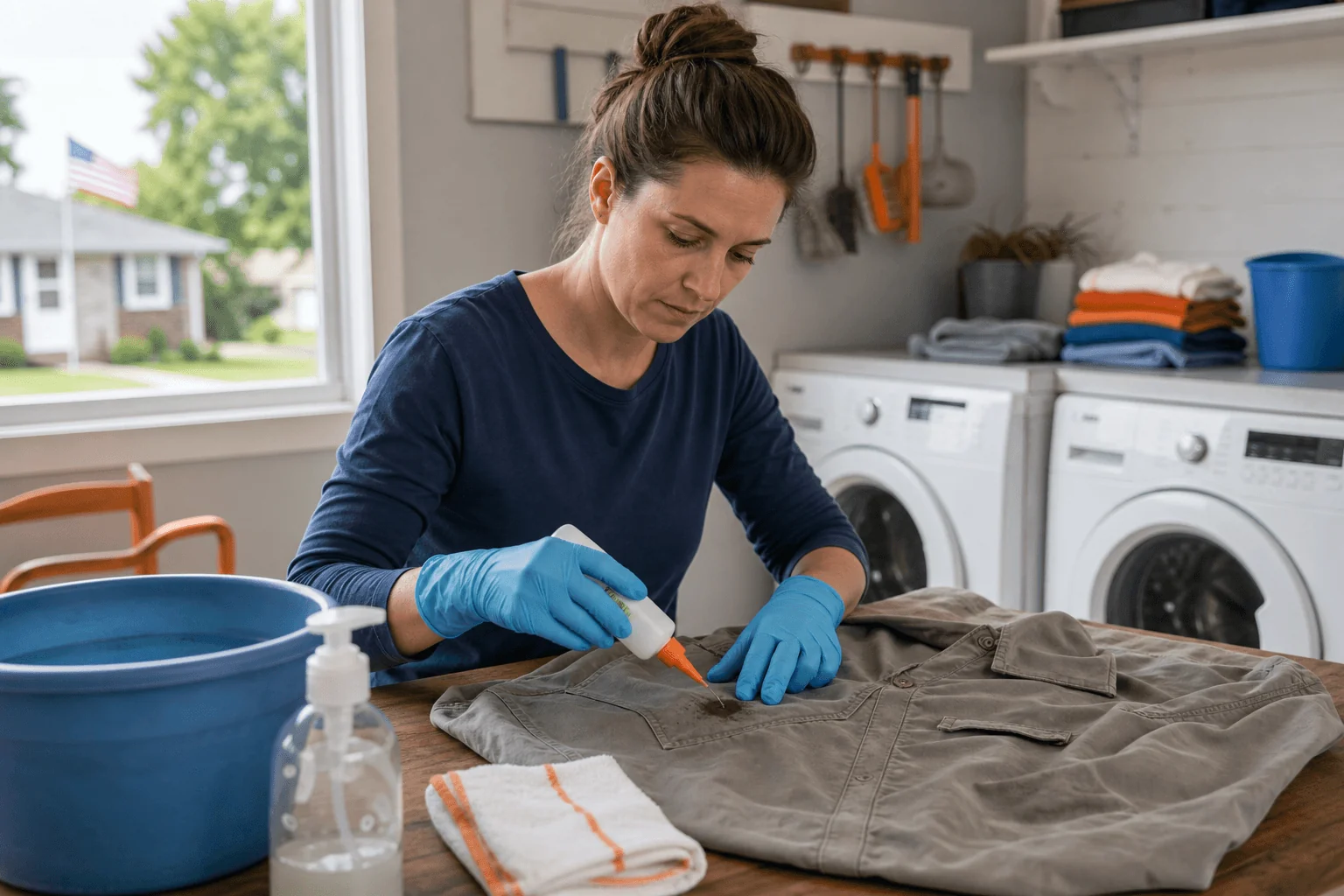
- Identify an ordinary stain. Choose a laundry product whose directions fit both the stain and the fabric. Do not treat unknown chemical residue as a food or mud stain.
- Follow the permitted wash method. Use the garment and detergent instructions together. Do not assume every uniform needs hot water or an aggressive cycle.
- Inspect before drying. Check whether an ordinary stain remains. Reassess the treatment before adding dryer heat.
- Dry and store as directed. Use the label’s drying method. Keep clean clothing separate from dirty items while packing for the next shift.
The American Cleaning Institute’s uniform-care guidance emphasizes garment labels, separate washing when care needs differ, stain pretreatment and appropriate temperatures. Its laundry basics guide recommends checking wet clothes for remaining stains before drying because drying can set stains. These general routines do not replace protective-clothing or hazardous-exposure instructions.
Should you choose self-service or drop-off wash-dry-fold?
For suitable everyday laundry, the main difference is who does the work. With self-service laundry, you handle the washing and drying. With in-store drop-off wash-dry-fold, you ask the Fresh Spin team about taking care of the order and return to collect it.
Drop-off may fit when you want to spend less of your own time handling laundry. Self-service may fit when you want to manage the load yourself. Neither option should be selected until you know the items are appropriate for that service. Protective garments, unusual materials and work-related contamination need specific discussion; this guide does not promise their acceptance.
When asking about an order, describe the garments and any special instructions rather than simply calling the bag “work clothes.” Explain whether an item has a special-care label and whether there is a known exposure concern. Do not leave an item and assume a care requirement will be noticed later.
Where do you enter and place an order at Fresh Spin?
Fresh Spin Laundry is at 10215 E Truman Road, Independence, Missouri. For an in-store wash-dry-fold order, enter the laundromat through the Ash entrance and place your order in the mini-mart. Discuss the garments and preferences before leaving your laundry, and confirm when to return.
Use the contact page and location map to plan from your actual starting point. The store is in Independence; the Blue Summit wording in this guide does not identify a separate branch or establish a particular travel time. Call 816-503-6652 when acceptance or a care requirement needs clarification before your visit.
How should you compare the cost and timing?
Compare the actual service you need, not a general claim that one type of laundry is always cheaper. Ask how your order will be priced, whether any requested treatment changes that price, and when collection is expected. For self-service, check the current machine information and account for the time you will spend in the store.
There is no universal weekly weight at which outsourcing automatically saves money. Your comparison depends on the quoted charge, your own available time, travel and the garments involved. A uniform-management program may include services beyond washing; compare its written terms separately rather than treating it as the same product as a walk-in laundry visit.
Write down the next shift when the clothes are needed and ask about the particular order. Keep a backup plan when timing is essential. A general statement about convenience is not confirmation that a specific load will be ready the same day.
What should you ask before handing over a bag?
- Are these specific garments and their soil conditions acceptable for the service?
- Can the care-label instructions be followed, or should an item go to a specialist?
- What is the agreed price and what requested work does it cover?
- When should I return, and how will any questions about the order be handled?
- Which preferences or special-care instructions should be recorded before I leave?
For ordinary washable work clothes, a clear plan can make the laundry errand easier. For protective or potentially contaminated items, the right next step may instead be your employer or manufacturer. Match the cleaning process to the garment before choosing a provider; do not treat promotional claims about cleaning power as evidence of specialist capability.
Helpful Fresh Spin Resources
Keep exploring related Fresh Spin Laundry guides and local service pages.


