
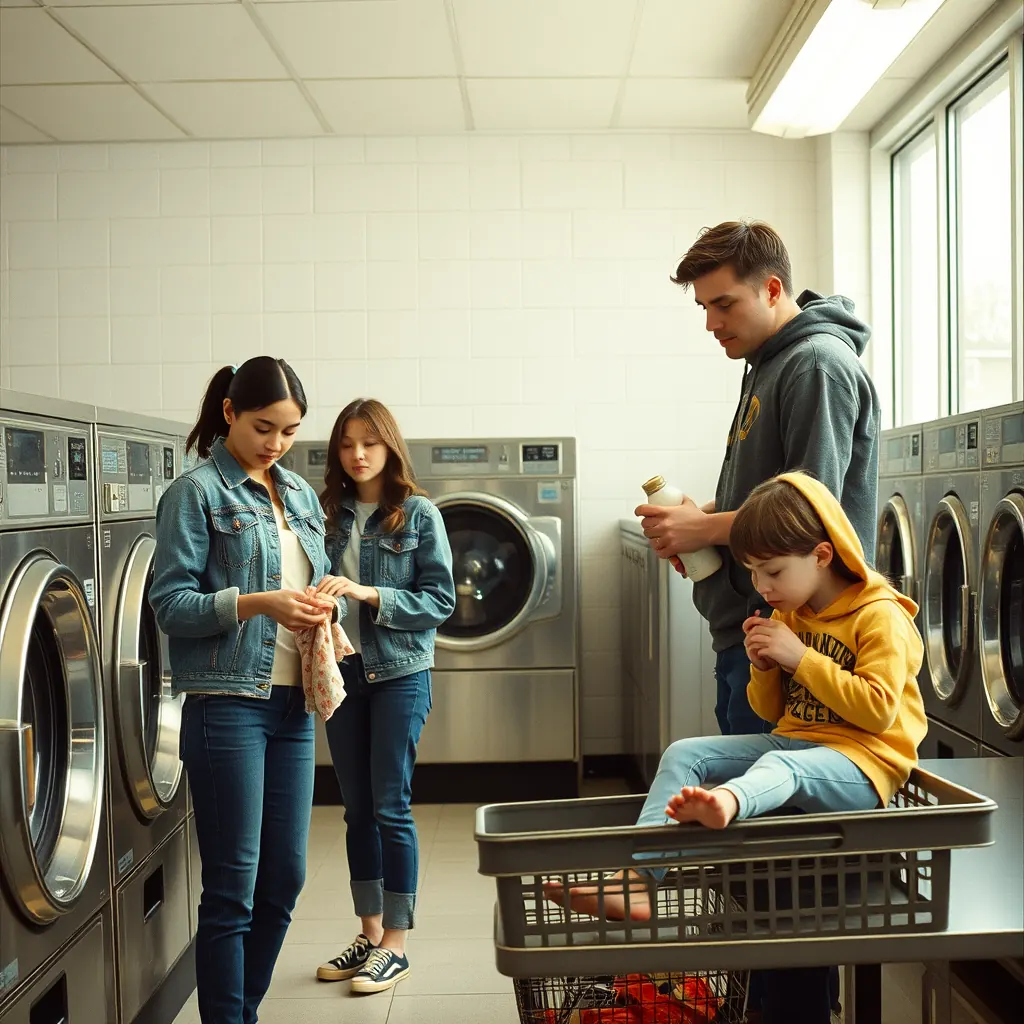
In many Englewood homes, especially with large families, laundry can hit 10 or more loads each week and still never seem finished. The fastest way to get control back is a hybrid system that mixes smarter home routines with Englewood laundromats, pickup and delivery help, and a few simple habits that cut pileups before they take over.
Key Takeaways
- Use a hybrid plan: daily basics at home, bigger loads outsourced.
- Pre-sort with divided hampers to save time every single week.
- Pickup and delivery services can recover hours when schedules get busy.
- Large-capacity machines help families finish more loads in fewer cycles.
- Simple systems beat perfect folding in a busy household.
Why Englewood Large Families Hit a Laundry Wall Fast
For a family with six, eight, or more people, laundry stops being a chore and starts acting like a second job. Clothes pile up in bedrooms, towels stack in bathrooms, sports gear appears by the door, and bedding somehow needs washing again before the last load is even folded. In many homes, daily laundry collection happens across several rooms, which means the mess grows in multiple places at once.
Time is the next problem. Washing, drying, moving loads, sorting, folding, and putting things away can eat huge parts of the day. Parents are already balancing work, school drop-offs, activities, meals, and homework. Laundry competes with every one of those demands. That is why so many families feel like they are always behind, even when the machines are running constantly.
Space makes the problem worse. Typical Englewood homes do not always offer roomy laundry areas or built-in storage. Historic homes often have charm, but they do not always have efficient sorting stations, wide counters, or giant utility rooms. A cramped setup creates friction. Every extra step, from carrying piles downstairs to folding on a dining table, increases the odds that clothes will sit in baskets for days.
Local life adds another layer. Englewood families often run on packed schedules, and many households need systems that work around school calendars, sports seasons, and changing work hours. If laundry depends on one huge weekend reset, the whole plan can collapse after one busy Saturday. Families often reduce the workload by batching loads and using divided hampers, while services in the area often average around $2 per pound or similar hourly value depending on the provider.
The Fastest Way Out: Build a Hybrid Laundry System
The quickest relief usually does not come from doing everything yourself better. It comes from doing the right parts at home and handing off the most draining parts to outside help. A hybrid system gives families the speed of outsourcing without the cost of sending every sock and T-shirt away each week.
Here is the idea. Keep simple, everyday clothing loads in-house. Use pickup and delivery during the heaviest weeks. Save self-serve laundromat trips for oversized loads like comforters, blankets, and towel mountains. This approach gives your home machines a break, protects your time, and keeps the total cost more manageable.
Peak weeks are where this strategy really shines. School starting back up, holiday hosting, family travel, sickness, muddy sports uniforms, and changing weather can double the volume overnight. Instead of letting those spikes wreck your whole schedule, families can schedule a service pickup or knock out bulky items in one session with large-capacity machines.
The goal is not perfection. The goal is a routine your family can repeat without stress. A useful system should be easy on normal days and flexible on chaotic ones. If your process depends on everyone being fully motivated every evening, it will fail. If it relies on simple habits and occasional outside help, it has a much better shot.
Best Englewood Laundry Services Ranked by Convenience
When laundry is out of control, convenience matters more than anything else. Some families need total removal of the task. Others want to stay hands-on but need bigger machines and a faster setup. Englewood offers both paths, plus marketplace-style options for comparing local providers.
Before choosing, think about your true pain point. Is it the washing itself, the folding, the oversized items, the lack of time, or the strain on your home machines? Once you know that answer, choosing the right service becomes much easier.
Pickup and Delivery Services for Full Relief
If you need the laundry gone completely, pickup and delivery is the fastest option. These services work best for families who are losing hours every week to sorting, running loads, and folding piles that never shrink. In exchange for a higher price than doing it yourself, you get back your time.
Front Range Laundry is a strong pick for routine household outsourcing. It offers Monday through Friday residential pickup and a 48-hour turnaround. That setup works well for weekly cycles because you can schedule around work and school. Even better, you do not need to be home, which removes one more scheduling headache from a packed family calendar.
HappyNest is built for Englewood residents who want simple online scheduling and affordable wash-and-fold with free pickup. That ease matters when your week is already overloaded. A system that can be booked in minutes is far more likely to get used than one that requires phone calls, guesswork, and extra planning.
Martinizing Cleaners stands out for bulk laundry and specialty items like comforters and sheets. Free pickup and delivery, 24/7 locker access, and app-based scheduling make it a practical option for families whose schedules shift day by day. Locker access also helps households that cannot predict when someone will be home. That level of flexibility can be the difference between using a service regularly and never getting around to it.
For families comparing options, local marketplace platforms may offer 60 or more providers in the broader area. That creates a chance to compare prices, turnaround times, minimums, and family-volume deals. If you are testing outsourcing for the first time, comparing a few providers can help you find a better fit without committing long term.
Self-Serve Laundromats for Speed and Control
Some families do not want to give up control. They just want to finish three or four home-machine days of laundry in one concentrated trip. That is where self-serve laundromats become a smart middle ground. You still handle the loads yourself, but you gain access to larger machines, faster turnover, and enough capacity to move through family laundry in a single visit.
Fresh Threads Laundromat is a practical Englewood option for oversized family loads. It offers large-capacity machines, hours from 6 a.m. to 11 p.m., free WiFi, and easy parking. Those details matter. Long hours help busy parents fit laundry around work and school, while big machines let you combine loads that would take several rounds at home.
This route works especially well for comforters, sheets, towels, and seasonal wash days. Instead of overloading your home equipment, you can process heavy fabrics more safely and more quickly. If you want a broader look at machine-based convenience, this self-serve laundromat guide shows why larger washers can be such a major win for high-volume homes.
The tradeoff is simple. Laundromats save machine wear and compress your schedule, but they still require your presence. You gain control and speed, though you give up some convenience compared with pickup and delivery.
The Smart Hybrid Strategy That Saves Time Without Overspending
The strongest systems usually combine several methods instead of forcing one solution to do everything. A hybrid plan lets you spend money where it creates the biggest return and save money where a home system already works. That balance is what makes the approach sustainable for large families.
Start with a weekly base routine at home. Handle everyday shirts, pajamas, school clothes, and basic undergarments yourself. These loads are predictable and easier to move through if you sort well. Then add a service layer only where needed. Use pickup and delivery during extra busy weeks or after family events. Use laundromats for blankets, comforters, towels, and overflow loads that would overwhelm your home setup.
This kind of system protects both your budget and your schedule. You are not paying premium rates for every load, but you are also not sacrificing your entire weekend to laundry. Families often find that one outsourced pickup each week during peak seasons can recover several hours. That is time that can go back into meals, errands, rest, or simply getting everyone out the door without stress.
Think in categories instead of one giant laundry pile. A useful hybrid plan may look like this:
- Daily basics at home
- Bulky loads at the laundromat
- Overflow weeks sent out for wash-and-fold
- Specialty items handled by a cleaner or pickup service
That simple division keeps your household from treating every load the same way. Once you stop doing that, the whole process becomes lighter and much more efficient.
A Step-by-Step Laundry Workflow That Actually Works
Most large-family laundry failures happen before the washing starts. The setup is clunky, sorting is unclear, people drop clothes everywhere, and folding turns into a basket graveyard. A better workflow fixes those weak spots from the beginning. The best systems reduce decisions and make the next step obvious.
What follows is a practical process that works because it removes friction. You do not need a perfect laundry room or expensive upgrades. You need repeatable actions, clear categories, and enough structure that the whole family can follow the plan without constant reminders.
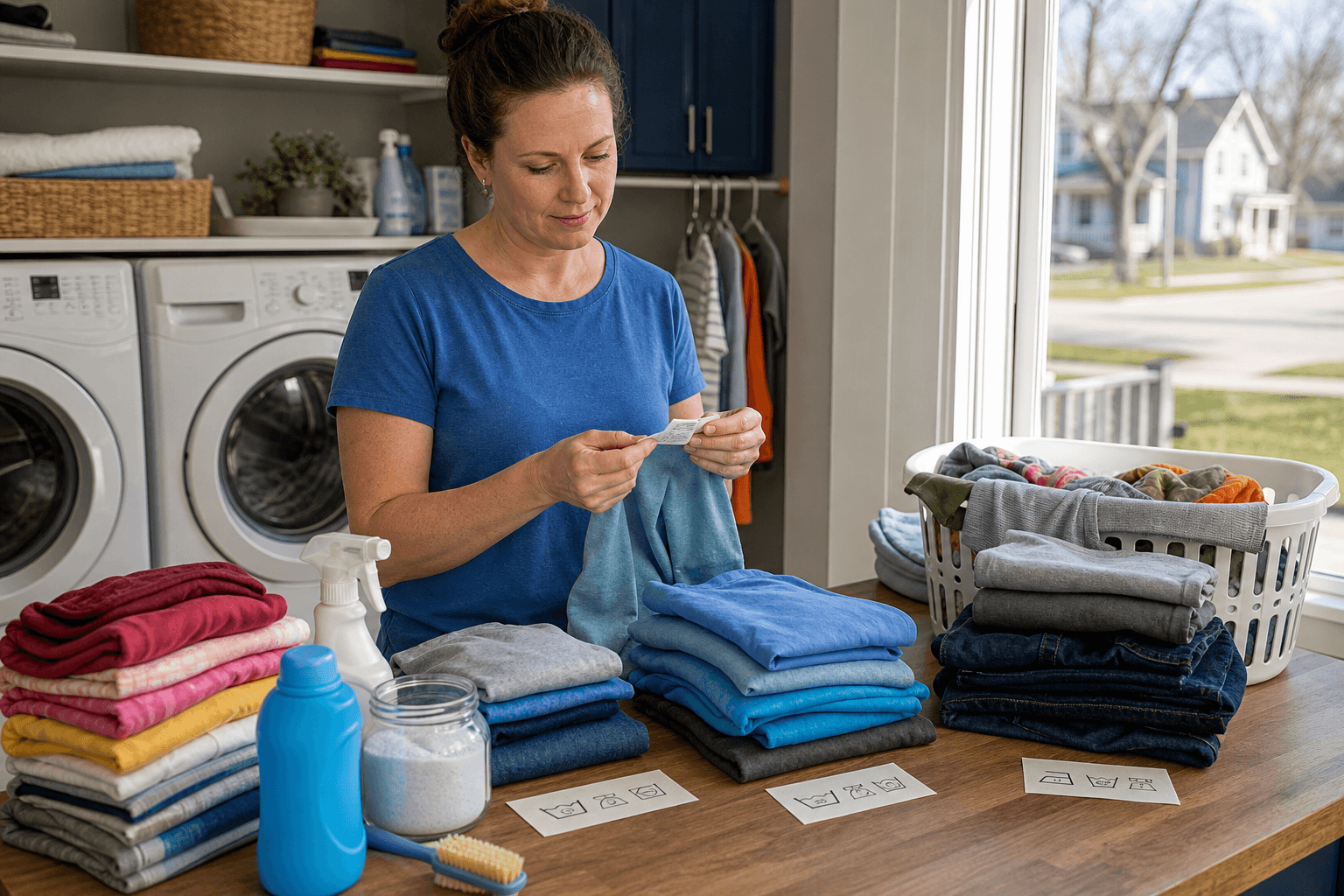
Step 1: Build a No-Friction Setup
Put hampers where laundry actually appears. That means every bedroom and every bathroom if possible. If people have to walk across the house to drop a shirt in a basket, they will leave it on the floor or the chair instead. A visible hamper in the right spot creates an easy default.
Use three main categories: lights, darks, and heavy or soiled items. That system is simple enough for children to understand and useful enough for adults to move loads quickly. Some families also use one basket per child, especially if clothing ownership causes confusion. Per-child baskets cut down the time spent asking whose shirt belongs to whom.
Skip anything that slows people down. Lids, complicated labels, or too many categories create hesitation. Laundry systems work better when they feel almost automatic. If a family member can sort in two seconds, the odds of success go up fast.
Step 2: Control Chaos with Daily Collection
Collect laundry every evening from all rooms. Tie this task to an existing routine like after dinner, before showers, or right before bed. Linking laundry pickup to another daily habit makes it easier to repeat. You do not need a motivational speech. You need a trigger that happens every day.
This evening sweep stops small messes from becoming huge weekend piles. It also helps you see what kind of load is forming. Maybe towels are overflowing, or dark clothes are full enough for a cycle. When you know what is coming, you can respond early instead of feeling surprised by three mountains of fabric on Saturday morning.
Children can help with this step. Younger kids can carry socks or washcloths. Older children can bring their full baskets to a central point. The key is consistency. Five minutes each night can prevent hours of catch-up later.
Step 3: Wash Smarter, Not Constantly
Do not run half-empty loads unless you truly need an item right away. A full hamper should lead to a full cycle. That single rule cuts wasted water, detergent, and machine time. It also reduces the number of times you are handling laundry during the week. More efficiency starts with fewer, fuller loads.
Batch by type instead of by panic. Wash towels on one day, clothing on another, and bedding on another if that fits your schedule. This keeps loads predictable and simplifies drying and put-away. Towels folded with towels move faster than mixed baskets full of random family items.
Overflow weeks are different. During sports season, holidays, or sickness, switch quickly instead of pretending your normal plan still works. Use a pickup service or a laundromat trip before the backlog turns into a three-day recovery project. Flexibility is part of a good system, not a sign that it failed.
If you want a simple overview of outsourced family laundry, this wash and fold resource explains why sending out high-volume loads can be a smart move during demanding weeks.
Step 4: Eliminate Folding Bottlenecks
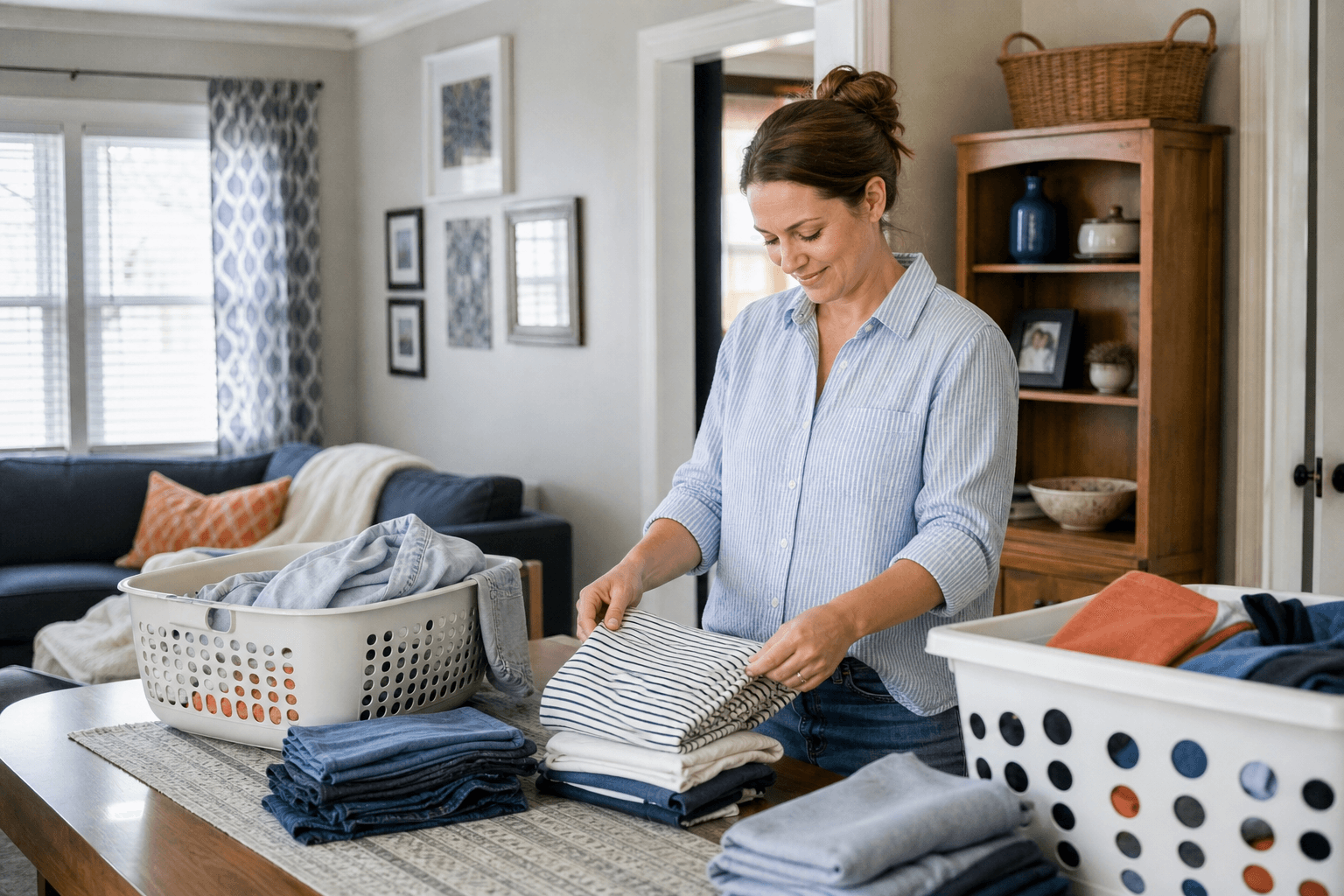
Folding is where many systems break down. Washing feels productive, but folding requires attention, space, and energy that families often do not have after a long day. So baskets sit. Then clean clothes get mixed with dirty ones, and the cycle starts again. The fix is to lower the standard and focus on what actually matters. Aim for functional, not fancy.
Fold essentials first. Towels, adult work clothes, and anything that wrinkles easily should get priority. For kids’ everyday clothes, consider simple sorting into baskets, bins, or drawers without perfect folding. Many families find that children can put away unfolded shirts and pajamas just fine. That step is much better than leaving a clean pile on the couch for three days.
Put laundry away immediately when possible. Even a basic “basket to drawer” routine keeps clutter from rebuilding. If you wait for the ideal moment to fold everything beautifully, the backlog will win. In big households, finished beats perfect.
Step 5: Outsource Strategically
Outsourcing works best when it is planned, not random. Schedule a recurring weekly pickup during your busiest seasons. If school sports, holiday visitors, or travel always hit the same months, build service into those periods on purpose. That helps you protect your energy instead of scrambling when the pile gets out of hand.
Use services for the loads that steal the most time. Bulk towels, bedding, mixed overflow baskets, and post-vacation laundry are strong candidates. Save your personal effort for loads that are easier to manage at home. Strategic outsourcing gives you the biggest return for the dollars you spend.
If you are comparing providers or wondering what to expect before booking, a quick look at these laundry FAQ details can help you feel more prepared.
Step 6: Maintain the System
Even a strong system needs small adjustments. Do a quick wardrobe declutter every week. Remove outgrown kids’ items, worn-out socks, and clothes nobody likes wearing. Less clothing in circulation means fewer mystery piles and less overstuffed storage. Reducing excess is one of the easiest ways to lower volume.
Rotate tasks among children based on age. One child sorts towels. Another matches socks. Another carries clean baskets to rooms. Shared responsibility turns laundry from a parent-only burden into a house routine. It also helps kids build independence, which pays off for years.
Review the plan any time the family schedule changes. A new sport, a job shift, or a move to colder weather can affect what kind of laundry shows up and when. Good systems stay simple, but they also stay flexible.
Game-Changing Laundry Hacks From Large Families
Large households tend to discover one truth quickly: tiny improvements create huge results when they happen every day. A few smart hacks can cut sorting time, reduce machine use, and prevent the kind of pileups that make laundry feel impossible. These tricks are practical because they work in busy homes, not just in perfect social media setups.
The best hacks remove extra decisions. They let everyone in the house understand the process at a glance. They also focus on speed. If a trick looks nice but adds steps, it will usually fail in a household with constant laundry pressure.
Smarter Sorting That Cuts Time in Half
Pre-sort directly into hampers. That one change can save a surprising amount of time because you stop touching the same clothes twice. Lights go in one basket, darks in another, and heavy or dirty items in another. By wash day, the sorting is mostly already done. That means less standing around, less reshuffling, and a much faster path to full loads.
Mesh bags are another easy win. Use them for socks, small baby items, delicates, or anything that tends to disappear. Instead of spending time digging through a mixed pile, you can move a bag from hamper to washer to dryer with almost no effort. This helps protect small items and reduces the endless hunt for missing pairs.
Keep sorting categories minimal. Families often slow themselves down with too many bins or too many special rules. Most homes do better with a simple system that everyone can remember. If a sorting method requires constant correction, it is too complicated to last.
Time-Saving Tools That Make a Real Difference
Detergent pods speed up the start of each load and help keep the amount consistent. That saves time and reduces measuring mistakes, especially when teens or older kids help with laundry. The more straightforward the process is, the easier it is to share the work and get consistent results.
Wool dryer balls can cut drying time and reduce static. They are reusable, easy to toss in, and helpful for big family laundry loads where every saved minute matters. Over a week with many cycles, those small time gains start to add up in a very noticeable way.
Large-capacity machines are another big advantage, whether at home or in a laundromat. Bigger drums mean fewer cycles and less handling. That matters a lot when your family is producing large loads of towels, bedding, and heavy clothing. One high-capacity cycle can replace what might take several rounds in a smaller machine. That is a serious boost in efficiency.
Routines That Prevent Overwhelm
Assign laundry days by person or category. Some families wash one child’s clothes on a specific day. Others group loads by towels, bedding, and general clothing. Either method can work well if it keeps the week predictable. Predictability reduces decision fatigue, which is often the hidden enemy of household systems.
Rotate loads after meals if someone is usually home. Breakfast load in, lunch move to dryer, dinner fold and put away. This kind of rhythm spreads laundry across the day without forcing one giant session late at night. It also ties the work to moments that are already part of the family schedule.
Avoid making Sunday the giant laundry reset if that day is already crowded. Many families feel more grounded when Sunday stays lighter and the week starts without a laundry hangover. A calmer reset can improve the whole household rhythm and make Monday feel less chaotic.
Get Everyone Involved Without Constant Resistance
Children can contribute earlier than many parents expect. Young kids can sort lights and darks, fold washcloths, and deliver clean clothes to rooms. Older kids can run a simple cycle, transfer loads, and put away their own items. Shared work is one of the biggest differences between homes that stay caught up and homes where one adult carries the whole burden.
Per-child baskets reduce confusion and arguments. Once laundry is clean, each child gets a basket or bin. That eliminates most of the “whose shirt is this?” questions that drag out folding time. It also gives kids a clear next step: take your basket and deal with your own clothes.
Start with simple expectations and build from there. If kids can sort and carry this month, they may be able to wash and put away next month. Independence grows through repetition. Over time, that change can reduce parental laundry work by a lot.
What Laundry Really Costs for Large Families in Englewood
Cost matters, especially when laundry volume is high every week. The right choice depends on whether your household is trying to minimize spending, recover time, or protect your home machines from heavy use. Once you view laundry in those terms, the tradeoffs become much clearer. Money is one factor, but so are hours, effort, and wear.
A large family doing 10 or more loads a week should think beyond sticker price alone. A cheaper option that consumes half a Saturday may actually cost more in lost time and energy. On the other hand, fully outsourcing everything may be more convenience than your budget allows. The sweet spot is usually a mix.
Self-Serve Laundromat Costs and Tradeoffs
Self-serve laundromats are often the most budget-friendly option for families that need big machines. Costs are generally coin-operated or machine-based and stay more affordable than full pickup and delivery. You keep direct control over products, timing, and load handling, which some families strongly prefer.
The downside is time. You still have to transport the laundry, wait through cycles, and handle folding or bagging. Yet for bulky loads and machine-saving sessions, this can still be an excellent value. If your home washer struggles with heavy items, a laundromat can prevent expensive strain on your own equipment.
Pickup and Delivery Pricing
Pickup and delivery services usually bring the highest convenience and the highest cost. In the Englewood area, pricing often lands around $2 to $2.35 per pound, and some providers use minimum order amounts. For families who want major time recovery, that cost can make sense, especially during the busiest months of the year.
The biggest benefit is obvious: hours back in your schedule. Instead of spending evening after evening moving loads, you send the bulk out and focus on everything else demanding your attention. This option is especially valuable for households where both adults work, where children have heavy activity schedules, or where one parent is carrying too much of the household load.
Dry Cleaning and Bulk Services
Dry cleaning and bulk laundry services fit best for large household items and specialty fabrics. Comforters, sheets, seasonal bedding, and delicate pieces are common candidates. Some providers also add convenience features like locker access or app-based scheduling, which can make specialty laundry much easier to manage.
The tradeoff is that hours or item types may be more limited than a pure family wash-and-fold service. Even so, these providers can be excellent for the loads that are hardest to process at home. Used selectively, they can take a lot of pressure off your weekly routine.
A Smart Budget Example for a 10-Load Week
Imagine a large family facing 10 or more loads per week. A cost-aware hybrid plan might keep daily clothing loads at home, schedule one weekly pickup for overflow, and reserve laundromat trips for comforters and heavy towels. This keeps regular costs lower while still creating time relief where it matters most.
That kind of plan works because it matches the method to the load. Home machines handle the basics. Services absorb the crunch. Large public washers handle the bulky stuff. You are not paying premium prices for every item, but you are also not trying to force one washer and dryer to solve every laundry challenge in the house. That is a much more balanced approach.
Real-Life Insights From Big Households
Families with lots of laundry often arrive at the same lesson after trying everything: systems matter more than appearance. A beautiful folding station does not help much if clothes are still dropped in five rooms without sorting. A perfect shelf of matching bins does not save you if nobody follows the routine. What works is a setup that people will actually use daily.
One of the strongest insights from experienced households is to sort by child or by room whenever possible. That reduces the folding chaos and shortens the final stage dramatically. Instead of one mountain of mixed clean clothes, you have smaller groups that can move back to the right place faster. Less mixing means less decision-making.
Another important lesson is that perfection gets in the way. Parents often lose time trying to make every drawer look neat or every shirt folded the same way. In a large family, that standard can become a trap. Clean, accessible, and put away is enough for many everyday items. A practical system will beat an attractive but unrealistic one every time.
Experienced families also tend to favor consistency over marathon “deep clean” laundry days. Smaller daily actions outperform occasional all-day catch-up sessions because they prevent the pile from becoming emotionally and physically overwhelming. If the household can stay close to caught up, laundry feels annoying but manageable instead of crushing.
Where Laundry in Englewood Is Going Next
Englewood laundry options are moving in a clear direction: more app-based scheduling, easier pickups, and more flexible drop-off systems. Busy families want convenience without complicated coordination, and providers are responding with tools that let customers manage orders quickly from their phones. That trend is especially useful for households with changing schedules and limited time.
Locker systems are also becoming more attractive. They remove the need to match delivery windows exactly, which is a major advantage for working parents and active families. A locker-based approach can make pickup and drop-off feel much less intrusive and far more practical in everyday life.
There is also a growing eco-conscious shift. Families are batching loads to reduce water and energy use, using reusable tools like dryer balls, and outsourcing some laundry to reduce wear on home machines. Those choices make sense for both budget and sustainability. In high-volume homes, small changes in how loads are grouped and dried can create meaningful savings over time.
As demand for convenience keeps rising, more families will likely build hybrid systems by default. That means home laundry will remain part of the routine, but services and larger machines will play a bigger role in keeping weekly volume manageable. For Englewood households, this shift is less about luxury and more about protecting time, energy, and household sanity.
Start Small and Build a System That Fits Your Family
You do not need to rebuild your whole household in one weekend. Start with one change this week. Add hampers to bedrooms and bathrooms. Switch to pre-sorting. Batch towels on one day. Test a pickup service during a high-volume week. Small changes are easier to keep, and kept changes are what produce real results.
Next, pay attention to where your current routine breaks. Maybe sorting is fine but folding never gets finished. Maybe your washer is too small for bedding. Maybe weekday evenings are impossible, but a weekly pickup would solve that. The best laundry plan is the one that answers your actual problem instead of copying someone else’s system.
Large-family laundry in Englewood does not have to stay overwhelming. With a hybrid approach, divided hampers, simplified folding, strategic outsourcing, and help from everyone in the house, you can reclaim hours each week and keep the piles from running your life. Try one fix, keep what works, and build a routine that matches your family’s real rhythm.