
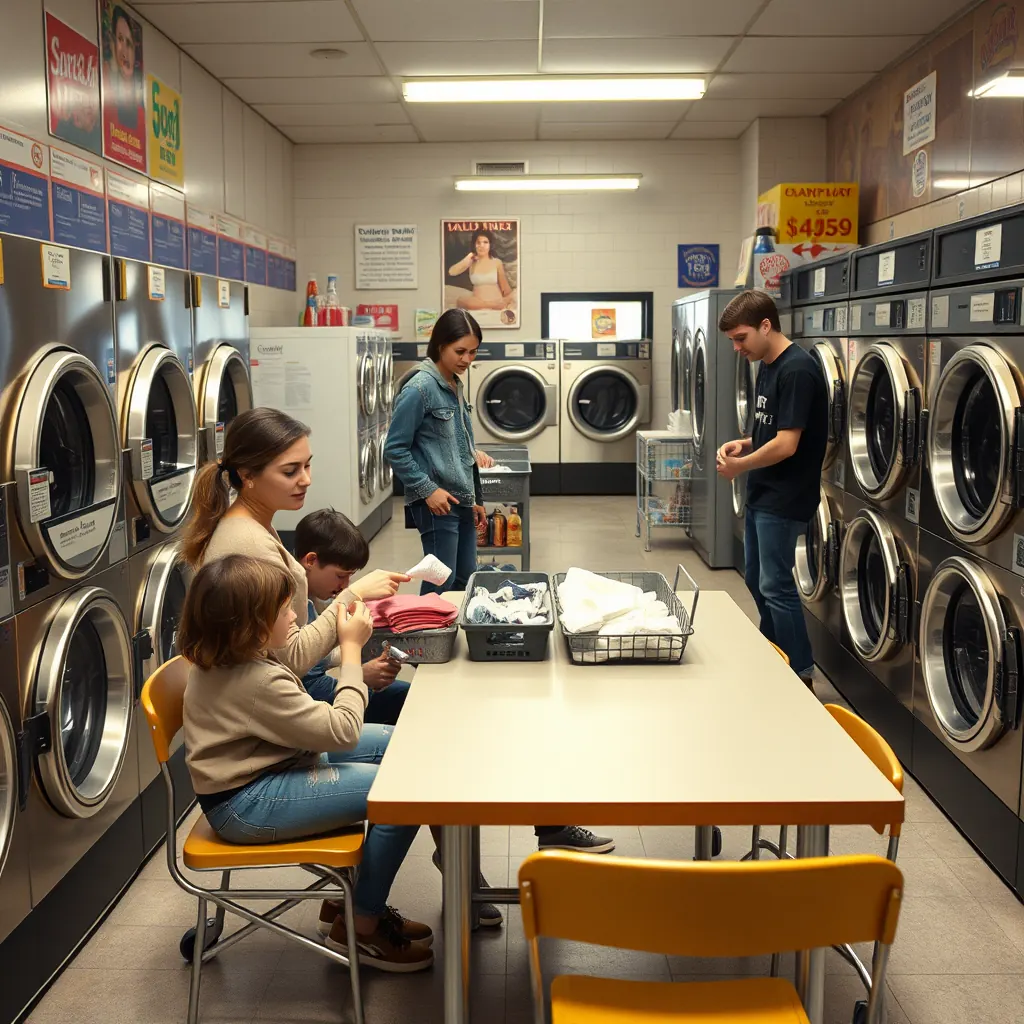
Laundry used to mean setting aside a chunk of the day, waiting on wash cycles, and planning life around a chore, but Procter & Gamble is pushing that old routine aside with an ecosystem built for speed, convenience, and round-the-clock access. Through Tide Cleaners, P&G PRO, and high-performance products like Tide, Downy Rinse & Refresh, Unstopables, and Bounce, P&G is turning laundry into a faster, app-connected, 24/7 service that fits how people and businesses actually live now.
Key Takeaways
- P&G’s fast laundry strategy is an integrated system, not one standalone brand.
- Tide Cleaners brings 24/7 access through lockers, kiosks, and app-based tracking.
- P&G PRO helps commercial users improve speed, uptime, and consistency at scale.
- Performance products support shorter cycles with strong cleaning and fabric care results.
- Technology, automation, and low-temp innovation are reshaping the future of laundry.
The End of Waiting: Why Fast Laundry Is Becoming the New Standard
Fast laundry is no longer a nice extra. It is becoming the baseline expectation for people with packed schedules and businesses that cannot afford delays. Old-school wash days asked users to dedicate hours to sorting, washing, drying, folding, and pickup. Today, many people want clean clothes to fit into life quietly, without eating up time or mental energy.
That shift comes from a mix of consumer habits and business pressure. A student, young professional, or parent may want to drop off laundry late at night and pick it up the next morning. A hotel or housing operator needs linens and resident laundry systems to stay running without service gaps. A sports team needs uniforms cleaned fast and consistently between games. In each case, speed and reliability matter just as much as stain removal.
Procter & Gamble has spotted that shift and built an answer around an ecosystem. Instead of relying on a single detergent or a single pickup model, the company combines products, digital tools, automated access points, and commercial support into one connected setup. That broader structure is what makes the idea of fast laundry feel practical rather than hype.
This matters because speed in laundry now means more than a shorter wash cycle. It can mean same-day turnaround. It can mean 24/7 pickup through lockers. It can mean app alerts that remove guesswork. It can also mean better chemistry that works effectively in low-temperature washes and commercial systems that keep operations moving. P&G’s approach tries to meet all of those needs at once.
Inside P&G’s Laundry Empire: 185 Years of Innovation Driving Today’s Speed
Procter & Gamble did not arrive at this model overnight. The company’s long history in home care gave it a strong base for what came next. Over roughly 185 years, it moved from foundational soaps into household names that reshaped laundry standards, including Tide and Downy.
Those brands matter because they trained consumers to expect more from laundry products. Better stain removal, improved fabric feel, odor control, and easier use all changed how people thought about washing clothes. Each product advance helped push laundry from a labor-heavy task into a more efficient household routine. That history gave P&G a strong testing ground for chemistry, performance, and brand trust.
Then the company expanded its focus. Instead of serving only people buying detergent off retail shelves, it moved deeper into professional and commercial systems. That pivot was important. Once P&G began looking at hotels, healthcare facilities, housing operations, and sports organizations, speed stopped being a feature and became an operational requirement.
Two moves stand out in that shift. One was the creation of P&G PRO, which extended the company’s expertise into professional cleaning and laundry support. Another was the acquisition of Pressbox, which became part of the Tide Cleaners platform. That deal gave P&G a stronger technology and locker-based service model, helping transform laundry access from store-hour dependent to always available.
Seen together, these moves show a clear pattern. P&G took decades of product knowledge and connected it to service infrastructure and digital tools. That combination is a big reason the company can now talk about fast laundry as a complete system instead of a single product claim.
What Procter Fast Laundry Solutions Really Means
Many people hear the phrase “Procter fast laundry solutions” and assume it refers to one product line or one service brand. That is a misunderstanding. There is no single standalone label with that exact structure. Instead, the phrase points to an integrated group of products, platforms, and services inside the broader P&G laundry network.
At the center of that network are three major parts. First is Tide Cleaners, which serves consumers with on-demand laundry and dry-cleaning access. Second is P&G PRO, which supports commercial and institutional laundry needs with equipment, chemistry, service, and guidance. Third is the product engine itself: detergents and fabric care items made to clean fast, protect fabrics, and support efficient workflows.
Modern fast laundry can include several practical benefits. Here are the main ones people usually mean:
- Same-day or next-day turnaround
- 24/7 access through lockers and kiosks
- App-based scheduling, tracking, and notifications
- High-efficiency formulas that help reduce cycle time
- Systems built for both home users and commercial scale
This broad setup helps a wide range of users. Busy consumers benefit because laundry fits around work, school, and social schedules. Hospitality groups benefit because linen and garment care can stay consistent even under heavy demand. Multi-housing operations gain systems that can serve residents more smoothly. Professional sports teams and other high-volume users gain dependable cleaning at high speed. In short, fast laundry here means connected, efficient, and built for real use patterns.
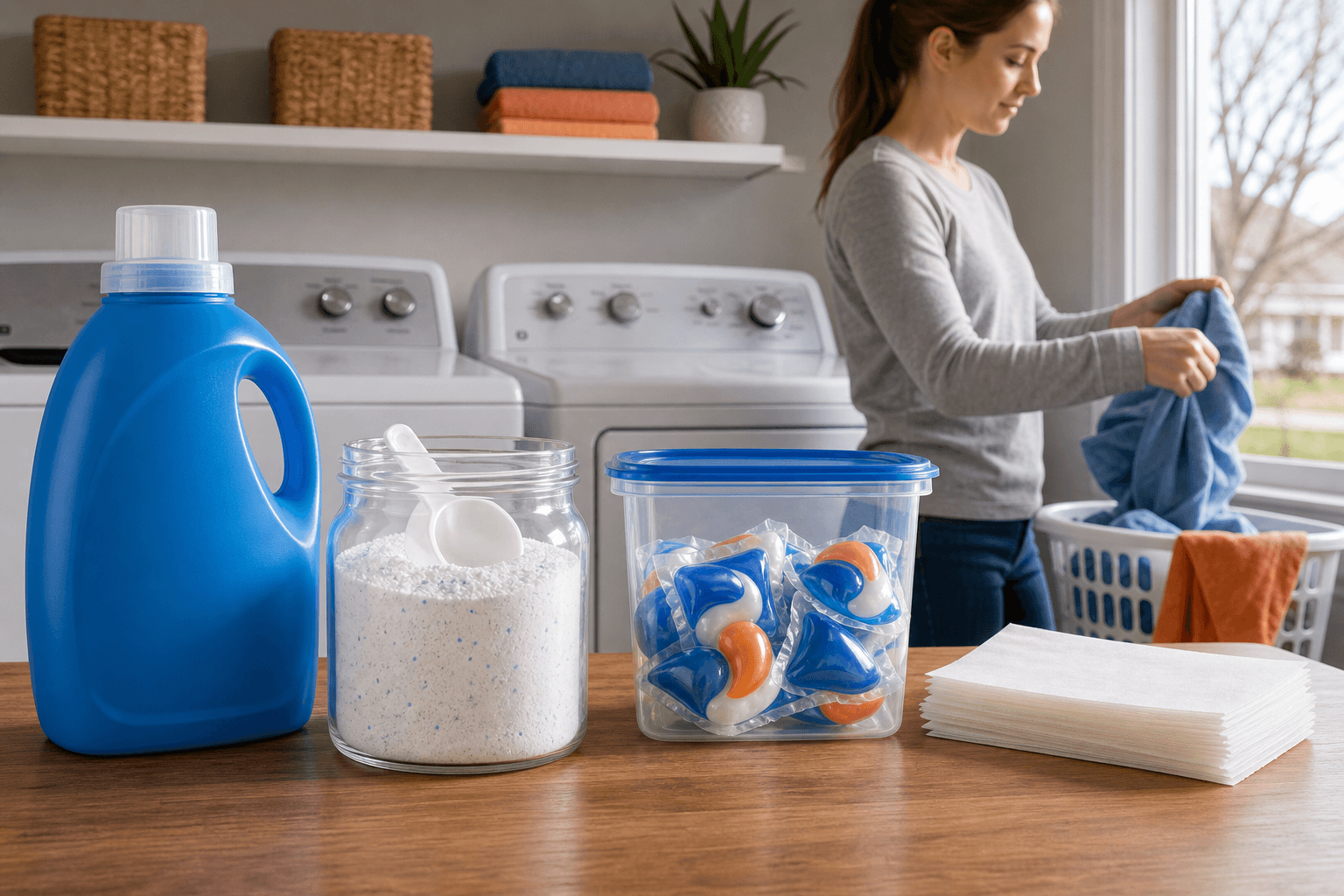
Tide Cleaners: The App-Powered, Locker-Based Laundry Revolution
Tide Cleaners is one of the clearest examples of how P&G is changing laundry service. Traditional cleaners often rely on storefront traffic, set business hours, and a manual handoff between staff and customers. Tide Cleaners shifts that model by using automated lockers and kiosks, which let people drop off and pick up laundry with far less friction.
The appeal is simple. A user does not need to rush across town before closing time. They can place items in a locker, track progress through an app, and return when it suits them. That model fits people who work long hours, live in apartments, commute, or simply do not want laundry to shape their daily schedule. The service feels more like a modern delivery platform than a traditional cleaners counter.
Technology makes that possible. After the Pressbox acquisition, Tide Cleaners gained stronger infrastructure for app-connected service and automated access. Customers can schedule service, receive updates, and monitor order status in one digital flow. Each step reduces uncertainty. Instead of wondering whether clothes are ready, users get direct notifications and better visibility.
Tide Cleaners has grown to more than 100 locations and continues expanding in major metro areas such as Orlando and Tampa. That footprint matters because convenience only works if it reaches where people actually live and move. A locker system in a residential building, mixed-use space, or transit-friendly area can make laundry feel almost invisible in the best way.
The customer experience also benefits from loyalty and rewards integration. Returning users can build habits around the service instead of treating it as a special one-off option. That helps Tide Cleaners position itself as part of everyday life, not an occasional luxury. For young adults used to apps for food, rides, and shopping, that setup feels familiar.
Operationally, the model is smart as well. Centralized processing handles the actual cleaning work, while decentralized access points handle drop-off and pickup. That structure can lower staffing pressure at every location and help expand service with greater efficiency. P&G does not need a full traditional storefront every time it wants to enter a new area. It can place a kiosk or locker system where demand exists and connect it to a larger processing network.
For readers comparing options, it helps to understand how this differs from older formats. A classic self-serve laundromat still works well for people who prefer full control over every load. Tide Cleaners, by contrast, aims to remove the task almost entirely. The shift is less about replacing every laundry habit and more about offering a smoother path for those who value time over hands-on washing.
P&G PRO: Industrial-Grade Laundry Built for Speed and Scale
While Tide Cleaners gets attention for consumer convenience, P&G PRO is just as important in the fast laundry story. This part of the business focuses on commercial, institutional, and large-scale laundry operations. That includes places where clean textiles are mission critical, such as hotels, healthcare facilities, housing operations, and other high-volume sites.
P&G PRO offers more than detergent. The value comes from a complete support structure that can include installation, maintenance, service planning, and compliance help. According to the article brief, these services are handled by non-commissioned experts. That detail matters because it suggests the support model is structured around performance and long-term function rather than quick sales pressure.
Speed in commercial laundry depends on chemistry and machines working together. An efficient washer alone will not solve poor wash results. A strong detergent alone will not fix mechanical bottlenecks. P&G PRO connects those parts so equipment and cleaning formulas support the same goal: faster cycles, fewer disruptions, and consistent output.
That synergy helps reduce downtime, which is one of the biggest hidden costs in large operations. If a hotel cannot turn over linens quickly, room readiness suffers. If a housing facility has machine issues, resident complaints rise. If a healthcare site faces laundering delays, operations become harder to manage. P&G PRO positions itself as the kind of partner that helps keep those systems running with fewer interruptions.
Another strength is nationwide service coverage. Businesses operating across multiple locations often struggle with uneven support and mixed service standards. A broad network makes it easier to maintain similar performance across sites. That creates operational simplicity, and simplicity often leads to better speed because fewer issues get stuck between vendors, machine providers, and product suppliers.
The main sectors that benefit include:
- Hospitality operations that need fast linen turnover
- Healthcare and institutional sites where cleanliness standards are strict
- Multi-housing properties serving residents at scale
- Large facilities that depend on reliable equipment uptime
For commercial decision-makers, that integrated model can be more attractive than patching together separate vendors. One company supports the chemistry, system planning, and service infrastructure. That can shorten problem-solving time and make laundry operations easier to manage day by day.
Businesses exploring scalable service models may also compare professional outsourcing options like wash and fold services with on-site commercial systems. The key difference is volume and control. P&G PRO focuses on helping organizations build or improve high-throughput laundry environments where speed and repeatability matter every single day.
Performance Products Engineered for Fast Turnaround
Fast laundry would fall apart quickly if the products could not keep up. P&G’s product stack is a major reason its larger system works. The company uses specialized brands for different parts of the cleaning and fabric care process, helping create a complete approach rather than asking one detergent to do every job alone.
Tide remains the standout for stain removal. It is central to P&G’s credibility in laundry because it addresses the core need people care about most: getting clothes truly clean. In fast-turnaround settings, strong stain performance matters even more. Nobody wants to save time only to rewash items later.
Downy Rinse & Refresh adds odor elimination to the mix. That matters for athletic wear, heavily used fabrics, and loads where smell lingers even after visible dirt is gone. Odor control is a huge part of what makes laundry feel complete. Young adults especially tend to value freshness because gym clothes, daily basics, and shared living spaces make odor performance easy to notice.
Unstopables focuses on long-lasting scent, while Bounce helps with static control and finishing quality. These details may sound secondary, but they affect how users judge service quality. A fast system still has to feel premium. Clothes should smell good, feel good, and come back ready to wear.
The article brief also points to real-world validation through the NBA Equipment Managers partnership. That example is powerful because sports laundry is demanding. Uniforms face sweat, heavy movement, frequent washing, and tight turnaround requirements. If products can perform in that environment, they carry more credibility in both consumer and commercial markets.
Another important benchmark from the brief is cleaning power capable of removing up to 99% of grease in comparable settings. That type of result matters because fast laundry is often judged harshly. People may assume shorter or more efficient cycles mean weaker cleaning. Strong performance data helps fight that assumption and shows that speed and quality can work together.
These products are also made for modern systems. The brief highlights effectiveness in low-temperature washes and optimization for high-throughput commercial environments. Lower-temperature performance matters for several reasons:
- Energy use can drop
- Fabric wear may be reduced
- Cycle planning becomes more flexible
- Commercial systems can operate with better efficiency
That product strategy gives P&G a major advantage. It does not have to rely on service convenience alone. It can support the convenience promise with chemistry built for speed, freshness, and repeat results.
The Tech Layer: How Apps, Automation, and Open Innovation Accelerate Everything
P&G’s laundry system works because the technology layer connects everything. Without software, app tracking, and automated access, “fast laundry” would mostly mean detergent claims. With those tools in place, speed becomes visible and measurable for users and operators alike.
The app side is easy to understand from the customer perspective. People can schedule, track, and receive status updates from their phones. That cuts down on uncertainty and back-and-forth communication. A digital workflow also makes repeat use easier because the user does not have to relearn the process each time. Familiarity creates frictionless behavior, and frictionless behavior supports frequent adoption.
Automation adds another layer. Locker systems remove some of the staffing limits that shape traditional laundry service. Customers do not need an employee present for every drop-off and pickup. That helps extend access beyond standard business hours and supports the 24/7 service model that makes Tide Cleaners stand out.
The post-acquisition move to a more unified tech stack also matters. Legacy systems often slow expansion because each new location requires extra integration work, training, or local adaptation. A more connected platform helps P&G scale faster and lower operational costs. That translates into easier metro-area expansion and potentially more reliable customer experiences across different sites.
Innovation at P&G also comes through its Connect & Develop model, which encourages external partnerships. That approach is useful in laundry because chemistry, biotech, sensors, automation, and logistics can all improve through collaboration. The brief points to a focus on low-temperature, high-efficiency cleaning. That suggests P&G is not just refining products in-house; it is also building a broader innovation pipeline.
For users, the result is simple even if the system behind it is advanced. Laundry feels easier. Orders move faster. Service becomes more predictable. Businesses gain smoother workflows. Consumers gain time back. Technology here succeeds because it removes small delays that usually make chores feel bigger than they are.
Real-World Impact: Where Speed Meets Scale
The best test of fast laundry is whether it performs under pressure in real settings. P&G’s model appears strongest where the cost of delay is obvious. Sports is a great example. NBA teams rely on quick, consistent laundry cycles to keep uniforms game-ready. There is little room for error in that environment. A missed turnaround is not just inconvenient; it can affect preparation and presentation.
Hospitality is another strong case. Hotels need a constant flow of clean linens, towels, and other textiles. Delays ripple across room turnover, guest satisfaction, and labor planning. A laundry setup that reduces downtime and keeps output steady can have a direct effect on day-to-day service quality. In that context, speed equals service.
Housing operations face a different challenge. They need resident-friendly access and dependable machine performance, often across many units or sites. A system backed by strong products, service support, and easier workflows can reduce complaints and improve convenience. That matters in a market where resident expectations keep climbing.
Urban consumer markets show another side of the impact. Locker and kiosk expansion can reduce wait times and place laundry access closer to where people already spend time. A customer may drop off items in a residential building, retail center, or nearby location instead of planning a special trip. That convenience adds up quickly over weeks and months.
The article brief also links continued sales and earnings growth to the strength of laundry innovation. Even without listing specific numbers, that point is important. It suggests P&G’s laundry strategy is not a side experiment. It is tied to meaningful business performance, which usually means the company has strong incentives to keep improving and expanding the model.
Readers who want to see how service expectations are shifting in the industry can also browse broader laundry trends through helpful laundry care articles. The bigger picture is clear: people are growing less willing to tolerate slow, inconvenient service for a task they repeat every week.
How P&G Stacks Up Against Traditional and Independent Laundry Models
P&G’s biggest advantage is integration. Traditional and independent laundry models often separate products, service logistics, customer communication, and machine support. One vendor handles cleaning products. Another handles repairs. Another runs pickup. Another manages customer service. That setup can work, but it often creates delays and inconsistency.
P&G brings those elements closer together. The products are part of the same broader system as the service platforms and professional support channels. That vertical integration can improve coordination and speed because fewer handoffs happen between disconnected providers.
Here is where the comparison becomes most obvious:
- Speed: Tide Cleaners offers same-day or app-enabled service where many traditional cleaners still work on multi-day timelines.
- Convenience: Locker access is available 24/7, while many older models stay tied to fixed store hours.
- Product quality: P&G uses premium, recognized laundry brands instead of generic or mixed solutions.
- Scalability: Tech-enabled systems can grow across regions more easily than labor-heavy local formats.
- Cost structure: Efficiency and automation can reduce some operating strain compared with storefront-only service.
That does not mean traditional or local providers have no strengths. In many neighborhoods, independent cleaners win on relationships, local familiarity, or specialized garment care. Self-service laundromats remain useful for customers who want the lowest-cost option or prefer direct control. P&G’s edge comes from creating a smoother system for users who value time, visibility, and consistency.
For commercial clients, the contrast can be even stronger. A fragmented laundry setup may slow problem resolution because responsibility is split across vendors. P&G PRO simplifies that by offering connected support. That is especially appealing for operators who care less about brand theory and more about whether the machines run, the textiles come out clean, and the service team answers quickly.
The Trade-Offs: Where Fast Laundry Still Faces Friction
No system is perfect, and fast laundry still faces several real challenges. The first is digital adoption. App-based scheduling and locker systems make life easier for many users, but some people still prefer face-to-face service or simpler routines. If someone is not comfortable using an app or does not trust automated drop-off, the model may feel less inviting at first.
Competition is another factor. Local and regional laundry providers often know their markets well and can adapt quickly. They may offer pickup and delivery, strong customer service, or niche expertise that appeals to loyal customers. P&G has scale, but local operators can still compete hard on community presence and personal relationships.
Infrastructure also costs money. Locker-based systems and kiosk expansion require investment, site selection, maintenance, and technical support. Reaching more neighborhoods is not just a branding challenge; it is a physical rollout challenge. The faster the company grows, the more important execution becomes.
There is also a habit problem. Many consumers still think of laundry in traditional terms: either do it yourself or drop it off at a storefront. Shifting that behavior takes time. People need to understand how the system works, why it is useful, and whether it fits their budget and routine. Education is a major part of adoption.
Commercial buyers face their own version of hesitation. Switching laundry systems can feel risky, especially in sectors like hospitality or healthcare where disruption is costly. Even a strong integrated model must prove that transition pain will be worth the long-term gain. That means onboarding, training, and support are as important as product performance.
So while fast laundry sounds simple on the surface, scaling it widely takes strong execution. The good news for P&G is that these are manageable business challenges rather than signs that the model itself is weak.
What Comes Next: AI Cycles, Low-Temp Cleaning, and a Greener Future
The next stage of fast laundry will likely be smarter, colder, and more efficient. The article brief points to emerging innovation such as AI-optimized wash cycles. That idea could change both consumer and commercial laundry by helping machines adjust settings based on fabric type, soil level, load size, and desired turnaround time.
AI matters because a lot of laundry inefficiency comes from guesswork. People use too much detergent, choose the wrong cycle, over-dry fabrics, or wash hotter than needed. Smarter systems can reduce that waste and improve repeat results. In commercial settings, the payoff may be even bigger because small gains across hundreds or thousands of loads add up fast.
Low-temperature cleaning is another major direction. The brief highlights continued biotech advances that support faster, colder washes. That trend is exciting because it aligns cleaning performance with energy savings and gentler fabric care. If products can clean deeply without relying on high heat, users gain speed and environmental benefits at the same time.
Sustainability will likely shape consumer choices more strongly in the coming years. Young adults often care about reducing waste, water use, and energy consumption, but they still want convenience. P&G’s opportunity is to prove that high performance and environmental responsibility can work together. If it succeeds, fast laundry will feel smarter rather than wasteful.
The market path also looks promising across hospitality, sports, and urban consumer segments. Each of those groups values quick turnaround and reliable quality. As city living becomes denser and time becomes more fragmented, on-demand laundry access could feel less like a premium option and more like standard infrastructure.
That trend may put pressure on traditional laundromats and multi-housing vending systems. Older setups that rely on fixed access, limited support, or outdated machines may struggle if users get used to app tracking, 24/7 pickup, and smoother service. The disruption may not happen all at once, but expectations are clearly moving.
The Bigger Picture: Why P&G’s Ecosystem Changes How We Think About Laundry
The most important shift here is conceptual. P&G is moving laundry away from isolated products and isolated service points into a connected ecosystem. That means detergent is part of the story, but so are app workflows, locker access, commercial service networks, and smart product engineering.
Once that ecosystem is in place, speed stops being a premium add-on. It becomes part of the value people expect from the start. Users no longer think, “Can this place wash my clothes?” They start thinking, “How easily does this fit into my life?” That is a much higher standard, and it favors companies that can control more of the process end to end.
P&G also blends consumer-friendly convenience with industrial-grade performance. That mix is hard to copy well. Consumer brands often know marketing and household use but lack large-scale service infrastructure. Commercial providers may know machines and operations but lack trusted household product branding. P&G sits in a rare position where it can speak both languages at once.
Its long legacy gives it credibility, but the bigger story is how that legacy is being updated. A company built over roughly 180 years is now working on a future where laundry becomes a background task instead of a scheduled event. That is a big cultural shift. The best service is often the one you barely have to think about.
If P&G keeps improving this model, laundry may start to resemble other on-demand systems people already use daily. Ordering food, tracking packages, unlocking buildings, and booking rides all became simpler through connected tech. Laundry is now moving in that same direction, and P&G is one of the companies pushing hardest on the change.
Ready to Skip Laundry Day? Where to Start
If you are curious about fast laundry, the easiest first step is to match the service to your lifestyle. Consumers who want to stop planning around wash day should start with Tide Cleaners. The app-based system, automated lockers, and 24/7 access can make a huge difference for anyone balancing work, school, fitness, commuting, or shared living.
Businesses with larger needs should look at P&G PRO. Hotels, housing operators, healthcare sites, and other high-volume users can benefit from a system that combines machines, chemistry, maintenance, and support. More information is available through P&G PRO, which gives a clear look at how the company approaches commercial-scale laundry performance.
The bigger takeaway is simple. Laundry does not have to dominate your schedule. As P&G connects products, automation, and service into one smoother system, clean clothes can become something that happens in the background instead of something that takes over your day. That is the real promise behind fast laundry, and it is why Procter & Gamble’s approach matters right now.