

Overflowing hampers, missed uniform washes, and worries about shared machines can make laundry feel like a weekly crisis for busy Maywood families, especially in larger households or homes with two working parents. The good news is that a simple system built on a fixed schedule, smart sorting, and shared responsibility can turn that constant backlog into a predictable routine that saves time, lowers stress, and helps clothes last longer.
Key Takeaways
- A weekly schedule stops laundry from turning into a weekend pileup.
- Pre-sorting with labeled bins and bags cuts daily decision-making and saves time.
- Better pre-wash habits protect fabrics, reduce stains, and improve cleaning.
- Shared family tasks make laundry a system instead of one parent’s burden.
- Maywood families can use local overflow options for big loads and busy weeks.
Start Here: The Fastest Way to Take Control of Endless Laundry
Laundry gets out of hand fast in family homes. One day you have a few shirts and socks. Two days later, you are staring at overflowing hampers, damp towels, stained school clothes, sports gear, bedding, and a growing sense that you will never catch up. For many Maywood parents, the pressure gets worse when the home washer is small, time is short, or a backup trip to a laundromat raises hygiene and time concerns.
A better approach starts with accepting one simple truth: laundry is not an occasional task in a busy household. It is a recurring household system, just like meals, school drop-offs, and bedtime. Once you treat it that way, the stress begins to drop. You stop reacting to the mountain and start controlling the flow with a routine that works in real life.
The most effective system for busy families has three parts. First, lock in a repeatable weekly rhythm. Second, sort laundry before wash day even begins. Third, spread the work across the family so one person is not carrying the whole load. This formula is simple, but it changes everything because it removes guessing, cuts rework, and creates steady progress every day.
Parents in large households often believe they need a giant weekend reset to get back on track. That sounds productive, but it usually creates more stress. A marathon laundry day means more waiting, more piles, more folding, and more frustration. Smaller daily or category-based loads are easier to manage and much less likely to spill into every room of the house.
You do not need a perfect laundry room, expensive gear, or extra hours in your day to make this work. What you need is a practical workflow that matches how your family actually lives. That means bins where clothes land, simple labels kids can follow, realistic load planning, and a clear handoff from washer to dryer to basket to drawer. Once those pieces are in place, laundry becomes predictable instead of overwhelming.
Lock in a Weekly Rhythm Before You Touch Another Load
The first fix is scheduling. Laundry falls apart when families try to “fit it in” whenever they find time. That usually means delaying a load, forgetting it in the washer, then cramming five loads into Saturday. A fixed laundry rhythm works better because it turns washing into a planned household task instead of a constant mental reminder.
Start by estimating your real weekly volume. A large family may need one to three loads a day, especially with school uniforms, towels, sportswear, and bedding in the mix. Smaller households may need less, but the principle stays the same. Be honest about your volume so your schedule matches reality. If your family creates ten loads a week, pretending you can finish everything in one evening will keep you stuck.
Treat each laundry block like an appointment. Put it on the family calendar. Add it to your phone. Tie it to routines you already follow, such as starting a load after breakfast or transferring clothes before dinner. Consistency matters more than intensity. A short daily habit beats an exhausting catch-up day almost every time.
Many parents also benefit from assigning days by category. This removes decision fatigue and keeps similar items together. Instead of standing in front of a pile and wondering what to wash first, you already know the answer. That one shift makes starting much easier on busy mornings and late evenings.
A simple category plan might look like this:
- Monday: Towels and bath mats
- Tuesday: School uniforms and everyday kids’ clothes
- Wednesday: Darks and heavier fabrics
- Thursday: Delicates and special-care items
- Friday: Bedding and sleepwear
- Saturday: Catch-up or sports gear
- Sunday: Light reset load if needed
This kind of structure prevents the classic last-minute scramble. Uniforms are ready before school. Towels do not stack up all week. Delicates stop getting mixed into rougher loads. Bedding gets handled before every bed in the house is covered in unfolded sheets.
Some families prefer a one-load-per-day system. That option works especially well if your washer runs daily and family members know what day their key items are handled. Other families may do two small loads on workdays and skip one or two days later in the week. The exact format matters less than sticking with a system you can repeat without thinking.
Once your schedule is visible and realistic, you stop asking, “How did we get this behind again?” You know what is being washed, when it is getting done, and who is responsible for the next step. That kind of routine creates control and saves energy before the washer even starts.
Fix the Biggest Time-Waster: Sorting Before It Starts
Sorting is where many families lose huge chunks of time. The common pattern is easy to recognize: everyone throws everything into one hamper, then one tired parent sorts five days of mixed laundry on wash day. That means picking through socks, towels, jeans, stained shirts, and delicate tops right when time already feels tight. A better system handles sorting at the moment clothes come off.
Multi-bin hampers make that possible. Place divided or labeled bins where laundry actually drops, such as bedrooms, bathrooms, or the hallway outside a shared bathroom. The goal is simple: make the right action easier than the wrong one. If kids have to walk across the house and open a lid to sort clothes, they will not do it. If the bins are in front of them and clearly labeled, they usually will.
Good sorting categories for busy homes include:
- Lights
- Darks
- Towels
- Delicates
- Sportswear
- Bedding
Sorting by fabric and function often works better than sorting by person. That idea surprises some parents at first, but it speeds up the whole process. Washing all school uniforms together makes sense because they usually need the same cycle and similar care. Grouping towels together makes drying easier. Keeping sportswear in one category helps you avoid mixing sweaty gear with everyday basics.
This system also improves fabric care. Towels can rough up soft shirts. Heavy jeans can twist around thinner items. Delicates can snag on zippers. Sorting early avoids these problems before they start. Your clothes come out cleaner, dry more evenly, and last longer because they are washed with similar items instead of random mixed loads.
Breathable hampers are another underrated fix. In busy homes, damp washcloths, sweaty gym clothes, and wet towels can create a musty smell fast. Mesh or ventilated bins allow better airflow and reduce odor buildup between loads. That is especially helpful if a hamper sits full for a day or two before washing.
Placement matters just as much as the hamper type. Put bins near where kids change after school, practice, or bedtime. If the drop point is close, dirty items are much more likely to land where they belong. A hamper tucked deep in a closet may look neat, but it often leads to clothes on floors, chairs, and bathroom counters.
If your family struggles with sorting, start small. Use two bins first: one for darks and one for lights. Add categories later once the habit sticks. Progress beats perfection here. Even a partial pre-sort cuts a major amount of work off laundry day and makes every load easier to start.
Contain the Chaos with Laundry Bags That Do the Sorting for You
Laundry bags can act like mini sorting stations inside your bigger system. They are especially useful for the tiny, easy-to-lose items that slow families down. Socks disappear. Baby clothes tangle. Delicate pieces get forgotten. Small mesh bags solve these problems by keeping items grouped from hamper to washer to dryer.
Mesh bags that go straight into the washer are one of the easiest upgrades a busy parent can make. Use them for children’s socks, underwear, bibs, washcloths, and delicate garments. Instead of re-sorting tiny items before every load, you grab the bag and toss it in. That saves time and reduces the frustration of hunting for matches after drying.
Color-coding makes the system even better. Assign one bag color to each child or use colors for clothing types, such as blue for socks, pink for delicates, and green for sportswear. Hang these bags on wall hooks, closet rods, or the side of a shelf so they are visible and easy to use. This setup works well in smaller homes because it uses vertical space and keeps laundry off the floor.
Delegation gets easier with clear bags and labels. If a child knows the red bag is theirs, they can collect it, carry it, and help put away what comes back out. That turns laundry from a hidden parent task into a visible family system with clear ownership. Even younger kids can match colors and follow simple steps.
Every busy household should also create a “stain queue” bag. This is where pretreated items wait for the next appropriate load. If a shirt gets grass stains or a pair of jeans takes a hit from lunch, you treat it right away and place it in the stain bag. That stops you from forgetting it in a corner or letting it sit until the stain fully sets.
A strong stain queue does three useful things:
- Keeps treated items separate from regular laundry
- Prevents missed stains from becoming permanent
- Makes wash-day decisions faster
These bags also help with travel sports, daycare, and seasonal clothing. A bag for swim items, one for practice gear, or one for baby essentials can make quick sorting almost automatic. Instead of a giant mix of everything, you create smaller groups that already make sense before the wash begins.
If your home laundry process feels chaotic, bags are one of the fastest ways to create order. They work because they reduce touches. Fewer touches mean less wasted time, fewer lost items, and a smoother path from dirty clothes to clean drawers. For many parents, that simple shift feels like an immediate reset.
Stop Ruining Clothes: Pre-Wash Habits That Actually Matter
Many clothing problems happen before the washer even starts. Fading, stretching, snagging, shrinking, and stubborn stains often come from rushed prep, mixed fabrics, or ignoring care instructions. Busy parents do not need a long pre-wash ritual, but they do need a few high-impact habits that protect clothing and improve results.
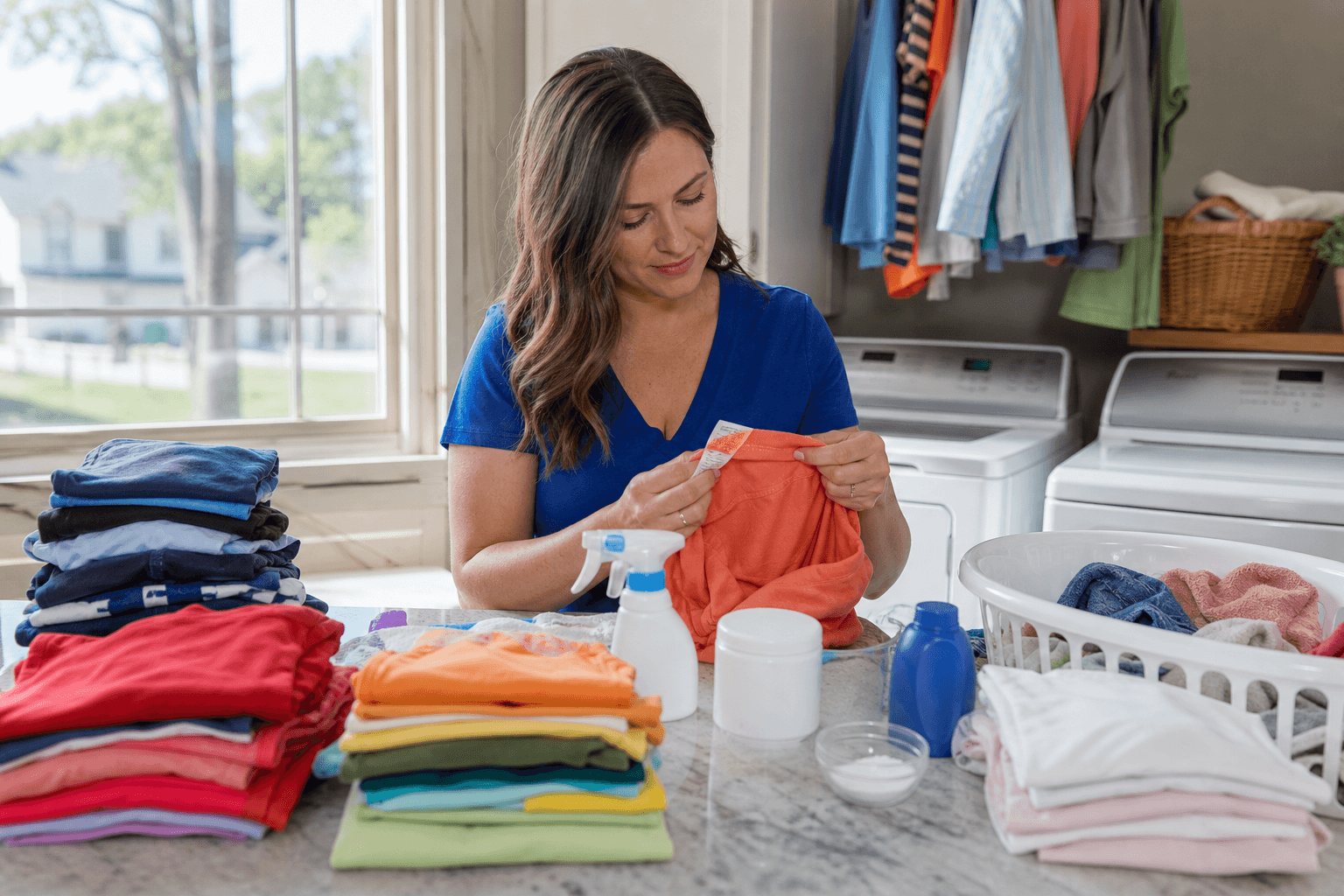
Start with care labels. They are easy to ignore, especially during a hectic week, but they exist for a reason. Some items can handle heat and regular agitation. Others need cold water, a gentle cycle, or air drying. A quick glance at labels helps you avoid accidents that shorten the life of school polos, knit tops, leggings, and uniforms.
Basic prep also matters. Turn knit items inside out to reduce pilling and surface wear. Zip zippers so they do not snag softer fabrics. Check pockets for paper, wrappers, tissues, and pens. Separate towels from lighter clothing because rough loops and lint can damage finer pieces. These steps take a minute, but they prevent a long list of annoying laundry problems.
Soil level should guide your wash groups too. Heavily soiled kids’ clothes need a different approach than lightly worn sleepwear or a T-shirt used for a couple of hours. Muddy pants, food-stained tops, and sports gear should be isolated early so they do not spread odor or grime through a regular load. Keep these items in a separate bin or bag until wash time.
Stain treatment is most effective right away. Waiting until laundry day gives stains time to sink deeper into fabric. A quick response works better and takes less effort. Dish soap can help with grease. Vinegar can help with certain odors and light stain issues. The key is speed. Treat the item while the spill or mark is still fresh whenever possible.
Keep a small stain station near your hamper area or laundry room if you have one. Stock it with a few basics so treatment is easy. A practical station may include:
- Dish soap
- Vinegar
- A soft brush or old toothbrush
- Clean cloths
- A stain queue bag
Parents often waste time rewashing clothes that were never prepped correctly in the first place. Better pre-wash habits reduce that problem. They also cut down on emergency clothing replacements caused by shrinking, fading, or rough treatment. In a family home, that saves real money over time.
The goal is not extra work. The goal is fewer mistakes. With a few repeatable habits, you get cleaner laundry, fewer ruined clothes, and less need to redo loads. That is a big win for any parent trying to keep up with a full schedule and a full house.
Wash Smarter, Not Longer: Cycle and Detergent Efficiency
Once your items are sorted and prepped, machine habits make the next big difference. A lot of families lose time and money by overloading the washer, using the wrong temperature, adding too much detergent, or rerunning loads that were never set up well. Better machine use means fewer repeat washes and more reliable results.
Begin with load size. A washer should usually be filled about three-quarters full, with space for items to move freely. Stuffing the machine to the top may feel efficient, but it often does the opposite. Water and detergent cannot circulate well, heavy pieces clump together, and clothes come out half-clean or still carrying odor. That leads to extra cycles, extra drying time, and more wear on fabrics.
Balanced loads matter too. Spread heavier items around the drum so the machine can spin evenly. That helps prevent noisy cycles, poor rinsing, and overly wet clothes at the end. If bedding or towels form one giant twist, separate them and rerun only if necessary rather than pushing every load to the limit.
Water temperature should match fabric type and laundry purpose. A practical temperature guide looks like this:
- Hot for whites and towels
- Warm for everyday wear like jeans and T-shirts
- Cold for delicates and darks to reduce fading
This approach protects clothes while keeping loads effective. Hot water has its place, especially for sturdier items like white towels. Cold water is useful for preserving darker colors and more delicate fabrics. Warm sits in the middle for daily basics that need solid cleaning without too much stress.
Quick cycles are another smart tool. They work best for lightly worn clothing, gym outfits, and basic tees that need refreshing rather than deep cleaning. Using a shorter cycle in the right situations saves water, cuts energy use, and gets clothes back into rotation faster. It also prevents over-washing items that do not need a long, heavy cycle.
Detergent use deserves attention as well. More soap does not mean cleaner clothes. Too much detergent can leave buildup, trap odors, and make rinsing harder, especially in packed family loads. Pre-measured pods or strips help keep amounts consistent. They are fast, easy to grab, and useful when several family members share laundry duties.
Many parents also get better fabric results by skipping standard fabric softener on kids’ clothes. A vinegar rinse can work as a simple alternative for softness and odor control without heavy residue. That can be especially useful for activewear, towels, and everyday clothing that needs to stay absorbent and comfortable.
According to Maytag, basic laundry tips like using the right cycle and following smart washing habits help protect clothes and improve routine efficiency. That lines up with what many families learn the hard way: better settings save both time and clothing. Washing smarter is less about doing more and more about choosing the right setup the first time.
Dry Faster and Fold Without Backlogs
For many families, washing is not the real problem. Drying, folding, and putting clothes away are where the system breaks. Clean laundry piles up in baskets, on couches, and at the foot of beds because the final steps feel repetitive and easy to delay. The answer is a simple finishing routine that keeps laundry moving.
Start with drying habits that improve speed without overworking the machine. Shake clothes out before putting them in the dryer. That reduces wrinkles, separates stuck fabric, and helps air move more freely around each item. Dryer balls can also improve airflow and help loads dry faster. They are especially helpful with towels, mixed basics, and kid-heavy loads that would otherwise bunch together.
Bulky items should be dried separately when possible. Bedding, blankets, and thick towels hold moisture longer than lighter clothes and can slow the whole load. Running them on their own often shortens dry time and prevents the common problem of having half the load dry and the other half still damp.
Once the dryer stops, move straight into a repeatable folding flow. The easiest four-step system is simple:
- Wash
- Transfer
- Fold
- Put away
Most laundry systems stall at folding or putting away. That is where parents should focus their fixes. If clean baskets sit for days, shorten the distance between the dryer and the folding area. Fold one load before starting the next. Use a timer if needed. Pair folding with something pleasant like music or a short show, but keep the rule firm: a load is not done until it is put away.
Individual baskets help close that loop. Give each family member a clearly marked basket for clean clothes. Once items are folded or grouped, they go into the right basket right away. This cuts down on random mixed piles and makes handoff simple. A child or teen can take one basket to their room instead of sorting through a shared mountain of clean clothes.
Ownership matters here. Kids who are old enough to dress themselves are usually old enough to help put away simple folded items. Teens can handle the full process from transfer to fold to drawer. Parents often hold onto every step because it feels faster in the moment, but shared finishing tasks reduce long-term clutter and teach responsibility.
The final goal is to stop clean laundry from becoming tomorrow’s mess. A strong finish routine protects the work you already did. It also makes mornings easier because clothes are where they belong, matching items stay together, and no one is digging through baskets looking for one sock or one clean shirt.
Turn Laundry Into a Shared Family System
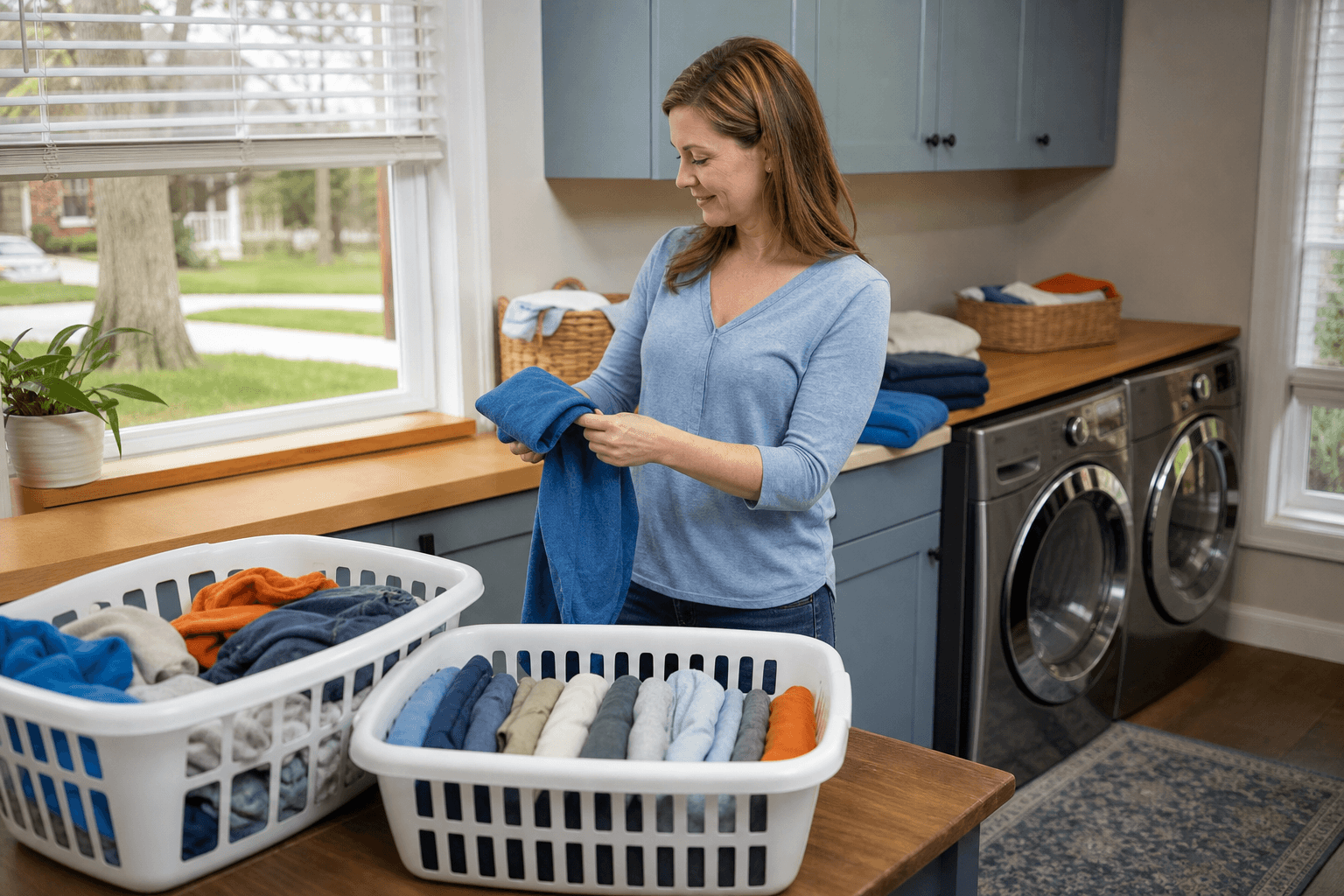
Laundry becomes much easier when it stops being one person’s invisible job. In many homes, one parent carries the full mental load: noticing what is dirty, sorting it, washing it, drying it, folding it, and putting it away. That setup leads to burnout fast. A shared family system spreads the effort and makes routines easier to maintain during busy weeks.
Start with age-appropriate tasks. Younger children can sort clothes into the right bins, match socks, and carry small items. Older kids and teens can transfer loads, start the washer, fold basics, and put their own clothes away. The point is not perfect results. The point is regular participation that reduces pressure on the parent who usually does everything.
Simple task examples work well:
- Ages 4–7: sort by color, place items in bins, carry pajamas
- Ages 8–12: match socks, fold towels, help transfer loads
- Teens: run loads, treat stains, fold clothes, put away laundry
Make participation easy by removing friction. Skip hamper lids if kids never use them. Put hampers in every bedroom so dirty clothes do not end up on floors. Add stickers or color labels to bins so younger kids can follow the system without reading long instructions. The less effort a task takes to start, the more likely your family is to stick with it.
Bedroom-specific hampers can be a major help in large families. Each room becomes its own collection point, which means less hunting for dirty clothes and less resorting later. Combined with a category-based wash schedule, that setup can cut sorting time dramatically. It also helps parents spot volume patterns, such as one room that generates most of the sportswear or one child who burns through towels faster than everyone else.
Communication helps this system stay consistent. Post a simple weekly chart on the fridge or inside a laundry closet. List laundry days, who transfers loads, who folds towels, and when baskets need to be put away. Families do better with visible routines than with spoken reminders that get lost in the rush of the day.
Parents should also resist redoing every imperfect task. If a child folds a shirt badly but puts it away, that is still progress. If a teen sorts a load correctly but forgets one step, coach them and move on. A family system grows through repetition. If every helper gets corrected for every detail, they are less likely to keep helping.
Shared laundry habits teach responsibility, time management, and care for personal belongings. Those life skills matter far beyond chores. More importantly for tired parents, a shared system creates relief. Laundry stops living in one person’s head and starts functioning as a routine the whole house understands.
Smart Solutions for Large Families and Full-Time Working Parents
Busy Maywood families often need laundry systems that work under pressure. If both parents work full-time, schedules may shift weekly. If the household is large, clothes can pile up faster than a single evening routine can handle. In these homes, the goal is not a picture-perfect routine. It is a stable system that keeps backlog from getting out of control.
One-load-per-day systems are often ideal for working parents. You start a load at the same point in the day, such as before work, after dinner, or right after the school run. This prevents accumulation and makes the task feel manageable. Even if the load is small, the consistency keeps laundry moving instead of waiting for a crisis weekend.
Batching by category also helps large households stay ahead. If all towels are washed early in the week, there is no panic about clean bath linens on Friday night. If uniforms are handled midweek, mornings feel less rushed. Predictable categories remove guessing and lower the chance of finding out too late that the one needed item is still dirty.
Families with several children can also create color systems that simplify every step. Use one label color per child on baskets, mesh bags, and shelves. Add matching stickers to drawers if needed. This makes clean laundry distribution much faster and helps kids identify their own items without digging through shared piles.
Working parents benefit from “minimum effective” laundry habits. That means focusing on the few actions that prevent backup:
- Start one load daily or every other day
- Pretreat stains immediately
- Sort at drop points, not on wash day
- Fold before bedtime or right after drying
- Assign clear family ownership for put-away steps
Another strong move is preparing for busy seasons before they hit. Back-to-school weeks, sports seasons, weather changes, and holiday travel all increase clothing volume. Add a backup laundry day during those periods or reduce pressure by simplifying wardrobes for a while. Fewer outfit changes and more repeatable basics can make a noticeable difference.
Keep your system flexible enough for real life. A sick child, overtime shift, or unexpected school event can throw off a perfect plan. That does not mean the system failed. It means the system should absorb bumps without collapsing. A good routine gives you recovery options, such as a catch-up day, a backup hamper category, or a quick local overflow solution when needed.
Parents who work long hours do not need more guilt about unfinished chores. They need systems that protect their energy. A smart laundry routine does that by reducing decisions, shortening task time, and making sure everyone in the house contributes in ways they can handle.
When Home Systems Aren’t Enough: Smart Maywood Options
Even the best home setup has limits. Some weeks bring extra bedding, muddy sports uniforms, guest laundry, or a broken appliance. In those moments, smart overflow options can keep your whole system from falling apart. That is where local support becomes useful for families who need to catch up without losing an entire day.
Large-capacity laundromat machines can be a practical choice for oversized loads like comforters, blankets, and several sets of towels. Instead of running many small home cycles, you can finish bulk items faster in fewer washes. This can be especially helpful during seasonal bedding changes or after illness moves a lot of linens into rotation at once.
Parents who worry about cleanliness should look for facilities that appear clean, organized, and well maintained. A better environment can help reduce concern about shared equipment while giving you access to machines that handle heavy loads more efficiently than smaller home units. If your washer at home takes multiple rounds to finish one bedding reset, larger machines can offer real time savings.
For self-service overflow days, a nearby self-serve laundromat can help you clear backlog quickly, especially when several bulky loads have piled up at once. This works best as a strategic tool, not a replacement for your home system. Use it for the loads that benefit most from extra capacity, then return to your regular weekly rhythm.
Some families also benefit from occasional support during especially packed weeks. If your schedule is overloaded with work, school events, and appointments, using a wash and fold service once in a while can free up time and reduce stress. This can be a smart move during life transitions, home repairs, or weeks when every evening is already full.
If your main challenge is knowledge rather than volume, regular learning can sharpen your routine. Practical laundry advice, equipment ideas, and home care tips from helpful reading can support the system you are building. A quick visit to helpful laundry blogs can give you fresh ideas for organizing loads, handling stains, or improving your weekly flow.
At home, equipment upgrades may also be worth considering if laundry demand is constant. Family-sized washers reduce the number of cycles needed each week. That can lower wear on the machine and shorten the total time spent managing loads. If an upgrade is not possible yet, focus on getting the most from your current machine through proper load sizing and better scheduling.
Cold washes and well-sized loads can also help lower utility bills without sacrificing cleanliness for many everyday items. Vinegar in rinse cycles offers a simple softening option for families trying to avoid extra product buildup. These choices are practical, low-cost adjustments that fit well into a busy family system.
The key is using outside help strategically. Overflow tools are most effective when they support your routine instead of replacing it. A strong home system remains the base. Local options simply keep you moving during the weeks when life gets heavier than usual.
A Simple System That Actually Sticks
The best laundry routine for Maywood families is usually the simplest one that can survive a busy week. That means a steady schedule, sorting before wash day, smart machine habits, and clear family ownership from start to finish. Once those parts are in place, laundry stops feeling like a random emergency and starts acting like a normal household rhythm.
The formula is straightforward: consistent schedule plus pre-sorting plus shared responsibility. That combination cuts clutter, protects clothes, and reduces the mental load that often falls on one parent. It also helps kids build useful habits, because they can see where dirty clothes go, when loads happen, and what they are expected to do after drying.
You do not need to rebuild your whole system in one weekend. Start with one upgrade this week. Install multi-bin hampers in the rooms where clothes pile up most. Assign laundry days by category. Create a stain queue bag. Give each child a clean basket and a simple put-away rule. Pick the change that removes the biggest source of friction in your home and make that your first move.
If your family hits an overflow week, use local Maywood support wisely for oversized loads or backup days. That kind of flexibility keeps one rough week from turning into a month-long laundry pileup. The strongest systems are the ones that can bend without breaking.
Laundry mastery is really about rhythm, not perfection. Once your family has a repeatable flow, the mountain gets smaller. The piles stop spreading. Clean clothes return to drawers faster. And the task that once felt endless becomes one more routine your household can handle with far less stress and a lot more control.