
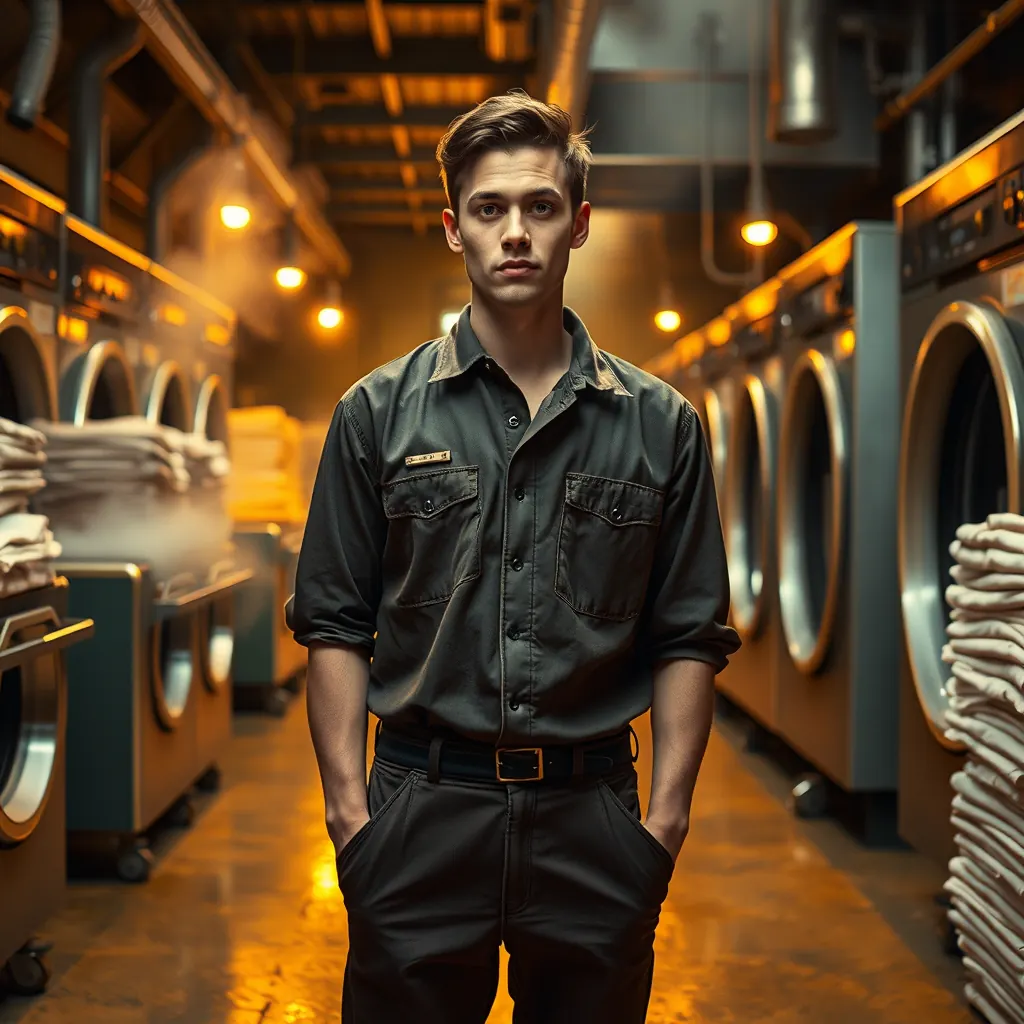
Before the mills roared each morning, Youngstown workers carried another burden besides steel: oil-soaked overalls, smoke-stiff shirts, and canvas jackets that had to be clean enough for the next shift. Truman Laundry stood in that gap between labor and survival, serving as a fast, trusted support system for a city shaped by Republic Steel, U.S. Steel, immigrant neighborhoods, and the relentless pace of industrial life.
Key Takeaways
- Truman Laundry helped keep Youngstown’s industrial workforce ready for daily mill life.
- Its services went beyond washing to include pressing, mending, and deep stain removal.
- The business reflected the values of family, reliability, and neighborhood trust.
- As the steel industry declined, Truman Laundry faced the same pressure felt across the city.
- Its story reveals how small local businesses sustained working-class dignity and connection.
The Smell of Steam and Steel: Why Truman Laundry Mattered From Day One
Picture a steelworker before sunrise. He steps off a cold Youngstown sidewalk, arms loaded with oil-soaked overalls and a shirt marked by soot, sweat, and metal dust. He is not dropping off ordinary laundry. He is handing over the clothing that protects his body, signals his trade, and helps him earn a wage. By the next day, he needs those garments back in usable shape. In a city driven by blast furnaces and mill whistles, that kind of service was not a luxury. It was a daily necessity.
Truman Laundry mattered because it sat close to the real demands of industrial life. Youngstown’s steel economy produced jobs, noise, heat, and grime on a huge scale. Mill workers came home with denim, canvas, and uniforms packed with grease and smoke that ordinary home washing could not always handle. A family laundry near worker foot traffic could step into that gap with speed, skill, and consistency. That role gave Truman Laundry a practical value that ran deeper than fresh collars or pressed shirts. It helped keep a workforce moving.
Yet the story reaches beyond machines and stained sleeves. This laundry offers a window into immigrant neighborhoods, family labor, union culture, and the local habits that held Youngstown together. Its rise likely followed post-Depression recovery or wartime demand, when industrial output surged and workers needed dependable garment care at fair prices. Over time, Truman Laundry became part business, part gathering place, and part neighborhood fixture. To understand it is to understand how many small enterprises quietly supported America’s manufacturing centers.
Built for the Mills: How Truman Laundry Emerged in a City of Soot and Steel
Youngstown did not create businesses like Truman Laundry by accident. The city’s working-class districts formed around the needs of the steel industry. Streets near Republic Steel and U.S. Steel filled with boarding houses, ethnic churches, small groceries, taverns, machine shops, and service businesses that matched the schedule of industrial labor. A laundry set near those routes made practical sense. Workers could drop off clothing on the way to a shift or collect it on the trip home.
The founders were likely connected in some way to the same immigrant labor communities that powered the mills. That mattered. Families who knew factory life understood that workwear was different from household linen. Heavy fabrics absorbed grease. Smoke lingered in collars. Metal dust embedded itself in seams. A normal wash-and-fold operation would struggle with that load. Truman Laundry seems to have begun with a simple but powerful idea: solve a harsh, recurring problem for people who could not afford wasted time or ruined gear.
Its opening period likely fell during years marked by recovery or wartime demand. In either case, the context points to a city with rising industrial pressure and workers who needed reliable support services. Starting a laundry in that environment still carried risk. Economic instability affected every working-class household. Wartime could tighten access to soap, fuel, replacement parts, and textiles. New businesses also had to convince a careful customer base that the cost was worth it. In neighborhoods where every dollar mattered, trust had to be earned one bundle at a time.
Early success would have depended on several practical choices. The most important likely included the following:
- Location near mill routes and worker housing.
- Pricing low enough for regular use.
- Speed that matched shift work.
- Skill in handling industrial dirt.
- Reputation built through word of mouth.
Because Youngstown workers were skeptical for good reason, Truman Laundry had to prove itself fast. A missed pickup could affect a shift. A shirt returned with lingering odor could embarrass a worker. An overall damaged in the wash could cost someone real money. Reliability became the strongest sales pitch. Over time, that reliability would turn a neighborhood service into something closer to a local institution.
Inside the Operation: A Facility Engineered for Dirt, Grease, and Grit
A business serving steelworkers needed equipment that could take punishment. Truman Laundry was likely arranged with clear zones for sorting, washing, drying, pressing, and mending. This kind of layout kept workflow efficient and reduced mistakes. Workers could move garments through a repeatable process without mixing lightly soiled shirts with deeply stained overalls. In a high-volume setting, organization was part of the product.
The washing area would have carried the heaviest burden. Industrial-scale machines had to manage thick fabrics, dense loads, and grime far tougher than ordinary household dirt. High-capacity tumblers gave the operation the force needed to loosen oil, soot, and embedded residue. Heat and detergent mattered, but so did timing. If garments stayed too long, they could wear down. If cycles ran too short, stains and odor remained. Experienced operators learned that fabric care in a mill town was equal parts chemistry, judgment, and routine.
Nearby, drying systems had to handle bulk without shrinking or stiffening workwear beyond use. Heavy denim and canvas respond differently than lighter cotton. Flame-resistant gear, if handled at all, would require extra care. Pressing stations then took over for uniform shirts, collars, and other garments that needed structure. A starched shirt may seem like a small detail today, yet in many working households it signaled discipline, dignity, and readiness. Looking presentable still mattered, even in rough industries.
Mending areas gave the business another advantage. Torn seams, broken buttons, and frayed cuffs were common in industrial work. On-site repair saved customers a second errand and extended the life of expensive clothing. For cost-conscious families, that service could make the difference between managing a budget and falling behind. In practical terms, Truman Laundry likely helped stretch paychecks as much as it cleaned fabric.
The facility’s location near the mills sharpened every part of the operation. Shorter distance meant faster turnaround. It also made communication easier. Customers could stop in, ask questions, or explain a tough stain face to face. That close link between shop and street set family laundries apart from distant services. They worked within the same urban rhythm as their clients.
Across the decades, the machinery almost certainly changed. Early systems may have leaned more on manual handling and mechanical power. Postwar upgrades likely introduced more efficient electric machinery, improving speed and consistency. Even so, the logic of the place probably stayed the same: sort carefully, wash hard, finish fast, and return each item ready for work. A storefront photo, an image of humming machines, or a shot of racks filled with uniforms would tell this story at a glance.
More Than Clean Clothes: Services Built Around Industrial Life
Truman Laundry thrived because it answered the specific needs of Youngstown’s workforce. A mill hand did not need fancy packaging or delicate perfume. He needed a shirt that no longer smelled like stale smoke, overalls cleared of greasy buildup, and a jacket that came back intact. The core services likely centered on washing, pressing, and repair of overalls, denim, canvas jackets, and work uniforms. Each item carried a different set of problems. Heavy cotton trapped sweat. Canvas held grime. Uniform shirts needed a cleaner finish.
Odor removal was likely one of the hardest tasks. Industrial labor leaves layers of scent that settle deep into fibers: sweat from long shifts, oil from machinery, and smoke from production environments. Removing those smells required more than a single wash. Truman Laundry likely developed repeat methods for soaking, treating, and reprocessing garments until they were fit to wear again. The workers behind the counter probably knew by touch and smell what each fabric needed.
Another challenge came from thick and specialized materials. Workwear had to endure abrasion, heat, and repeated use. Some garments could not be treated like ordinary household items. A family-run operation serving industrial clients had to understand where pressure, heat, and chemical treatment might help and where they might harm. That knowledge added quiet value to the service. Customers may not have used technical language for it, but they understood the result: clothes lasted longer.
Pricing had to fit a working-class budget. Truman Laundry likely offered either per-pound rates or some version of a regular weekly arrangement for repeat customers. That structure would make sense in a city where schedules repeated and laundry needs were predictable. Workers on fixed routines valued clear costs and dependable timing. Affordability and consistency often mattered more than variety.
Reliability, though, was the feature that tied everything together. Shift work leaves little room for delay. A same-day or next-day turnaround aligned with real life in the mills. If the shop promised a bundle by evening, that promise had to hold. A laundry that failed on timing lost more than a customer. It lost credibility.
The differences between Truman Laundry and common alternatives become clear in a side-by-side view:
- Heavy-Duty Wash: Truman Laundry used industrial machines for oil and grime, while hand washing at home often fell short.
- Starching and Pressing: Truman Laundry offered a professional finish, while home ironing took time many workers and families did not have.
- Mending: Truman Laundry handled repairs on-site, while do-it-yourself fixes were basic and often temporary.
- Turnaround Time: Truman Laundry could match shift schedules with same-day availability, while other options were slower.
That service model reveals an important truth. The laundry was part of Youngstown’s labor system in the same way lunch counters, bus lines, and corner stores were part of it. Each helped workers stay ready for the next day. Truman Laundry happened to do so through soap, steam, starch, and repair thread.
The Truman Family: Generations Behind the Machines
Family businesses often survive because every member carries a piece of the load. Truman Laundry appears to fit that pattern. Grandparents, parents, and children likely moved through the same building with different duties and shared memory. One person handled the front counter. Another ran machines. Someone else pressed shirts, managed repairs, tracked payments, or kept books late into the evening. This kind of division made the operation flexible and kept labor costs within reach.
That structure also gave the shop its emotional core. A child growing up in such a place would remember the smell of detergent and steam long after the machines went quiet. The rhythm of tumblers, the hiss of pressing equipment, and the sight of tagged garments stacked for pickup would become part of family identity. These are the details that memoirs tend to preserve because they hold daily life in a way official records rarely can.
Role-sharing across generations taught skills as well as values. Younger relatives learned how to sort by fabric, identify difficult stains, greet customers, and fix small garment failures before they became bigger ones. They also learned the unwritten rules of neighborhood business: remember names, extend grace when times are rough, and never make a worker feel small for bringing in a stained load after a punishing shift. Such habits built a reputation stronger than any advertisement.
The family’s presence likely stretched beyond the shop walls. In many industrial neighborhoods, small business owners were tied into churches, unions, school events, and local gatherings. They sponsored social functions, donated quietly, or stayed informed about layoffs and strikes because their customers lived those realities. A family laundry could become a trusted place in part because it belonged to the same web of local relationships as the people it served.
That closeness changed customer service in meaningful ways. If a regular lost hours at the mill, the counter staff might hear about it before the wider city did. If a strike loomed, laundry volume could shift before newspapers captured the full picture. By listening and responding, the Truman family did more than run machines. They absorbed the pressure of community life and made their business responsive to it.
For many readers, this may be the most relatable part of the story. Young adults today often hear about industry in abstract terms: production, decline, wages, policy. But family businesses show how those forces entered kitchens, storefronts, and childhoods. In Truman Laundry, work and home likely overlapped every day. That overlap gave the place a human scale that large companies rarely achieve.
A Day at Truman Laundry: Rhythm, Labor, and Human Connection
The day probably began early. Before sunrise, workers on the way to a shift stopped by with bundles of stained clothes. The counter exchange was brief because the hour was brief. Names were recognized. Occupations were known. A regular might not need to explain much at all. The clothes themselves told the story: heavy soot from one mill job, bright rust from another, sweat and salt from a long summer run. Morning drop-offs set the pace for everything that followed.
Once the front door settled, sorting began. Garments had to be separated by fabric, weight, color, and level of soiling. This was not busywork. A denim overall loaded with grease demanded a different process than a starched work shirt. Skilled staff likely checked pockets, removed loose debris, and pretreated difficult spots before the wash cycle even started. Such routines saved time later and protected the machinery.
By midday, the shop would hit its loudest stretch. Washers and dryers ran constantly. Steam rose from pressing areas. Repair tasks filled gaps between machine cycles. Workers moved in practiced patterns because hesitation slowed the whole line. In a family operation, coordination was learned by repetition. People knew where to stand, when to step in, and which jobs needed the most attention. The place likely felt busy, hot, and focused.
Finishing work mattered as much as washing. A garment returned wrinkled or half-dry could frustrate a customer as much as one returned dirty. Pressing and folding created the final impression. Tagged bundles were prepared for pickup with speed in mind. In a shop serving industrial schedules, the evening rush had to move quickly.
Late in the day, customers returned. This was when the human connection became most visible. People talked at the counter about shift changes, rumors from the mill, family concerns, prices, and neighborhood news. A laundry like this could function as a minor information exchange. Workers might hear about hiring, layoffs, union meetings, or local events while collecting a clean stack of clothes. These interactions gave the shop a social role beyond its core service.
Even closing time did not mean the work was done. Machines needed maintenance. Orders had to be checked. Bookkeeping waited. The next day’s loads might be staged before anyone locked the door. This after-hours labor often goes unnoticed in stories about local business, yet it is where much of the discipline lives. Family-run operations survive because someone always stays a little longer.
Seasonal shifts would also shape the workflow. In winter, mud, salt, and heavier fabrics created more difficult loads. In summer, the problem shifted to sweat, odor, and lighter but heavily worn garments. The shop had to adjust without losing pace. That ability to respond to the calendar made Truman Laundry a true service business rather than a static operation.
The Laundry as Lifeline: Social and Economic Impact on Youngstown
Small businesses often matter most where life is hardest. In Youngstown, a place tied to industrial labor, Truman Laundry likely served as a quiet lifeline for workers and their families. Clean workwear helped people show up ready, maintain self-respect, and avoid spending precious off-hours scrubbing heavy garments by hand. In working-class households, time and energy were limited resources. A service that gave some of both back had real economic value.
Employment within the laundry also counted. Family members were joined by local staff who learned stain treatment, machine operation, fabric care, and customer service. These jobs may not have carried the public attention of mill work, yet they were steady and useful. For some households, work at a laundry could provide crucial income when industrial employment was unstable or physically inaccessible. Support businesses helped spread opportunity across the neighborhood economy.
Socially, the shop likely functioned as a community hub. Places where people return every week naturally gather information. News moved across counters long before it appeared in formal channels. In times of layoffs or strikes, that flow of conversation became even more important. Someone might hear about who was hiring, who needed help, which church was organizing support, or where a union meeting would be held. A laundry could never replace a union hall, but it could reinforce the same social bonds.
There was also a question of dignity. Industrial work was physically punishing and often dangerous. Having clean, mended clothes ready for the next shift helped workers preserve a sense of order in lives shaped by hard labor. This mattered at home too. Families dealing with long hours and limited money still wanted children to see stability, routine, and care. Truman Laundry played a role in that invisible emotional economy.
Youngstown was not unique in needing businesses like this. Similar laundries in Pittsburgh and Cleveland supported factory districts across the Rust Belt. The pattern repeats in many industrial cities: where heavy labor gathers, nearby service businesses emerge to support the workforce. Yet local details still matter. Truman Laundry belonged to Youngstown’s own rhythm, neighborhoods, and memory. That is what gives its story local weight.
Seen this way, the laundry stands as a reminder that industrial history is never just about steel output or corporate decisions. It is also about the supporting cast: repair shops, grocers, diners, transit workers, and laundries that made daily labor possible. Remove those support systems, and the image of industrial strength starts to look much less complete.
When the Mills Fell Silent: Challenges, Adaptation, and Decline
The 1970s changed Youngstown in painful ways. As the steel industry contracted, entire neighborhoods felt the shock. Mill closures reduced jobs, weakened local spending, and disrupted routines that had shaped the city for generations. For a business like Truman Laundry, the effect would have been immediate. Fewer workers meant fewer bundles of overalls and uniforms. A laundry built around industrial volume could not ignore that kind of drop.
Another pressure came from inside the home. By the late twentieth century, more households had access to washers and dryers. These machines could not always handle the toughest industrial loads well, but they reduced the need for regular outside service. Families trying to cut costs often brought more laundry work back into their own space. That shift changed the math for neighborhood laundries across the country.
Competition likely intensified too. Larger operations could spread costs more widely. New consumer expectations changed service habits. A family-run industrial laundry had to decide whether to hold tightly to its original niche or widen its offerings. Adaptation may have included taking on more household laundry, broadening pressing services, or updating equipment after World War II with improved electric systems. Such changes could help, but they also required investment at a time when the customer base was shrinking.
The hardest challenge may have been emotional as much as financial. Businesses like Truman Laundry were woven into the identity of the neighborhoods they served. As mills closed, customers did not just disappear as transactions. They disappeared as familiar faces, family stories, and daily habits. The loss of an industrial base can hollow out the social ecosystem around it. A laundry counter that once heard shift talk and union chatter might fall increasingly quiet.
Eventually, the business likely closed or shifted into a different form. The exact details may survive best through oral history, family memory, or local preservation efforts. What remains at the original site today might be another business, an altered building, or a vacant lot that reveals little on first glance. Yet the disappearance of a storefront does not erase its role in the city’s past. That is why preservation matters.
Oral histories, museum objects, photographs, and neighborhood storytelling keep this kind of history alive. They preserve what official accounts often miss: how a place smelled, sounded, and felt; how workers depended on it; how families built a life around it. In towns marked by deindustrialization, memory becomes a form of civic repair. It helps people name what was lost and why it mattered.
From Truman Laundry to Modern Uniform Giants: What Changed and What Stayed the Same
Industrial garment care did not disappear when family laundries faded. Larger companies such as Cintas and UniFirst now serve many of the same practical needs. They wash uniforms, handle pickups, and manage large client accounts with automation and regional scale. In that sense, the service Truman Laundry provided still exists. Workers in many industries still need clean, safe, reliable clothing for the next shift.
What changed is the structure. Modern uniform firms operate through broader logistics systems, stronger standardization, and corporate management. Family shops like Truman Laundry were more intimate. They knew individual customers, local schedules, and neighborhood pressures in a direct way. That closeness shaped the service itself. A local operator could adjust quickly for a regular customer, hold a conversation at the counter, or extend small flexibility in a difficult week. Scale brings efficiency, but it often reduces personal connection.
Technology is another major difference. Today’s operations use advanced tracking, uniform programs, and highly automated washing systems. By contrast, earlier laundries relied more heavily on staff memory, manual organization, and in-person trust. Yet one element remains constant: dirty work still creates demand for garment care that home equipment cannot fully replace. That continuity links Truman Laundry to modern providers even across decades of change.
The name itself may also spark curiosity. If readers wonder about businesses sharing the Truman name today, any connection may be coincidence, partial overlap, or something preserved in community memory rather than corporate continuity. The available brief does not confirm a direct line. What matters more is how names survive in local conversation. A familiar business name can outlast the building, the sign, and even the trade itself.
For visitors interested in tracing this history, Youngstown still offers valuable paths. A trip focused on steel museums, labor history sites, and surviving industrial neighborhoods can help place Truman Laundry in context. Looking at former mill corridors, worker housing, and nearby commercial strips makes it easier to imagine why such a laundry mattered so much. The city’s industrial footprint tells the larger story that the storefront once served.
Readers curious about related historical business threads may also glance at Truman and Grinnell as a naming reference noted in the brief, though the laundry’s legacy stands on its own as a Youngstown story. The important point is not brand continuity. It is the broader lesson that service work has always sustained industrial labor, whether delivered by a local family shop or a national uniform firm.
Visual Storytelling and the Power of Remembering Place
Some histories are easiest to understand through images. Truman Laundry is one of them. A vintage storefront photo would immediately show scale, signage, and the kind of street life that surrounded the business. Family portraits could reveal pride, formality, and multi-generational involvement. Interior images of washers, pressing stations, and hanging garments would show that this was a place of constant motion, not a quiet backroom enterprise.
Before-and-after photographs of work clothing would be especially powerful. They would capture the transformation from stained, soot-marked garments to cleaned, wearable uniforms ready for another shift. That visual contrast explains the laundry’s purpose better than any sales pitch could. It reminds viewers that cleaning industrial clothing was skilled labor, not simple routine.
Maps can tell the story too. A local map showing Truman Laundry’s proximity to major mills, worker housing, and common foot routes would make its location strategy obvious. In industrial cities, geography shaped survival. Businesses succeeded when they fit the movement of workers through the day. A map can reveal that relationship at a glance.
A timeline would add another layer. Pairing Truman Laundry’s operation with the rise and fall of Youngstown steel would place the business inside larger economic shifts. Readers could see how post-Depression recovery, wartime production, postwar modernization, and 1970s decline likely affected the laundry’s customer base and machinery choices. Timelines help turn memory into context.
Audio and video could deepen that effect. Excerpts from memoirs or oral histories would bring back the sounds of the shop: doors opening before dawn, machines thumping, voices calling out orders, steam hissing from pressing stations. A filmed walk through historic Youngstown blocks could connect present-day streets to the vanished service economy that once supported mill life. For younger audiences especially, this kind of multimedia bridge can make labor history feel immediate rather than distant.
Why Truman Laundry Still Matters
Truman Laundry matters because it turns a big story into a human one. Many accounts of Youngstown focus on mills, strikes, closures, and industrial decline. Those topics deserve attention, but they can overshadow the smaller businesses that kept working-class life functioning day after day. A laundry that cleaned, repaired, and returned garments on time may seem modest beside a steel plant, yet it supported the people who made the plant run.
The business also reminds us that resilience often appears in ordinary places. A family behind the machines, a customer known by name, a shirt made wearable again before dawn—these details reveal how communities actually hold together. Care, consistency, and trust are not dramatic words, but they describe the practical values that sustained Youngstown through growth and hardship alike.
For young readers, this story offers a useful lens on labor history. Work is never only about the job site. It depends on networks of service, skill, family effort, and neighborhood exchange. Truman Laundry stood inside that network. It helped preserve dignity for workers, income for local families, and social connection in a city shaped by physical strain and economic risk.
Its memory deserves space alongside bigger industrial landmarks. If you know a family story about a local shop, a mill service business, or a neighborhood trade that kept your community going, share it. These stories fill the gaps left by official records. They also help cities like Youngstown remember themselves honestly. Industries fade. Buildings change. Yet the lives built around places like Truman Laundry remain essential to understanding America’s labor history.