
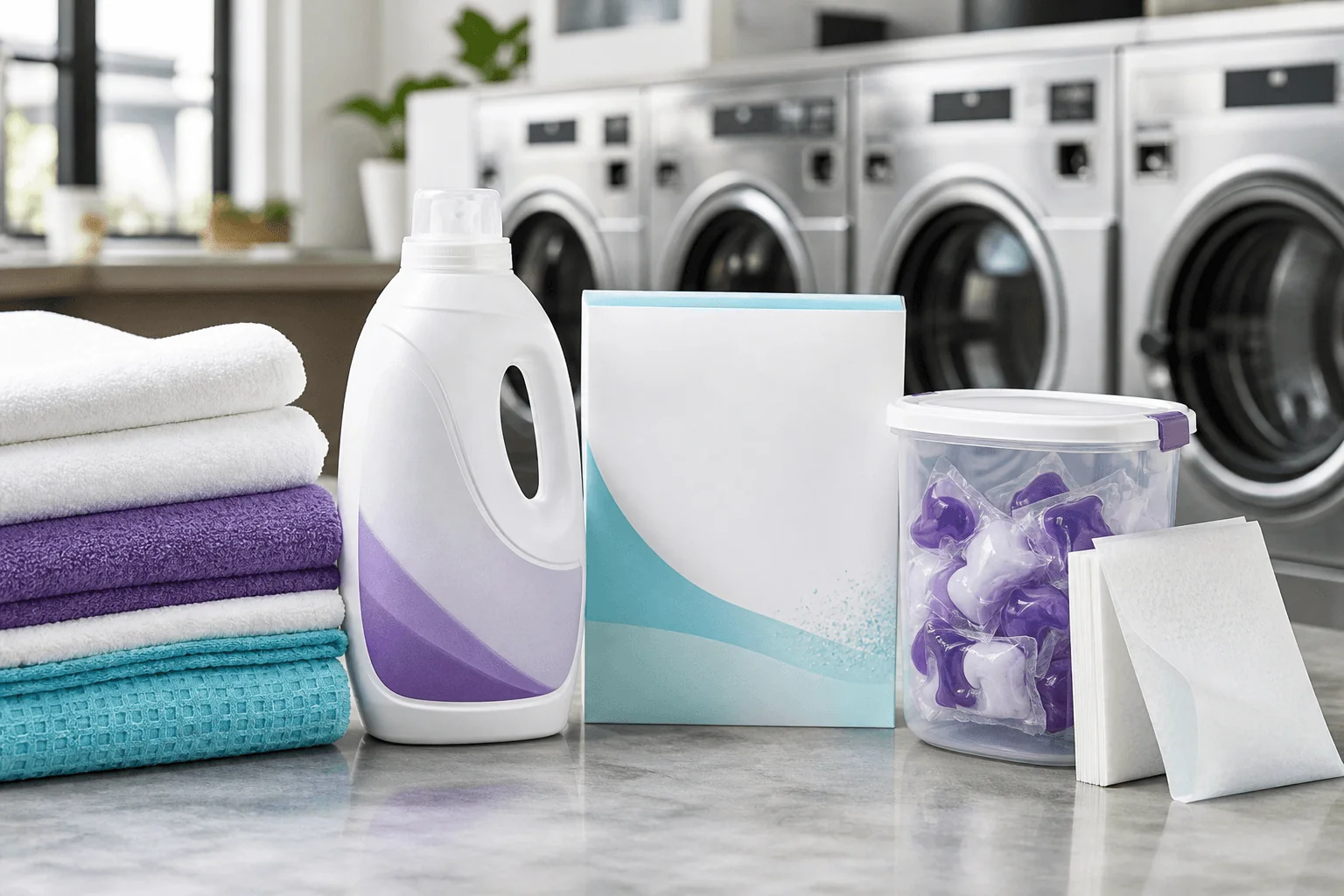
The best laundry detergent is the one that fits your washer, garments, usual soils, and budget at the labeled dose. Compare the exact formula rather than treating a brand name, premium price, or strong fragrance as proof of better cleaning. Start with care-label and machine requirements, then compare cost per usable load and the results that matter to your household.
Editorial update: This guide replaces unsupported product-winner rankings and references to Fresh Spin testing with a source-based comparison framework. It is not a Fresh Spin laboratory test or a claim that one detergent beats every alternative.
What should you check before choosing a laundry detergent?
Make a shortlist around the laundry you actually do, not the most dramatic promise on the package. A useful comparison starts with five questions:
- Will it work with the machine? Check the washer’s instructions and the detergent’s compatibility information.
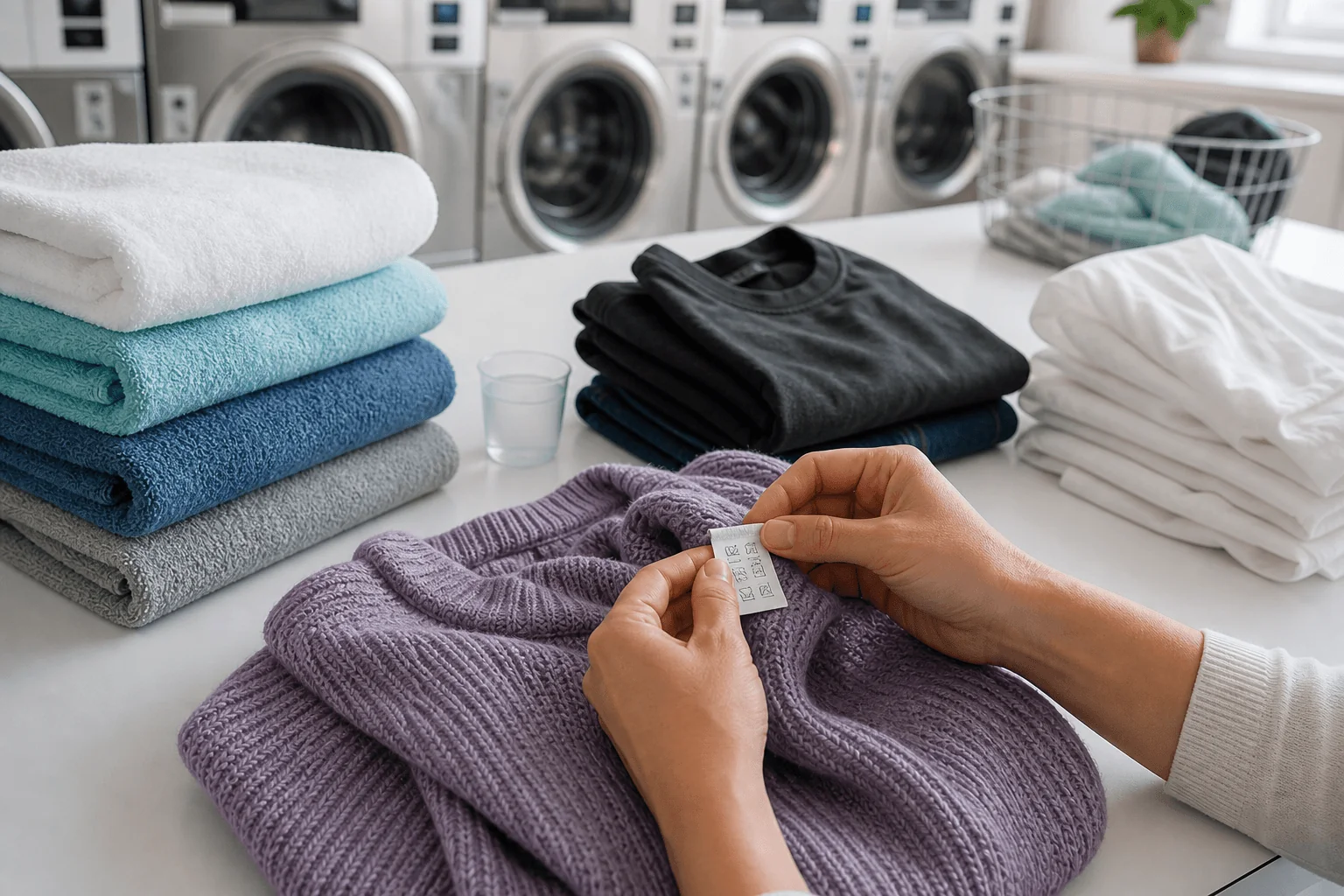
- Will it suit the garments? Read their care labels before choosing a product or wash process.
- What problem are you trying to solve? Write down the recurring issue, such as a particular stain, an unwanted scent, or an inconvenient measuring routine.
- What will a usable load cost? Compare the dose needed for your normal load, not just bottle price.
- Can you use and store it safely? Consider the package and your household’s storage arrangements before buying.
The American Cleaning Institute’s detergent guidance recommends following clothing care instructions and using the amount on the product label. Both overusing and underusing detergent can leave clothes less clean. That makes the label a better starting point than a universal rule such as a full cap for every load.
Which laundry detergents have a good brand reputation?
Reputation can help you form a shortlist, but it cannot establish a winner for a particular formula. A review of one liquid does not automatically apply to another formula or packet sold under the same name. This guide does not rank Tide, Persil, Kirkland Signature, Dirty Labs, or other brands without a comparable, current body of evidence.
When reviewing a recommendation, look for the exact product name, format, test date, and conditions. Was the reviewer comparing the same stain on the same fabric at the same dose? Did the review explain its limitations? An enthusiastic customer comment may describe a useful personal experience, but it does not settle a head-to-head performance question.
For your own shortlist, record three things beside each candidate: the reason you are considering it, the evidence supporting that reason, and the uncertainty that remains. For example, a clearly labeled fragrance-free formula may meet a stated preference, while a claim of superior stain removal still needs comparative evidence. Keeping those two judgments separate helps avoid buying a product for a benefit nobody has actually demonstrated.
Which laundry products offer good fabric care?
Start with the garment rather than a brand ranking. Check the care label for the permitted washing method, temperature, and drying instructions. Where a garment maker specifies a particular kind of cleaner or excludes a treatment, use that restriction to narrow your choices. A familiar detergent is not permission to ignore a garment’s instructions.
Separate your decision into two parts: choosing an eligible product and choosing an eligible process. A product could fit the machine but still be the wrong choice for an item with specialized care requirements. If instructions are missing or contradictory, check with the garment or detergent manufacturer before experimenting on a valued item.
How should you compare liquid, powder, and packets?
Use format as a practical decision, not a substitute for evaluating the formula. Compare how you will measure, carry, store, and use each eligible product.
- Liquid: Check the measuring marks and the dose for your load. Choose a package you can handle without making measurement difficult.
- Powder: Check the scoop instructions, machine compatibility, and product directions for the wash conditions you intend to use. Do not assume every powder has the same requirements.
- Packets: Check the labeled packet count and placement for your load and machine. Do not assume one packet suits every load, and do not substitute a generic placement rule for the manufacturer’s instructions.
Packets require particular care around children. The U.S. Consumer Product Safety Commission warns that liquid laundry packets can cause serious injury. Keep them sealed in their original packaging, locked away and out of children’s sight and reach; handle them with dry hands and do not let children handle them. Bringing loose packets in a food container sacrifices the original warnings and safe-storage information.
What does an HE washer change about detergent choice?
Use the detergent type required by the washer. The American Cleaning Institute explains that HE detergents are designed to be low-sudsing and quick-dispersing for high-efficiency washing. Excess suds can interfere with the washing action; more foam is not a useful cleaning score.
Read the instructions for the particular machine and product to determine dispensing and dose. Do not assume a dispenser compartment accepts every format. The ACI guide also cautions against mixing liquid and powder detergent in the same dispenser compartment because the mixture can cake or clog.
At a laundromat, check the machine’s posted directions before adding anything. This guide does not assert that every machine at Fresh Spin has the same detergent or dispensing requirements. For visit planning, see our self-serve laundry page and first-time laundromat checklist.
What premium laundry detergents offer good value?
Paying more only makes sense when the extra expense serves a need you can identify. Treat a premium candidate as a purchase decision with a stated purpose: a preferred format, a specific product feature, or a result you can assess. Do not use price itself as evidence of better cleaning.
Comparison method: package price divided by usable loads at the dose you actually need. Compare like-for-like load assumptions. A package’s headline load count is not automatically the number of your larger or more heavily soiled loads it will wash. When the label gives a liquid dose in milliliters, divide the bottle volume by that dose to estimate usable loads. For example, a hypothetical 2,000 mL bottle provides 50 loads at 40 mL per load, but only 25 at 80 mL per load. These are arithmetic examples, not dosing recommendations: use the dose on your exact product for your load and machine, and do not compare capfuls across different bottles.
For an illustrative calculation, not a current product price, a $15 package used for 50 loads costs $0.30 per load. A $12 package used for 30 comparable loads costs $0.40 per load. The cheaper package is not the cheaper load in that example. Replace both numbers with your own purchase price and label-based dose before deciding.
Also consider whether the package is a sensible commitment. Buying a smaller size first may be worth a higher unit cost when you have never used that exact formula. A bulk purchase is not useful savings if the product does not suit your household or storage space. Record repeat washes separately; do not assume detergent alone caused either an improvement or a problem.
How can you check environmental and fragrance claims?
A broad claim such as environmentally friendly is less useful than a specific, verifiable credential. EPA’s Safer Choice program evaluates ingredients and includes performance requirements. Its label is not a declaration that a product wins every cleaning comparison.
Fragrance-free and unscented are not interchangeable. EPA’s fragrance-free fact sheet (PDF) explains that fragrance-free products do not use ingredients to add or mask a scent, while an unscented product may contain ingredients that neutralize or conceal other ingredient odors. Also, the standard Safer Choice label alone does not establish that a detergent is fragrance-free: EPA’s program FAQ says qualifying fragrances are allowed. The additional Fragrance-Free Safer Choice label identifies products reviewed for that separate requirement.
To check a detergent, search the EPA product directory for the exact product and select its fragrance-free filter. Match the listed product name and company to the package you are considering, then read the fragrance-free field and any directory notes. Do not transfer a certification from one formula to another product sold by the same company. If the package wording or listing is unclear, ask the manufacturer before treating it as a verified fragrance-free choice. Keep this check separate from the garment, washer and dose requirements elsewhere in this guide.
Decide which claim matters to your purchase, then ask what verifies it. A packaging claim, a fragrance preference, and a cleaning-performance claim answer different questions. None should be used as a shortcut for the others. This guide makes no blanket claim that a particular format, ingredient origin, or brand is the most environmentally friendly.
How can you compare results without inventing a winner?
Use a simple household observation sheet when you change products. This is a decision aid, not a laboratory experiment and not proof of brand superiority.
- Define the issue: Write down what you want to improve before buying. Avoid a vague goal such as better laundry.
- Record the conditions: Note the exact product, labeled dose, load type, machine, and cycle.
- Record what changed: Include pretreatment, load size, and drying changes so that you do not credit detergent for everything.
- Assess the result: Note whether the original issue remains and whether the product fits your handling, scent, and cost preferences.
- Keep the conclusion narrow: A useful outcome for your ordinary loads is a reason to consider continuing, not evidence that every household will get the same result.
If results are disappointing, first recheck instructions and the conditions you recorded. Changing several products and settings at once makes it harder to understand what helped. Avoid turning one difficult item into a reason to buy a large new supply immediately.
Common detergent questions
Is there one best detergent for ultimate clean clothes?
This guide does not establish a universal winner. Use the machine and garment requirements to identify eligible products, then compare the exact formulas on your priorities. Claims about superior cleaning need evidence tied to the products and conditions being compared.
Should I use more detergent when clothes are dirty?
Use the product’s directions for the load and soil level. Do not add an arbitrary extra cap or packet. If you cannot interpret the label, ask the manufacturer rather than guessing.
Does a premium price prove better results?
No. A price tells you the purchase cost, not the outcome of a controlled comparison. Check what additional feature you are paying for and whether it addresses your actual need.
Can I bring laundry to Fresh Spin instead of washing it myself?
For a hands-off alternative, Fresh Spin offers in-store drop-off wash-dry-fold service; customers bring laundry to the store and return to collect it. Review the service page and Fresh Spin FAQ, or use the contact page to confirm requirements before bringing an item with special care needs. This guide does not promise a particular detergent, stain-removal result, or turnaround.
Images illustrate detergent and fabric-care decisions; they are not photographs of Fresh Spin’s facility or evidence of product testing.


