
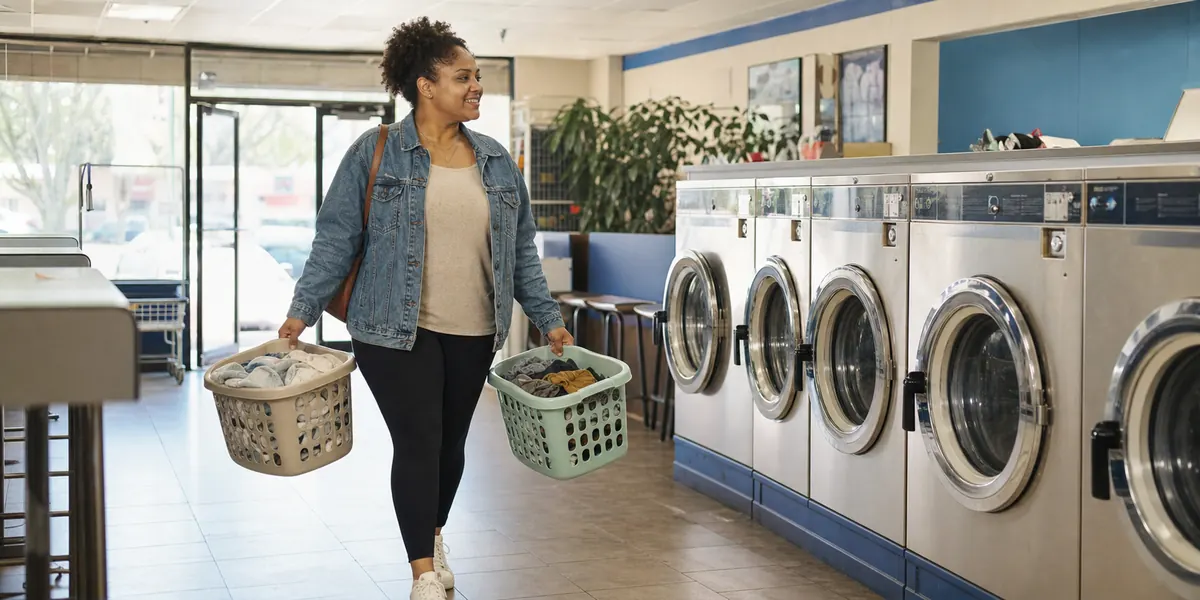
Your first trip to a laundromat is much easier when you arrive with sorted clothes, a simple supply kit, and a plan for each load. This first-time laundromat checklist explains how to prepare for a self-serve visit in Independence, Missouri, without guessing about care labels, machine choices, detergent, drying, or what to do with finished laundry.
You do not need special experience to use a laundromat well. A few decisions made at home can protect your clothes, shorten the amount of sorting you do in public, and help you move from washer to dryer without losing track of small items.
Key Takeaways
- Sort clothes and check care labels before leaving home.
- Bring only the supplies you expect to use, plus bags for separating clean and dirty items.
- Choose washers and settings by garment needs and the machine instructions, not by guesswork.
- Keep every load with you through washing, drying, folding, and packing.
- Use drop-off wash-dry-fold when doing the work yourself is not the best fit for your day.
Your First-Time Laundromat Checklist
A successful visit starts with a short checklist. Bring your sorted laundry, detergent you know is suitable for the garments, any stain product you already use safely, a basket or sturdy bag, and a separate clean bag for the trip home. Add hangers if you have shirts, uniforms, or other pieces that wrinkle easily. Keep a phone note listing how many loads you brought so you can account for everything before leaving.
Check the laundromat’s current payment information before your visit instead of assuming every location works the same way. Bring a flexible payment backup if possible, but do not carry more cash or supplies than you need. Pack water or another personal essential for yourself if the visit may overlap with a meal or medication schedule. Families should also bring a quiet activity that is easy to contain and does not create a tripping hazard.
Before loading the car, look through pockets one final time. Remove pens, receipts, gum, lip balm, keys, earbuds, and tissues. Close containers tightly and place liquid products upright in a small washable tote. Put stain-treated garments where you can find them instead of burying them at the bottom of a basket. These small steps prevent the most common kind of first-visit frustration: discovering a problem only after a cycle has started.
Sort Laundry at Home, Where You Have Room
Sorting at home gives you time and privacy to make thoughtful decisions. Start by separating items that can safely wash together. Color is one consideration, but fabric weight, soil level, lint, and care instructions matter too. Towels may shed lint onto dark shirts. Heavy jeans can rub against lightweight knits. A heavily soiled work garment may need different treatment than lightly worn everyday clothes. New, strongly colored items may also deserve extra caution on an early wash.
Create practical groups rather than chasing a perfect system. Many households can begin with lights, darks, towels, and bedding, then move delicate or unusual pieces into a separate review pile. If a pile is too small for a sensible load, wait until you have more compatible items or hand-wash only when the label and your experience support it. Do not combine incompatible garments merely to fill a machine.
Fasten hooks that could catch other fabric, close zippers when appropriate, and turn printed or dark garments inside out if their care directions allow it. Place tiny items such as baby socks in a washable mesh bag. Keep stained items visible so you remember to inspect them before drying. If someone in the household has an illness or a special hygiene concern, follow current health guidance and the garment instructions rather than relying on improvised internet tricks.
Pre-sorting also makes your arrival calmer. Label baskets or use different bag colors so each group stays intact. When you reach a self-serve laundromat, you can take one prepared group to an appropriate machine, review the posted directions, and load it without spreading the entire household’s laundry across a folding area.
Read Care Labels Before You Choose a Machine
Garment care labels are the most reliable starting point for deciding how to wash and dry an item. The symbols and words tell you whether the manufacturer recommends machine washing, a particular temperature range, a gentle cycle, line drying, tumble drying, or professional care. The Federal Trade Commission’s Care Labeling Rule guidance explains the responsibilities behind those instructions and why a label should provide a regular-care method that will not cause substantial harm when followed.
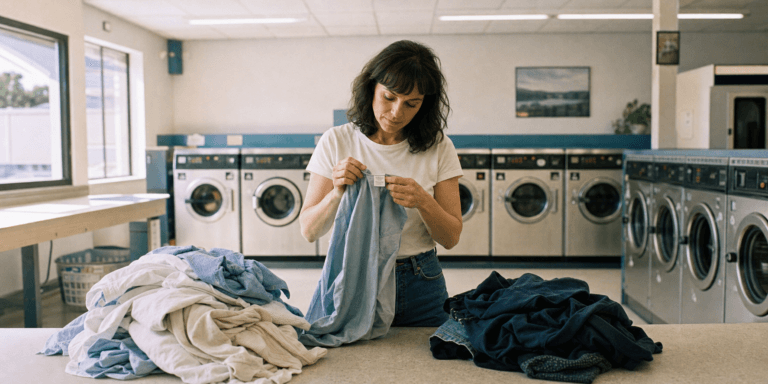
Read labels while you are still at home. Set aside anything marked dry-clean-only, hand-wash-only, do-not-wash, or do-not-tumble-dry until you can give it the correct care. If a label is missing or unreadable, treat the item conservatively. Consider its fiber, construction, color, decorations, and past washing history. When an item is valuable, sentimental, or unfamiliar, a cautious delay is better than an irreversible guess.
Care labels also help you avoid one-setting-for-everything laundry. Hot water, strong agitation, and high dryer heat are not universal signs of cleanliness. They may shrink, fade, distort, or weaken some materials. Likewise, a delicate setting is not automatically suitable for every item in a mixed load. Build loads from garments with compatible instructions, then choose the machine cycle that matches the group.
Take a quick photo of confusing labels so you can enlarge them on your phone. If you need to research a care symbol, do it before starting the cycle. Do not pour a product onto a garment or select a setting while you are still unsure. Once water, heat, or a chemical reaches the fabric, your options become narrower.
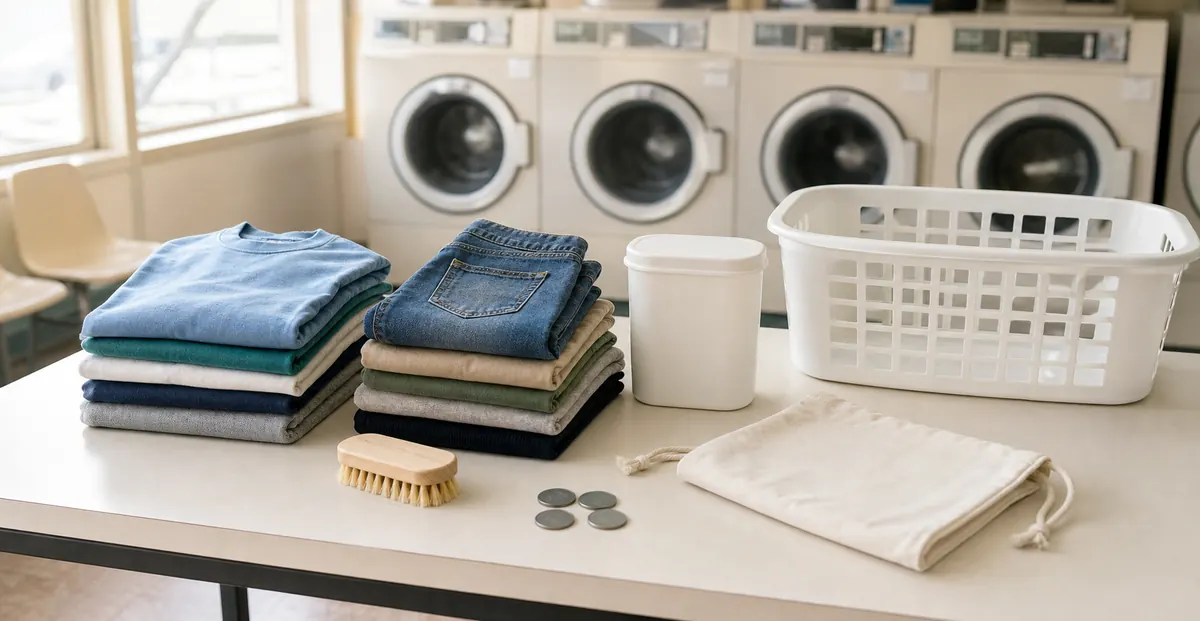
Pack a Small, Useful Laundry Kit
A first-time laundry kit should solve predictable problems without becoming another bulky load to manage. A practical kit can include detergent, a familiar stain-treatment product, a mesh bag for small items, a clean cloth for minor spills, a few hangers, and separate bags for clean and dirty laundry. If you use dryer sheets or another optional product, confirm that it is suitable for the fabrics and follow its directions. More products do not necessarily produce better results.
Use detergent in the amount directed by the product and the machine. Too much can be difficult to rinse away and may leave residue; too little may not handle the soil in the load. Concentrated products can require surprisingly small amounts. Keep the original measuring cap or another clearly marked measure with the container. Never combine products unless their labels explicitly say the combination is safe.
A rigid basket works well for folded clothes and helps protect them in the car. A flexible bag is easier to carry and store, but it can collapse and mix folded pieces. Many first-time customers find it useful to bring dirty laundry in one container and pack finished laundry into a clean liner or second bag. That separation prevents a damp sock, untreated item, or dirty basket bottom from contacting the finished load.
Fresh Spin also has an on-site mini-mart, but you should check current availability rather than assuming a specific product will be stocked. Packing the supplies you already know and use is the best way to avoid substitutions. The store can still be useful when you need to address a forgotten basic or combine laundry with a practical neighborhood stop.
Plan the Trip Around the Actual Laundry
Count your prepared groups, not just your baskets. One basket may contain two incompatible loads, while two small bags might wash together. Your goal is to know what needs washing, what may need separate drying, and which pieces should never enter a dryer. A simple note could read: dark everyday clothes, light everyday clothes, towels, bedding, and air-dry items.
Check the current location details before leaving. Fresh Spin’s contact page provides the address and ways to contact the business, but current details should always win over an old screenshot or saved search result. The laundromat is on East Truman Road in Independence, making it a practical option for people coming from nearby areas such as Englewood, Bristol, Sugar Creek, or eastern Kansas City. Mentioning those areas should help with orientation, not turn the article into a list of place names.
Load the vehicle so detergent stays upright and clean containers remain separate from dirty laundry. Put heavy bedding where it will not crush a delicate basket. If rain is possible, use closed bags or covers that keep clean fabrics dry during the return trip. When walking or using transit, reduce the load to an amount you can control safely without blocking doors or leaving bags unattended.
Allow enough flexibility that you do not feel pressured to overload a machine or remove damp clothes early. Laundry involves observation: you may need to redistribute a load, inspect a stain, or give a thick item more drying time. A calm plan is safer for clothing than a schedule that depends on every load finishing at the same moment.
Walk In, Pause, and Learn the Room
When you arrive, take a minute to identify washers, dryers, folding areas, carts, posted rules, payment instructions, and staff or contact information. Do not claim several machines before you understand how the room works. Keep baskets out of aisles and doors. If a cart is available, use it for moving laundry between machines rather than as long-term personal storage.
Read the directions on the exact machine you intend to use. Control panels and capacity markings vary. The order for selecting a cycle, adding payment, and starting may differ from what you use at home. Look inside the drum for forgotten items or visible residue. If something appears damaged, dirty, or out of service, choose another machine and alert staff rather than trying to repair or clean internal parts yourself.
Keep each sorted group together until its machine is ready. Loading too early can make it harder for another customer to tell whether a machine is available, while scattering clothing across tables creates mix-ups. A good rhythm is to choose one machine, confirm the directions, load one compatible group, add the correct product as directed, select settings, start, and record the machine location on your phone.
If you are unsure about a local policy, ask. A brief question about payment, machine labeling, or where to place a cart is better than an assumption. For general service questions before the visit, Fresh Spin’s frequently asked questions can help you prepare, but posted instructions and staff guidance at the time of your visit govern the actual transaction.
Choose a Washer Without Guessing at Capacity
Use the machine’s own capacity information and loading guidance. Do not choose solely by the physical size of the door or by copying another customer. Clothing needs space to move as the machine is designed to move it. Packing a drum tightly can reduce effective movement, make rinsing more difficult, and create an unbalanced load. At the other extreme, using a much larger machine than needed may not be the most practical choice.
Load items loosely rather than compressing them with your arms. Keep incompatible pieces separate even if combining them would save a machine. Bulky bedding needs particular attention because a comforter can fill space without being extremely heavy, then become much heavier when wet. Follow the equipment instructions and ask staff when you are uncertain whether a piece fits safely.
Balance matters. A single heavy item can collect on one side during extraction. Pair compatible items when the machine directions allow, or choose an appropriate cycle and machine for the load. Never force the door closed, bypass a latch, or add items after the machine has locked. If the machine reports a problem, follow posted guidance and seek help.
Fresh Spin describes large-machine laundry as one of its services, which may be useful for bedding, towels, or family-size loads. That does not eliminate the need to read the garment labels and the selected machine’s instructions. “Large” is not a promise that every oversized household item is machine washable.
Add Detergent and Select Settings Carefully
Identify the correct detergent compartment or loading method before pouring anything. Front-loading and top-loading systems may handle products differently, and some machines have separate spaces for detergent, bleach, or softener. A compartment’s shape is not enough evidence; use its label and the posted directions. Never put chlorine bleach into an unlabeled area or onto clothing.
Match water temperature and cycle intensity to the care labels in the load. Cold water is appropriate for many everyday loads and can reduce energy used for water heating, but the garment label, soil, product instructions, and household needs still matter. ENERGY STAR offers low- and no-cost energy tips that include washing with cold water when suitable and running full loads. “Full” means appropriately loaded according to the machine, not packed beyond its guidance.
Choose a normal, gentle, permanent-press, heavy-duty, or other available cycle based on the items rather than habit. A longer or hotter cycle is not automatically better. Strong treatment can be unnecessary for lightly worn garments, while a delicate cycle may be insufficient for durable, heavily soiled items. Separate the loads when one setting cannot serve all pieces safely.
Before pressing start, review four things: the door is closed, the product is in the correct place, the selected settings match the load, and the payment display looks right. Then start the machine and confirm that it actually begins. Stay long enough to notice an immediate leak, unusual warning, or failure to turn. Report problems rather than moving wet, soapy laundry without a plan.
Use Wash Time Without Losing Track of Loads
Set a timer based on the machine display, then remain close enough to return promptly. Do not rely solely on memory, especially when several loads started at different times. Label your phone timers by machine location or load, such as “dark clothes—left row.” A timer is a reminder, not permission to leave valuables or children unattended.
Use the interval to prepare the next step. Clear clean bags, arrange hangers, and review which garments need air drying or low heat. Keep food and drinks away from folding surfaces and machines. If you visit with children, maintain active supervision and keep them away from doors, carts, and operating equipment.
Public laundry etiquette is mostly about making shared space predictable. Return when a cycle finishes, remove your laundry promptly, wipe up your own spills safely, and keep personal items contained. Do not open, move, or handle another customer’s clothing. If an occupied machine appears finished for a long time, follow the location’s policy or ask staff.
If a spill involves an unknown product, broken container, or electrical area, do not improvise a cleanup that could spread the hazard. Keep others away and alert staff. Store your own detergent with the cap closed after each use. A tidy kit makes it less likely that a product will tip while you are transferring a wet load.
Inspect Clothes Before They Enter the Dryer
Dryer heat can make some stains harder to remove, so inspect treated areas after washing and before drying. If a stain remains, review the garment and product directions before treating or washing again. Do not repeatedly apply chemicals without understanding how they interact. Set aside uncertain items and address them later rather than making a rushed choice at the dryer.
Separate anything that must line dry, lay flat, or avoid tumble drying. Check pockets again because a small object can survive the washer and cause trouble in the dryer. Shake out sheets, pants, and shirts so they do not remain twisted into dense bundles. Unwrap socks or small items trapped inside larger pieces.
Notice whether the load rinsed and spun normally. Clothing that is unusually wet may indicate an unbalanced load or incomplete cycle. Do not compensate automatically with maximum dryer heat. Review the washer display, posted directions, and garment care requirements. Ask for help if the machine did not appear to complete correctly.
Keep the clean, wet load off the floor and away from the dirty basket interior. Move it in a clean cart or container. This is the point where a two-bag system pays off: the original dirty-laundry bag can remain separated while the clean liner is ready for dry, folded clothes.
Dry Clothes Completely Without Overheating Them
Sort wet laundry by compatible drying instructions and fabric weight. Lightweight shirts may dry sooner than towels, while thick seams, waistbands, and bedding corners can hold moisture. Mixing everything into one dryer can lead to overdrying some pieces while heavier items remain damp. Separate loads when the care labels or drying behavior call for it.
Clean the lint screen if customer access and posted directions permit, or notify staff if it needs attention. Load the dryer loosely and choose heat according to garment labels. Check the load during drying when the machine and location permit. Remove dry lightweight pieces while giving compatible heavier pieces additional time only as needed.
ENERGY STAR’s clothes-washer guidance emphasizes efficient washing equipment and practices, but clothing care remains a complete process. A well-spun load generally carries less water into drying than a dripping load. Still, the correct solution to an unusually wet load is to understand what happened, not simply apply more heat.
Before packing, feel thick areas rather than judging only the surface of the pile. Damp laundry folded into a bag can develop odors and may need rewashing. At the same time, avoid continuing to heat garments after they are dry. Prompt removal helps reduce wrinkles and gives you a chance to fold while fabrics are still warm.
Handle Bedding, Towels, and Special Loads Deliberately
Bedding deserves its own plan. Read the care label, inspect seams, and consider the item’s size when wet. Wash sheets separately from items that can trap them into a tight bundle. Shake bedding out before drying and check multiple areas for moisture. Thick comforters may feel dry on the outside while still damp inside.
Towels are durable but can be heavy and lint-producing. Keep them away from fabrics that attract lint when practical. Avoid assuming that extra detergent or softener will improve absorbency or cleanliness; follow product and textile directions. Make sure towels are fully dry before folding and storing.
For illness-related laundry, follow reliable current guidance. The CDC’s household guidance on cleaning and disinfecting the home recommends following manufacturer instructions for laundering and using appropriate settings and products. Keep potentially contaminated items contained, avoid shaking them unnecessarily, wash hands at appropriate points, and do not invent a chemical mixture.
Pet bedding, heavily soiled work clothes, rugs, and items with oils or unusual residues may have special requirements or facility restrictions. Review both the item label and laundromat policy before loading them. Some materials can be unsafe in ordinary washers or dryers. When in doubt, ask before bringing the item into the machine area.
Avoid the First-Visit Mistakes That Create Extra Work
The most common mistake is arriving with one unsorted mass of laundry. That forces quick decisions in a shared space and makes it easy to miss labels or stains. The second is overloading to reduce the number of machines. A better goal is the fewest sensible loads that still respect compatibility and equipment guidance.
Another mistake is using an unfamiliar amount of detergent. More suds do not prove that clothing is cleaner, and concentrated formulas vary. Measure according to the product and machine. Avoid pouring directly onto fabric unless the product explicitly directs it. Keep caps and bottles away from the floor where they become trip hazards.
Do not treat every dryer problem with higher heat. Separate heavy and light pieces, untangle bedding, confirm care labels, and check progress. High heat can damage some fabrics and still fail to dry a dense twisted bundle evenly. Likewise, do not pack warm laundry without confirming that thick sections are dry.
Finally, do not leave without a count. Check washer and dryer drums, door gaskets where visible, folding tables, carts, chairs, and the floor around your machines. Match the number of bags or loads to your original note. One final room scan can recover a sock, hanger, detergent bottle, or phone charger before it becomes a return trip.
Decide When Drop-Off Wash-Dry-Fold Is the Better Choice
Self-service gives you direct control over sorting, products, settings, and timing. It can be the right choice when you want to handle each garment yourself or need laundry completed around other errands. But doing every step personally is not always the best use of a busy day.
Drop-off wash-dry-fold may be worth considering when the volume feels unmanageable, your schedule is crowded, mobility makes repeated transfers difficult, or you simply want help with everyday washable laundry. Fresh Spin’s wash-and-fold service is a drop-off service: customers bring laundry to the location and later collect the completed order. Fresh Spin does not offer pickup or delivery, so plan transportation for both parts of the visit.
Before dropping off, review the current service page and ask about any item-specific questions. Separate anything requiring special care, empty pockets, and communicate relevant instructions through the service’s accepted process. Do not assume that every household textile belongs in a standard wash-dry-fold order.
The choice does not need to be permanent. A customer might use self-service for delicate or urgent pieces and drop off a compatible everyday load another week. The useful question is not which method is universally better; it is which method fits the garments, your time, and the verified service options for this particular laundry day.
Fold and Pack With Clean and Dirty Items Separated
Use a clean folding surface and keep the original dirty containers away from finished clothing unless they have a clean liner. Fold similar pieces together so they are easier to put away at home. Hang wrinkle-prone garments as soon as possible. Pair socks after checking that none remain inside sheets or pant legs.
Sort finished laundry by room or person if that will simplify unloading. Place heavy folded items at the bottom and lighter pieces on top. Avoid crushing structured garments under bedding. Close bags enough to protect clothing during transport, but do not seal anything that feels warm and possibly damp.
Clean up your immediate area. Return carts according to the laundromat’s practice, remove lint or scraps you created, and take all containers with you. Check every machine you used by number or location. A repeatable exit routine is one of the easiest habits to build from the first visit.
At home, put laundry away promptly and leave baskets or bags open to dry if needed. Restock detergent and replace your clean liner so the kit is ready next time. Write down one thing that would improve the next visit, such as bringing more hangers or separating towels earlier.
A Simple Independence Laundry-Day Plan
The night before, sort clothes into compatible groups, read labels, treat stains according to directions, and pack the kit. On the day of the visit, confirm current location information and transport the loads securely. At Fresh Spin, pause to read the room, select machines from their actual instructions, and start one organized group at a time.
Give every load a simple identity that you can remember from start to finish. You might call them lights, darks, towels, and bedding, or use a phone note with the machine location beside each name. When a washer finishes, move only that group into a compatible dryer or clean container. This prevents a delicate piece from accidentally joining a high-heat load and makes it easier to notice whether one sock or small garment is missing.
Build a few quiet checkpoints into the plan. Before washing, confirm pockets and labels. Before drying, confirm stains and heat limits. Before folding, confirm that thick areas are dry. Before leaving, confirm the original load count. These checks take less time than correcting a mixed, damaged, damp, or forgotten load. They also make the process easier to repeat with another family member because the routine does not depend on one person’s memory.
During washing, prepare clean bags and drying groups. Before drying, inspect stains and remove air-dry pieces. During drying, separate by fabric weight, check progress, and fold promptly. Before leaving, account for every load and scan each machine and folding area.
This routine works whether you are coming from nearby Truman Road, Englewood, Bristol, Sugar Creek, or another part of Independence. Local convenience should mean that the visit fits into real life—not that you rush through garment care or rely on unsupported promises.
If questions remain, use Fresh Spin’s current website or contact options before the trip. For the first visit, keep the goal modest: complete compatible loads safely, leave with everything clean and dry, and learn the details that will make your next visit even smoother.
First-Time Laundromat Questions
Should I sort clothes before going to a laundromat?
Yes. Sorting at home gives you room to check pockets, stains, colors, fabric weights, lint, and care labels. Keep each compatible group in a separate bag or clearly divided basket so you can load it without resorting everything in public.
How do I know which washer to use?
Read the capacity and operating instructions on the exact machine, then compare them with the size and care needs of your load. Load garments loosely and do not force the door or compress clothing to make it fit. Ask staff if bedding or another bulky item creates uncertainty.
How much detergent should I bring?
Bring enough for the planned loads and measure it according to the detergent label and machine directions. Concentrated formulas vary, so avoid guessing by cap size or suds. Keep liquid containers closed and upright between uses.
Can I leave while my laundry runs?
Plan to supervise your laundry and return promptly when each cycle ends. Location policies vary, and leaving items unattended creates security, timing, and courtesy problems. Set labeled timers and remain close enough to respond.
What if a stain remains after washing?
Do not dry the item automatically. Inspect the label and treatment directions, then decide whether another safe treatment is appropriate. Dryer heat can make some stains harder to remove. Set uncertain items aside instead of improvising.
Does Fresh Spin pick up laundry?
No. Fresh Spin offers self-service laundry and drop-off wash-dry-fold at its Independence location, but it does not offer pickup or delivery. Customers bring in and collect their own laundry.
Printable Recap for the Door or Laundry Bag
- Empty pockets and check every care label.
- Sort by compatible color, fabric weight, lint, soil, and instructions.
- Pack detergent, stain product, mesh bag, hangers, and clean liners.
- Confirm current location and payment information.
- Read the exact washer and dryer directions before loading.
- Measure products; do not guess or mix chemicals.
- Set a labeled timer for every load.
- Inspect stains and remove air-dry pieces before drying.
- Dry thick areas completely without overheating garments.
- Fold on a clean surface and pack into clean containers.
- Check every drum, cart, table, and floor area before leaving.
A first laundromat visit does not have to feel unfamiliar for long. Prepare at home, follow labels and machine directions, keep the loads organized, and ask when a local rule is unclear. That approach protects your clothes and turns the next laundry day into a routine instead of a puzzle.
Leave A Comment