
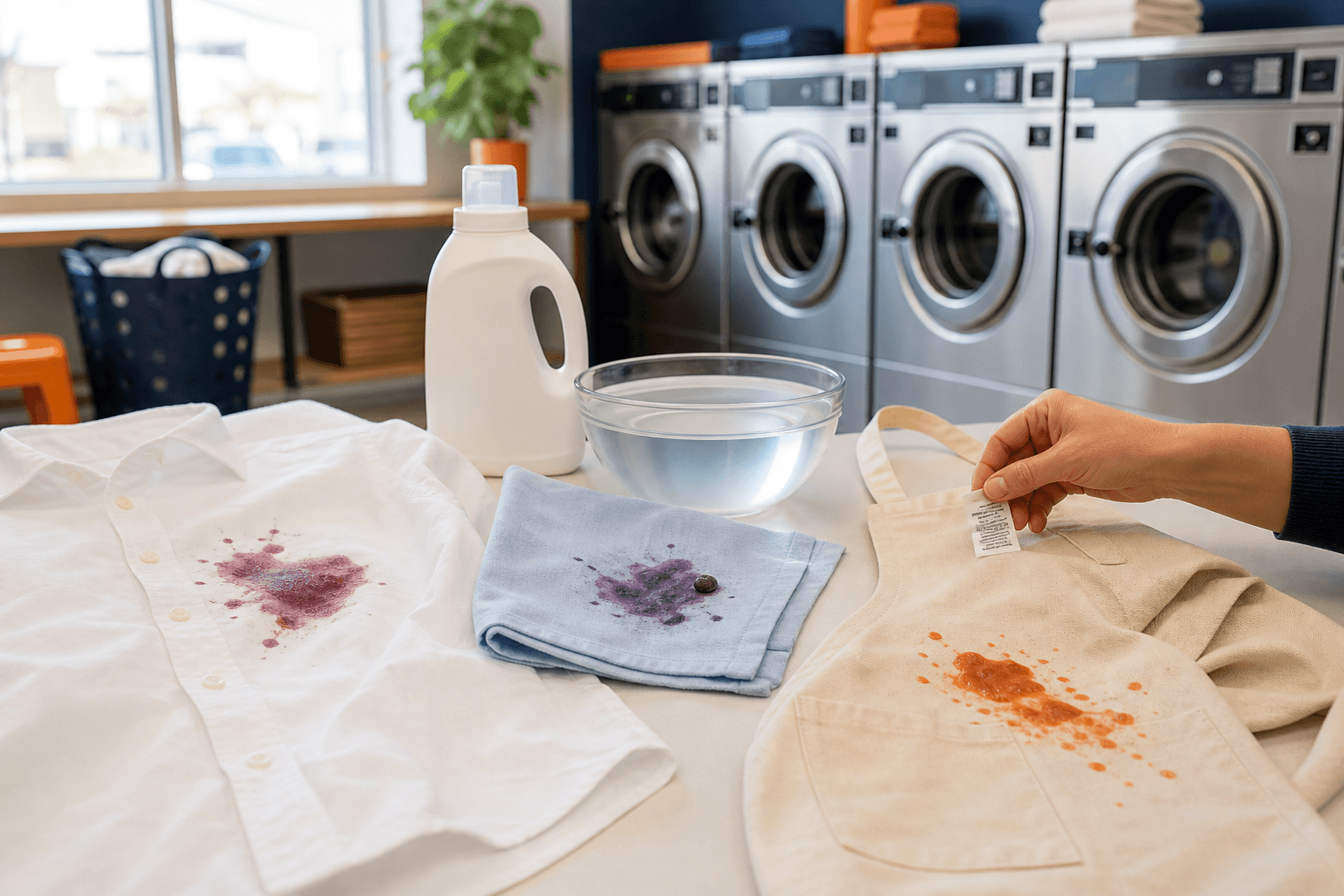
Need help deciding what to do with stained laundry?
Use this guide for first steps at home, then choose the Fresh Spin option that fits the load. Use the self-serve laundromat when you want to handle the wash yourself, bring eligible loads for drop-off wash-dry-fold, check the FAQ for common laundry questions, or use the contact page before visiting.
A spilled latte on denim, lipstick on a blouse, or red wine on a couch can feel like a disaster, but most stains on South Main can be saved with fast action and the right fabric-specific method. Fresh Spin Laundry in Independence, MO builds its stain removal approach around a simple truth from daily experience: quick action and a fabric-appropriate treatment can improve the chance of removing a stain.
Key Takeaways
- Act fast and keep heat away until the stain is fully gone.
- Check the care label before treatment to avoid shrinkage and fading.
- Blot stains gently instead of rubbing, which can spread the mess and weaken fibers.
- Different fabrics and stain types need different solutions for the best results.
- Fresh Spin Laundry gives Independence residents self-service machines and in-store drop-off wash-dry-fold for washable clothing and household laundry.
The Fastest Way to Save Your Favorite Clothes on South Main
A stain feels dramatic in the moment, yet most clothing accidents are still fixable. What decides the outcome is usually timing, technique, and whether the treatment matches both the stain and the fabric.
Fresh Spin Laundry’s approach in Independence, MO centers on proven stain-removal science mixed with local know-how. That matters because a cotton T-shirt, wool sweater, polyester dress, and silk blouse may all react very differently to the same cleaner. One quick move can lift the problem, while one wrong move can lock it in.
The first few minutes are especially important. Oils sink deeper, pigments grab onto fibers, and protein stains begin to bind as they dry. If you blot or gently scrape away the excess right away, you lower the amount of material the fabric has to release later. That gives you a much better shot at a clean finish.
Many people assume stain removal is about finding one miracle product. In reality, the best results usually come from a simple process: remove excess material, identify the stain, check the care label, test the cleaner, then treat with patience. Fresh Spin Laundry uses that kind of disciplined method because it protects fabrics while improving the odds of full stain removal.
For young adults balancing work, school, nights out, and busy weekends, that matters a lot. Clothes are expensive, and favorite pieces often have a lot of life left in them. Learning a few smart habits can save money, reduce waste, and keep your wardrobe looking fresh without turning laundry day into a major project.
Fresh Spin Laundry’s 5 Non-Negotiable Stain Removal Rules
Before getting into stain-by-stain fixes, it helps to lock in a few rules that apply almost every time. These basics are what keep a small spill from turning into permanent damage.
First, act immediately for the best results. The longer a stain sits, the more time it has to soak into the fibers and bond with the material. Lift solids with a spoon or dull edge, and blot liquids with a clean cloth or paper towel. Quick action gives every cleaner a better chance to work.
Second, always check the fabric care label first. That small tag can stop you from shrinking cotton blends, fading dark colors, or wrecking a delicate item. If a garment says dry clean only, hand treatment at home may do more harm than good.
Third, test before you treat. Put a small amount of the product on a hidden part of the fabric, such as an inside seam or hem. Wait a few minutes and check for color loss, texture changes, or weakening. This quick test can save a shirt, dress, or jacket from visible damage.
Fourth, blot and never rub. Rubbing pushes the stain deeper, spreads it wider, and can rough up the fabric surface. That is especially risky on knits, wool, silk, and upholstery. Blotting lifts the stain with less stress on the fibers.
Finally, keep heat out of the process until the stain is fully gone. That means no hot dryer, no iron, and no heated styling tools touching the area. Heat can set many stains permanently, especially protein stains, oils, cosmetics, and colored spills.
These five rules sound basic, but they make a huge difference. Fresh Spin Laundry relies on them because they work across most stain types and fabric categories. If you remember nothing else, remember this: move fast, check labels, test first, blot gently, and skip heat.
Know Your Fabric Before You Treat the Stain
The same stain remover does not belong on every material. Fabric construction, dye stability, fiber strength, and water tolerance all affect what you should do next. A better understanding of fabric types helps you choose safer methods.
Cotton is generally durable and easier to treat than many delicate fabrics. It can often handle dish soap, enzyme cleaners, hydrogen peroxide in some cases, and standard detergent pretreatments. Still, dyed cotton can bleed, so testing remains important.
Polyester and many synthetic blends resist some stains better than natural fibers, but they tend to hang onto oily residues. That makes grease and makeup especially stubborn. Dish soap and liquid detergent usually perform well, though high heat can make stains harder to remove.
Denim acts a lot like cotton, but dark washes can lose color if you use harsh products too aggressively. Treat the stained area carefully, and do not scrub hard enough to create a faded patch around the spot.
Wool needs a gentler touch. It can felt, shrink, or lose shape with too much friction, hot water, or strong chemicals. Blotting, cool water, and wool-safe products are usually better choices. If the garment is structured or expensive, professional help is often the smartest move.
Silk is one of the trickiest materials to handle at home. Water marks, dye shifts, and texture changes can happen fast. A light blot may be okay, but strong spot treatments can leave the fabric worse than the original stain. For silk, it is often safer to stop early and hand it to Fresh Spin Laundry.
Linen is absorbent and strong, yet it wrinkles easily and can show water rings. Light treatment works best, and the fabric should dry evenly. Targeted cleaning with minimal soaking usually gives better results than drenching the whole area.
Rayon and similar regenerated fibers can weaken when wet. That means hard rubbing and repeated soaking are risky. Test first, use limited moisture, and keep expectations realistic if the stain is old or dark.
Upholstery fabrics vary even more. Some are synthetic and forgiving, while others react badly to water or solvents. Always use minimal moisture and blot carefully. The fabric code, if available, should guide your cleaner choice.
Fabric awareness changes everything. Instead of asking, “What removes this stain?” a better question is, “What removes this stain from this fabric?” That shift leads to smarter choices and better-looking clothes.
Oil and Grease Stains: Cooking Oils, Butter, and Dressings
Oil stains are sneaky because they often look light at first, then darken as they spread through the fabric. Salad dressing on a hoodie, butter on a T-shirt, or cooking oil on jeans can all leave a greasy mark that grabs dirt later if you do not remove it fully.
Start by blotting the excess oil right away. Do not rub. If there is any solid residue, lift it gently with a spoon or dull knife. The goal is to remove surface material before it moves deeper into the fibers.
Next, apply dish soap directly to the stain. Dish soap works well because it is made to break up grease. Use your fingers or a soft cloth to work it in gently. Let it sit briefly so it can loosen the oily residue.
Then rinse with warm water if the fabric allows it. Warm water can help with greasy stains, but always check the care label first. Some materials handle warm water well, while others do better with cool or lukewarm treatment.
After rinsing, wash the garment as usual with detergent. Before drying, inspect the area closely in good light. If any trace remains, repeat the treatment. A dryer can set leftover oil, making the stain much harder to remove later.
For cotton, polyester, and many blends, this process works well at home. On silk or wool, however, grease removal can leave rings or affect texture if handled too aggressively. In those cases, a professional treatment may be the safer path.
Makeup stains often contain oils too, which is why dish soap sometimes helps there as well. Knowing the base of a stain matters. If the mess looks slick, shiny, or translucent, think oil first.
Ink Stains: Ballpoint, Marker, and the Ones That Spread Fast
Ink creates panic because it travels quickly and often looks permanent. A pen leak in a pocket or marker streak on a sleeve can spread with one wrong touch. Still, many ink stains respond well if you break up the pigment early.
Fresh Spin Laundry recommends rubbing alcohol or hairspray to loosen the ink. Place a clean cloth or paper towel under the stained area first so the pigment has somewhere to transfer. Then apply the product carefully and blot from the outside in.
Blotting is critical here. Ink can feather across fabric if you flood the area or rub hard. Work slowly, replacing the cloth underneath as it picks up color. Once the stain starts fading, wash the item right away.
Ballpoint ink often responds better than permanent marker, but both can improve with prompt treatment. If the stain remains stubborn, a dry-cleaning solvent may be needed. That is a good point to stop experimenting and bring the item to Fresh Spin Laundry.
Dark or saturated dyes on the garment itself add another risk. Alcohol can affect color, especially on delicate items. Test first on a hidden area and use only enough product to target the stain.
On cotton shirts, denim, and many synthetic fabrics, ink removal at home has a fair chance of success. On silk blouses, lined garments, and specialty pieces, professional help is usually worth it. Ink stains can travel through layers, and careless treatment can create a larger, fuzzier mark than the original line.
Blood Stains: Fresh Spills Versus Set-In Marks
Blood stains need a different strategy because they are protein-based. That means heat is a major enemy. Hot water can cook the protein into the fibers, making the stain far harder to remove.
For fresh blood, rinse with cold water as soon as possible. Let the water pass through the back of the stain if you can, pushing the blood out instead of deeper in. After rinsing, treat the area with a salt solution or hydrogen peroxide, depending on the fabric.
Hydrogen peroxide can be effective, but it also has bleaching potential on some colors. That is why spot testing matters. If the item is dark, bright, or delicate, test in a hidden area first and use a very small amount.
For older blood stains, the job gets harder. The brief recommends soaking in an ammonia solution and following with an enzymatic cleaner. Enzymatic cleaners are useful because they break down stain matter at a deeper level, helping release what plain detergent may leave behind.
Wash the item after treatment, then inspect it before drying. Any remaining discoloration means the stain needs another round. A dryer cycle can turn a faint shadow into a permanent mark.
Cotton and many blends can usually tolerate these steps better than wool or silk. For delicate fabrics, use extra caution and less agitation. If the garment has sentimental value, structure, or specialty dye, Fresh Spin Laundry is a safer choice than repeated home attempts.
Red Wine and Berry Stains: Bright Color, Fast Action
Red wine and berry stains are famous for their dramatic color. They look intense because the pigments are strong and highly visible, especially on light fabrics, rugs, and upholstery. That said, they are often manageable if you act quickly.
For red wine, blot the spill immediately. Absorb as much liquid as you can without pushing it deeper into the fabric. Then apply salt to the area. Salt can help draw out moisture and pigment before the stain settles in.
After that, rinse and wash the garment. If you are treating a couch or carpet, you may need to repeat blotting with a mild solution rather than fully rinsing. The key is to keep lifting the stain without over-wetting the material.
Berry stains need a slightly different approach. The brief recommends flushing them with boiling water, then treating with white vinegar if needed. This can work well on durable fabrics, but you should be careful with delicate materials or anything that may shrink or distort with very hot water.
Colorful plant-based stains can linger as a pink or purple shadow. If that happens, do not panic and do not dry the item yet. Repeat treatment and laundering until the fabric looks fully clean.
Bright stains on table linens, cotton tees, and casual wear often respond well at home. On wool rugs, silk dresses, or upholstered pieces, stronger caution is needed. Too much water or the wrong heat level can leave a ring, texture shift, or dye issue even if the original stain fades.
Mud and Outdoor Dirt: Why Waiting Can Help
Mud looks like a stain emergency, but this is one case where waiting is useful. If you attack wet mud right away, you often smear it into the fibers and create a much larger mess. Letting it dry first usually gives a better result.
Once the mud is dry, brush off as much loose debris as possible. Do this outdoors or over a trash can because the dried dirt can spread everywhere. Removing the loose material first prevents muddy grit from grinding deeper into the fabric in the wash.
After brushing, pre-treat the area with detergent and wash according to the care label. If the stain still shows after laundering, repeat the pretreatment before drying. Outdoor dirt often leaves behind an oily or mineral-based shadow that needs a second pass.
Jeans, work pants, hoodies, and kids’ clothes commonly recover well from mud with this approach. White fabrics may need more than one cycle, especially if the dirt includes grass, clay, or road grime.
For upholstery or entry rugs, vacuum dried mud first before applying any moisture. That keeps the soil load lower and helps the cleaning solution focus on what is actually stuck to the fibers.
Patience matters with mud. A quick wait, a thorough dry brushing, and a standard pretreat often do more than aggressive scrubbing ever will.
Makeup and Lipstick Stains: Beauty Products Meet Fabric Trouble
Makeup stains are a mix of pigments, waxes, and oils, which is why they can be surprisingly stubborn. Foundation on a collar, lipstick on a napkin, or concealer on a sweatshirt can sink into fibers and leave a tinted residue.
The brief recommends placing the stain face-down on a paper towel. That setup helps the loosened product transfer away from the fabric instead of spreading around. Apply rubbing alcohol or acetone carefully to dissolve the oily and waxy components.
Once the product starts breaking down, blot gently and move the paper towel as needed. Then follow with a cold wash cycle. Cold water helps protect many fabrics and avoids setting the stain during the treatment stage.
Acetone should be used with care. Some synthetic fabrics can react poorly, and dyed garments may lose color. A hidden-area test is essential before you apply it to the visible part of the item.
Oil-free makeup may behave differently from long-wear lipstick or cream products, but the basic idea stays the same: dissolve the residue, transfer it out, then wash before heat enters the picture.
On cotton tops, polyester blends, and many casual pieces, home treatment often works. On silk, rayon, or structured jackets, use extra caution. Cosmetics can leave a broad halo if too much solvent spreads beyond the original stain.
Carpet and Upholstery Rescue for Independence Homes
Stains do not stop at clothing. Drinks spill on rugs, snacks land on sectionals, and makeup ends up on upholstered chairs more often than people like to admit. Home surfaces need a different cleaning style because oversaturation can create bigger problems than the stain itself.
For general carpet stains, the brief suggests a DIY solution made from dish soap, vinegar, and water. This combination can help loosen many everyday marks without relying on overly harsh chemicals. Use a light hand and blot rather than scrub.
Baking soda is useful for odors and leftover residue. Sprinkle it over the affected area after initial cleaning if needed, let it sit, then vacuum it up. That can freshen the surface and help lift lingering moisture-related smells.
Upholstery calls for even more restraint. Blot excess material first, apply minimal moisture, wait briefly, then blot dry. Repeat until your cloth no longer picks up stain transfer. This slow process helps protect the fabric backing and cushion fill.
Natural stone surfaces near stained upholstery or carpets need separate care. The brief notes that a baking soda paste with a mild solvent can help on delicate hard surfaces. That matters because furniture accidents often affect more than one material at a time.
Fresh Spin Laundry points out that large or stubborn stains often respond better to professional-grade extraction than home methods. That makes sense. Deep stains sink below the surface, and consumer tools usually cannot pull out as much residue as pro equipment can.
If the stained area is large, smells sour, has been there for days, or keeps wicking back after you clean it, professional treatment is a smart move. Surface improvement is good, but complete removal usually requires pulling contamination from deeper layers.
Build Your Fresh Spin Emergency Stain Kit
Fast action is easier if you already have the right supplies at home. Hunting for rubbing alcohol while a stain dries is frustrating and often costly for the garment. A small stain kit keeps you ready for everyday accidents.
Fresh Spin Laundry’s recommended kit starts with a few core liquids. These should be easy to reach, clearly labeled, and stored safely. Keep them in a closet, laundry room, or bathroom cabinet where you can grab them in seconds.
Here are the essentials to include:
- Rubbing alcohol for ink, makeup, and some oily residues
- White vinegar for berry follow-up treatment and general stain support
- Hydrogen peroxide for certain protein stains, with testing first
- Dish detergent for oil, grease, and many mixed stains
- Cotton balls, Q-tips, and an eyedropper for precise application
- Glycerin or similar wetting agents for deeper, stubborn marks
Add a few clean white cloths or paper towels as well. White materials are helpful because they do not transfer dye onto the item you are treating. A soft spoon or dull edge for scraping solids is useful too.
Store the kit where spills happen most often. If makeup stains usually happen in the bathroom, keep a small version there. If food stains are your bigger issue, place one near the kitchen or laundry area.
The real power of a stain kit is speed. You do not need a huge collection of specialty products. You need a few reliable basics and the habit of using them quickly and correctly.
The Most Common Stain Removal Mistakes
People often ruin fabrics while trying to save them. That sounds harsh, but it is true. The biggest stain-removal mistakes usually come from panic, overconfidence, or advice that ignores fabric type.
One of the most common mistakes is rubbing instead of blotting. Rubbing spreads the stain, frays fibers, and can create a fuzzy damaged spot that stays visible even after the stain is gone. This is especially obvious on knits, sweaters, and soft upholstery.
Another big mistake is using hot water on protein stains like blood. Heat helps with some oily messes, but it can set protein stains quickly. That is why blood should start with cold water instead.
Drying garments before the stain is fully removed is another frequent problem. A shirt can look clean while damp, then reveal a faint ring after drying. If heat hits it at that stage, the leftover mark may become much harder to remove.
Ignoring care labels causes plenty of avoidable damage. A quick check can tell you if the item needs gentle handling, cold water, or professional care. Skipping that step can lead to shrinkage, color loss, or texture changes that no stain remover can fix.
Overusing harsh chemicals is also risky. More product does not always mean better results. In many cases, it means weakened fibers, color fading, or sticky buildup that traps future dirt.
Fresh Spin Laundry avoids these mistakes by following a controlled process. That means identifying the stain, checking the fabric, using the right amount of product, and stopping before a home treatment causes bigger damage. For anyone treating stains at home, that same discipline is worth copying.
When It’s Time to Bring It to Fresh Spin Laundry
Some stains are home-fixable. Others are better left to professionals. Knowing the difference can save a favorite piece from permanent damage.
If a stain persists after multiple careful treatments, that is a strong sign to stop. Repeating the wrong process can wear down the fibers and lock in a stain shadow. A professional may have access to stronger chemistry, better rinsing control, and stain-specific methods that are safer than another round of guesswork.
Delicate fabrics deserve extra respect. Silk, wool, and specialty garments often react badly to home remedies, especially if the cleaner choice is too aggressive or too wet. A structured blazer, lined dress, embellished top, or vintage item can be damaged by simple DIY errors.
Large-scale carpet or upholstery issues are another clear reason to call in help. Once a stain covers a broad area or reaches deep into padding, home blotting may improve the look without truly removing the problem. That can leave behind odor, residue, or recurring discoloration.
Fresh Spin Laundry stands out because it combines advanced stain treatment methods with fabric-safe processes that match each material. That local experience matters. Independence residents benefit from a service that understands both everyday stain emergencies and the value of preserving clothes people actually love to wear.
Professional care also helps with mystery stains. If you do not know whether the spot is oil-based, protein-based, dye-based, or a mixed stain, a trained team can often identify the best route faster than trial and error at home.
What’s Next in Stain Removal
Stain removal keeps improving, and that is good news for anyone who wants better results with less fabric damage. New products and methods are making it easier to target stains more precisely while protecting color and texture.
One major area of growth is enzymatic cleaners. These products work by breaking down stain matter at a smaller scale, which can be especially useful for food, sweat, blood, and other organic residues. As these formulas improve, they give cleaners more power without relying on heavy scrubbing.
Oxygen-based solutions are another important development. They can improve color-safe cleaning and offer a gentler option than traditional chlorine-based approaches. That matters for bright clothes, dark items, and mixed loads where color preservation is a priority.
The brief also points to advancements in nano-cleaning technology. The big idea here is deeper penetration into fibers, allowing cleaning agents to reach particles that ordinary surface treatments may miss. For hard-to-release stains, that could lead to better outcomes with less physical stress on the fabric.
There is also increasing demand for eco-friendly, non-toxic cleaning solutions. Younger customers especially care about performance without unnecessary harshness. Effective stain removal should protect clothes, and it should also fit modern expectations around safety and environmental impact.
Fresh Spin Laundry’s commitment to adopting safe and effective innovations is a strong advantage. The best cleaners do not chase trends blindly. They evaluate what works, what protects fabric, and what gives customers cleaner clothes without unwanted trade-offs.
How to Create a Fabric-Specific Stain Routine That Actually Works
The easiest way to stay ready for stain emergencies is to build a simple routine. You do not need a huge chart taped to the wall. You need a process you can remember even when you are tired, late, or in a rush.
Start with a quick three-part check: What is the stain, what is the fabric, and how long has it been there? Those three answers shape almost every good decision that follows. A fresh grease stain on cotton gets one response. A set-in berry stain on silk gets a very different one.
Next, follow a repeatable sequence:
- Remove excess material gently
- Check the care label
- Test the cleaner in a hidden area
- Blot with the correct product
- Wash or rinse based on the fabric’s needs
- Inspect before drying
This routine reduces panic. It also helps avoid random internet advice that may work for one fabric and ruin another. Consistency usually beats intensity in stain removal.
For people with active schedules, it helps to sort clothes mentally into two categories: safe for home treatment and better for pro care. Casual cottons, durable blends, and many everyday items often fit the first group. Delicates, structured pieces, specialty fabrics, and expensive garments usually belong in the second.
A routine also teaches patience. Stains often fade in stages, and the first treatment may only lighten the mark. Repeating a label-approved pretreatment can be safer than scrubbing or escalating immediately to a harsher chemical.
Practical Answers for Six Difficult Food and Laundry Stains
These answers are for washable clothing. Always begin with the garment care label, test a treatment on a hidden area, and never mix stain-removal products. Do not machine-wash items labeled dry-clean-only. If a stain remains after washing, keep the garment out of the dryer because heat can make many stains harder to remove.
How Do You Remove an Old Blood Stain from Clothes?
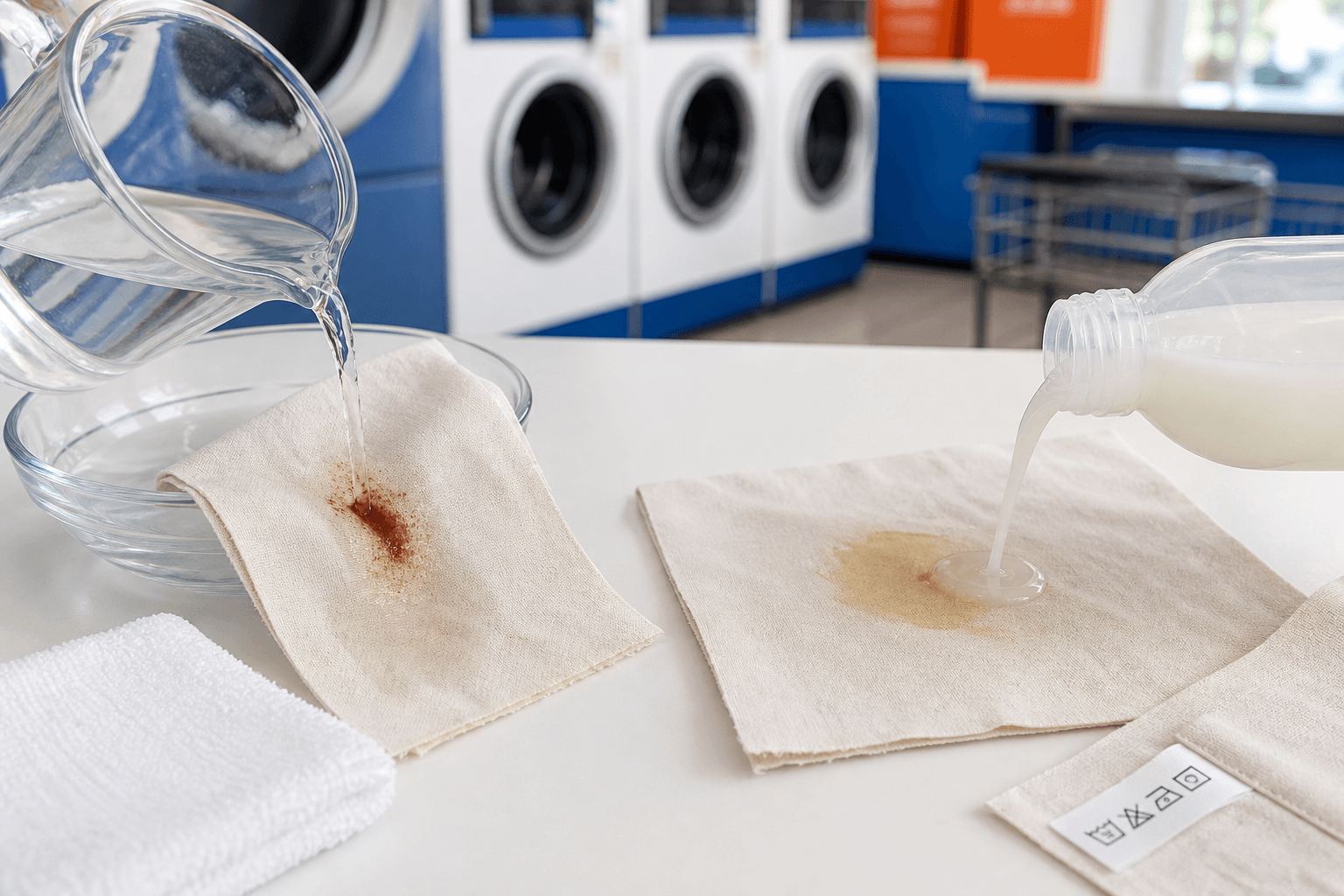
For old blood stain removal, start with cool water—not hot water, which can set protein stains. Soak the washable garment in cool water, then work an enzyme-containing laundry pretreatment or liquid detergent into the stained area according to its label. Allow the product its directed contact time, rinse, and wash using the warmest water permitted by the garment label. Inspect the fabric before drying and repeat the pretreatment if needed. The University of Georgia’s textile-care guidance for blood stains also emphasizes cool water, care-label compliance, colorfastness testing, and extra caution with silk and wool. An old stain may not disappear completely, so use repeated gentle treatment instead of scrubbing or jumping immediately to a strong chemical.
What Is the Best Way to Remove a Cherry Juice Stain from Clothing?
For cherry juice stain removal, remove any fruit pieces with a dull edge and flush the back of the stain with cool water so the liquid travels out of the fibers instead of farther through them. Pretreat or soak the washable garment with an enzyme product that is safe for its color and fabric, rinse thoroughly, and launder according to the care label. Check the stain in good light before using a dryer. Cherry juice is a fruit-and-pigment stain, so soap, aggressive rubbing, and premature heat can work against you. The University of Georgia’s fruit and red-vegetable stain instructions recommend prompt cool-water rinsing and warn that treatments should be tested for colorfastness first.
How Can You Remove an Old Grease Stain After It Has Dried?
Old grease stain removal usually takes more than one pass because oil spreads through fibers and may have been set by dryer heat. Place the stain on a clean white towel, apply a grease-targeting prewash stain remover or liquid laundry detergent, and gently work it into the spot without distorting the fabric. Follow the product’s contact-time directions, then wash in the hottest water that is safe for the garment. Air-dry and inspect before repeating. The American Cleaning Institute’s stain-removal guide separates light and heavy grease treatments and likewise bases the wash temperature on the fabric. Avoid improvising with flammable solvents, and do not place a solvent-treated garment in a washer or dryer unless the product label explicitly says that is safe.
How Do You Remove a Blueberry Stain Without Setting the Color?
For blueberry stain removal, flush a fresh mark with cool water, then soak the washable item in an enzyme-compatible pretreatment solution according to the product label. Rinse well and wash with detergent; use chlorine or oxygen bleach only when both the garment label and bleach label permit it. Do not dry the garment until the blue-purple shadow is gone. Blueberry pigment can linger even after the sugary residue has rinsed away, so patience is safer than hard rubbing. The American Cleaning Institute’s berry-stain guidance recommends a cool-water flush followed by staged soaking, rinsing, and laundering.
What Removes a Spaghetti Sauce Stain from Washable Clothes?
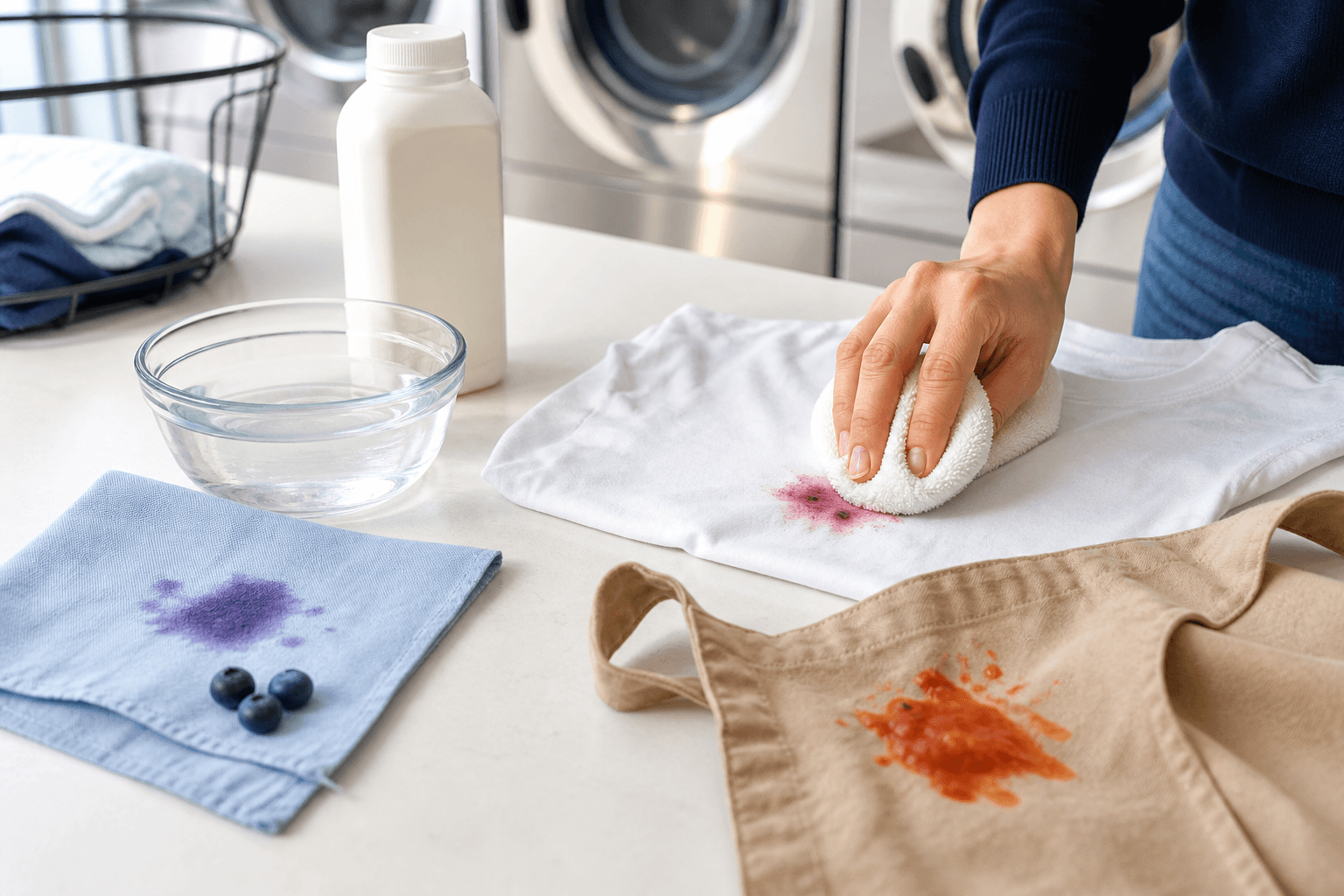
For spaghetti sauce stain removal, lift off excess sauce with a spoon or dull edge, then rinse from the back with cool running water. Rub liquid detergent into the mark, rinse, and apply a labeled prewash stain remover if the red or oily portion remains. Wash according to the care label and hold the damp fabric up to the light before drying. Tomato sauce can combine pigment, oil, starch, and protein, so a single rinse may remove only part of it. The American Cleaning Institute’s tomato and spaghetti-sauce instructions recommend repeated detergent or pretreatment steps and a final inspection before the dryer.
How Should You Handle Red Wine Stain Removal on Clothes?
For red wine stain removal on clothes, blot the spill with a clean white cloth and rinse or soak the washable fabric in cool water. Apply a prewash stain remover that is approved for the garment, launder according to the care label, and add bleach only if the bleach type is safe for both the color and fabric. Skip myths that substitute one beverage for another, and never rub the stain outward. Inspect before drying; a remaining pink or gray cast needs another gentle treatment. For a large load or when you would rather not manage the washing yourself, Fresh Spin offers in-store drop-off wash-dry-fold. Customers bring laundry to the store and return for it; Fresh Spin does not offer drop-off or drop-off wash-dry-fold.
If you are doing the work yourself, use the Fresh Spin self-service laundry guide to plan the wash. Bring the garment care instructions and stain product with you, keep treated items separate until you know the color is stable, and ask before putting an unusual or delicate item into a machine.
Keep South Main Looking Fresh
Great stain removal is less about panic and more about smart action. If you move quickly, match the treatment to the fabric, and avoid common mistakes, you can save a surprising number of clothes, rugs, and upholstered pieces.
Fresh Spin Laundry’s advice is practical for a reason. It comes back to the same essentials every time: act fast, blot gently, read the label, test first, and keep heat away until the stain is completely gone. Those habits protect both the fabric and your chances of success.
A stocked stain kit can save time, money, and favorite outfits. So can knowing when to stop and get help. Tough, delicate, or large-area stains often need a higher level of care than a home setup can provide.
If you want to try these methods yourself, start with the basics and stay patient. If the stain will not budge, if the item is delicate, or if the surface needs deeper extraction, visit Fresh Spin Laundry for expert care in Independence, MO. Bring your toughest stain challenge to the team and find out the best fix before a temporary spill turns into a permanent mark.