
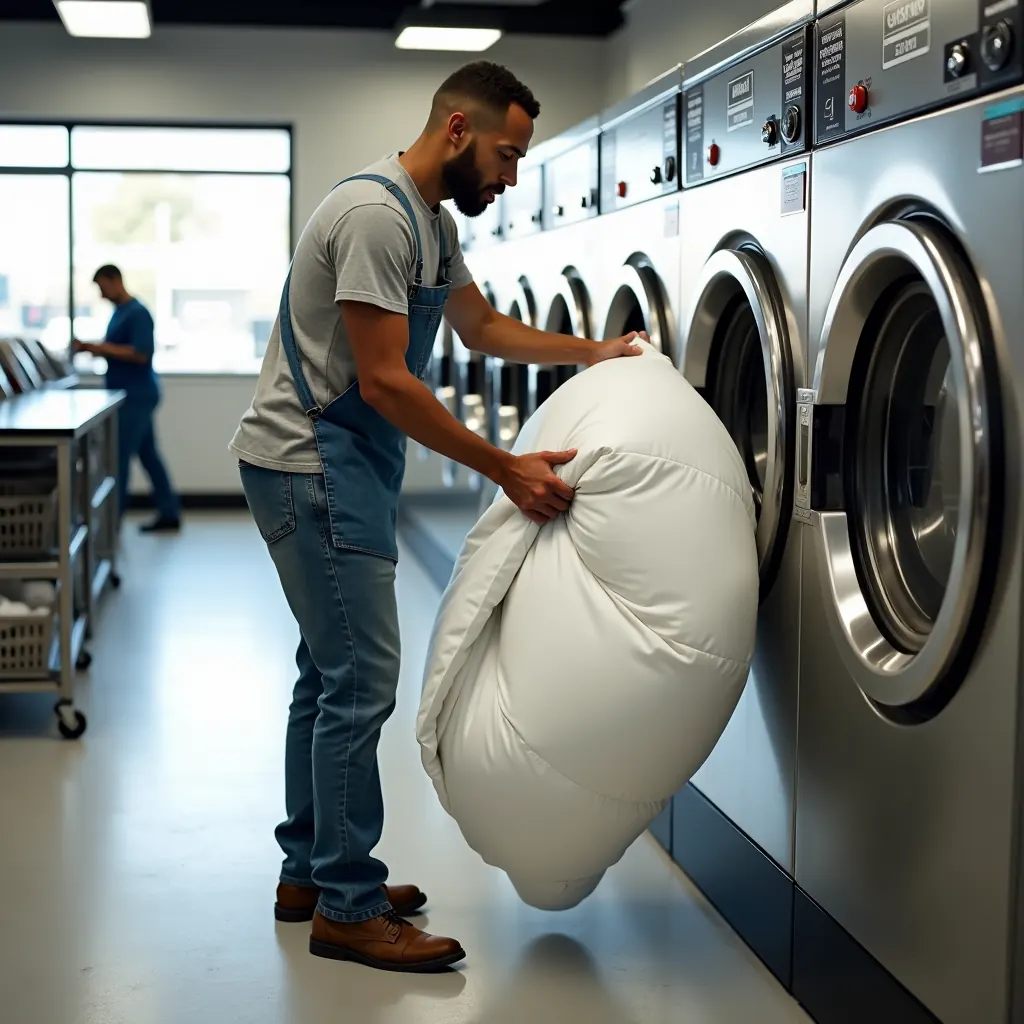
A comforter that bunches up in a home washer rarely gets truly clean, and forcing it through a too-small machine can leave behind detergent, trapped soil, and damp filling. If you are in Independence and need a practical way to clean bulky bedding without guessing, a laundromat can be the right solution when you match the item to its care label, size, and fill type.
Key Takeaways
- Check the sewn-in care label first; it determines whether your comforter should be washed, how warm the water can be, and whether machine drying is appropriate.
- Bulky bedding needs room to move, so self-serve is best when the comforter can wash and dry safely in a large machine without being packed tight.
- Down, feather, and synthetic fills often need different handling, especially during drying, to prevent clumping and lingering damp spots.
- Use detergent sparingly, pretreat stains before washing, and make sure the comforter is fully dry before taking it home to avoid odors and mildew.
- If you do not want to manage the process yourself, Fresh Spin offers a drop-off service for laundry; bring the item in, confirm any care concerns, and return for the finished order.
Can You Wash a Comforter at a Laundromat in Independence?
In many cases, yes. A laundromat is often the most practical place to wash a comforter, duvet insert, oversized blanket, or other bulky bedding because these items need more open space than many home machines provide. Whirlpool and Consumer Reports both note that large bedding should have enough room to circulate freely in the washer and dryer so water, detergent, rinsing, and airflow can work properly. When a comforter is crammed in, cleaning suffers and the fabric shell, seams, and fill can be stressed.
That said, “can I wash it?” depends less on the bedding size alone and more on three checkpoints:
- The care label: If the sewn-in label says machine wash, that is your starting point. If it says dry clean only or warns against machine drying, follow that instruction.
- The fill: Down, feather, synthetic, wool blends, and specialty fills do not all respond the same way to water, agitation, or heat.
- The item’s condition: Torn seams, weak stitching, shredded baffles, or a damaged shell can get worse during washing and drying.
For many households in Independence, the better question is not whether a comforter can be washed at a laundromat, but whether it should be washed self-serve or brought in as a drop-off service item. If you want to handle the process yourself, Fresh Spin’s self-serve laundromat information is the right place to start. If you would rather avoid the sorting, waiting, and drying checks that bulky bedding often requires, the drop-off option can be the simpler path.
When a Laundromat Makes More Sense Than Home Washing
A laundromat is usually the better choice when your comforter is hard to fit, hard to rinse, or hard to dry at home. That includes situations like these:
- Your home washer compresses the comforter into a tight ball.
- The comforter comes out with dry patches after washing, meaning water did not reach all areas evenly.
- You notice detergent residue, streaks, or a stiff feel after a home wash.
- The bedding still smells musty after drying.
- The comforter takes repeated dryer rounds at home and still feels damp in the middle.
- You are washing more than one bulky item from the same bed setup, such as the comforter plus a duvet cover, shams, or heavy blankets.
In short, roomy equipment matters because bulky bedding is not just large; it holds water, traps air, and shifts weight as it moves. A good wash depends on circulation, and a good dry depends on airflow.
When You Should Pause Before Washing
Even if the item seems washable, stop and reassess if any of the following apply:
- The care tag is missing and you do not know the shell fabric or fill.
- The comforter has a waxed, coated, or waterproof layer.
- The item has glued embellishments, delicate quilting, fringe, or decorative trim.
- There are open seams or leaking feathers.
- The item is vintage, heirloom-quality, or highly delicate.
- The comforter has heavy pet damage, oily buildup, or biological contamination that may need special treatment.
When in doubt, follow the tag over any general advice. Manufacturer instructions always come first.
How to Decide Between Self-Serve and Drop-Off Service
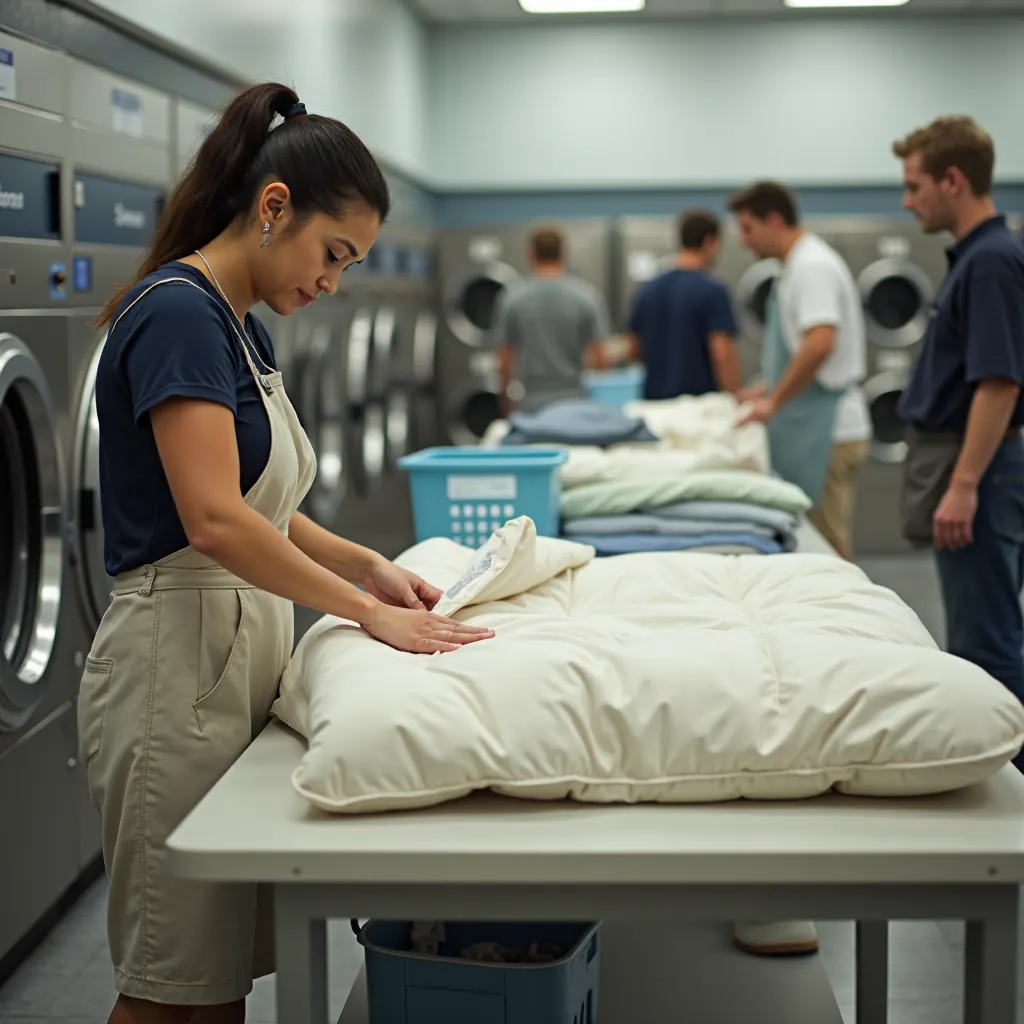
If your comforter is washable, the next decision is whether to do it yourself or use a drop-off service. This is where many people save either time or stress by choosing the right path from the start.
Choose Self-Serve When
- You have checked the care label and are comfortable following it.
- The comforter is in solid condition with no damaged seams or escaping fill.
- You want direct control over detergent, water temperature, and drying checks.
- You have only one or two bulky items and can stay involved through the process.
- You are dealing with normal household soil, light stains, or seasonal freshening.
Self-serve is a good fit when you want hands-on control and are prepared to monitor drying carefully. The drying stage is where most comforter problems happen, not the wash itself.
Choose Drop-Off Service When
- You do not want to manage a large bedding load from start to finish.
- You have several items to clean at once.
- You are concerned about using too much detergent or the wrong heat setting.
- You want to avoid hauling damp bulky bedding around while checking for hidden moisture.
- You simply prefer convenience over a self-managed visit.
At Fresh Spin, the safe way to describe this option is simple: bring in your bedding for drop-off service, explain any care concerns, and return for the finished order. If you want details on the service itself, use the site’s wash and fold page for the latest information.
A Simple Decision Checklist
Use this quick checklist before you leave home:
- Label says machine wash? If no, stop.
- Label allows tumble drying? If no, stop or seek a different care method.
- No tears, weak seams, or leaking fill? If no, repair first.
- You know whether it is down, feather, or synthetic? If no, inspect the tag carefully.
- You can stay attentive through washing and drying? If no, use drop-off service.
What to Check on the Care Label Before You Start
The care label is not a formality. It is the most important instruction set you have for your comforter. Sources like Whirlpool, Sleep Foundation, and Consumer Reports all align on this point: the label should guide your temperature choices, whether bleach is safe, whether machine drying is allowed, and whether the item is even washable in the first place.
Key Instructions to Look For
- Machine wash or dry clean only
- Water temperature guidance, such as cold or warm
- Cycle guidance, such as gentle or delicate
- Drying guidance, including low heat, tumble dry, or air dry preferences
- Bleach warnings
- Fiber content of the shell and fill
Why Fill Type Matters So Much
A synthetic comforter is often more forgiving than a down comforter, but that does not mean rough handling is safe. Down and feather fills can clump when soaked and overheated, while some synthetic fills can mat down or lose loft if dried too aggressively. Sleep Foundation emphasizes that down comforters need careful drying so moisture does not remain trapped in the inner fill. A comforter that feels dry on the surface may still be damp deep inside.
Common Label Language, Explained
- Machine wash gentle: Use a gentle approach and avoid overloading.
- Cold water only: Do not substitute hot water because you think it will clean better.
- Tumble dry low: Drying is allowed, but keep heat conservative and check often.
- Do not bleach: Skip chlorine bleach and do not improvise with strong whitening products.
- Dry clean only: Do not put it in a washer.
If the tag conflicts with internet advice, trust the tag. General washing guidance cannot override the item manufacturer’s care instructions.
How to Prepare a Comforter for Washing
Good results start before the item ever goes into a machine. Preparation reduces the chance of a stain setting, a seam splitting, or a damp spot becoming a mildew problem later.
Step 1: Inspect the Entire Comforter
Lay the comforter out and look closely at:
- Seams and piping
- Corner stitching
- Quilted channels or baffles
- Thin spots in the shell fabric
- Rips, pinholes, or areas where fill is escaping
Even a small opening can become a much larger problem once wet fill starts shifting. If you see damage, repair it before washing.
Step 2: Shake Out Dust and Loose Debris
This is especially helpful if the comforter has been stored or has pet hair, lint, crumbs, or dried surface dust. A quick shake also helps you spot problem areas such as flattened sections or matted fill.
Step 3: Pretreat Visible Stains
Consumer Reports and Clorox both support spot treatment for stains before the full wash, as long as you use products appropriate for the fabric and care label. Focus on:
- Body oil near the top edge
- Cosmetic stains
- Food drips
- Pet marks
- Yellowing on white bedding
Blot and pretreat according to the product instructions and the fabric’s care label. Do not scrub the shell aggressively, especially on delicate or tightly woven covers.
Step 4: Remove the Duvet Cover If There Is One
If you use a duvet cover, wash it separately unless the label clearly allows otherwise and the combined bulk still leaves ample room in the machine. The insert and the cover clean and dry more evenly on their own.
Step 5: Fold for Easy Loading, Not Tight Packing
It helps to fold or loosely roll the comforter for carrying, but do not compress it into a hard bundle. You want it to open up once it goes into the machine.
What to Bring With You
- Detergent suitable for the comforter’s fabric and fill
- A stain pretreatment product if needed
- Dryer balls if you already use them and the label allows machine drying
- The matching duvet cover or shams, if washing separately
- A large clean bag or basket for transporting the finished item home
The Right Way to Load a Comforter in a Laundromat Washer
The biggest self-serve mistake is simple: overstuffing. Whirlpool and Consumer Reports both point out that bulky bedding needs enough free space to move. A comforter stuffed in too tightly may look like it fits, but “fitting” is not the same as washing well.
What Proper Loading Looks Like
After placing the comforter in the washer, it should sit inside the drum without being jammed or forced. You want visible room for shifting and tumbling. If you have to push hard to close the door or the item is packed wall to wall with no give, the load is too tight.
Why Overloading Causes Problems
- Water cannot circulate evenly through the fill.
- Detergent may not rinse out completely.
- The comforter can twist into a heavy mass.
- Cleaning becomes uneven, especially in center folds.
- The shell and seams can be stressed by concentrated weight.
Should You Wash Anything Else with It?
Usually, no. A comforter washes best on its own unless the care label and available washer space clearly support combining it with very light companion items. Adding towels, jeans, or other heavy laundry is a common mistake that changes how the bedding moves and can lead to poor rinsing or a lopsided load.
If you also need to wash sheets, pillowcases, and duvet covers, keep them as separate loads. Bulky bedding is not the place to maximize every inch of drum space.
Choosing Water Temperature, Detergent, and Cycle
This is where many people overcomplicate the process. In reality, the correct settings usually come directly from the care label, with a few broad best practices backed by appliance makers and bedding care guidance.
Water Temperature: Follow the Label, Then Stay Conservative
If the care label says cold, use cold. If it allows warm, warm may be fine for many washable comforters. Hot water is not automatically “better” and can increase the risk of shrinkage, shell stress, dye movement, or damage to certain fills and finishes.
Sleep Foundation notes that down bedding often benefits from careful temperature control and gentle handling. If you are uncertain and the label does not clearly call for warmer water, conservative settings are usually safer.
Detergent: Less Is Often Better
Because comforters are thick and absorbent, too much detergent can be hard to rinse out. Residue can leave the shell stiff, make the item feel heavy, and attract soil faster after washing. Use only the amount appropriate for a single bulky item and avoid the instinct to add extra “for freshness.”
Cycle Choice
- Gentle or delicate: Often the safest choice for many washable comforters, especially down or delicate shells.
- Normal: May be fine if the label supports it and the item is sturdy.
- Heavy-duty: Usually unnecessary for comforters and can be harsher than needed unless the manufacturer specifically supports it.
Do not guess based only on how dirty the comforter looks. The shell fabric and fill type matter more than surface appearance.
What About Bleach?
Only use bleach if the care label explicitly allows it and the product instructions support the fabric type. Clorox makes clear that bleach use depends on bleach-safe materials and correct handling. Never assume a white comforter can automatically be bleached. Many white items contain finishes, trims, or fibers that can be damaged.
Should You Use Fabric Softener?
Unless the label specifically allows and you know it works well with the fill, it is often better to skip anything extra. Residues from softeners or scent boosters can build up in thick bedding and reduce breathability.
How to Dry a Comforter Without Leaving Damp Clumps Inside
If washing is the first half of the job, drying is the part that determines whether the comforter actually comes out usable. A comforter can look dry, smell fresh, and still hold hidden moisture in the middle. That trapped dampness can lead to odors, mildew, or fill clumping after you take it home.
Start with the Care Label Again
If the comforter is machine dryable, follow the label’s heat guidance. For many items, lower heat and careful checking are safer than pushing high heat in hopes of getting done faster. Sleep Foundation and Consumer Reports both emphasize complete drying, especially for down bedding.
Why Low-to-Moderate Heat Is Often Safer
- It reduces the risk of scorching delicate shells.
- It lowers stress on seam construction.
- It helps avoid overheating synthetic fills.
- It gives you more control as the comforter lofts and redistributes.
Use Dryer Balls if the Label Allows
Dryer balls can help separate filling and reduce clumping during the drying process. This is especially useful for down or feather-filled items. The goal is not speed alone; it is loft restoration and even internal drying.
Check for Hidden Damp Spots
Do not rely on the outer shell only. During drying, pause to feel:
- The center of the comforter
- Thicker quilted sections
- Fold lines
- Corners where fill tends to bunch
If any area feels cool, dense, or slightly moist, it likely needs more drying. Coolness in the inner fill often signals retained moisture.
How to Tell If Fill Is Clumping
- Some panels feel dense while others feel flat.
- The comforter no longer hangs evenly.
- You can feel hard or lumpy pockets inside.
- Feather or down fill gathers in one end or corner.
If you notice clumping, stop and redistribute the fill by hand before continuing. Drying while clumps are left in place can make the problem worse.
Do Not Rush the Final Dryness Check
This is one of the most common mistakes people make with bulky bedding at any laundromat. They remove the comforter when it feels mostly dry, fold it up, and trap the remaining moisture inside. Once folded or bagged, that slight dampness has nowhere to go.
Before leaving, make sure the comforter feels evenly dry throughout, not just acceptably dry on the outside.
How to Wash Different Types of Comforters and Bulky Bedding
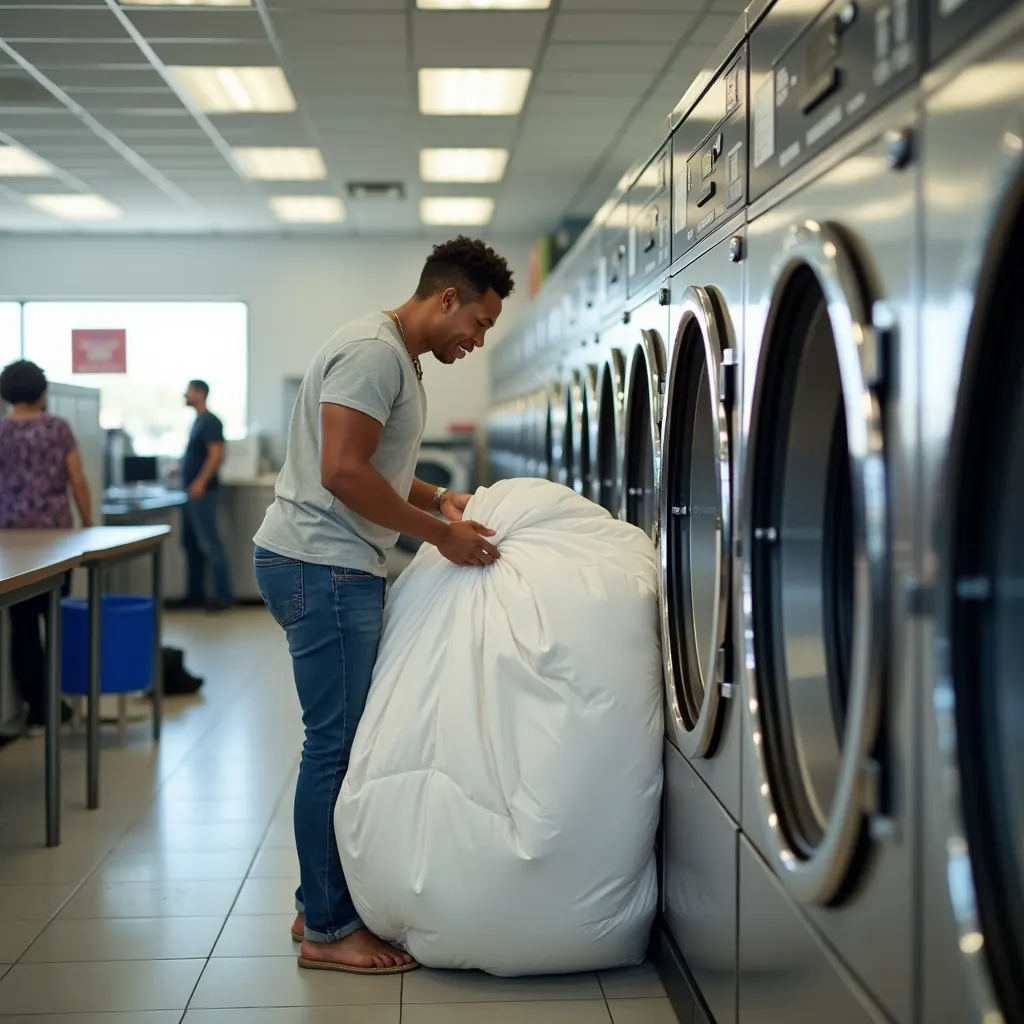
Not all bedding behaves the same way in a washer and dryer. Here is how to think through the most common categories.
Down Comforters
Down comforters can often be machine washed if the label says so, but they deserve extra caution. Sleep Foundation notes that down requires gentle handling and thorough drying to prevent damp clusters and odor. With down, the two biggest risks are overdetergenting and incomplete drying.
- Use the care label as your primary guide.
- Choose a cycle that does not over-agitate the shell.
- Use a modest amount of detergent.
- Break up clumps during drying checks.
- Do not stop the drying stage just because the shell feels dry.
Feather-Filled Comforters
Feather-filled items share some of the same concerns as down, including clumping and seam stress. If the shell is aging or feathers are already escaping, washing may worsen the issue. Inspect carefully before you start.
Synthetic Comforters
Synthetic comforters are often easier to wash than down, but they still need space and measured heat. Overheating can flatten loft or distort the shell. They may seem sturdier, but that does not make them a good candidate for crowding into a too-small load.
Wool or Specialty Fill Comforters
These may have narrower care requirements and can be more sensitive to water temperature, agitation, and drying method. If the label is strict or unclear, err on the side of caution.
White Comforters
White comforters often show body oils and yellowing more clearly. Pretreating can help, but do not jump straight to bleach unless both the care label and product directions support it. As Clorox advises, bleach safety depends on the item’s materials.
Duvet Inserts
A duvet insert may wash similarly to a comforter, but always separate it from the cover unless the label and space clearly support combining them. Inserts need room to open and tumble freely.
Heavy Blankets and Quilts
Bulky blankets and quilts may also benefit from a laundromat setting, but quilting, stitching, batting, and decorative elements can change the safest method. Some quilts are far more delicate than they appear.
Common Mistakes People Make When Washing Comforters
Most comforter problems come from a small number of preventable mistakes. If you avoid these, you are far more likely to get a clean, fresh result without damage.
Mistake 1: Ignoring the Care Tag
This is the fastest route to shrinkage, clumping, shell damage, or a ruined finish. The tag is the rulebook.
Mistake 2: Stuffing the Comforter into a Too-Tight Load
If the comforter cannot circulate, it cannot wash well. A cramped load also tends to rinse poorly and dry unevenly.
Mistake 3: Using Too Much Detergent
Extra detergent does not equal extra cleanliness. On bulky bedding, it often means more residue and more rinsing trouble.
Mistake 4: Washing the Comforter with Heavy Mixed Laundry
Combining it with towels or clothing changes movement and can cause twisting, uneven cleaning, and poor balance.
Mistake 5: Choosing Heat Based on Hurry
High heat can be tempting, but it is not a shortcut you should assume is safe. Comforters need careful drying more than aggressive drying.
Mistake 6: Leaving with a Comforter That Is Only Mostly Dry
This is probably the most expensive mistake in terms of wasted effort, because it can undo the whole job. Lingering moisture leads to odor, mildew risk, and flattened fill.
Mistake 7: Skipping Stain Pretreatment
Once the comforter is fully washed and dried, untreated oils and stains may still be there, and heat can make them harder to address later.
Mistake 8: Washing a Damaged Comforter Without Repairing It First
Water adds weight, and tumbling adds stress. A tiny seam issue can become a major rip by the end of the wash.
Troubleshooting: What to Do If Something Goes Wrong
Even when you follow the label, comforters can be finicky. Here is how to deal with the most common problems.
The Comforter Still Smells Musty After Washing
This usually means one of two things: it did not get fully clean, or it did not get fully dry. Check whether detergent residue remains or whether the inner fill still feels cool and damp. Musty odor after drying often points to retained moisture.
- Reassess whether the load had enough room to wash properly.
- Make sure detergent use was not excessive.
- Confirm the item is completely dry all the way through.
The Fill Is Clumped in Sections
This is common with down, feather, and some synthetic fills. Separate clumps by hand and continue drying if the care label allows. Do not store the comforter until the fill feels evenly distributed and dry.
The Comforter Feels Stiff
Stiffness often suggests detergent residue or overdrying. If the shell feels coated rather than simply crisp, residue may be the issue. If the fabric feels harsh from heat exposure, review the drying setting you used and follow the label more conservatively next time.
The Stain Did Not Come Out
Some stains need targeted treatment before washing, not after. Avoid escalating to stronger products unless the care label supports them. Repeatedly washing without the right pretreatment can wear the shell without removing the stain.
Feathers Are Escaping
If feathers begin working through the shell, stop handling the item roughly. This may indicate seam stress, shell wear, or pre-existing damage. Washing again without repair can make loss of fill much worse.
The Comforter Looks Uneven After Drying
Lay it flat, redistribute fill gently by hand, and inspect the quilted sections. Uneven loft may mean the item needs more drying, or it may reflect permanent fill migration in an older comforter.
Practical Tips for a Better Laundromat Visit
A little planning makes bulky bedding easier to handle from start to finish. Comforters are not difficult, but they are awkward, heavy when wet, and easy to misjudge if you arrive unprepared.
Before You Leave Home
- Read the care label completely.
- Pretreat visible stains.
- Inspect for tears or weak seams.
- Remove duvet covers and wash them separately.
- Bring only the products you actually need.
At the Washer
- Do not force the load into a machine.
- Load the comforter by itself unless the label and available space clearly allow otherwise.
- Choose settings based on the tag, not habit.
- Use measured detergent, not an extra pour.
At the Dryer
- Fluff and redistribute before drying if the item came out bunched.
- Check inner areas, not just the shell surface.
- Break up clumps before they harden into dense pockets.
- Do not fold or bag the comforter until it is fully dry.
When You Get Home
- Spread the comforter out briefly before placing it back on the bed or storing it.
- Do a final feel-check in the center and corners.
- If storing, make sure the item is truly dry and clean before putting it away.
When Drop-Off Service Is the Smarter Choice
There is nothing wrong with deciding that a comforter is more work than you want to manage. Bulky bedding takes judgment, especially during drying, and many people would rather avoid the trial and error.
Drop-off service makes sense when:
- You have multiple bedding pieces from one room.
- You do not want to monitor fill clumping and moisture checks yourself.
- You are short on time but still want the item cleaned properly.
- You are handling seasonal bedding changeovers.
- You simply prefer a simpler routine.
For Fresh Spin customers, the best way to describe the process is straightforward: bring the item in for drop-off service, mention any stains or care-label concerns, and return for the finished order. If you need current service details or want to reach the team before your visit, use the contact page.
Examples: Which Approach Makes Sense for Different Households?
Sometimes the easiest way to decide is to compare your situation to a realistic example.
Example 1: The Guest-Room Comforter That Just Needs Freshening
The comforter has been stored for a season, has no stains, and the label allows machine washing and tumble drying. It is in excellent condition and not heavily soiled. This is a strong self-serve candidate because the process is mostly straightforward: inspect, wash according to the tag, dry thoroughly, and go home with a refreshed item.
Example 2: A Primary-Bed Comforter with Body Oil and Pet Hair
This one likely needs more prep. You will want to remove pet hair as much as possible, pretreat visible soils, and be disciplined about detergent use so residue does not stay in the fill. Self-serve can still work well if the label supports it, but this is the kind of load where drop-off service starts to look appealing.
Example 3: A Down Comforter You Are Nervous About Ruining
The label says machine wash gentle and tumble dry low, but you are worried about clumping or hidden moisture. This is exactly the kind of item where your comfort level matters. If you are prepared to monitor the dry carefully, self-serve may be fine. If not, drop-off service can remove a lot of the uncertainty.
Example 4: A Comforter with a Small Seam Split
Do not wash it yet. Repair first. A minor opening can become a major tear once the fill gets wet and heavy.
Example 5: A White Comforter with Yellowing
Treat this as a stain-and-fabric question, not just a “wash it hotter” problem. Pretreat first, read the label closely, and only consider bleach if the item is actually bleach-safe.
FAQ: Washing Comforters at an Independence Laundromat
Will my comforter fit in a laundromat washer?
Many comforters do, but the real test is whether the item has enough room to move freely. If it must be packed in tightly, the wash quality will suffer and the item may not rinse or dry well.
Should I wash a comforter by itself?
Usually yes. Bulky bedding cleans best when it is not competing with towels, clothing, or other heavy items for space and water circulation.
Can I wash a down comforter at a laundromat?
Often yes, if the sewn-in care label allows machine washing. Down needs gentle handling, modest detergent use, and especially careful drying so moisture does not stay trapped inside.
What temperature should I use?
Use the temperature listed on the care label. If the label allows warm water, that may be fine for many items. Do not assume hotter is better.
How much detergent should I use for a comforter?
Use a measured amount appropriate for one bulky item and avoid overpouring. Too much detergent can be difficult to rinse out of thick bedding.
Can I use bleach on a white comforter?
Only if the care label says bleach is safe and the product instructions support the fabric. Many white comforters are not suitable for chlorine bleach.
Why does my comforter still smell after washing?
The most common reasons are incomplete cleaning, detergent residue, or hidden moisture left in the fill after drying.
How do I know when a comforter is fully dry?
Feel the center, corners, and thicker quilted sections. The item should feel evenly dry throughout, not just dry on the outer shell.
Can I bring a comforter in without doing it myself?
Yes. Fresh Spin offers drop-off service. Bring the item in, note any care concerns, and return for the finished order.
Is self-serve or drop-off better for bulky bedding?
Self-serve is great when you want control and can monitor the process carefully. Drop-off is often better when you want simplicity, have multiple items, or do not want to manage the drying stage yourself.
Final Decision Guide: The Best Option for Your Comforter
If your comforter’s care label allows machine washing and machine drying, a laundromat can be one of the safest and most effective places to clean it because bulky bedding needs room to circulate and dry properly. The best self-serve results come from four habits: check the label, avoid overloading, use detergent sparingly, and keep drying until the entire item is evenly dry inside and out.
If any part of that sounds inconvenient, uncertain, or too easy to get wrong, choose the simpler route. Fresh Spin gives Independence-area customers two practical options: self-serve for washable comforters you want to handle yourself, and drop-off service for bedding you would rather bring in and return for when it is finished. Either way, the goal is the same: a comforter that comes back clean, fresh, fully dry, and ready for the bed instead of half-cleaned and still damp in the middle.
Helpful Fresh Spin Resources
Keep exploring related Fresh Spin Laundry guides and local service pages.