
Searching for the best laundry service near me usually starts with a full hamper, a crowded schedule, or a washer that cannot keep up. The useful answer is not simply the closest business or the loudest claim. The best choice is the service that fits your laundry, explains how the process works, respects garment-care instructions, and gives you a practical way to get clean, folded clothes without spending your own active time washing, drying, and folding every load.
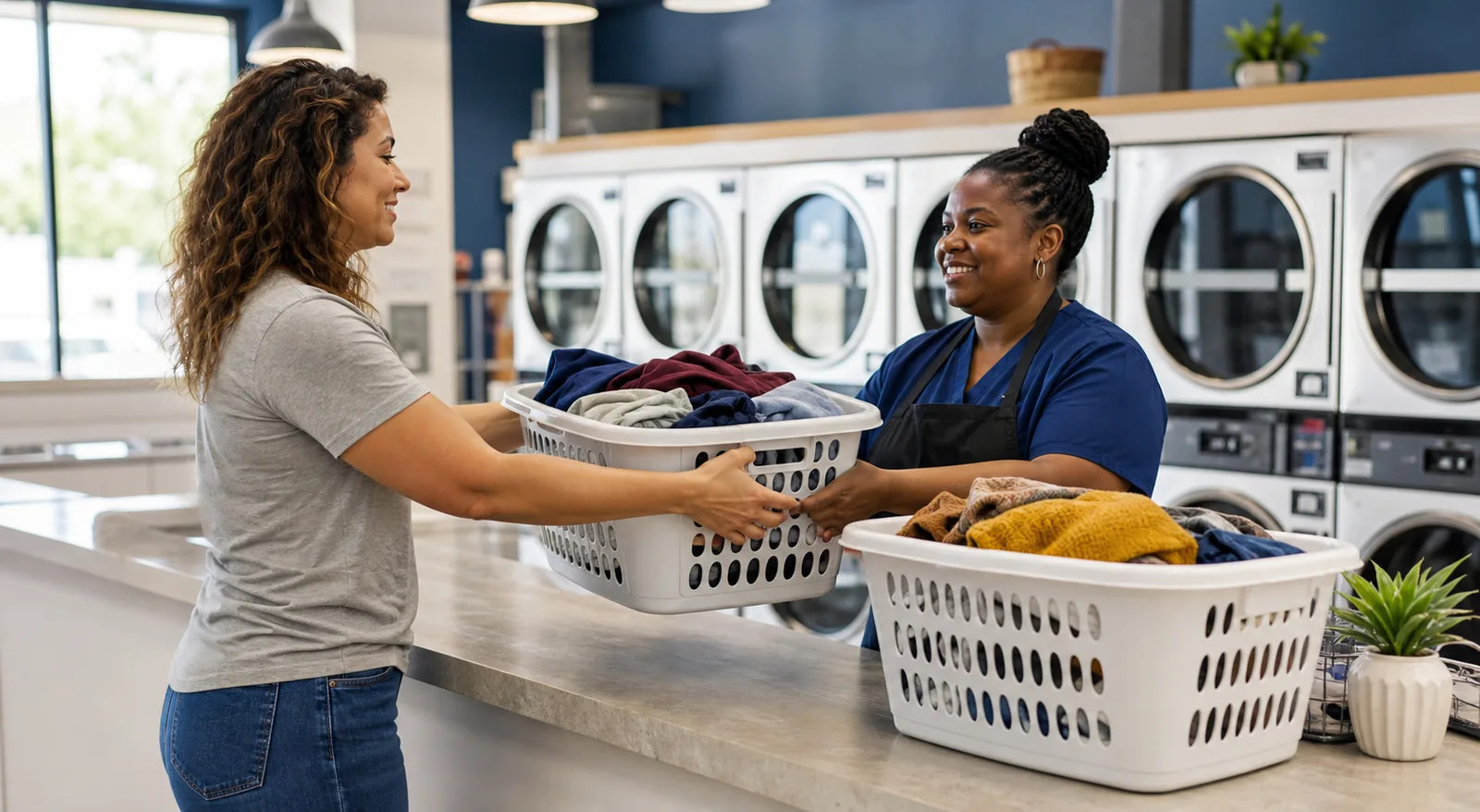
For households near Independence, Missouri, in-store wash-dry-fold service at Fresh Spin Laundry offers that kind of help. You bring washable household laundry to the store, explain any important preferences or special-care items, and return to the store for the finished order. Fresh Spin does not offer pickup or delivery. That distinction matters: this is a local, attended drop-off service for people who want laundry handled for them without pretending that a driver will come to their home.
This guide explains what to compare, what to ask, what to bring, and when wash-dry-fold is a better fit than doing every load yourself. It also shows why “best” should mean dependable fit and clear expectations—not an unsupported promise that one option is perfect for every person or every garment.
What “best laundry service near me” should actually mean
A nearby laundry service can save a meaningful amount of hands-on work, but distance alone does not make it the right choice. A strong local wash-dry-fold service should make the whole exchange understandable. You should know where to bring the laundry, what types of items belong in the order, how to identify anything needing special attention, and how you will receive the completed laundry. If a service description leaves you guessing about those basics, proximity will not remove the friction.
The best fit also depends on the job. A parent trying to catch up on everyday shirts, pants, towels, and school clothes has different needs from someone holding one delicate garment with a “dry clean only” label. A renter with several routine loads may value relief from folding. Someone washing a bulky comforter may need to confirm that the item can be handled before bringing it in. A useful comparison begins with the actual contents of your hamper.
Think about five practical qualities:
- Fit: the service handles the washable items you need cleaned and helps you identify exceptions.
- Clarity: the drop-off, processing, and in-store return steps are easy to understand.
- Care: garment labels, colors, fabrics, and customer instructions are treated as meaningful information.
- Convenience: the store location and current operating information work with your routine.
- Trust: the business avoids vague guarantees and gives honest answers when an item needs a different kind of care.
That framework is more useful than choosing from a search-results list based only on ranking position. It helps you compare the service you will actually receive.
What wash-dry-fold service includes
Wash-dry-fold is a straightforward division of labor. You prepare and bring your laundry to the laundromat. The attended service handles the active washing, drying, and folding. You then return to the store to collect the order. Customers bring laundry to the store and return to collect it. There is no pickup or delivery service.
That makes wash-dry-fold different from both self-service laundry and home-delivery laundry. With self-service laundry, you operate the machines and remain responsible for moving, drying, and folding each load. With a pickup-and-delivery company, transportation is part of the service. Fresh Spin’s model stays in the middle: you handle the short trip to and from the store, while the attended team handles the time-consuming work between those visits.
The service is built for ordinary washable laundry, but “ordinary” still includes important differences. Dark clothing, white towels, athletic fabrics, children’s clothes, jeans, sheets, and workwear may not all belong in the same wash conditions. A thoughtful intake conversation helps surface those differences before the order begins.
Wash-dry-fold is not dry cleaning, garment restoration, tailoring, or a guarantee that every old stain will disappear. Some fabrics or constructions require a specialty cleaner. If a care label says “dry clean only,” or if an item contains leather, structured padding, delicate decoration, or an unknown material, ask before putting it in a routine drop-off order.
Start with the care label, not the stain
When a garment is dirty, the stain naturally gets attention first. The care label should come first because it tells you which cleaning methods the manufacturer supports. The Federal Trade Commission’s explanation of the Care Labeling Rule says covered garments must carry instructions for regular care and warnings when a procedure could harm the product. Those instructions may address washing, bleaching, drying, ironing, and special restrictions.
Before drop-off, turn questionable pieces inside out and find their labels. Set aside anything marked hand wash, line dry, lay flat, no tumble dry, or dry clean only. That does not automatically mean the service cannot help, but it does mean the item deserves a direct conversation instead of disappearing into the middle of a bag. If the label is missing or unreadable, tell the attendant what you know about the fabric and how the garment has been cleaned successfully before.
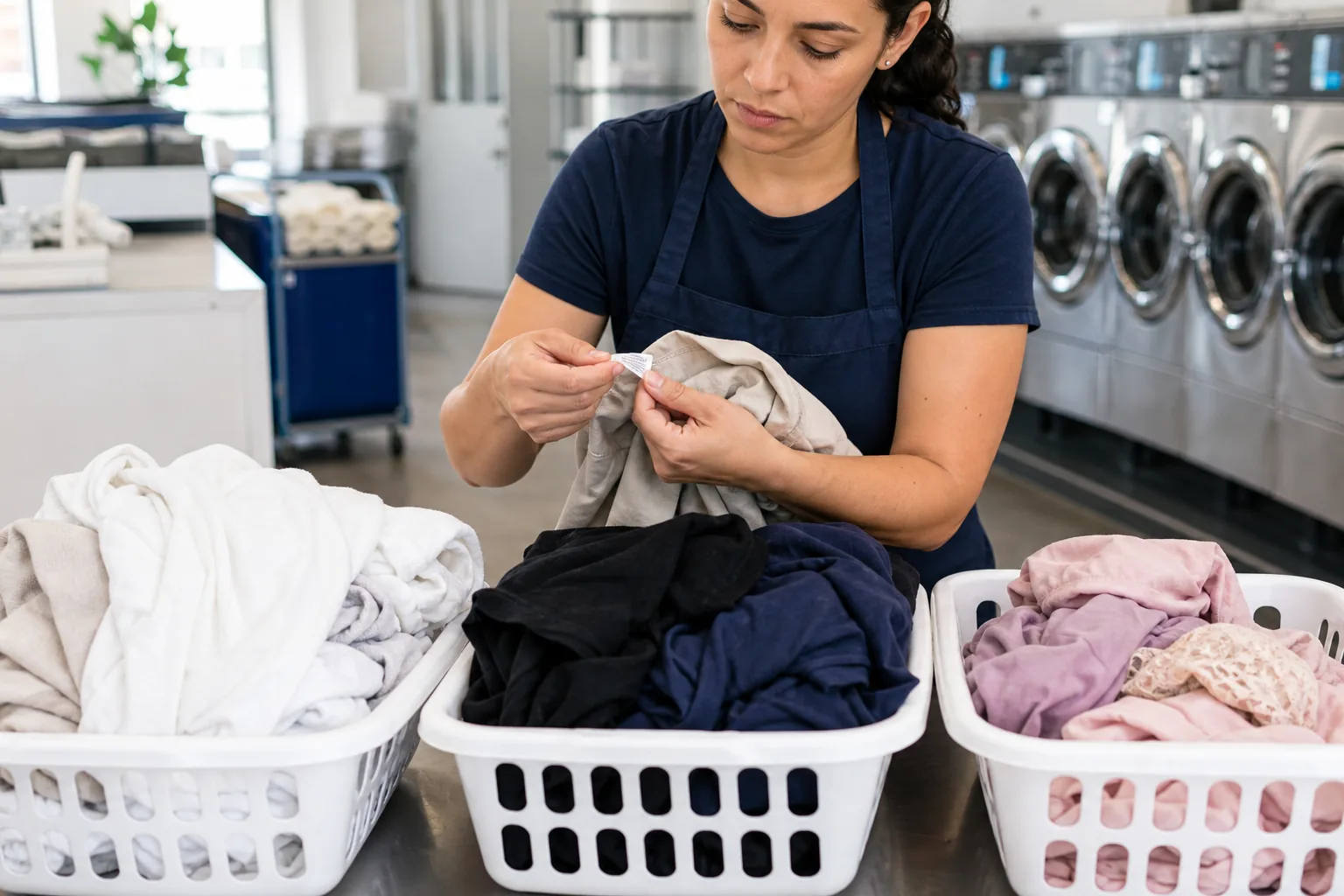
Care labels also help set realistic expectations. A “wash with like colors” warning signals color-transfer risk. A low-temperature drying instruction may protect fit or elasticity. A “no bleach” instruction matters even if a white garment appears to need aggressive stain treatment. The best laundry service is not the one that promises the harshest cleaning; it is the one that recognizes that cleaning and protecting the item must happen together.
A seven-part checklist for comparing a local laundry service
1. Confirm the service model
Read the service page and make sure you understand whether the business offers self-service, attended drop-off, pickup and delivery, dry cleaning, or some combination. These services are not interchangeable. Fresh Spin provides self-service laundry and in-store wash-dry-fold. If your search assumes a driver will collect bags from your porch, this particular service model is not that. If you can bring the laundry to the store and return for it, the attended model may fit well.
2. Ask how preferences are recorded
A good intake process should give you a chance to mention relevant preferences and exceptions. You might need to identify fragrance sensitivity, a garment that should not enter a dryer, an item with a known color-bleeding problem, or clothing that should remain separate from household towels. Not every preference can necessarily be accommodated, so ask rather than assume. The quality signal is a clear answer and a repeatable way to attach important information to the order.
3. Evaluate garment-care awareness
Listen for questions about labels, fabric differences, and unusual items. A service does not need to turn intake into a textile seminar, but it should not treat every object in a bag as identical. The FTC care-label guidance is a useful reminder that normal care instructions exist because the wrong heat, bleach, washing method, or drying method can harm clothing.
4. Understand what is excluded
Ask before bringing items that may fall outside routine household laundry: dry-clean-only garments, items with heavy contamination, oversized specialty pieces, pet bedding with excessive hair, rugs with rubber backing, or fabrics with unknown coatings. A responsible “no” protects your item and the rest of the order. It is a better signal than an automatic yes to everything.
5. Check current store information
Use the business’s current website or contact channel to verify location and operating information before making the trip. Search snippets and third-party directories can become stale. Fresh Spin serves customers from its Independence location; the contact page is the right place to confirm current details or ask a service question.
6. Compare the full burden, not only the charge
Price matters, but the useful comparison includes your time, transportation, sorting, machine work, transferring loads, folding, and the possibility of redoing a load after a mistake. Wash-dry-fold shifts much of that active work to an attendant. It does not eliminate the need to prepare the order or travel to the store, but it can replace a long chain of chores with two shorter store visits.
7. Start with a representative order
If you are trying a service for the first time, choose a normal order that reflects what you would use it for regularly. Everyday clothing, towels, and washable linens give you a clearer sense of fit than one unusual item. Keep irreplaceable, fragile, or specialty-cleaning pieces out of a first trial unless you have discussed them directly.
Why time—not only cleanliness—drives the search
People rarely search “best laundry service near me” because they have forgotten that washing machines exist. They search because laundry competes with work, family, sleep, errands, maintenance, and the rest of life. The active steps are fragmented: gather, sort, pretreat, load, transfer, dry, fold, match, and put away. Even when each step feels small, the interruptions can dominate a day.
The U.S. Bureau of Labor Statistics’ American Time Use Survey chart includes laundry among measured household activities. The exact average is less important for an individual household than the broader point: laundry is recurring labor. A busy family may experience far more work in a high-volume week, while another household may have only one simple load.
Wash-dry-fold changes which parts require your attention. You still gather clothes, check pockets, separate specialty items, bring the order in, and put the finished clothes away. The attended service takes over the middle. That can be especially valuable when the real problem is not the washer cycle itself but the repeated monitoring and folding around it.
Who benefits most from in-store wash-dry-fold?
Families facing a backlog
Children’s clothing, towels, bedding, school outfits, and sportswear can create more volume than a home routine absorbs comfortably. A drop-off order can help reset the household without requiring a permanent all-or-nothing commitment. Some families use attended laundry during demanding weeks and return to home washing when the schedule settles.
Workers with limited off-hours
People working long shifts or multiple jobs often need clean clothing but cannot devote a continuous block of attention to laundry. Bringing an organized order to the store can turn active wash-day labor into a shorter errand. Work garments with unusual soil, protective finishes, or specialized care still need to be identified at intake.
Caregivers and people managing household transitions
Illness, a new baby, a move, travel, or caring for a family member can disrupt even a strong home routine. Wash-dry-fold can serve as temporary capacity. It is not a statement that someone cannot do laundry; it is a practical way to direct limited energy toward the work that only they can do.
Renters with inconvenient laundry access
A shared laundry room, limited machine availability, or an unavailable home washer can turn a few loads into a scheduling problem. Fresh Spin’s guide to choosing a laundromat near you explains the broader self-service decision. Wash-dry-fold is the adjacent choice for someone who also wants the active process handled.
People who dislike folding more than washing
Clean laundry that sits in baskets creates its own stress. If folding is the step that repeatedly breaks your routine, paying for attended service may address the real bottleneck. The finished order still needs to be put away, but orderly folding can make that final step much easier.
How to prepare a wash-dry-fold order
A little preparation protects garments and makes the intake conversation more useful. It does not require doing the attendant’s job in advance. The goal is to remove surprises.
- Empty every pocket. Remove pens, receipts, lip balm, keys, hardware, tissues, and anything containing a battery. Check children’s clothing and workwear carefully.
- Look for damaged items. Loose seams, open zippers, missing buttons, and torn pockets can worsen during normal washing. Set those pieces aside for repair or point them out.
- Read special-care labels. Pull out dry-clean-only, hand-wash, air-dry, embellished, leather-trimmed, and other unusual items.
- Identify stains without guaranteeing an outcome. Tell the attendant what caused a stain if you know. Do not apply a random chemical mixture before drop-off.
- Separate anything that must remain separate. Use a smaller labeled bag or discuss it at the counter rather than relying on memory.
- Count or photograph unusually important pieces. A simple personal record can help you remember what you brought.
- Transport laundry securely. Use baskets or bags that close or remain upright, and keep clean containers available for the return trip.
If you use single-load detergent packets at home, store and handle them carefully. The U.S. Consumer Product Safety Commission warns that concentrated laundry packets can seriously harm children and says they should remain sealed in their original packaging and out of children’s sight and reach. Do not let a child carry loose packets as part of the laundry errand.
Questions worth asking at the counter
A short conversation can prevent most mismatched assumptions. Choose the questions that apply to your order:
- Is this item appropriate for routine wash-dry-fold service?
- How should I flag a garment that needs special attention?
- Can this item remain separate from the rest of the order?
- Should I remove or repair anything before leaving it?
- How will I know when to return for the order?
- What should I bring when I collect it?
- Where can I confirm current service and store information?
Avoid assuming an answer based on another laundromat, an old review, or a generic search result. Practices vary. Current questions deserve current answers, especially when they involve timing, pricing, products, or item eligibility.
What about detergent, fragrance, and sensitive skin?
Detergent preferences can matter for comfort, scent, and routine. If a household has a known sensitivity or a strong fragrance preference, mention it before the order is accepted and ask what options are available. Do not assume that “free and clear,” “hypoallergenic,” “natural,” or another marketing term guarantees a reaction-free result. Individual sensitivities vary, and shared laundry environments may not be suitable for every medical need.
More detergent is not automatically better. Excess product can be difficult to rinse and may leave residue, while too little may not match the soil level or load. The right amount depends on the product directions, equipment, load size, and conditions. For home or self-service washing, follow the detergent label and machine instructions rather than estimating from suds.
If you need supplies for a self-service visit, Fresh Spin also has a mini-mart convenience store. Availability can change, so confirm a specific item instead of building the entire trip around an assumption.
Wash-dry-fold versus self-service: which is the better value?
The answer depends on what you are trying to conserve. Self-service gives you direct control over sorting, products, cycles, timing, and folding. It may be the better fit when you want to manage every garment personally, have time to remain with the loads, or are handling an item that needs repeated judgment.
Wash-dry-fold gives up some direct involvement in exchange for less active labor. It can be the better fit when your schedule is the scarce resource, the backlog is creating stress, or folding is preventing clean clothes from becoming usable clothes. A household can use both options: self-service for special loads and attended service for routine volume.
Do not compare value only by imagining that your own time is free. Also do not pretend that every saved minute converts directly into income. The practical question is simpler: what could you do with the attention the service returns? Rest, family time, paid work, meal preparation, errands, or simply a less chaotic evening can all be legitimate value.
How a good order protects clean laundry after washing
Clean laundry can pick up odor, moisture, pet hair, or dirt again if it returns to the same container that held a soiled load. Bring a clean basket, liner, or bag for collection unless the service specifies how the finished order will be contained. Keep the vehicle area dry and reasonably clean, especially during rain or winter weather.
At home, put the laundry away promptly. Folded stacks become unstable when left in a busy hallway or on the floor. Make a clear landing area before collection, then move each category directly to its drawer, shelf, or closet. If anything feels damp, address it before storage rather than sealing moisture into a drawer.

This last step is easy to overlook, but it is part of the service’s real benefit. Neatly folded laundry reduces the friction between collection and putting clothes away. The goal is not just clean fabric; it is a household routine that reaches completion.
Red flags when comparing “laundry service near me” results
Search results can blend different service models and repeat old information. Slow down when you see:
- a pickup or delivery promise that does not appear on the business’s current site;
- exact hours, prices, or turnaround claims copied into an undated directory;
- a guarantee that every stain or odor will disappear;
- no explanation of what happens to special-care items;
- a “best” claim without any criteria;
- stock descriptions that could apply to any business in any city;
- instructions to leave laundry unattended without a clearly documented process.
A credible local service does not need to promise perfection. It needs to communicate honestly, perform the service described, and make it possible for customers to ask questions before handing over their clothes.
Local convenience in Independence, Missouri
For customers around Independence and nearby eastern Kansas City communities, local convenience usually means combining laundry with an existing route. A store near familiar roads, work, school, groceries, or family errands can be more useful than a theoretically shorter route that is difficult to fit into the day. Fresh Spin’s location on E Truman Road is positioned for in-store visits; check the current contact and location information before leaving.
If this will be your first visit, the first-time laundromat checklist can help with pocket checks, sorting, supplies, and clean transport. If your main concern is late-night search intent, the 24-hour laundromat and wash-dry-fold guide explains how attended service can reduce active laundry time without claiming that Fresh Spin is open around the clock.
Local visibility should make the real service easier to understand. It should not turn every nearby neighborhood or street into a separate claim. The relevant fact is that customers bring laundry to the Independence store and return there for it.
A practical first-order plan
If the service sounds like a fit, use this simple plan:
- Choose a representative group of ordinary washable household items.
- Empty pockets and remove anything damaged, delicate, or dry-clean-only.
- Photograph care labels on items you want to discuss.
- Write down the two or three preferences that matter most.
- Confirm current location and service information.
- Bring the laundry to the store and review questions at the counter.
- Keep your order information and follow the stated return process.
- Prepare a clean place at home for the folded laundry.
After collection, evaluate the experience against your real criteria. Was intake clear? Did the service model match the description? Was the finished folding useful for your storage? Did the process save the kind of time you hoped to recover? Those observations tell you far more than a generic ranking.
Build a wash-dry-fold rhythm that prevents the next backlog
One successful order solves today’s pile. A simple household rhythm can keep the same problem from returning at full size. Start by deciding what wash-dry-fold is responsible for. Some households send routine clothing and towels while keeping delicate garments at home. Others use attended service only during travel weeks, school transitions, overtime periods, or when bedding and normal clothing collide. A clear boundary makes preparation faster because everyone knows which hamper is meant for which process.
Create one collection point for the service and keep a small “needs a decision” container nearby. Anything with a damaged seam, unusual stain, missing label, delicate trim, or special drying instruction goes into the decision container instead of the routine bag. Before each store visit, review that smaller group. Some pieces can join the order after a counter conversation; others may need home care, repair, or a specialty cleaner. This prevents one questionable garment from delaying an otherwise ordinary order.
Plan around usable clothing rather than waiting for every hamper to overflow. If school uniforms, work shirts, towels, or sheets are the items that create pressure, watch those categories. A routine should leave enough clean essentials to cover the period while an order is away from home, without relying on an assumed completion time. Current timing should always be confirmed with the store for the actual order.
Give each family member a pocket-check habit. The person who puts clothing into the service hamper should remove personal items, close hook-and-loop fasteners when appropriate, and call attention to a stain or tear. Adults should perform the final review, especially for children’s garments. A shared habit reduces preventable problems without asking one person to inspect the entire household at the last minute.
Finally, make collection part of the plan. Clear drawers and shelves before returning to the store, bring a clean transport container when needed, and put the order away soon after it reaches home. If the folded clothes remain in baskets for a week, the household has moved the bottleneck rather than removed it. The strongest laundry service routine connects drop-off, garment care, collection, and storage as one finished cycle.
Frequently asked questions
Does Fresh Spin pick up laundry from my home?
No. Fresh Spin’s wash-dry-fold service is an in-store drop-off service. You bring laundry to the store and return to the store for the finished order. There is no pickup or delivery service.
Is wash-dry-fold the same as dry cleaning?
No. Routine wash-dry-fold uses laundering processes for appropriate washable items. Dry cleaning is a different specialty process. Check the garment label and ask before including anything marked dry clean only.
Can I include every item from my hamper?
Do not assume so. Remove valuables, pocket contents, damaged items, and specialty-care garments. Ask about bulky, coated, embellished, heavily contaminated, or unusual items before leaving them.
Will wash-dry-fold remove every stain?
No laundry process should be treated as a guarantee that every stain will disappear. Stain type, age, prior treatment, fabric, colorfastness, and care restrictions all affect the safe options. Identify known stains at intake without expecting aggressive treatment that could damage the garment.
Do I need to sort everything first?
You do not need to complete the full service process yourself, but you should separate specialty items and clearly identify anything that must not be handled with the rest. Empty pockets and review care labels before drop-off.
Is wash-dry-fold only for large families?
No. Families often benefit from volume relief, but the service can also help individuals, couples, caregivers, workers, renters, travelers, or anyone facing a temporary backlog. The best fit depends on the value of saved active time.
How do I check current pricing or timing?
Ask Fresh Spin directly using the current site information or at the store. This guide intentionally does not publish a price or completion-time promise because those operational details should be confirmed for the current order.
What if I prefer to do the laundry myself?
Use Fresh Spin’s self-service option and keep direct control over sorting, products, cycles, drying, and folding. You can also divide the work, using self-service for sensitive items and wash-dry-fold for routine household volume.
Choose the service that solves your actual laundry problem
The best laundry service near you is not defined by a keyword alone. It is the service that matches your garments, schedule, transportation, and expectations. For many Independence households, in-store wash-dry-fold solves a specific problem: too much active laundry work and not enough uninterrupted time. It lets you keep control of what enters the order while handing off washing, drying, and folding.
Fresh Spin Laundry offers that attended option alongside self-service laundry. Review the wash-dry-fold service page, use the Fresh Spin FAQ for common store questions, and contact Fresh Spin when an item or preference needs a current answer. Bring the laundry to the Independence store, discuss what matters, and return for the finished order—without any pickup or delivery claim getting in the way of a clear decision.
Leave A Comment