
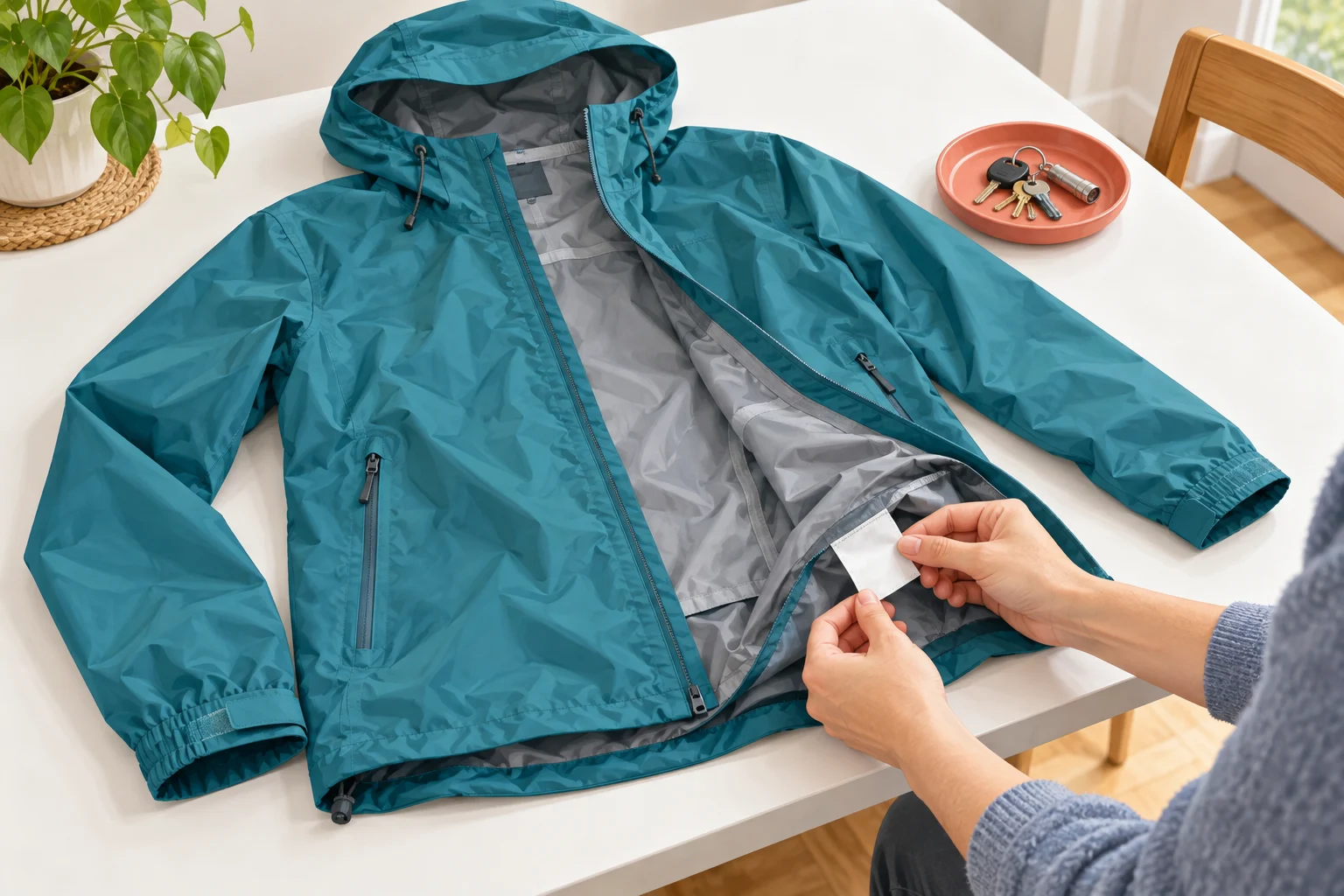
To wash a rain jacket, identify the exact garment, follow its care label and manufacturer instructions, use a compatible cleaner, and complete the specified rinsing and drying process. Check the result before adding a water-repellent treatment. A dirty shell, worn surface repellency, and damaged fabric are different problems; a single wash recipe cannot solve all three.
This guide is for choosing a care process for an everyday rain shell. It is not a substitute for your jacket’s instructions, a waterproofness test, or a promise that an old garment can be restored. Insulated coats, waxed cotton, and specialist membrane garments need their own decisions. Start with the identification checklist, then use the relevant path instead of combining advice intended for different products.
What should you identify before washing a rain jacket?
Put the jacket on a clean surface and find its brand, model or style number, fiber label, and care instructions. Look inside pockets as well as along interior seams. Photograph the labels while they are dry and readable. A product name is more useful than a description such as “blue waterproof coat,” especially when contacting the manufacturer about a discontinued model.
Make a short record with four entries: what the jacket is, what cleaning method is permitted, what drying method is permitted, and whether a separate water-repellent treatment is mentioned. Add any warnings about trim, detachable components, or professional cleaning. You are not trying to translate every technical term before starting; you are identifying the instructions that change what you will actually do.
Our laundry care-label guide can help you organize that check. If a symbol is unclear, do not substitute an internet recommendation that happens to look convenient. Ask the garment maker to explain it. A clear answer about one jacket is more useful than a long collection of conflicting general tips.
- Uninsulated shell: continue with its own washing and drying directions.
- Insulated coat: identify both the shell and the filling. Our puffer-jacket guide addresses the additional insulation decisions.
- Waxed cotton: follow the waxed-garment maker’s separate care process.
- Missing or unreadable label: find model-specific instructions before selecting a cycle.
- Visible damage: document it and seek manufacturer guidance before treating the jacket as an ordinary dirty load.
Is the problem dirt, wetting out, or possible damage?
Start by describing what you observed rather than diagnosing it. “The shoulders turned dark in rain” is a useful observation. “The waterproof membrane has failed” is a conclusion that the observation alone does not establish. Likewise, an odor, a sticky patch, a separated seam, and dampness inside the coat do not automatically have the same cause.
Patagonia distinguishes the surface water-repellent finish, commonly called DWR, from the underlying membrane in laminated waterproof fabric. The finish encourages droplets to bead and roll away; the membrane performs a different barrier function. Its care guidance also identifies dirt, body oils, sunscreen, and smoke as reasons to clean a shell. See Patagonia’s waterproof-jacket explanation.
For your own notes, separate three questions: Does the outside look dirty? Does water spread across the face fabric? Is there a tear, peeling area, or localized place where water appears to enter? The answers help you choose whom to ask and what to inspect next. They do not certify waterproofness, establish a warranty claim, or tell you that a particular bottle will repair the problem.
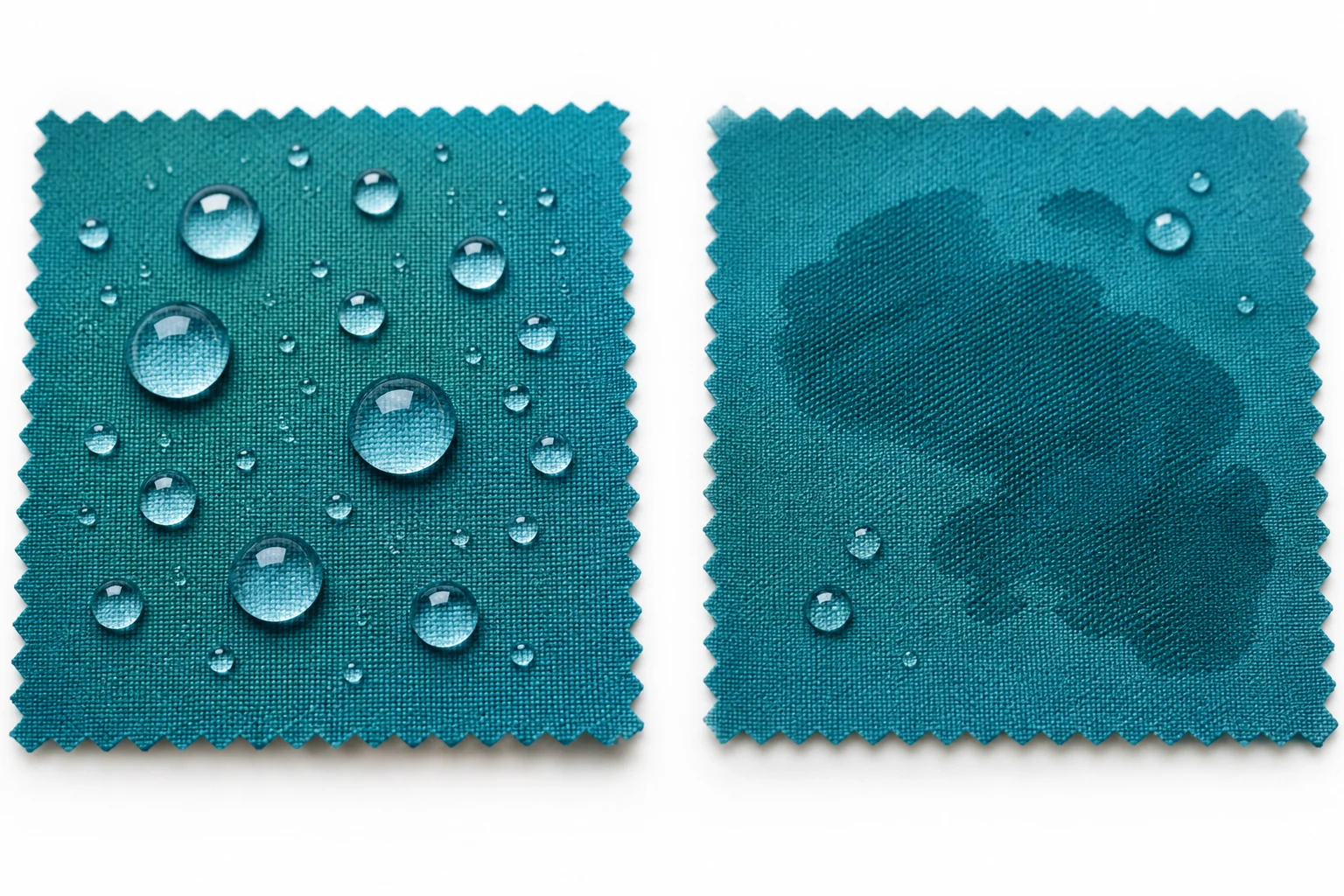
Helly Hansen explains that a wetted outer face can interfere with moisture escape and create a damp feeling inside a waterproof-breathable jacket. That makes “I felt wet” an incomplete diagnosis. Note the weather, activity, location of dampness, and whether the garment was already wet inside before you put it on. This is a practical record for support, not a home laboratory test. Helly Hansen’s shell-care guide discusses this distinction.
How do you prepare the jacket and washing machine?
Empty every pocket, including small chest and sleeve pockets. Put keys, tissues, receipts, and other contents in a separate container so they do not return to the garment by mistake. Inspect the inside before closing anything. Photograph existing marks or damage if you may need to compare the result later; use your own images, not a different jacket’s product photograph.
Follow the maker’s directions for zippers, hook-and-loop tabs, cords, and removable parts. Do not assume that instructions for one brand’s pockets apply to all jackets. Keep any removable liner with its own label and care plan. If two pieces require different methods, treating them as one convenient load does not resolve that conflict.
Rab’s waterproof-clothing instructions include cleaning the detergent drawer and rinsing the machine to remove previous detergent or softener residue. They also call for emptying pockets and securing the garment before washing. Use the appliance’s permitted cleaning process, and ask the operator before running an empty cycle in a shared machine. See Rab’s preparation and washing guidance.
At the machine, match the controls to the instructions you recorded. Identify the temperature, cycle, rinse options, and any automatic product dosing before loading. A machine you use every week for towels may have a setting or dispenser habit that is unsuitable for this jacket. If you cannot control a required part of the process, choose another suitable option instead of hoping the default is close enough.
Keep the laundry plan simple. You need the garment instructions, the selected cleaner, a way to measure it, and an appropriate drying arrangement. You do not need to assemble a mixture of household remedies. Adding products without a defined purpose makes an unexpected result harder to investigate because you no longer know which change mattered.
Which cleaner should you choose?
Choose by compatibility, not by whether the packaging says “powerful,” “natural,” or “gentle.” Find the cleaner type recommended for your jacket, then read the actual product directions for your machine and load. Keep cleaning products separate from treatments intended to restore water repellency. Similar bottles can serve different purposes, and a product intended for the second step is not automatically a substitute for the first.
Helly Hansen’s product-care instructions recommend a technical wash for HELLY TECH garments and warn against softening agents. They also emphasize removing detergent residue with an additional rinse. This is a manufacturer example, not permission to impose the same cleaner on every raincoat. Check Helly Hansen’s product-specific care instructions alongside your label.
Before paying for a cleaner, answer these practical questions: Is it for clothing or for a different item such as footwear? Is it a cleaner, a water-repellent treatment, or a combined product? Does its application method match the equipment available? Does the garment maker exclude any of its ingredients or require a different product? If the answers are unclear, keep looking rather than interpreting the price or brand popularity as proof of suitability.
Measure according to the chosen product’s current instructions. A cap is a container, not a universal unit: two products can have different cap sizes and concentrations. Record the amount you used in ordinary units or the product’s specified measure. Do not increase the dose simply because the jacket is expensive, because the machine looks large, or because you want a stronger water-repellent effect.
If another household member normally handles laundry, leave the jacket’s written plan with the load. A brief note such as “use this labeled cleaner; follow this photographed care label; keep separate from the ordinary towel load” is easier to act on than a vague request to be careful. Confirm the plan before the machine starts, when changes are still straightforward.
What washing sequence is useful without inventing universal settings?
The useful sequence is preparation, compatible cleaning, complete rinsing, and the garment’s specified drying process. The numerical settings belong to the actual product instructions. For example, Rab’s guide describes a cool, gentle approach for many waterproof garments, while other manufacturers specify different settings. Do not average two conflicting temperatures or select a longer cycle as a compromise.
- Identify: keep the exact care instructions visible and confirm that the garment is suitable for the chosen machine.
- Prepare: empty pockets, inspect condition, and arrange fasteners as directed.
- Set up: check the dispenser, automatic additions, program, and required rinse options.
- Measure: add only the compatible product and amount specified for that process.
- Wash: use the verified settings; do not add unrelated garments midway through the plan.
- Inspect: look for visible residue or an unexpected change before moving to the next treatment.
- Dry: follow the jacket-specific method, then evaluate the original concern.
This checklist is deliberately a sequence of decisions rather than a new manufacturer’s recipe. Write the real settings into it before you begin. That makes it useful whether your garment requires a machine process, a carefully specified hand-wash method, or a specialist service. Leaving a setting blank is a signal to resolve it, not an invitation to use whatever the machine selected last.
Why do manufacturer temperature examples differ?
GORE-TEX’s standard outerwear instructions specify 40 degrees Celsius, about 105 degrees Fahrenheit, a small amount of liquid detergent, two rinses, and reduced spinning. Rab’s guide describes around 30 degrees Celsius for many waterproof garments, subject to the label. These examples describe different guidance, not two interchangeable settings that this article endorses for every coat. Their linked instructions above should be read with the specific garment label.
Check the unit on both the label and the machine. A number copied without its unit can be misleading, and a control marked “warm” does not provide the same information as an explicit temperature. If the machine only offers named programs, use its instructions or ask the operator what the relevant setting provides. Do not infer a temperature from the cycle name alone.
For hand washing, first confirm that the jacket’s instructions permit it. Rab describes a cool-water, gentle-cleaner approach with thorough rinsing for field situations. That does not make hand washing an automatic fallback for an unidentified coat. You still need a compatible cleaner, a suitable container, enough room to handle the garment, and a complete drying plan.
Do not run repeated wash cycles just because the jacket does not immediately look new. If the first completed process leaves an unexpected result, identify what changed. Was the concern a permanent cosmetic mark rather than removable soil? Did you use the intended product? Was the garment fully dry when you compared it? These questions can prevent unnecessary repeat treatment while giving the manufacturer useful information.
Can a rain jacket go in a dryer?
Some can, but the jacket’s construction and instructions decide. GORE-TEX’s standard outerwear guidance includes a controlled drying and heat-reactivation process, while its special instructions for persistent-beading-surface garments such as SHAKEDRY prohibit tumble drying, ironing, and adding DWR. This is why a general instruction to heat every rain jacket is unsafe. Consult the relevant section of GORE-TEX’s outerwear-care instructions, not just the first paragraph.
Read the drying directions before starting the wash. Otherwise, you may finish with a wet garment and discover that the only available dryer cannot provide the required setting. Check whether the process involves drying alone, a subsequent activation step, or no machine heat at all. Keep the instructions with the jacket until the entire process is finished.
Do not replace an unavailable controlled drying method with a radiator, hair dryer, or improvised ironing treatment. A tool’s ability to make fabric warm does not establish that it provides the right process. If the instructions mention ironing, follow their exact conditions; if they do not permit it, a general internet shortcut is not an adequate reason to proceed.
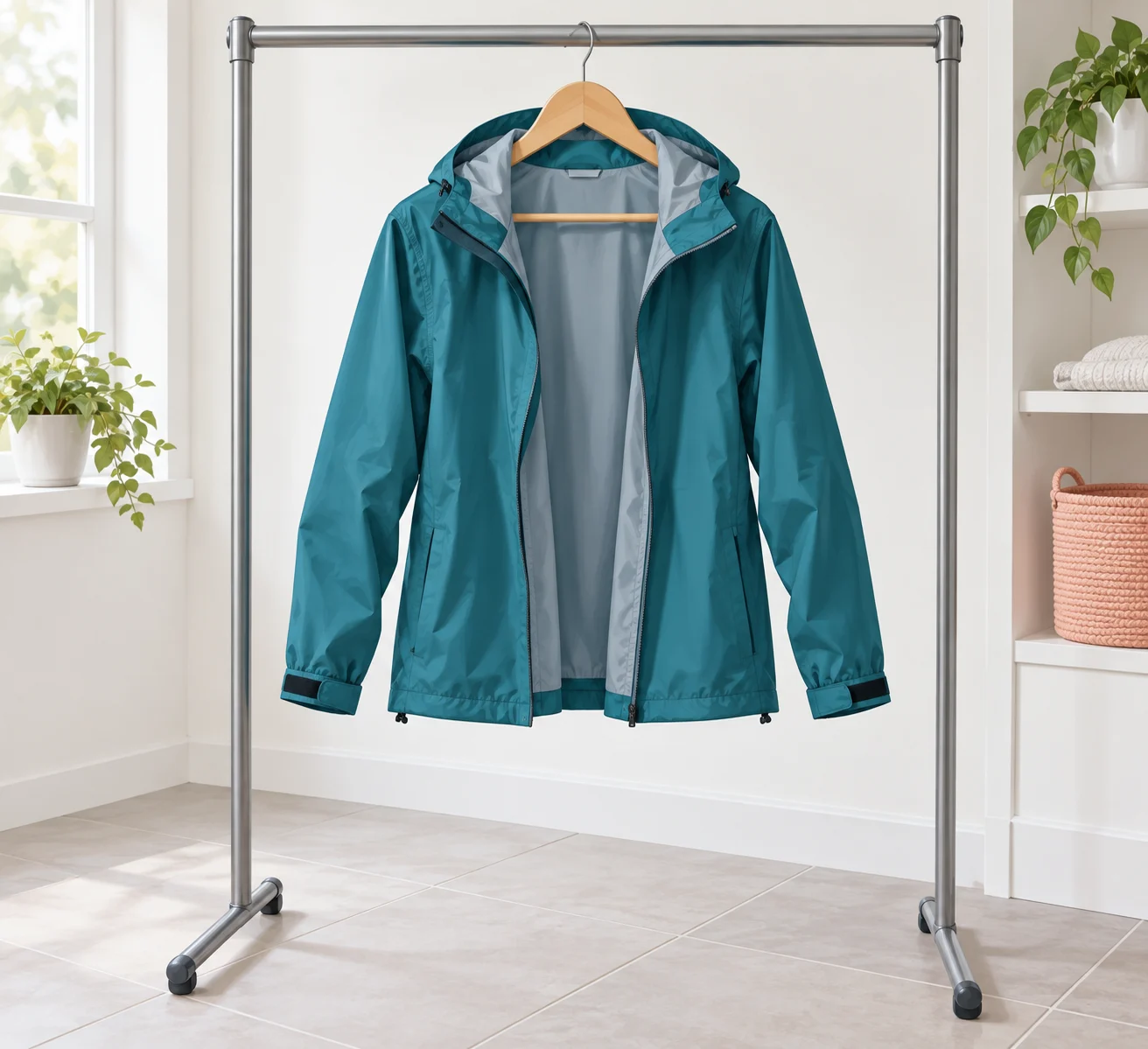
When the specified method includes hanging, choose the space in advance. Think about where drips will go, whether the sleeves can hang freely, and whether you can leave the garment undisturbed. This is a household logistics decision, not a claim that hanging alone restores every finish. Allow enough time to finish the actual process rather than packing a damp coat because the rest of the laundry is done.
When should you consider a water-repellent treatment?
Check the manufacturer’s recommended evaluation after cleaning and drying. If its guidance calls for observing how water behaves on the surface, follow that limited check. Do not interpret a few beads as proof that seams, closures, and the entire garment will remain waterproof in every condition. Surface appearance can inform the next care step without becoming a guarantee of performance.
Nikwax distinguishes spray-on treatment for garments with wicking linings from its wash-in option for suitable garments without those linings. Its TX.Direct Spray-On instructions also describe repellency developing without tumble drying. These are product-specific distinctions worth checking before purchase. See Nikwax’s TX.Direct Spray-On information; do not assume every treatment shares its application or drying requirements.
The practical tradeoff is access versus control. A wash-in process uses a washing procedure; a spray application requires you to reach the intended surfaces deliberately. Neither format removes the need to confirm compatibility. Consider the lining, the treatment directions, the work space available, and the garment maker’s recommendation rather than choosing a format solely because it seems faster.
Grangers’ Performance Repel Plus directions provide another example: application to a freshly cleaned, damp garment, removal of excess product, and drying according to the instructions. The product is described as effective without heat activation. Read the current Grangers application directions rather than borrowing the sequence from a different bottle.
Before beginning a treatment, lay out the entire process on paper: garment condition, application method, amount or coverage instructions, drying method, and any safety precautions on the bottle. Decide where to work and how to protect nearby surfaces. Keep children and pets away from the work area and store the product according to its label. Do not mix treatments or add household chemicals to make them spread farther.
If the garment instructions and treatment instructions do not fit together, stop at that conflict. For example, a product that requires an unavailable process is not made compatible by omitting that step. Contact the garment or treatment manufacturer with the exact names. Ask for a compatible route, rather than asking whether an unspecified “waterproofing spray” is generally okay.
Which garments should not follow the ordinary shell process?
Waxed cotton is a clear exception. Barbour’s wax-jacket guidance calls for its separate cleaning approach and warns against machine washing and dry cleaning. Do not treat the word “rain” as a material description. A traditional waxed coat and a lightweight laminated shell can serve a similar purpose while requiring different care. See Barbour’s wax-jacket care guidance.
For insulated jackets, the filling adds another care requirement. Do not choose a process solely from the waterproof outer fabric and ignore the rest of the garment. A removable insulated liner may have separate instructions; an integrated lining cannot simply be treated as though it were absent. Identify the complete product and use its manufacturer guidance rather than joining together two partial recipes.
Specialist sports, work, protective, and motorcycle garments also deserve their own instructions. This guide does not establish suitability for equipment with protective functions. If the item includes electronics, detachable safety components, unusual coatings, or a professional-care requirement, use that information to select the appropriate specialist resource before putting it into an ordinary laundry load.
For a secondhand jacket, previous care may be unknown. Make a factual condition record instead of assuming that the absence of a visible stain means the item has never been treated. Ask the seller for the model name or any retained care information. If you cannot identify the construction, take clear photographs and ask the manufacturer what can still be established.
What should you do about peeling, tears, or persistent wetness?
Cleaning and repair are different decisions. GORE-TEX’s repair information describes repairs such as tears, damaged zippers, and detached seam tape, while identifying extensive delamination as a potential limit. Its cited service page is UK-specific; readers elsewhere should use the manufacturer’s appropriate local support route rather than assume the same service is available. See GORE-TEX’s explanation of repair assessment.
Do not pull at a loose section to find out how far it will peel. Photograph the whole jacket, a closer view of the affected area, and the label. Describe whether the problem appeared before or after cleaning, and list the products and settings actually used. This gives support a useful starting point without turning a visual guess into a diagnosis.
A concise support request might say: “This is model X. I noticed lifting along the interior shoulder seam before washing. The label allows this process. Should it be cleaned before assessment, and is there an approved repair route?” That is more actionable than “My jacket is ruined.” It also leaves the repair decision with someone who can evaluate the specific construction.
If the jacket remains unreliable for your intended use, do not depend on another wash as proof of protection. Make a separate clothing plan for the next outing while the issue is investigated. A care guide can help organize the problem; it cannot certify a damaged garment for severe weather or replace a manufacturer’s assessment.
How can you plan a laundromat visit for technical outerwear?
Start with the process the garment needs, then check whether the available equipment supports it. Bring the label photographs and the chosen product instructions. Confirm the required cycle options, rinsing controls, and drying conditions before paying for a cycle. Do not assume that a larger machine automatically makes a delicate or specialized process safer.
Pack the jacket separately from the rest of the household laundry so it does not get included in a general load by accident. Bring a clean container for the finished garment. If the drying method continues at home, plan the trip and drying space before you begin, rather than leaving the wet jacket bundled while other errands take priority.
At Fresh Spin, review the self-service laundry information and use the contact page to ask about a specific equipment requirement. This article does not promise technical-shell cleaning, reproofing, repair, or acceptance of a particular coat. A general laundry service description should not be interpreted as a specialist garment-care guarantee.
If you are considering drop-off wash-and-fold, discuss the exact garment and its instructions before including it. Ask whether the required process can be followed and whether the item should instead stay outside the ordinary order. An explicit answer about one coat is better than assuming that every washable household item belongs in the same service.
What do different care decisions look like in practice?
The following examples are hypothetical planning exercises, not customer stories, tests, or reports of Fresh Spin services. Each starts with a different unresolved question. Use the reasoning to organize your own facts, but do not copy the imagined settings or assume that your jacket matches an example just because it looks similar.
Example 1: An everyday shell looks dirty but has no visible damage
A commuter has an identifiable, uninsulated shell with readable instructions. The immediate goal is ordinary cleaning, not repairing a leak. They locate the model guidance, choose the specified cleaner, and check that their machine and drying arrangement can complete the process. They do not buy a second treatment merely because it is displayed next to the cleaner.
After the prescribed process, they compare the original concern with the result. If the jacket is clean and the manufacturer’s recommended check is satisfactory, there is no reason in this example to invent another step. If the concern remains, the next question is specific: what was observed, and what does the maker recommend now?
Example 2: Two similar-looking jackets have different labels
A household wants to wash two raincoats together to save a trip. One has an identified machine-wash process; the other has a missing label and an unfamiliar lining. Matching colors and similar weights do not resolve the missing instructions. The practical decision is to proceed only with the identified item and investigate the second separately.
This avoids letting convenience answer a technical question. The household can photograph the second garment, search by its style number, and ask support for the care information. Waiting on that one coat does not prevent the rest of the ordinary laundry from being completed. Keeping uncertain items separate makes the plan more manageable.
Example 3: Water no longer beads after a completed care process
A jacket owner has followed the exact cleaning and drying directions and recorded the result. Before applying anything else, they check whether the product uses a finish that can be renewed and which treatment the maker permits. They compare the garment instructions with the treatment’s application and drying directions, including any lining restrictions.
If those instructions are compatible, they can plan the next step deliberately. If they conflict, the next action is a specific manufacturer question. Neither outcome requires pretending that every shell needs the same bottle, that stronger treatment is better, or that surface beading alone establishes protection in all conditions.
What information should you keep for the next wash?
A small care record can save repeated research. Keep the model name, label photographs, manufacturer link, cleaner name, actual settings, and the date of the process together. Add a brief description of the result. The purpose is not to create a technical maintenance burden; it is to avoid guessing which method you used when the next question appears.
Separate observation from interpretation in that record. Write “a mark remained at the left cuff” rather than “the cleaner failed.” Write “the interior tape was lifting before washing” rather than assigning a cause you cannot verify. Clear notes are useful whether you continue home care, ask a service provider about acceptance, or contact the manufacturer for assessment.
Plan maintenance around actual use and the manufacturer’s guidance instead of a universal calendar. A rarely used backup coat and a jacket worn regularly in dirty conditions may not need the same schedule. Recheck instructions when switching products or equipment. What worked under one verified set of conditions should not become a permanent assumption after the conditions change.
How can you recover useful information when the label is missing?
Begin with identifiers that remain on the garment: a model name, style code, size label, purchase receipt, or an old order confirmation. Search the manufacturer’s own support resources using those details. Treat a similar-looking current product as a possible lead, not as proof that its care instructions apply to an older version. Product photographs can help identify a coat without settling its construction.
Prepare a small set of clear photographs: the full front, the inside, any surviving labels, and the feature you are uncertain about. Avoid sending unrelated personal information from receipts or account screenshots. If you have a purchase date, describe it as approximate when appropriate. Honest uncertainty is more useful than supplying a guessed year or material.
Ask narrowly framed questions. Is this model machine washable? Which cleaner type is compatible? What drying method is permitted? Does the lining change the recommended treatment? Is the visible condition a reason to request assessment before cleaning? These questions let support respond to the actual decision instead of giving you another general article to interpret.
Keep the response with the jacket record, including the model it refers to. If support cannot identify the garment, that is a real limit, not a failure to search hard enough. You can then decide whether professional assessment is worth the time and expense. Do not turn a lack of information into permission to test a speculative method on a coat you need to rely on.
For future purchases, saving care information early is easier than reconstructing it later. Photograph the labels and retain the product identifier before the printing fades or an order page disappears. This small record is especially useful for households with several similar jackets, where a remembered instruction may otherwise belong to the wrong garment.
Frequently asked questions about washing rain jackets
Does washing automatically remove waterproofing?
No universal rule applies to every garment. Many technical-shell manufacturers provide washing instructions as part of normal care, while waxed garments and other exceptions need different methods. Identify the jacket first. The important question is whether you followed its compatible process, not whether all rainwear should be kept out of water.
Can I use a household stain-removal trick?
Do not assume a remedy suitable for an ordinary shirt is compatible with a technical shell. Identify the stain and ask what the garment maker permits. Avoid experimenting with multiple products in sequence. If you already applied something, record its exact name before asking for help rather than hiding that step from the diagnosis.
Should I choose the hottest dryer setting to save time?
No. Use the permitted drying process, not the fastest-looking option. If the available equipment cannot provide the specified conditions, arrange another suitable method before washing. The absence of an immediate alternative does not make an incompatible setting appropriate, particularly when the garment has a specific prohibition.
Can I restore every old raincoat with a water-repellent spray?
Do not assume so. First identify whether the concern belongs to cleaning, surface treatment, or repair. A treatment recommendation must fit the actual garment and its condition. When there is physical damage or unresolved wetness, use manufacturer assessment instead of treating a product purchase as a diagnosis.
What if I need the jacket tomorrow?
Read the complete process before starting, including drying and any treatment instructions. If it cannot be finished in time, arrange an alternative coat rather than rushing an unverified method. A deadline is a planning constraint, not evidence that a shorter wash, stronger cleaner, or higher heat will be suitable.
The most useful rain-jacket care plan is specific: identify the garment, define the problem, choose compatible instructions, complete the process, and evaluate the result honestly. That approach helps you avoid unnecessary treatments while recognizing when a question belongs with the manufacturer rather than in another wash cycle.


Leave A Comment