
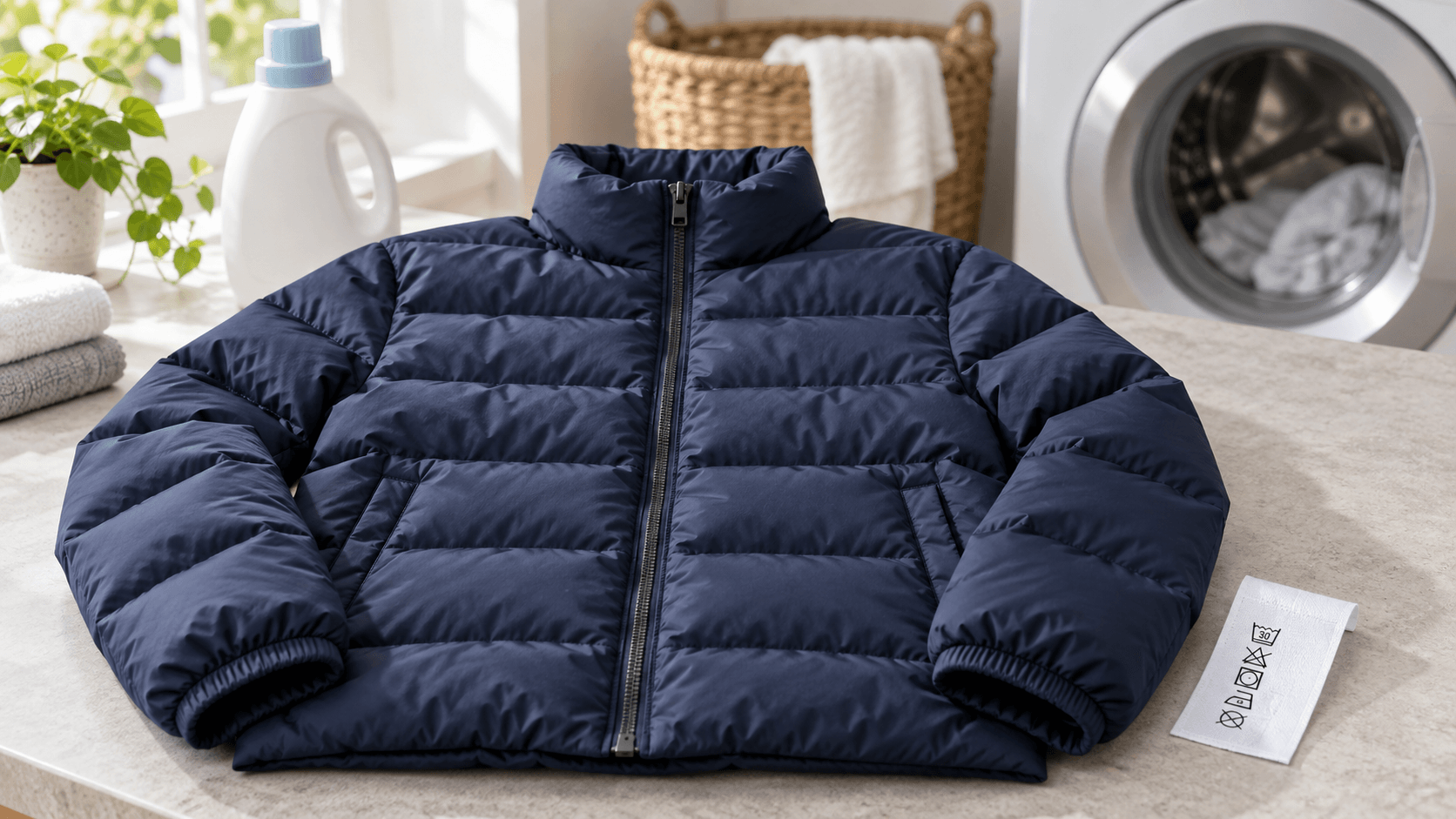
To wash a puffer jacket safely, read the care label first, identify whether it has down, synthetic insulation, or a waterproof shell, then use only the wash and dry method the manufacturer permits. Close zippers, empty pockets, use a gentle cleaner in the recommended amount, and make sure the jacket is completely dry before storing it. A puffer jacket is not a generic load of laundry.
“Puffer” describes the jacket’s quilted construction, not one universal material. A jacket may hold down feathers, synthetic insulation, or both. Its face fabric may also have a water-repellent finish. Those differences determine what a safe wash looks like, so the sewn-in label and the maker’s instructions take priority over any general guide.
Why does a puffer jacket need special laundry care?
Insulated jackets depend on small air pockets to help provide warmth. Dirt, body oil, and detergent residue can affect how the garment feels and performs, while rough washing or excessive heat can damage the shell, seams, trim, or insulation. Patagonia and Helly Hansen both emphasize checking the garment’s individual care instructions before choosing a washing or drying method.
Start by looking for the fiber content, fill information, water-temperature limit, drying symbol, and any warning against bleach, fabric softener, ironing, dry cleaning, or machine washing. If the tag says professional cleaning, spot cleaning only, or hand wash only, do not substitute a machine routine just because another puffer jacket can be machine washed.
How do you tell what kind of puffer jacket you have?
Read the label and product information before washing. The important distinction is usually the insulation:
- Down insulation: usually needs gentle washing and careful, complete drying to restore loft.
- Synthetic insulation: can have different temperature, cycle, and drying instructions from down.
- Waterproof or water-repellent shell: may need a technical cleaner and its own care routine to protect the shell finish.
Do not assume the outside fabric tells you the fill. A jacket can look like a down coat while using synthetic insulation, or it can combine an insulated section with a technical shell. When the tag is missing or illegible, contact the manufacturer rather than guessing.
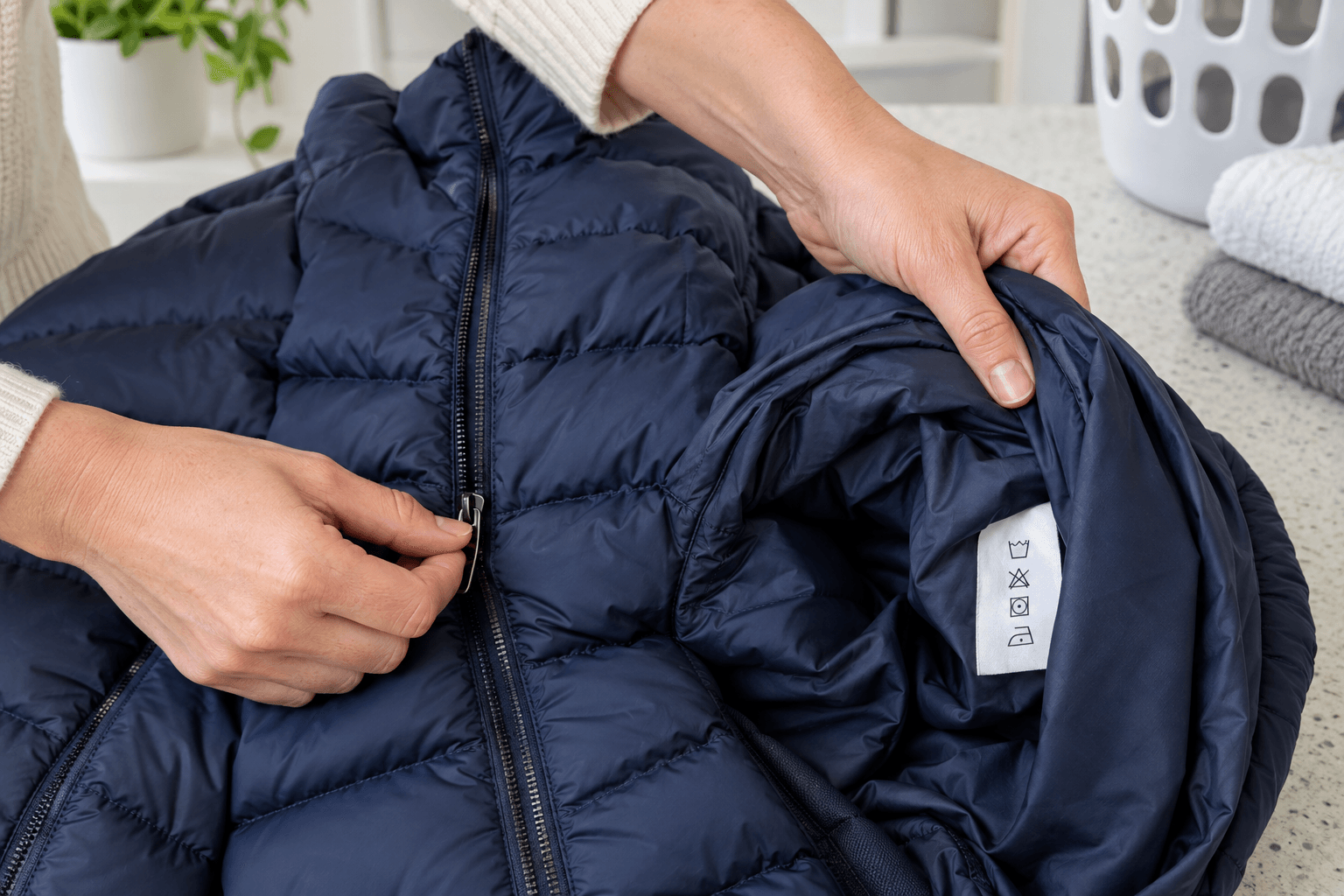
What should you do before washing a puffer jacket?
- Read the care label and any manufacturer product-care instructions.
- Empty every pocket and remove loose items.
- Close zippers, fasten closures, and check for tears or loose seams.
- Brush off surface dirt and spot treat only if the label permits the product you plan to use.
- Turn the jacket inside out if its label or manufacturer directs that step.
- Use a washer that gives the garment room to move without being forced into a tight drum.
A front-loading washer is often the lower-risk option for delicate insulated garments because it does not use a central agitator. Patagonia notes that top-loading machines with agitators can snag or abrade jackets. That is a general construction concern, not permission to machine wash every jacket; the label still decides whether a machine cycle is appropriate.
How do you wash a down puffer jacket?
Only machine wash down when the label allows it. Patagonia’s down-care guidance recommends a front-loading washer, a cleaner designed for down, and a low-heat dryer. Helly Hansen likewise advises starting with the label and using the manufacturer-approved wash settings. Use the amount of cleaner specified by its label. Adding extra product does not make a jacket cleaner, and residue can make it harder for insulation to loft.
Choose the cycle, water temperature, and rinse approach the garment label permits. Avoid chlorine bleach and fabric softener unless the manufacturer specifically permits them. If your jacket has a removable hood, faux-fur trim, belt, or liner, follow the care instructions for each part rather than assuming every component can go through the same cycle.
Down will look clumped when wet. That does not by itself mean the jacket is ruined. The drying method matters: low heat may be appropriate when the maker permits it, and fully drying the insulation helps it recover its loft. Patagonia and Helly Hansen describe using clean dryer balls or clean tennis balls for some down garments to help separate clumps, but readers should use that technique only when their own garment care instructions allow tumble drying.
How should you wash a synthetic puffer jacket?
Synthetic insulation does not follow every down-jacket rule. It may be machine washable, but the garment label controls the water temperature, detergent, cycle, and dryer setting. Use a mild cleaner when allowed, avoid overloading the washer, and do not use heat simply because a different synthetic jacket tolerates it.
Pay special attention to coated fabrics and welded or taped details. A jacket with a technical shell may need a cleaner intended for that material rather than an ordinary detergent. Patagonia’s waterproof-jacket guidance recommends checking the garment instructions and using a technical or mild cleaner appropriate to the shell. Treat the shell and insulation as a system: a method that is gentle on the fill may still be wrong for the outer fabric.
Can a puffer jacket go in a dryer?
Sometimes, but only if the care label allows it. For down garments, manufacturer guidance often calls for low or no heat and complete drying. For waterproof shells, drying can be part of the care routine for some products, but the temperature and method vary. High heat, an iron, or steam can damage some fabrics, finishes, adhesives, and trim.
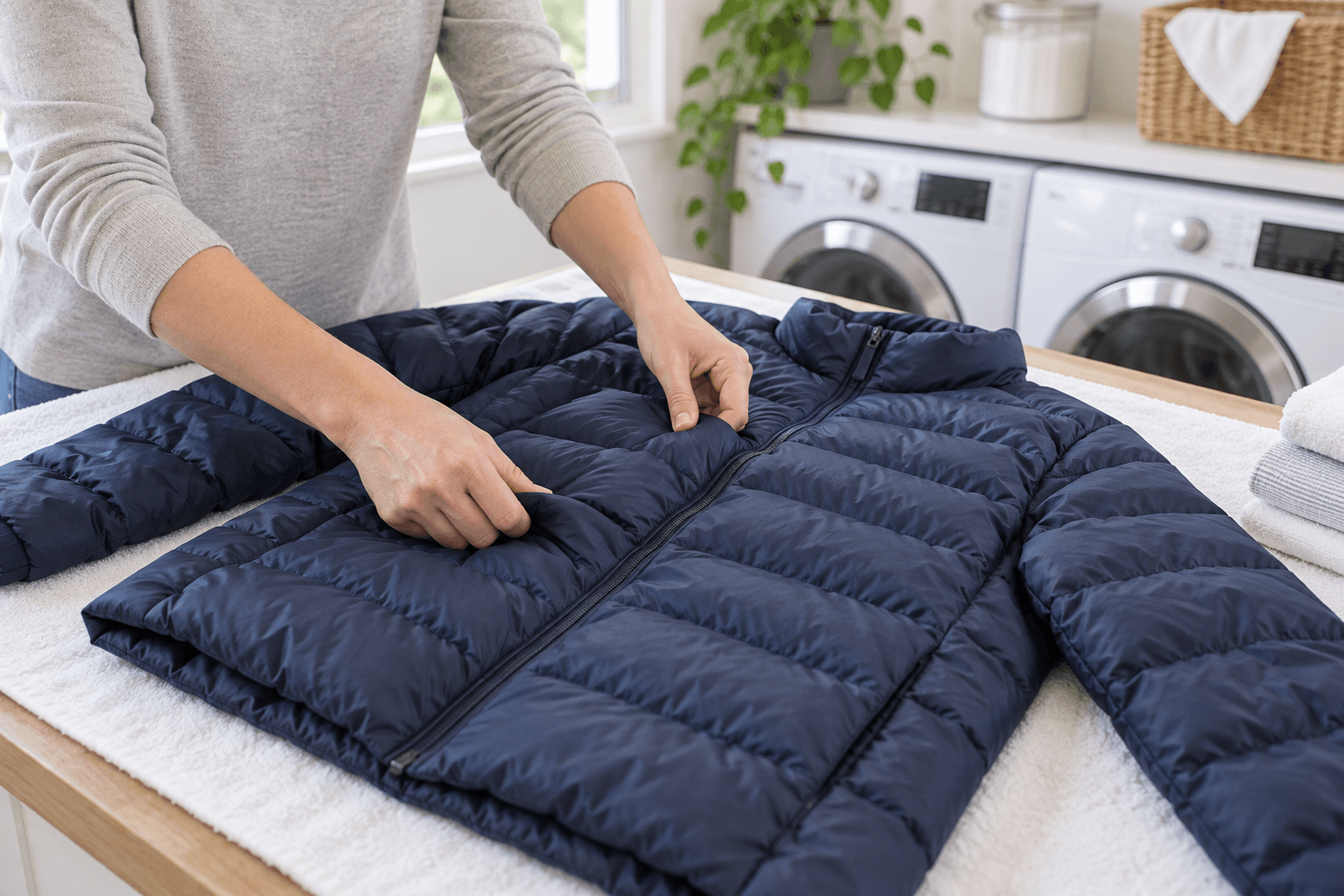
Check the jacket periodically if its approved drying method uses a machine. Feel for damp, heavy clumps in insulated sections and make sure the cuffs, seams, pockets, and lining are dry before storage. If air drying is the permitted method, lay or hang the jacket as its manufacturer directs and allow enough time for the insulation to dry completely.
What mistakes can flatten or damage a puffer jacket?
- Ignoring the care label because another jacket used a different routine.
- Using a harsh cleaner, bleach, fabric softener, or treatment the garment maker does not permit.
- Forcing the jacket into an overcrowded washer or using an agitator when the garment is vulnerable to snagging.
- Using high heat, ironing, or storing the jacket before it is fully dry.
- Washing a jacket with a torn seam or damaged baffle without addressing the damage first.
For a puffer jacket with a small tear, leaking insulation, a cracked coating, or a stubborn stain, pause before washing. The label or manufacturer can help identify whether repair, specialty care, or spot cleaning is the safer choice. A general article cannot determine the right treatment for a specific garment.
When is a laundromat useful for a puffer jacket?
An insulated jacket needs enough room to move and rinse according to its approved care method. If a home washer is too small for the jacket to move freely, do not force it in. Review the garment label first, then choose a machine size and cycle that match its instructions. Fresh Spin’s self-serve laundromat information can help with a local laundry visit, while the jacket maker remains the authority on the garment’s wash and dry settings.
Before using any shared machine, inspect it for residue from bleach or softener products. If the jacket label calls for a specialized cleaner, bring the appropriate product and follow its directions. Do not add a service promise, turnaround expectation, or garment-specific guarantee that Fresh Spin has not verified.
How should you store a puffer jacket after cleaning?
Wait until the jacket is fully dry. Damp insulation can clump and trapped moisture can create odors or mildew risk. Once dry, hang the jacket or store it loosely according to the manufacturer’s instructions. Avoid compressing a down jacket for long periods if the maker advises against it; loft depends on the insulation having room to recover.
For additional label-reading help, see Fresh Spin’s laundry care labels guide. If the label’s symbols are unclear, use the manufacturer support channel before selecting a wash cycle.
Frequently asked questions about washing puffer jackets
Can every puffer jacket be machine washed?
No. Puffer jackets use different fills, shells, and construction methods. Machine wash only when the jacket’s own label or manufacturer permits it.
Should I use regular detergent on a down jacket?
Follow the garment and cleaner labels. Manufacturer guidance often recommends a cleaner intended for down, but the exact product and amount depend on the jacket.
Can I use fabric softener on a puffer jacket?
Do not use it unless the garment manufacturer specifically permits it. Some technical fabrics and insulation care instructions advise against it.
Why does my down jacket look flat after washing?
Wet down can clump. Follow the maker’s approved drying method and make sure the garment is fully dry before evaluating its loft.
What if the care label is missing?
Do not guess. Search the manufacturer’s product-care information using the jacket model or contact its support team before washing.
Sources
Patagonia: How to Wash and Care for Your Down Jacket
Leave A Comment