

Manor Oaks Detergent Buying Guide: Smart Picks
Choosing laundry detergent in Manor Oaks sounds simple until you realize your washer type, fabric mix, skin sensitivity, water conditions, and stain level all change what “best” actually means. Fresh Spin Laundry sees this every day, and the difference between the right formula and the wrong one shows up fast in cleaning results, residue, fabric wear, and even how your laundry room smells.
Key Takeaways
- Pick detergent based on your washer, fabrics, and stain level, not just the brand.
- HE machines need low-sudsing formulas to prevent residue and poor rinsing.
- For sensitive skin, choose fragrance-free, dye-free, and simpler formulas.
- Compare detergents by cost per load, not bottle size or shelf price.
- Keep one solid everyday detergent and one specialty option for stains or delicates.
Why Detergent Choice Matters More Than Most People Think
Many people grab a detergent based on habit, scent, or whatever is on sale. That can work for a while, but laundry problems often build slowly. Clothes may start feeling stiff. Dark shirts can fade sooner than expected. Towels may hold onto a sour smell even after a fresh wash. In many cases, the issue is not your washer. It is the detergent match.
Fresh Spin Laundry points out a practical truth: the right detergent improves cleaning, reduces residue, and helps fabrics last longer. That matters in a place like Manor Oaks, where households may wash everything from gym wear and work uniforms to bedding, baby clothes, and delicate items in the same week. A detergent that works for one load may be a poor choice for the next.
Performance also changes with laundry habits. If you often wash in cold water, choose short cycles, or pack the drum too full, your detergent needs to dissolve and rinse clean under less-than-perfect conditions. A formula that leaves behind too much product can trap odors in fibers and create buildup inside the machine. Over time, that means lower freshness and more maintenance.
Fragrance is another overlooked factor. A strong scent can make clothes smell “clean,” but scent alone does not mean actual odor removal. In smaller laundry spaces, heavily perfumed detergent can feel overwhelming. For some people, it can also trigger skin irritation or make indoor air feel stuffy. Picking the right detergent helps your clothes smell fresh because they are truly clean, not because fragrance is covering a problem.
There is also a cost angle. A cheap bottle can end up costing more if you need extra product per load, if it fails on stains, or if it leads to rewashing. Smart detergent buying is really about value. The best choice is the one that cleans well, protects your fabrics, fits your machine, and makes sense for your budget.
The Six Factors That Should Drive Your Purchase
If you want a detergent that actually fits your life, start with a few key questions. Each one changes what type of product makes sense. Fresh Spin Laundry recommends thinking about your machine, clothes, skin needs, water, soil level, and budget before you buy. That short check saves money and prevents a lot of common laundry mistakes.
Here are the six most important factors to review:
- Washer type: standard or HE
- Fabric mix: everyday clothes, delicates, activewear, baby items, bedding
- Skin needs: fragrance-free, dye-free, hypoallergenic options
- Water conditions: especially hard water concerns
- Soil level: light wear versus grease, sweat, mud, and food stains
- Budget: true cost per load, not shelf price alone
That may sound like a lot, but each factor leads to a simple choice. Once you know your basic needs, detergent shopping gets much easier. Instead of falling for flashy packaging, you start picking products based on function. That is the smarter move for both beginners and people who already do a lot of laundry every week.
Start With Your Washer Type
Your washer should be the first filter in your decision. If you have a high-efficiency machine, you need an HE detergent. These formulas create fewer suds and rinse more easily in machines that use less water. Fresh Spin Laundry notes that its equipment is optimized for HE-compatible performance, which shows how important this distinction really is.
Using standard detergent in an HE washer causes real problems. Extra suds can stop clothes from rinsing fully. That leaves residue on fabric and inside the machine. You may notice musty odors, a sticky drum, or clothes that feel less soft after drying. In some cases, repeated misuse can add stress to the washer itself. A low-sudsing formula protects both laundry quality and machine health.
If you have a standard top-load washer, you have more flexibility. You can use regular detergent or HE detergent. Many people still choose HE formulas because they are concentrated and rinse well. That said, the dosage still matters. More soap does not mean cleaner clothes. In fact, too much detergent is one of the most common mistakes Fresh Spin Laundry sees. Extra product often creates the very odor and buildup people are trying to avoid.
Check your washer manual if you are unsure. If the machine says HE, follow that rule every time. This is the easiest detergent choice to get right, and it affects everything else that follows.
Match Detergent to Fabric Type and Laundry Mix
One detergent does not perform equally on every fabric. Everyday cotton T-shirts, stretchy activewear, wool sweaters, baby sleepers, and thick bedding all behave differently in the wash. A smart pick starts with your most common loads. If most of your laundry is regular daily wear, a balanced detergent with good enzyme support usually works very well. If your loads vary a lot, you may need one main detergent plus one specialty formula for certain items.
Fresh Spin Laundry recommends paying special attention to mixed loads. These are common in busy households and often include jeans, socks, shirts, underwear, and towels in the same cycle. For that kind of laundry, a versatile detergent with enzymes helps break down sweat, body oils, and food stains without being too harsh on fibers. This is often the best all-around option for families and roommates.
Some categories deserve a more focused approach. Consider specialty detergent for these loads:
- Athletic wear with sweat buildup and synthetic fibers
- Wool or delicate fabrics that need gentler treatment
- Baby clothes or households dealing with skin sensitivity
- Workwear that picks up grease, grime, or heavy soil
Performance fabrics deserve extra care because odor tends to cling to synthetic materials. A basic detergent with heavy perfume may hide the smell for a while, but it may not remove the source. Sports detergents or enzyme-rich formulas are often a better fit. Delicates are the opposite. They need less aggressive cleaning and more fiber protection.
You do not need a separate detergent for every item in your closet. Still, if you regularly wash a specific problem load, such as sweaty gym clothes or delicate knits, a second detergent can make a big difference. That simple two-product setup often gives the best mix of results and convenience.
Think About Skin Sensitivity and Household Health
For households with infants, sensitive skin, allergies, or fragrance issues, detergent ingredients matter a lot. A strong perfume may smell pleasant at first, yet it can leave irritation behind on shirts, sheets, and towels. In these cases, labels such as fragrance-free, dye-free, hypoallergenic, and dermatologist-tested are useful starting points.
Fresh Spin Laundry makes an important point here: reducing irritation often means simplifying ingredients, not just changing brands. Two products can both claim to be gentle, but one may still contain extra scents, dyes, or additives that your skin does not like. The smartest move is to look for formulas with fewer unnecessary ingredients and a reputation for rinsing clean.
Baby laundry creates a similar need. Infant skin is more delicate, and clothes, blankets, and burp cloths often sit against the skin for hours. A gentle detergent with low residue can help reduce irritation. You do not always need a product marketed only for babies, but you do want a formula that is mild, easy-rinsing, and free from heavy fragrance.
Unscented detergent also helps indoor comfort. In apartments, shared laundry rooms, or small homes, intense fragrance can linger in the air and on textiles. Lighter or unscented formulas reduce that buildup. If anyone in your home gets itchy skin, red patches, headaches, or finds that clothes smell too strong after washing, your detergent may be worth changing before anything else.
It also helps to test a new product on a small batch first. Wash a few shirts or pillowcases and see how they feel against the skin after one or two cycles. This is a safer way to switch than buying a giant container right away.
Do Not Ignore Local Water Conditions in Manor Oaks
Water quality affects detergent performance more than many shoppers realize. If your home has hard water, minerals in the water can reduce cleaning power and leave buildup on fabrics and washer parts. You may notice dull colors, rough-feeling towels, soap residue, or clothes that never seem fully fresh. In those cases, your detergent may not be “bad,” but it may be the wrong formula for your local conditions.
Fresh Spin Laundry highlights that powder formulas may struggle more in hard or cold water unless they are specially optimized. That does not mean powder is always a poor choice. It just means dissolution matters. If the product does not fully break down, it can leave visible particles or contribute to stiffness in fabric. Liquid detergent often performs better in cold washes and is generally easier to dissolve fully.
Specialized formulas and laundry boosters can help if Manor Oaks water is working against you. A booster may improve mineral management, while a detergent made for tougher water can hold onto cleaning power better. For homes dealing with repeated residue, this can be a smart adjustment. It may also let you use less detergent overall, which helps both performance and cost.
Water issues are also tied to odor. If detergent does not rinse clean, leftover product mixes with body oils and moisture in fabric. That can create a trapped smell that returns as soon as clothes warm up. Many people blame the washer, but the real fix may be using a detergent that better suits local water.
If your clothes come out looking cloudy, feeling stiff, or smelling less fresh than expected, do not assume you need a more expensive brand right away. First ask whether your detergent type fits your water conditions. That one change can improve results fast.
Be Honest About How Dirty Your Clothes Really Get
Everyday laundry needs are different from heavy-duty laundry needs. A student washing T-shirts, pajamas, and light office wear does not need the same detergent as someone cleaning restaurant uniforms, muddy sports gear, or mechanic work clothes. Smart detergent buying starts with realistic expectations about soil level.
For light loads, a standard detergent usually does the job. Daily wear with minor sweat and no major stains rarely needs the strongest formula on the shelf. In fact, using a very heavy-duty detergent on lightly soiled clothes can be wasteful and may be harsher than needed. A balanced product gives enough cleaning power while protecting color and fabric feel.
Heavy soil is different. Grease, mud, food splatter, body oils, and sweat often need enzyme-rich or heavy-duty formulas. Enzymes help break down protein stains, starches, and oily messes that simple surfactants may leave behind. If your lifestyle includes sports, outdoor work, cooking, or uniforms, stronger stain-focused detergent can save time and reduce rewashing.
Still, Fresh Spin Laundry stresses that pre-treatment remains critical for tough stains. No detergent can magically erase every set-in mark during a normal cycle. If you have grease on work pants or tomato sauce on a shirt, apply detergent or stain remover directly before washing. That step matters more than buying the priciest product in the aisle.
Think in three categories:
- Light soil: daily wear, sleepwear, casual basics
- Medium soil: towels, kids’ clothes, standard mixed loads
- Heavy soil: uniforms, sportswear, greasy or muddy items
Once you know where most of your laundry falls, detergent shopping becomes much easier. You stop paying for power you do not need or settling for a formula that cannot keep up.
Price Tag Versus Cost Per Load
A detergent bottle can look cheap and still be a poor value. Another product may seem expensive but last much longer because it is concentrated and used in smaller amounts. That is why Fresh Spin Laundry recommends checking cost per load instead of focusing on sticker price alone.
The basic formula is simple. Divide the price by the number of loads listed on the package. Then think about your real usage. If you tend to wash large loads or add extra detergent, your actual cost may be higher than the label suggests. Concentrated formulas often offer better long-term value because they use less packaging and take up less storage space while still delivering solid cleaning performance.
This matters even more for large households. If you do multiple loads every week, small differences in per-load cost add up fast. Buying in bulk can save money in that situation, especially if you already know the product works well for your family. For small households or occasional users, giant containers may be less useful. They take up space, can be hard to pour, and may simply be more than you need before you want to try something else.
Store brands also deserve a fair look. Many offer performance close to premium options at a lower price. Premium detergents may still be worth it for specific needs such as sensitive skin, wool care, or odor-heavy athletic wear. The key is paying extra for a real benefit, not for branding alone.
A smart shopper compares these details before buying:
- Loads per container
- Recommended dose
- Concentration level
- How often you wash
- Whether specialty performance justifies the price
That quick check helps you spot true value. It also cuts down on impulse buying based on flashy labels or oversized packaging.
Scent Preferences and Indoor Air Quality
Scent is personal, but it should never be your only reason for choosing detergent. A strong perfume can make clean clothes smell intense, yet that does not mean the detergent removed the cause of odor. In some homes, especially those with smaller or enclosed laundry spaces, heavy fragrance can linger in the air and on fabrics longer than people want. Fresh Spin Laundry recommends thinking about practical scent levels, not just pleasant first impressions.
Lighter scents often work better in apartments, shared laundry areas, and compact homes. They leave clothes smelling fresh without overwhelming closets, bedrooms, or bathrooms. Unscented detergents go a step further and reduce the chance of irritation for people who are sensitive to fragrance. They are also a smart pick if you use scented dryer products and want to avoid fragrance stacking.
There is a second issue here: odor masking versus odor removal. A good detergent tackles sweat, bacteria, and soil that create bad smells. A weaker product may simply layer fragrance on top. If your workout shirts smell okay right after washing but turn sour once you start moving, your detergent may be masking rather than solving the problem. Enzyme-driven products and formulas made for odor control tend to do better at actual odor removal.
Indoor air quality matters too. Detergent is one of those products people do not always think about as an air issue, but it can be. Strongly fragranced products release scent into small spaces, onto bedding, and into closets. If anyone in your home gets bothered by lingering smells, switching to a mild or fragrance-free detergent can improve comfort fast.
The best rule is simple: pick a scent level you can live with every day. Laundry should smell clean and feel comfortable, not overpower your room or your skin.
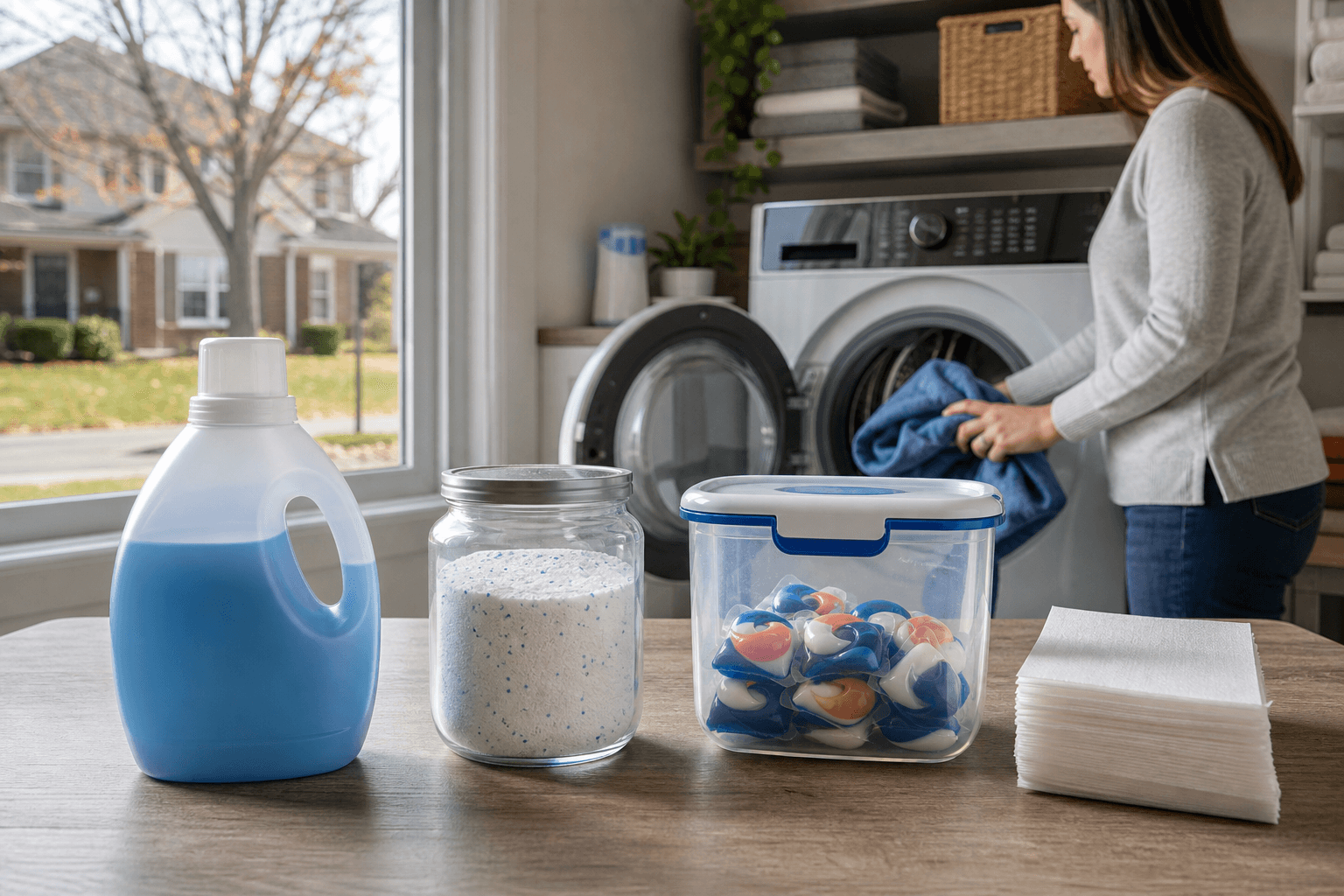
Liquid, Powder, or Pods: Which Format Fits Best?
Once you know your laundry needs, the next choice is format. Liquid, powder, and pods each have clear strengths and trade-offs. None is automatically best for everyone. Fresh Spin Laundry encourages shoppers to match format to lifestyle, stain patterns, water temperature, and budget. That is the smarter way to buy.
Each format affects how you measure, store, and use detergent. It also changes stain treatment, dissolving behavior, convenience, and cost. If you have ever had powder clumps, pod residue, or liquid spills, you already know the format matters almost as much as the formula itself. A good product in the wrong form can still be frustrating.
Liquid Detergent: Flexible and Stain-Friendly
Liquid detergent is a strong everyday option for many Manor Oaks households. It dissolves easily, performs well in cold water, and works across a wide mix of fabrics. That flexibility makes it a go-to choice for families, roommates, and anyone who washes many different items in a typical week. Fresh Spin Laundry especially points to liquid detergent as useful for pre-treatment.
That is one of its biggest benefits. You can apply a small amount directly to a stained area before washing, which helps with food marks, sweat lines, or oily spots. This makes liquid especially useful if you deal with frequent messes or active lifestyles. It also works well in cold cycles, which many people use to save energy and reduce fabric wear.
There are a few downsides. Liquid detergent usually comes in heavier packaging and can be messy to pour. Caps get sticky. Bottles can drip. Shipping weight is also higher, which matters for online buying. Still, for people who want maximum control and easy stain handling, liquid remains one of the most versatile options available.
If you often wash mixed loads, use cold water, or need to pre-treat stains, liquid detergent is hard to beat. Just measure carefully. A lot of people pour more than they need, which leads to residue and wasted money.
Powder Detergent: Budget-Friendly and Strong on Dirt
Powder detergent has long been a favorite for people who want good cleaning power at a lower cost per load. It often performs very well on ground-in dirt, outdoor mess, and heavier soil. If your laundry includes sports uniforms, gardening clothes, or workwear, powder can be a strong option. It also tends to have a longer shelf life than liquid.
Budget is one of its biggest selling points. Powder is frequently cheaper per load, especially in larger boxes. For big households with regular laundry routines, that can mean real savings over time. It is also less likely to spill in storage, which some people appreciate.
Still, powder is not perfect for every setup. It can struggle in cold water or hard water if the formula is not optimized for those conditions. That may leave visible residue or undissolved granules, especially in short cycles. If your clothes come out with powdery marks or the machine tray holds leftover detergent, the product may not be dissolving fully. In that case, switching formulas or moving to liquid may make more sense.
Powder is a smart fit for shoppers who value economy, wash larger or dirtier loads, and have water conditions that support full dissolution. If that sounds like your home, it is worth a close look.
Pods and Pacs: Easy to Use, Less Flexible
Pods are popular for a reason. They are pre-measured, compact, and simple to toss into the washer. For small households, college students, and anyone who hates measuring detergent, they offer real convenience. There is no cap to clean and no powder to scoop. Fresh Spin Laundry recognizes that appeal, but also points out the trade-offs.
The biggest drawback is flexibility. Pods make it harder to adjust dosage for small loads, extra-large loads, or lightly soiled items. You also cannot easily use them for direct stain pre-treatment. If a shirt needs special attention before washing, liquid is usually more practical. Pods also tend to cost more per load than comparable liquid or powder products.
Safety is another serious issue. Pods must be stored securely away from children and pets because of ingestion risks. Their bright colors and soft texture can make them especially dangerous in homes with young kids. Clear handling instructions and child-resistant packaging matter here.
Pods are best for people who want fast, tidy laundry routines and do not need much customization. They are helpful for occasional laundry users too, since they reduce overpouring and accidental waste. Just remember that convenience often comes with a higher price per load.
Specialty Detergents: Worth It in the Right Situations
Specialty detergents include free and clear formulas, baby-safe products, sportswear cleaners, wool washes, color-safe detergents, and stain boosters. Some shoppers assume these are mostly marketing. Sometimes that is true. In many cases, though, specialty products solve very specific laundry problems much better than a general detergent can. Fresh Spin Laundry recommends using them where they offer a clear functional advantage.
For example, performance fabrics used in athletic wear often trap odor in ways cotton does not. A sports detergent may target sweat and bacteria more effectively. Wool and delicates benefit from gentler formulas that protect fibers and shape. Sensitive skin households often do better with simpler, fragrance-free products that rinse clean. Baby detergents can be useful if they are low-residue and mild.
That does not mean every home needs five separate products. For general laundry, one balanced primary detergent often handles most loads well. Specialty formulas become worth the money when you repeatedly face one issue: odor that lingers in synthetic clothes, skin irritation, shrinking or damage in delicates, or stubborn workwear stains.
A practical setup is often best:
- One everyday detergent for regular loads
- One specialty product for your most common problem load
This keeps your routine simple while still giving better results where you need them most.
How to Read a Detergent Label Without Guessing
Detergent labels can look crowded, but the useful information is there if you know what to scan. Instead of getting distracted by bright packaging or vague claims, focus on ingredients, washer compatibility, dosage, and a few key performance terms. Fresh Spin Laundry advises shoppers to read labels for function, not hype.
Once you understand a few basics, labels get much easier. You will know what supports stain removal, what helps preserve color, and what matters for sensitive skin or HE machines. That means fewer bad purchases and more confidence every time you shop.
Understanding Active Ingredients
Different ingredients do different jobs. Surfactants lift dirt and oils away from fabric. Enzymes break down protein stains, starches, and grease. Builders help detergents work better in water, and brighteners can help maintain the appearance of whites and colors. Knowing these roles helps you match detergent to your laundry instead of buying based on brand image.
If your biggest issue is oily stains or workout odor, enzyme support matters. If you mostly wash lightly soiled basics, a simpler balanced formula may be enough. Brighteners may make clothes look fresher, but they do not replace actual stain-fighting power. Ingredients tell you more than front-label promises do.
HE Symbols and Proper Dosing
Look for the HE symbol if you have a high-efficiency washer. That symbol matters more than any marketing phrase on the bottle. It tells you the formula is meant to work with low water and low suds. Skip it, and you risk poor rinsing and machine buildup.
Dosing instructions matter just as much. Follow the label. More detergent does not produce cleaner clothes. Fresh Spin Laundry repeatedly sees overdosing cause residue, odor retention, and extra wear on fabrics. HE detergents especially need smaller amounts because they are concentrated. If your clothes feel coated or your washer smells off, too much detergent may be the reason.

Decoding Common Marketing Claims
Some claims are useful if you know what they really mean. “Cold water clean” suggests the formula can work in lower temperatures, which helps save energy and reduce wear on fabric. “Color-safe” points to better dye protection. “Odor control” should mean the product targets the source of smells rather than covering them with fragrance. Focus on practical meaning, not catchy wording.
Claims are more helpful when they match your actual laundry habits. If you wash almost everything in cold water, that feature matters. If you care about preserving black jeans and bright tees, color-safe performance matters. A random claim means very little if it does not solve one of your real problems.
Safety Labels That Matter
Some parts of the label are easy to ignore, but they should not be. Child-resistant packaging, clear handling directions, and warnings about skin or eye exposure are important, especially with concentrated formulas. Pods require extra caution because of ingestion risks. Safe storage is part of buying smart, not just cleaning well.
If you have children, pets, or limited storage space, let that influence your detergent choice. A product that cleans great but is difficult to store safely may not be the best fit for your home.
Best Detergent Picks by Real-Life Laundry Needs
The most useful way to shop is by your actual lifestyle. Fresh Spin Laundry organizes detergent needs around common load types, and that makes sense. Instead of asking which detergent is “best” overall, ask which is best for the laundry you do most often. That gives you a clearer path to smart picks.
Here is a practical guide by household need:
- Everyday family laundry: choose a balanced HE or liquid detergent with enzyme support, moderate scent, and good cost per load.
- Sensitive skin households: choose fragrance-free, dye-free, minimal ingredient formulas that rinse clean.
- Baby clothes: choose gentle, low-residue detergent meant to reduce irritation.
- Athletic wear: choose enzyme-driven formulas that target sweat and bacteria in synthetic fabrics.
- Work clothes: choose heavy-duty detergent with strong grease-cutting and stain-removal power.
- Delicates and wool: choose mild, fabric-specific formulas that protect fibers.
- Small households: choose pods or smaller containers if you want less waste and easier storage.
This kind of sorting keeps things realistic. You do not need to chase trends. You need a detergent that matches your weekly loads. If your laundry routine includes mostly everyday clothes and one or two special categories, keep your setup simple. Start with one dependable main detergent and add one specialty product only where it clearly improves results.
What Actually Determines Detergent Performance
Plenty of products promise deeper clean, brighter color, or longer-lasting freshness. The real test is simpler: does the detergent work well in your washer, in your water, on your clothes, with your washing habits? Fresh Spin Laundry points to a few performance areas that matter most. These are the ones worth paying attention to when comparing products.
Cold Water Cleaning Efficiency
Cold water washing saves energy and is gentler on many fabrics. That is a major plus for both your utility bill and your clothes. Still, not every detergent performs equally well in cold cycles. Liquid and enzyme-based detergents tend to work better here because they dissolve more easily and start acting quickly. If you wash most loads cold, this should be one of your top buying criteria.
Stain Removal Power
Good stain removal depends heavily on enzymes, surfactants, and proper pre-treatment. Complex stains such as sweat, food, or grease need more than fragrance. They need chemistry that breaks them down. Fresh Spin Laundry stresses that pre-treating tough spots still matters, even with strong detergent. A product can help a lot, but stain removal is rarely just about tossing clothes into a normal cycle.
Rinse Quality and Residue Prevention
Clean-rinsing detergent helps clothes feel softer, smell fresher, and last longer. Too much detergent or a poor formula can leave behind buildup that traps odor and makes fabrics stiff. That buildup can also collect in the washer. If your towels feel rough or your shirts seem less fresh after washing, poor rinsing may be part of the problem.
Color Protection
Repeated washing slowly affects dyes. Some detergents do a better job preserving darks and bright colors over time. If your wardrobe includes lots of black, denim, or vivid pieces, choose a formula that supports color care. It will help clothes look newer longer and reduce that faded, washed-out look that cheap or overly harsh products can cause.
True Odor Removal
The best detergents remove odor sources instead of covering them. This is especially important for activewear, towels, bedding, and anything made from synthetic material. If your laundry smells good for one day and then turns stale again, the formula may be masking odor instead of eliminating it. Strong fragrance is not the same as deep cleaning.
How to Compare Detergents Smartly for Value
Once you narrow down the right type of detergent, compare products with a clear system. Fresh Spin Laundry suggests focusing on real usage rather than marketing. This is where smart shoppers save money without sacrificing quality. A few quick calculations reveal which detergent actually offers better value.
Start by calculating cost per load accurately. Divide total price by the listed number of loads. Then adjust mentally for your usual habits. If you wash oversized loads or tend to add extra for heavily soiled items, your real cost may rise. Concentrated formulas are often more efficient because they reduce packaging, storage needs, and waste while delivering the same or better performance.
Bulk buying helps some households and hurts others. It works well for large families with steady usage and enough storage space. It makes less sense for people who wash infrequently, have limited storage, or are still testing products. A giant container is only a good deal if you will actually use it comfortably before you want to switch.
Store brands deserve serious consideration. Many deliver comparable everyday performance at a lower price. Premium products can still earn their cost if they solve a specific issue, such as sensitive skin, odor-heavy sportswear, or delicate fabric care. The key question is simple: does the product give you a measurable benefit?
Eco-Friendly and Health-Conscious Options
Many Manor Oaks shoppers want detergent that works well without creating extra environmental or household health concerns. That usually means looking for plant-based surfactants, biodegradable formulas, concentrates, refill systems, and lower-fragrance options. Fresh Spin Laundry highlights that what you use affects both your home and the broader environment, so detergent choice has a bigger footprint than it may seem.
Concentrates are a smart starting point. They reduce packaging, cut down on transportation weight, and take up less shelf space at home. Refill systems can also lower plastic waste. If you want to make a lower-impact choice without overcomplicating your routine, concentrated detergent is often one of the easiest upgrades.
Unscented formulas also fit health-conscious buying. They reduce indoor exposure to strong fragrance and can lower irritation risks for sensitive users. That matters in enclosed laundry rooms, apartments, and homes where washed fabrics stay close to skin for long periods, like bedding and towels.
Safe storage is part of this conversation too. Keep all detergents away from children and pets. Pods need extra caution, and liquid bottles should be stored securely to prevent spills and exposure. A product is only a smart choice if it fits your home safely as well as your laundry goals.
Fresh Spin Laundry’s Quick Checklist for Manor Oaks Shoppers
Before you buy your next detergent, run through this fast checklist from Fresh Spin Laundry. It helps cut out guesswork and keeps you focused on what actually matters. This kind of simple screening leads to better long-term results.
- Confirm HE compatibility if your machine requires it.
- Match the formula to your main fabrics and stain level.
- Choose scent level based on your skin and laundry space.
- Compare cost per load instead of shelf price alone.
- Follow dosing instructions carefully.
- Check storage and safety needs before buying pods or bulk sizes.
- Test smaller sizes first before committing to a huge container.
This checklist works because it stays practical. You do not need to memorize ingredient science every time you shop. You just need a short process that keeps you from making easy mistakes.
Common Detergent Mistakes Fresh Spin Laundry Sees Every Day
Even good products fail when people use them the wrong way. Fresh Spin Laundry sees the same issues again and again, and most are easy to fix. Recognizing these patterns can save your clothes, your washer, and your budget.
One of the biggest mistakes is using too much detergent. This causes buildup, stiff fabric, trapped odor, and poor rinsing. Another common mistake is choosing pods when stain pre-treatment is clearly needed. Pods are convenient, but they are not ideal for direct spot treatment. Ignoring HE requirements is another frequent problem, especially in modern machines that depend on low-sudsing formulas.
Some shoppers also prioritize scent over cleaning performance. A strong smell can create the illusion of freshness while residue and odor sources remain in the fabric. Others assume all “free and clear” products perform equally, even though ingredient simplicity and rinse quality vary. Local water conditions get overlooked too, even though hard water can change how well a detergent performs.
If your laundry routine has been frustrating, check for these simple errors before replacing your machine or spending more on premium products. Often the fix is smaller than people expect.
Quick Answers to Common Detergent Questions
Fresh Spin Laundry’s guidance makes a few common questions much easier to answer. For most households, a balanced liquid or HE detergent with enzymes is a strong everyday choice. Pods are more convenient, but they are usually less flexible and often more expensive per load. Fragrance-free is often a smart choice for sensitive skin, though ingredient simplicity matters more than the label alone.
How much detergent should you use? Usually less than you think. Follow the label, especially with concentrated products. Does expensive detergent always clean better? No. Performance depends on formulation, machine fit, water conditions, and your laundry type, not price alone. Can one detergent handle all fabrics? Mostly yes, but specialty items still benefit from targeted care.
If you suspect your detergent is causing trouble, look for warning signs such as residue, stiffness, lingering odor, fading, or skin irritation. Those clues tell you a lot. They often point to a mismatch in formula, dosage, or water compatibility rather than a random laundry problem.
Build a Simple Detergent Strategy That Works
The smartest detergent strategy for Manor Oaks is usually very simple. Start with your washer type. Then consider your fabric mix, stain level, skin sensitivity, water conditions, scent preference, and budget. Fresh Spin Laundry’s advice is clear: choose based on performance, not trends, branding, or the loudest fragrance on the shelf.
For most homes, the best setup is one reliable everyday detergent plus one specialty option if you truly need it. That might mean a general HE liquid for weekly laundry and a second formula for sportswear, delicates, or sensitive skin loads. This approach keeps things easy while giving you better cleaning where it matters most.
As you shop, compare labels, check cost per load, and remember that overdosing creates more problems than it solves. If you wash in cold water, pick a formula that works well there. If your home has hard water, choose a product that can handle it. If fragrance bothers you, go lighter or unscented. These are practical choices that improve daily life and help clothes last longer.
The next step is straightforward. Review the detergent you use now. Check whether it matches your washer and your most common loads. If it leaves residue, stiffness, odor, or irritation behind, make a smarter switch next time. A better detergent choice can give you cleaner clothes, less waste, and a laundry routine that feels a lot more efficient.