

In Independence, MO, surfaces take a beating from Mount Washington-style weather patterns, where snow, ice, road salt, humidity swings, and wind-driven debris can leave decks, siding, and concrete stained far beyond a simple rinse. Fresh Spin Laundry’s approach stands out because it applies stain-fighting methods from fabric care to hard outdoor surfaces, giving homeowners smarter ways to lift rust, mold, grease, and seasonal messes before they damage both appearance and value.
Key Takeaways
- Freeze-thaw cycles help stains sink deeper into wood, concrete, and siding.
- Rust, mold, oil, and seasonal debris are the most common stubborn stains in Independence.
- Safe prep matters: test first, match pressure to the surface, and avoid bad weather.
- Fresh Spin Laundry combines fabric-care knowledge with practical exterior stain treatment advice.
- Fast action and regular maintenance can cut effort, cost, and repeat staining.
Why Harsh Weather in Independence Leaves Lasting Stains
Independence homeowners know that winter and spring do more than make a mess. They create the kind of conditions that force dirt, salt, rust, and organic buildup deep into outdoor surfaces. Heavy snow melts, refreezes, and expands inside tiny pores in wood and concrete. After that, grime gets trapped in place and becomes harder to remove with each passing week.
Cold weather starts the problem, but shifting humidity keeps it going. Moisture sits on decks, fences, and siding long enough for mold, mildew, and algae to grow. Wind adds debris, pollen, and fine particles that stick to damp surfaces. A driveway can go from clean to streaked in one season. A fence can start looking aged long before its time.
Stains also do more than hurt curb appeal. Rust can eat away at vulnerable materials. Organic growth can hold moisture against wood and shorten its life. Oil can soak into concrete and leave dark marks that spread. In many cases, what starts as a visual issue becomes a surface damage issue that lowers property value and raises future repair costs.
That is why the first move should be simple and smart. Identify the stain, check the surface type, and act early. Fresh Spin Laundry brings a local perspective to this problem by focusing on safe methods that respect both fabrics and exterior materials. That mix matters in a climate where one wrong cleaner or one overpowered wash can cause more harm than the original stain.
The Fresh Spin Laundry Method That Makes More Sense
Fresh Spin Laundry takes an approach that feels practical because it starts with stain science. The same logic used to remove marks from workwear, rugs, and outdoor cushions can help with decks, driveways, and siding. Every stain has a source. Every surface has a limit. The best results come from matching the treatment to both.
Many homeowners jump straight to pressure washing or harsh chemicals. That can work on light dirt, but deep-set stains need a more focused plan. Fresh Spin Laundry combines fabric-care knowledge with exterior cleaning know-how, which means they think in layers. First, loosen the stain. Next, break it down. Then rinse completely and protect the material so the problem does not return as quickly.
Another strength in this method is its eco-conscious focus. Missouri weather already stresses outdoor surfaces. Strong chemicals can make things worse by drying wood, fading finishes, or causing runoff concerns. Fresh Spin Laundry favors surface-safe solutions that clean effectively without punishing the material underneath.
That approach also extends indoors and across household items that live outside part of the year. Outdoor cushions, covers, rugs, and work clothes pick up the same mud, pollen, grease, and mildew that stain porches and patios. Fresh Spin Laundry helps homeowners handle these stain-prone fabrics while also offering guidance for exterior surfaces and referrals for larger jobs. It is a useful middle ground between guessing on your own and hiring a full crew too soon.
Winter Rust and Salt Stains: The Top Local Headache
In Independence, winter rust and salt stains are often the most frustrating problem. Road salt gets tracked onto concrete, porches, garages, and entryways. Metal furniture, tools, railings, or vehicle parts add oxidation to the mix. Once freezing temperatures and thaw cycles repeat a few times, those orange-brown marks can sink in fast. Fresh Spin Laundry treats this as a priority stain because early action can make a huge difference.
A simple pre-treatment often works better than people expect. Fresh Spin Laundry’s recommended first step is a vinegar and baking soda application left in place for about 30 minutes. This helps loosen mineral buildup and begin lifting rust from the surface. For mild to moderate staining, that alone may create a visible improvement before any stronger product is used.
Some stains need more than pantry ingredients. In those cases, targeted rust removers can help, but dilution matters. Too much product can etch concrete, damage finishes, or leave odd color shifts on wood and painted surfaces. Careful use is the difference between lifting a stain and replacing the material.
Concrete sometimes needs a stronger answer. Fresh Spin Laundry notes that concrete-safe acid treatments can be useful for severe cases, especially where rust has settled deeply into porous slabs. These treatments should be handled with caution, good airflow, gloves, and a test spot first. Used correctly, the expected result can reach 80–90% stain lift, which makes a dramatic difference on driveways, walkways, and garage floors.
Speed matters with rust and salt. If residue sits all winter and into spring, the stain often grows larger and more stubborn. Homeowners who rinse after storms, sweep debris quickly, and spot-treat orange marks early usually spend less time and money later.
Mold, Mildew, and Algae Grow Fast in Humidity Swings
Missouri humidity swings create ideal conditions for organic growth. A few wet days, followed by shade and mild temperatures, can turn a clean deck or north-facing wall into a patchy green surface. Mold, mildew, and algae show up on wood, vinyl, concrete, brick, fences, and outdoor fabric. They spread fast because they feed on moisture and hold it in place.
Many people make the mistake of blasting these areas with high pressure. That may remove the visible film for the moment, but it can also rough up wood fibers, force moisture deeper into cracks, and shorten the life of paint or stain. Fresh Spin Laundry warns that high pressure alone often makes the long-term problem worse.
A better treatment starts with a gentler cleaning mix. Fresh Spin Laundry recommends vinegar, water, and a mild surfactant solution to break up buildup without overpowering the material. This combination can loosen the growth so it lifts off more evenly. On many surfaces, low-pressure washing after that step is enough to clear away the residue while protecting the finish.
For added prevention, a hydrogen peroxide finishing spray can help slow regrowth. That final step matters because many homeowners clean the surface but leave behind enough microscopic residue for the problem to return in a few weeks. Prevention is never perfect in a humid climate, yet a finishing treatment can buy valuable time between cleanings.
Shady areas usually need extra attention. Fences near trees, deck boards under planters, and siding behind shrubs tend to trap moisture. Trimming vegetation, improving airflow, and keeping leaf litter off the ground can reduce repeat growth. A clean surface stays cleaner longer if the environment around it also changes.
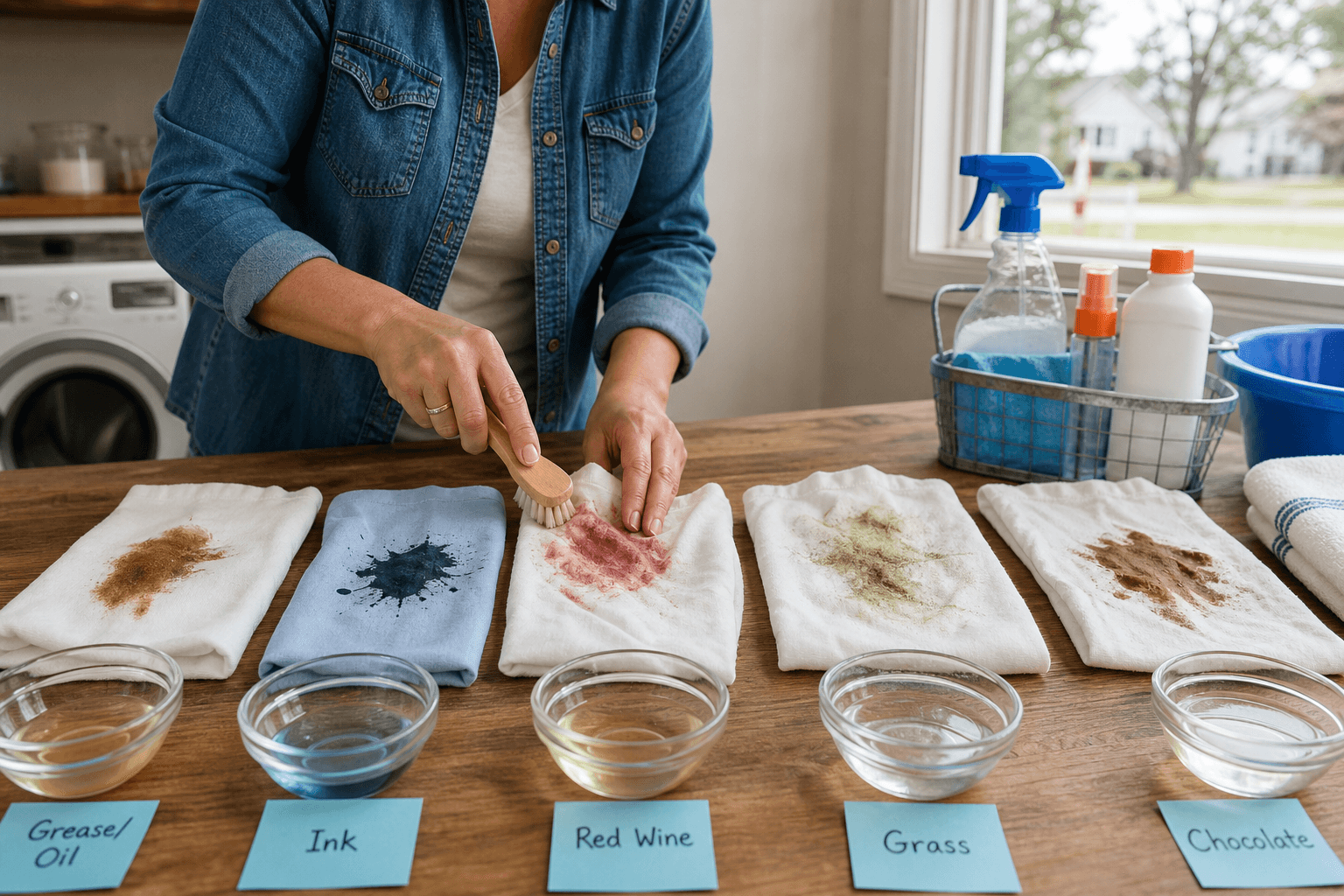
Oil, Grease, and Daily Living Stains Need a Different Strategy
Some stains come from weather. Others come from regular life. Cars drip oil, grills spit grease, and foot traffic spreads grime from the driveway to the patio. These stains look simple at first, but they soak deep into porous surfaces and leave dark shadows that keep returning after a quick wash. Fresh Spin Laundry treats oil and grease as a layered problem, not a one-step cleanup.
The first job is absorption. Before adding any liquid cleaner, cover the stain with cat litter or sawdust and leave it overnight. This pulls up surface oil and prevents it from spreading further during scrubbing. Skipping this step usually means pushing the grease deeper instead of removing it.
After absorption, use a degreasing agent that matches the surface. Concrete can usually handle stronger formulas than painted wood or coated decks. Fresh Spin Laundry’s method focuses on breaking apart the oily residue so it can be lifted away in stages. Short dwell time, light agitation, and a full rinse are usually more effective than one aggressive round of scrubbing.
Deep stains may need a poultice method. That process uses an absorbent material mixed with a cleaner to draw oil out of the pores over time. It takes patience, but it works well on older spots that have baked in under heat and sun. Homeowners often give up too early on these stains, yet repeated controlled treatments can make major progress.
Grease stains from patios and grills deserve quick attention. The longer they sit, the more dust and dirt attach to them, turning one slick spot into a broad dirty patch. A small spill fixed right away is a simple chore. The same spill ignored for a month can become a weekend project.
Seasonal and Holiday Stains Are Easy to Ignore but Hard to Remove
Holiday weekends and changing seasons bring a different category of mess. Fireworks residue, BBQ grease, pollen, and tree sap all leave marks that seem minor at first. Then they bake in under sun, mix with moisture, and create stains that resist regular soap and water. Fresh Spin Laundry treats these as time-sensitive problems because speed changes the outcome.
Fireworks residue can leave powdery marks and dark spotting on patios and driveways. A baking soda paste is a useful first response because it lifts residue without being too abrasive. Let it sit briefly, scrub lightly with a soft-bristle brush, and rinse well. This method works best soon after the event, before the material bonds with the surface.
BBQ grease needs a cleaner that can digest organic buildup. Enzyme cleaners are a strong option here because they target the material at a chemical level without always needing harsh solvents. They are especially useful around grill pads, outdoor dining areas, and concrete where repeated cookouts leave old stains layered over fresh ones.
Pollen and sap need a separate approach. Fresh Spin Laundry suggests a cornstarch and vinegar combination for plant-based stains. Cornstarch helps absorb sticky residue while vinegar helps loosen it. This can be effective on outdoor furniture frames, certain sealed surfaces, and nearby flooring where trees drop material through spring and summer.
These stains matter because they build up over time. A little pollen mixed with foot traffic turns into grime. A few drops of sap become dark marks that collect dirt. Seasonal cleanup is easier if it happens during the season instead of after several months of buildup.
Before You Scrub: The Prep Checklist That Prevents Damage
Good stain removal starts before the cleaner touches the surface. Preparation protects you and the material you are trying to save. Fresh Spin Laundry emphasizes this stage because many expensive mistakes happen before the actual cleaning begins. A stronger product or a louder machine does not fix a bad setup. Safe prep does.
Start with the basics. Wear gloves and goggles. If a product has fumes or fine spray, make sure there is enough airflow protection in the area. That matters even outside, especially in covered patios, garages, or corners where cleaner can linger. Quick jobs still need the right safety habits.
Weather timing is another big factor. Avoid freezing temperatures because cleaners will not work properly and rinse water can create slip hazards or refreeze on the surface. High winds are also a problem. They dry products too fast, blow spray into areas you did not plan to treat, and make results uneven. A mild, dry day usually gives the best cleaning window.
Always test a small hidden section first. That one step can save siding, painted trim, deck stain, and outdoor fabric from discoloration. Surfaces often react differently than expected, especially older ones with wear, fading, or patchy sealant. A short test shows whether the cleaner is safe and whether pressure needs adjustment.
The right tools matter more than a long shelf of products. Fresh Spin Laundry highlights a few essentials:
- Pressure washers in the 1,500–3,000 PSI range, matched carefully to the surface
- Soft-bristle brushes that loosen buildup without gouging wood or scratching finishes
- Eco-friendly solutions that clean effectively while staying safer for runoff and surrounding landscaping
Preparation also means clearing the work area. Move planters, mats, grills, and furniture before cleaning. Sweep away leaves and loose dirt first. The cleaner should hit the stain directly instead of fighting through surface debris.
Decks and Fences: Where Too Much Pressure Causes Permanent Damage
Decks and fences often show the worst effects of weather, and they are also the surfaces homeowners damage most often during cleanup. The common mistake is simple: using too much pressure. Wood may look tough, but high PSI can scar the grain, strip protective finish, and create fuzzy fibers that trap even more moisture later. Fresh Spin Laundry treats wood as a high-risk surface for that reason.
The safer process starts with controlled pressure washing. Use enough force to remove dirt and loosen stains, but not enough to carve lines into the boards. Keep the nozzle moving and hold a steady distance. Test in a hidden section first, especially on older decks where the surface may already be dry or weakened.
Older finishes may need light sanding after washing. This smooths raised grain, removes leftover residue, and prepares the wood for a fresh coat of protection. Sanding should feel like cleanup, not reconstruction. The goal is to restore an even surface, not grind down healthy material.
Once the wood is dry, apply a durable semi-transparent stain. That option protects the surface while still showing the grain, and it tends to age better than heavier coatings that peel in strips. For homeowners comparing stain types and finish options, Independence Painters offers helpful information through its staining page. That reference can support better decisions on long-term wood protection after the cleaning work is done.
Fences need similar care, especially near soil and landscaping where moisture rises and algae gathers. Bottom boards usually stain first. Cleaning them gently and improving airflow near the base can extend the life of the whole structure.
Outdoor Fabrics Need Attention Too
Decks and patios are not the only things hit by harsh weather. Outdoor cushions, furniture covers, rugs, and workwear collect the same salt, mildew, pollen, grease, and mud found on hard surfaces. Fresh Spin Laundry stands out here because fabric care is one of its main strengths. That means homeowners can think beyond wood and concrete and protect the soft surfaces that make outdoor spaces usable.
Outdoor cushions often trap moisture after rain or morning dew. That leads to mildew smells, dark spotting, and fading if the fabric is cleaned too harshly. Fresh Spin Laundry uses stain-removal habits borrowed from garment care: identify the source, pre-treat carefully, wash with the right chemistry, and avoid heat or pressure that sets the stain deeper.
Covers and rugs usually suffer from pollen, dirt, and organic staining. A gentle pre-soak or targeted stain treatment is often more effective than trying to hose everything off at once. Fabric tends to respond better to patience than force. That same idea applies to work clothes exposed to grease, mud, and winter salt. If your household deals with garage work, landscaping, or construction, you already know these stains travel from the job to the home quickly.
Keeping fabrics clean also protects the hard surfaces below them. A damp cushion can transfer mildew to a deck. A greasy grill mat can stain the patio beneath it. A neglected outdoor rug can hold moisture against concrete or wood and speed up discoloration. Clean fabrics are part of a cleaner, longer-lasting outdoor setup.
When DIY Stops Making Sense
DIY stain removal can save money and work well for many common jobs. Still, some situations call for expert help. Knowing where that line sits can save a lot of frustration. Fresh Spin Laundry helps homeowners decide whether a stain is manageable at home or better handled by a trusted local service. That guidance alone can prevent wasted weekends and unnecessary product costs.
Large or risky jobs are usually the first sign that DIY may not be enough. Multi-story surfaces are a clear example. Reaching upper siding, dormers, and tall exterior walls safely takes equipment and experience. Trying to balance a pressure washer on a ladder is not worth the risk.
Deep rust, chemical staining, and very large square footage areas are also strong reasons to escalate. These jobs often require special cleaners, better rinse control, and the ability to work evenly across a broad area. A patchy result can look worse than the original stain. Professional crews are usually better equipped to keep the finish consistent.
For homeowners weighing costs, pressure washing often runs about $0.30–$0.50 per square foot. That range helps frame the decision. A small patio may be easy to handle yourself. A full driveway, fence line, and multi-level deck can quickly become more than a basic DIY project. Fresh Spin Laundry plays a useful role here by helping customers assess whether an affordable at-home treatment is realistic and by connecting them with trusted Independence-area providers when it is not.
DIY vs. Guided Help vs. Full Service
Budget matters, so it helps to compare your options clearly. The cheapest route is usually DIY. You buy the cleaner, put in the time, and control the pace. Done well, this can save 50–70% compared with hiring out the whole job. Done poorly, it can lead to repeat work, damaged surfaces, and extra product costs that erase the savings.
Fresh Spin Laundry’s guided approach offers a middle option. This works well for homeowners who want better results than guesswork but do not need a full exterior cleaning team. You get practical direction, stain-specific treatment ideas, and help applying fabric-safe and surface-safe logic to real problems around the home. That kind of support can make a moderate DIY project far more successful.
Full professional service costs more upfront, but it is often the right move for severe staining, difficult access, or large areas. It also makes sense if the surface is valuable and easy to damage, such as older wood, decorative concrete, or premium siding finishes. In those cases, the higher cost can protect against much bigger replacement expenses.
The smartest choice depends on three things:
- Severity of the stain
- Size of the affected area
- Risk of damage if the method goes wrong
If the stain is small, recent, and on a low-risk surface, start at home. If it is deep, old, widespread, or on a sensitive material, guided help or a local pro will usually give better value.
Costly Mistakes That Make Stains Worse
Some stain-removal errors are so common that they deserve their own warning list. Fresh Spin Laundry sees these mistakes often, and each one can turn a manageable stain into a much bigger problem. The first is using too much pressure on wood and siding. High pressure feels powerful, but it can strip finish, gouge boards, and push water into places where mold grows later. More force is rarely the best answer.
Another major mistake is skipping the rinse phase. Cleaners left on the surface can attract dirt, create streaks, or react with sunlight and moisture in ways that speed up re-staining. A full rinse removes loosened grime and leftover product. Without it, the job is incomplete even if the stain looks lighter at first.
Bleach on wood is another bad call. It can cause discoloration, weaken fibers, and create uneven light patches that are harder to fix than the original stain. Wood responds better to gentler, stain-specific treatments followed by proper drying and sealing.
Weather mistakes are common too. Cleaning in freezing temperatures, during high wind, or in intense direct heat can ruin results. Products dry too fast, rinse poorly, or fail to work at all. Timing is part of the cleaning method, not an afterthought.
Here is a quick list worth remembering:
- Do not use excess pressure on wood or siding
- Do not skip the final rinse
- Do not use bleach on wood surfaces
- Do not clean in the wrong weather
A Simple Maintenance Plan That Prevents Bigger Problems
The best stain removal job is the one you never have to fight in the first place. Fresh Spin Laundry encourages a maintenance plan built around regular inspection, seasonal timing, and a few smart prevention habits. In this climate, outdoor surfaces should usually be cleaned 1–2 times per year at minimum. That schedule helps stop light staining from becoming deep-set damage.
Late spring is often the best time for a major cleanup. The thaw has passed, winter residue is visible, and you can treat problems before summer heat bakes them in. A fall check is also useful, especially for removing organic buildup, sap, and mildew before cold weather locks them into the surface.
Protective sealants make a real difference on wood and concrete. They reduce absorption, slow down staining, and make future cleaning easier. Sealants are not permanent, so check the condition of the finish regularly rather than assuming a surface is still protected because it was treated a year or two ago.
Tree trimming helps more than many people realize. Less shade means less dampness. Fewer overhanging branches mean less sap, leaf litter, and mold-friendly debris. Improving sun exposure and airflow can reduce the frequency of cleaning across decks, fences, siding, and patios.
Smart chemical choices matter as well. Eco-friendly products that are safe for runoff help protect surrounding soil and landscaping while still delivering useful stain-lifting power. Fresh Spin Laundry keeps this balance in mind because surface care should not create a new environmental mess.
The biggest habit shift is simple: treat stains early. A mark that is a five-minute cleanup today can become a half-day project after a month of weather, foot traffic, and sunlight. Fast action almost always means less labor later.
Quick Answers to Common Stain Removal Questions
Homeowners often ask the same few questions, and the answers help set realistic expectations. First, how often should outdoor surfaces be cleaned in this area? Fresh Spin Laundry recommends at least once or twice each year in this climate. That pace keeps buildup from turning into deep staining and gives you a chance to catch damage early.
Are pressure washers always safe? The short answer is no. PSI has to match the surface. Concrete can handle more force than wood, painted trim, or some siding types. If you are unsure, start lower and test first. Pressure is a tool, not a cure-all.
What is the most effective eco-friendly option? Vinegar-based solutions and steam cleaning are strong choices for many situations. They are useful because they can clean without relying on the harshest chemicals, though the right method still depends on the stain and the material.
Is DIY worth trying? Yes, especially for smaller jobs, fresh stains, and low-risk surfaces. Larger areas, deep-set stains, and surfaces that damage easily are better handled with expert input. The smartest move is not always to do everything yourself. It is to know what you can handle well and where support will save time and money.
Bring Your Surfaces Back to Life with Smarter Stain Removal
Mount Washington-style weather leaves a real mark on Independence homes, from salt-streaked concrete to algae-covered decks and grease-stained patios. The answer is not harder scrubbing or stronger chemicals by default. The answer is a smarter system: identify the stain, prep carefully, use the right treatment, rinse well, and protect the surface afterward.
Fresh Spin Laundry brings a useful perspective to this challenge by combining fabric-care experience with practical exterior stain knowledge. That means safer methods, more thoughtful product choices, and better long-term results for both hard and soft surfaces around the home. It also means helping homeowners know when to handle a stain themselves and when to bring in local pros.
If your deck, siding, driveway, cushions, or outdoor gear are showing the effects of another rough Missouri season, this is a great weekend to start. Try a Fresh Spin-approved method on one problem area, test carefully, and work in stages. Consistent care is still the best way to stay ahead of the toughest conditions Missouri can throw at your home.