
You grab your favorite blanket for a quiet night in, but instead of that cloud-like comfort, it feels stiff, rough, or oddly lumpy after the last wash. South Main homes deal with this all the time, and the fix is usually simple: follow the care label, stick with cold water and gentle settings, and avoid the common wash-day mistakes that cause shrinkage, felting, fading, and lost softness.
Key Takeaways
- Start with the care label, then default to cold water and a gentle cycle if you are unsure.
- Most blanket damage comes from heat, overcrowding, and harsh laundry products.
- Different materials need different care, especially wool, down, knit, heated, and weighted blankets.
- Air drying or using low heat helps prevent shrinkage, stiffness, and clumping.
- Regular washing removes allergens, extends blanket life, and can lower replacement costs.
Why Your Blanket Washing Routine Matters
A blanket can look clean and still hold onto dust, body oils, sweat, pet hair, and everyday odors. Over time, that buildup changes the way fabric feels. Soft fibers start to feel flat or rough, and thicker blankets may lose their loft and cozy texture.
Fresh Spin Laundry points out a helpful truth: most blanket damage does not come from normal use. It usually happens during washing and drying. Hot water can tighten or warp fibers. Too much detergent can leave residue behind. A packed washer can twist, stretch, or scrub blankets harder than needed.
That is why a better routine matters. Once you understand how your blanket fabric reacts to water, detergent, agitation, and heat, you can clean it without ruining the feel you love. A few smart choices can protect the shape, softness, insulation, and overall life of the blanket.
Good care also improves the feel of your space. Fresh blankets make beds, couches, and reading corners feel cleaner and more inviting. In South Main, where blankets get used through cooler months and during indoor-heavy seasons, washing them the right way helps keep your home feeling comfortable and fresh.
The Golden Rule: Check the Care Label First
If there is one habit that prevents the most blanket disasters, it is this: read the care label before you do anything else. That small tag tells you whether the blanket can handle machine washing, what water temperature is safe, which cycle to use, and how it should dry.
This matters even more for blankets made from wool, heated materials, loose knits, crochet, faux fur, feather fill, or weighted inserts. These fabrics and constructions can react badly to the wrong method. One hot cycle or one high-heat dry can turn a soft blanket into a shrunken, matted, misshapen version of itself.
If the label is faded, missing, or hard to understand, Fresh Spin Laundry recommends a safe default: use cold water, a gentle cycle, and a mild detergent. That baseline works well because it reduces stress on fibers while still washing away normal dirt and odors.
Cold water helps protect fabric structure. Gentle cycles keep agitation lower, which means less pulling, rubbing, and tangling. Mild detergent cleans without loading the blanket with heavy chemicals or residue. Together, those choices lower the risk of shrinking, felting, fading, and lost softness.
Think of the label as your first line of defense. Guessing may feel faster, but it often leads to avoidable damage. A 10-second check can save you from replacing a blanket much sooner than expected.
How Often You Should Wash Blankets
Many people wait far too long between blanket washes because blankets do not seem dirty in the same way towels or sheets do. Still, regular washing matters for hygiene, comfort, and fabric life. A blanket picks up skin cells, oils, allergens, and airborne dust every time you use it.
Fresh Spin Laundry gives a practical schedule that fits most homes. Use this as your starting point:
- Lightweight throws: wash weekly to biweekly
- Standard blankets: wash every 1 to 3 months
- Weighted or heated blankets: wash 2 to 4 times per year
You may need to wash more often if the blanket gets heavy daily use, sits in a home with pets, or starts to smell stale. Allergy season can also be a reason to clean sooner. If someone naps on the couch blanket every day, weekly or every other week may make more sense than monthly washing.
There is also a money side to this. Regular care helps prevent long-term buildup that can weaken fibers and lead to pilling, fading, or matting. That means fewer replacements and fewer trips for special cleaning. Fresh Spin Laundry also notes that cold washes cut electricity use significantly, which makes routine blanket care easier on your budget.
For South Main households, seasonal timing helps too. Wash blankets before heavy winter use. Clean them again before storing them away. That habit reduces indoor allergens and keeps your blankets ready for the next cozy stretch.
Before You Wash: Three Prep Steps That Prevent Damage
Blanket care starts before the washer turns on. A quick prep routine lowers the chance of tears, set-in stains, and fiber damage. It also improves the final result, since detergent and water can work more evenly on a blanket that is ready for washing.
The first step is to check the label and decode it. Look for water temperature limits, approved cycle types, and drying directions. Some blankets can handle low tumble drying, while others need flat drying or air drying only. If you skip this step, every later decision becomes riskier.
Next, inspect the blanket closely. Check seams, edges, quilting lines, and corners for loose threads, thinning spots, or small tears. Mend any damage before washing. Agitation and water weight can turn a small split into a major rip in a single cycle. This is extra important for older blankets and anything with decorative stitching.
Then pretreat visible stains or oily areas. Body oils often gather near the top edge of a bed blanket, while spills may sit in one corner or along the center. Use a mild or enzymatic detergent to spot-treat those areas. Let it sit briefly so it can loosen the stain before the full wash begins.
Finally, gather the right supplies. Fresh Spin Laundry recommends a mild liquid detergent that works well in cold water. Skip bleach and fabric softener, since both can damage fibers or leave behind buildup. If your blanket is delicate, loosely knit, or crocheted, place it in a mesh bag for extra protection.
These prep steps take only a few minutes, but they prevent many of the wash-day mistakes that ruin blankets fast. Clean smarter first, and the rest of the process becomes much safer.
Choose the Right Supplies for Soft, Safe Cleaning
The products you use matter almost as much as the settings you choose. A blanket needs cleaning power, but it also needs protection. Harsh formulas can strip fibers, leave residue, or make a once-soft blanket feel heavy and stiff.
Start with a mild detergent, preferably liquid. Liquid detergent dissolves more easily than powder, especially in cold water, and that helps reduce leftover soap trapped deep in thick fabric. Many blanket problems that seem like “wear” are really detergent buildup causing roughness and reduced fluff.
For certain materials, use a specialized formula. Wool benefits from a pH-neutral detergent. Down and feather blankets do best with a down-specific cleanser. These formulas are made to clean without stripping the natural qualities that give those materials softness and insulation.
Bleach is usually a bad idea. It can weaken fibers, fade color, and make fabric feel harsher over time. Fabric softener sounds helpful, but it often coats blanket fibers with residue. That coating can reduce breathability, attract more dirt, and make plush fabrics feel matted after repeated use.
A few extras can help when used well. Mesh laundry bags protect fragile knits and crochet work from stretching or snagging. Wool dryer balls can fluff blankets in the dryer without adding residue. Vinegar in a rinse cycle can help remove lingering odors or soap traces from some washable blankets.
Keep the product list simple. The best blanket routine usually uses fewer additives, not more. Clean water, a gentle detergent, and the right cycle go a long way.
How to Wash Fleece, Polyester, and Microfiber Blankets
Fleece, polyester, and microfiber blankets are some of the most common blankets in South Main homes. They are warm, lightweight, and usually machine washable. Even so, they can lose softness quickly if washed with too much heat or mixed with the wrong laundry.
Fresh Spin Laundry recommends cold or warm water, staying under 120°F, on a gentle cycle. Cold is still the safer pick if you are unsure. These synthetic fibers do not need high heat to get clean, and too much heat can damage texture or lead to shrinking and stiffness.
Wash these blankets alone if possible. Fleece and microfiber can attract lint from towels, sweatshirts, and other fuzzy items. Once that lint sticks, it is hard to remove. Washing them separately also gives the blanket more room to move and rinse properly.
Use a small amount of mild liquid detergent. Too much soap can cling to these fabrics and make them feel waxy or flat. If your machine has an extra rinse option, use it for thicker blankets or heavily used couch throws.
Drying matters just as much. Air drying is safest, but low heat can work if the care label allows it. Remove the blanket while it is still slightly damp if you notice it starting to feel hot or over-dried. That simple step can help preserve the soft hand-feel that makes these blankets so popular.
If a fleece blanket already feels less cozy than it used to, try a short air-fluff cycle in the dryer with wool dryer balls. That can help loosen the fibers and bring back some of the original softness without adding more heat damage.
How to Wash Wool Blankets Without Felting or Shrinking
Wool blankets need extra care because wool reacts quickly to heat, agitation, and sudden temperature shifts. Those three things can cause felting, which makes the fibers lock together and leaves the blanket denser, smaller, and rougher than before.
Always start with the care label on wool. If machine washing is allowed, use cold water and the wool or delicate cycle. If there is any doubt, hand washing is the safer route. Wool does not respond well to rough movement, so gentle handling is key from start to finish.
Choose a pH-neutral detergent made for wool or delicate fabrics. Standard detergents can be too harsh. Add only a small amount. More soap does not mean a cleaner blanket, and extra product can be hard to rinse from thick natural fibers.
Avoid wringing, twisting, or scrubbing. Those actions rough up the surface and increase the chance of felting. After washing, support the blanket with both hands, press out excess water carefully, and reshape it while it is damp.
Dry wool flat. Hanging it can stretch the fibers and distort the shape, especially when the blanket is heavy with moisture. Place it on a clean, dry surface or drying rack and let air move around it. Drying may take a full day or longer, but patience protects the fabric.
If a wool blanket shrinks slightly, Fresh Spin Laundry suggests soaking it in water with a small amount of conditioner to relax the fibers. That may help loosen the structure enough for gentle reshaping, though it will not fix severe shrinkage every time. Prevention still works better than rescue.

How to Wash Cotton Blankets the Smart Way
Cotton blankets are often easier to wash than wool or specialty fabrics, but they still benefit from a careful routine. Cotton is durable, breathable, and comfortable, yet it can shrink or fade if exposed to repeated high heat.
Most cotton blankets do well in cold or warm water on a gentle cycle. Warm water may help with heavier soil if the care label allows it, but hot water is usually unnecessary. If the blanket is richly colored, cold water is the better choice for preserving appearance.
Use a moderate amount of mild detergent and avoid packing the washer. Cotton absorbs a lot of water, which makes blankets heavy during the cycle. A crowded drum can stop the fabric from rinsing fully and may strain both the machine and the blanket.
Drying is where many cotton blankets get into trouble. Medium heat may be acceptable if the label allows it, but high heat can trigger shrinkage. Pull the blanket out while it is slightly damp, then let it finish air drying. That method can reduce stiffness and help keep the fabric softer.
Cotton also responds well to simple maintenance. Spot-cleaning small marks between full washes can reduce how often you need a complete cycle. That helps preserve color and texture over time while still keeping the blanket fresh for daily use.
How to Wash Down and Feather Blankets
Down and feather blankets feel amazing when cared for properly, but they can turn clumpy and uneven if washed or dried the wrong way. Their biggest needs are space, gentle cleaning, and plenty of drying time.
Fresh Spin Laundry recommends cold or warm water on a delicate cycle with an extra rinse. The extra rinse matters because down can trap detergent deep inside. Leftover soap can make the fill stick together and lose loft.
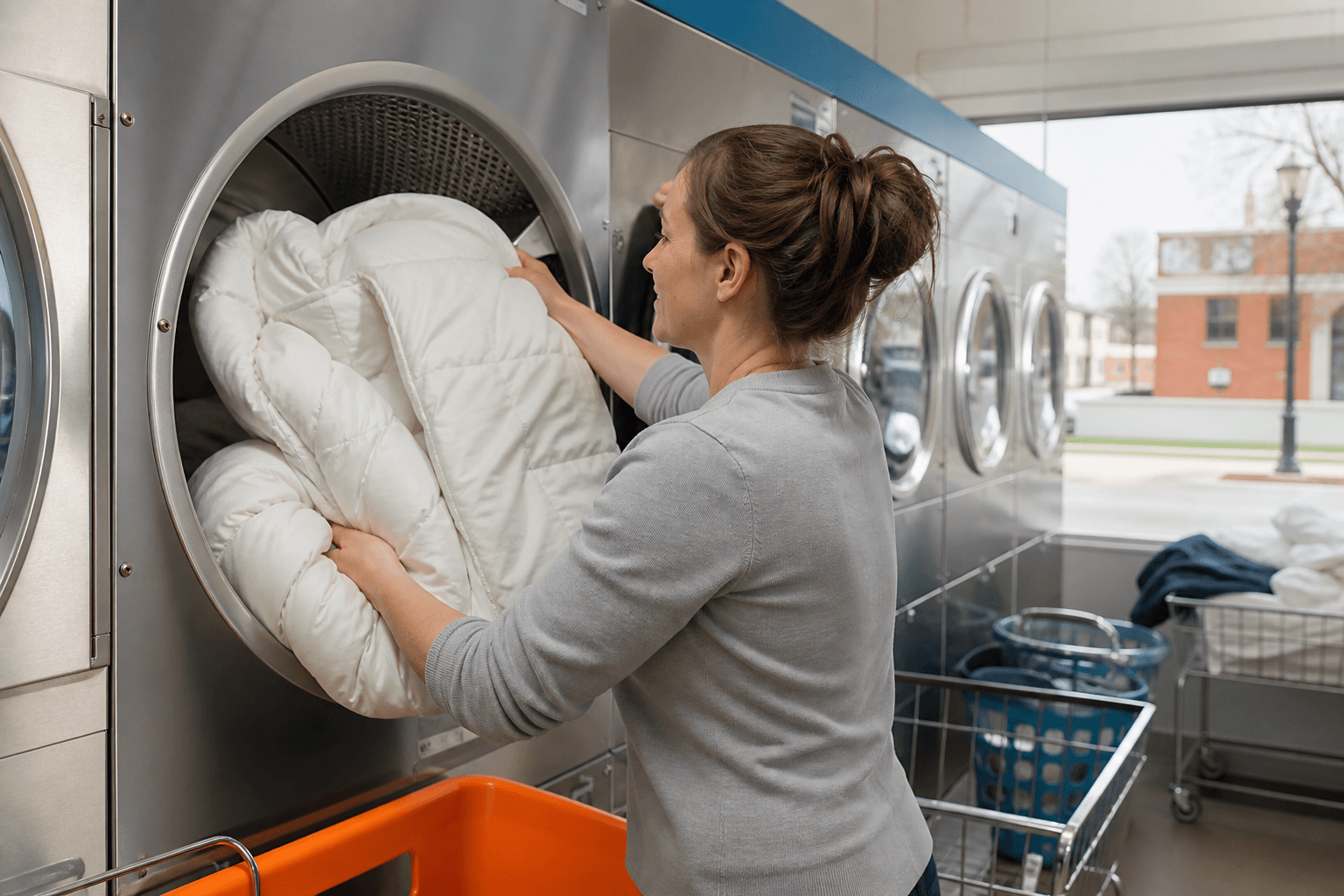
Always use a large-capacity washer for down or feather blankets. A small home machine may not allow enough room for water circulation, and the blanket may become too heavy as it absorbs water. If your washer feels too tight for the load, use a local laundromat with front-loaders that can handle bulky bedding.
Pick a down-specific detergent if possible. Standard detergent can strip natural oils from feathers and down clusters. Those oils help the fill stay airy and resilient, so preserving them makes a difference in long-term comfort.
Dry on low heat and expect it to take time. Stop periodically to fluff and redistribute the fill by hand. Wool dryer balls can help break up clumps and restore loft. Do not rush this step. A blanket that feels dry on the outside can still hold moisture deep inside, and that can lead to odors or mildew.
Air drying is also an option, especially if the weather is mild. Still, be ready for a longer drying window and regular fluffing while it dries. However you finish the process, make sure the blanket is completely dry before folding or using it again.
How to Wash Knit and Crochet Blankets
Knit and crochet blankets carry a different kind of risk. They may not shrink as dramatically as wool, but they can stretch, snag, or lose shape with rough handling. Their open structure makes them vulnerable during both washing and drying.
Hand washing is the ideal option for many knit and crochet blankets. If machine washing is allowed, use cold water, the gentle cycle, and a mesh bag for protection. That extra barrier helps reduce pulling and keeps loose loops from catching on the drum or other laundry.
Use a mild detergent and avoid any rough scrubbing. If there is a stained section, work on it gently with your fingers rather than a brush. Twisting the blanket to remove water is a common mistake and one of the fastest ways to distort the shape.
Flat drying is essential. Lay the blanket on a clean towel or drying surface and reshape it carefully while damp. Smooth the edges and adjust the corners so the blanket dries in the right form. Hanging it can make it stretch long or uneven under its own weight.
These blankets often take longer to dry because moisture collects in thicker stitched areas. Make sure air can circulate around them, and turn them carefully if needed. A little patience keeps handmade or delicate pieces looking much better for much longer.
How to Wash Sherpa and Faux Fur Blankets
Sherpa and faux fur blankets are popular because they feel plush and warm, but their texture can mat down quickly with harsh washing. These fabrics need a gentle approach if you want to keep that fluffy, cozy finish.
Wash in cold water on a gentle cycle. Mild detergent is best. Strong detergents and hot water can strip softness and make the fibers stick together. Like fleece, these blankets also do better when washed away from lint-heavy items.
Keep the load light. Overcrowding leads to rougher friction, and that can flatten the pile. If your sherpa blanket is large, give it a cycle by itself so it has room to rinse and move evenly.
Dry using low tumble heat if the label allows it, or air dry for the safest result. High heat is one of the fastest ways to change the texture permanently. Once faux fur fibers become singed or matted by heat, the original feel rarely comes back fully.
If the blanket seems less fluffy after drying, shake it out gently and use your hands to separate compressed areas. A short no-heat tumble can help lift the pile again. Small care choices make a big difference with textured blankets like these.
How to Wash Heated and Electric Blankets Safely
Heated and electric blankets need special attention because water and electrical components must be handled carefully. Before doing anything else, unplug the blanket and remove any detachable cords or controls according to the manufacturer instructions.
Fresh Spin Laundry recommends cold or lukewarm water with a gentle cycle or hand washing, depending on the care label. This is one category where the label is truly non-negotiable. Heated blankets can vary a lot in construction, and some are much more sensitive than others.
Use a mild detergent and skip bleach or fabric softener. Harsh chemicals can affect both the fabric and the blanket’s internal wiring area. Avoid soaking too long unless the care instructions allow it, since extended water exposure may increase wear on electrical sections.
Never twist or wring the blanket. Press water out gently instead. After washing, air dry it fully before plugging it back in or placing it on a bed. This step is critical. Any leftover moisture inside the blanket can create a safety issue and may damage the heating system.
Even if the blanket appears dry on the surface, wait until it is thoroughly dry all the way through. Patience here protects both the blanket and your safety. Heated blankets may not need frequent full washing, so regular spot-cleaning can help stretch time between cleanings.
How to Wash Weighted Blankets Without Ruining Their Structure
Weighted blankets offer comfort and pressure, but their construction makes them trickier to wash than standard blankets. They are heavy even when dry, and once they absorb water, the strain increases fast. Always confirm the blanket is machine-safe before putting it in a washer.
If machine washing is approved, use cold water and a bulky or gentle cycle. A front-loading machine is often the safer choice because it handles heavy bedding more evenly. Make sure the blanket falls within your washer’s weight limit. If it does not, use a large-capacity laundromat machine or wash by hand as directed.
Use a small amount of mild detergent and rinse thoroughly. Weighted blankets can hold onto soap, especially if the outer shell is dense. That residue may leave the blanket feeling stiff or create a stale smell over time.
Flat drying is usually the best choice because it helps preserve shape and keeps the internal fill distributed more evenly. Hanging a very wet weighted blanket can stretch seams or distort the internal pockets. If the cover is removable, wash the cover separately and less often wash the insert, depending on the care directions.
Because of their weight and build, these blankets usually need less frequent full washing than lightweight throws. Spot-cleaning, removable covers, and proper storage all help reduce wear while keeping the blanket fresh.
The Fresh Spin Laundry Method: Machine Washing Step by Step
Once your blanket is prepped and you know the right settings, the actual wash process should feel simple. A clear routine helps you avoid overthinking and lowers the chance of mistakes. Fresh Spin Laundry follows a practical machine-washing method that works for most washable blankets.
Start by loading the blanket properly. In a front-loader, spread it out as evenly as possible. In a top-loader with an agitator, arrange it evenly around the center rather than dropping it in one tight bundle. Balanced loading helps the machine clean more effectively and reduces strain on seams.
Give the blanket room. Never overcrowd the washer. Blankets need space for water and detergent to move through the fibers. If the drum is too full, the blanket will not rinse well, and the rubbing from a packed load can cause wear or twisting.
Next, add detergent and choose the settings. Gentle is the default cycle for most blankets. If your washer has a bulky or bedding mode, that may be a good option for larger pieces. Stick with cold water unless the care label clearly approves warmer temperatures.
Run the cycle and consider adding an extra rinse for thick, plush, or heavily used blankets. This is especially helpful if the blanket has been exposed to body oils, pets, or heavy detergent in the past. Cleaner rinsing often means softer results.
After the cycle ends, remove the blanket promptly. Letting a damp blanket sit in the machine can create odor and flatten the fabric. Move right into drying so the blanket keeps its shape and dries evenly.
How to Wash Oversized Blankets at Home
Oversized blankets can be difficult to clean in a standard home washer. If the blanket barely fits dry, it will be far too heavy and cramped once wet. That can lead to poor cleaning, machine strain, and possible fabric damage.
Fresh Spin Laundry suggests two main options. The first is to use a local laundromat with large-capacity front-loaders. These machines handle bulky bedding more safely and often rinse more effectively than small household units. For many king-size blankets, this is the easiest and safest route.
The second option is the bathtub method. This works well if you want to wash a large blanket at home without stuffing it into a machine. Fill the tub with warm water if the fabric allows it, or cool water for more delicate materials. Add a small amount of dish soap and baking soda, then submerge the blanket.
Gently agitate the blanket by pressing and moving it through the water. Avoid aggressive scrubbing or twisting. Drain the tub and rinse thoroughly, repeating as needed until the water runs clear and no soap remains. Thick blankets may need multiple rinses, so plan enough time.
Press out excess water carefully. A large blanket can become extremely heavy, so lift it with support and avoid pulling from one edge. Then move it to a flat drying surface or a drying setup that keeps the weight distributed evenly.
For South Main households, this method is especially useful for big seasonal blankets that only need occasional washing. It takes more effort than a machine cycle, but it can save a favorite blanket from damage.
Drying Blankets Without Damage or Shrinkage
Drying is where many blankets are lost. Even a perfect wash can be undone by too much heat or the wrong drying position. If you want to preserve softness, shape, and size, focus just as much on drying as you do on washing.
Fresh Spin Laundry notes that air drying is the safest choice for many blankets, especially wool, knit, and down. Laying blankets flat helps maintain shape and reduces stretching. This is important for anything with loose construction or heavy fill.
If you use a dryer, keep it on low heat or no heat. Remove the blanket while it is still slightly damp, then let it finish drying outside the machine. That simple step helps prevent stiffness and lowers the risk of shrinkage. It also reduces over-drying, which can make fibers feel brittle or flat.
Dryer balls are useful for fluffing, especially with down or thick synthetic blankets. They help improve air movement and break up clumps without coating the fabric. Skip dryer sheets if you want to avoid residue buildup.
Drying times vary by material. Synthetics may take about one to two hours on low heat. Natural fibers often need much longer, and air drying may take 24 to 48 hours depending on thickness and airflow. Do not rush the process. A blanket stored or reused while still damp can develop odor and mildew quickly.
Good drying is really about patience. Give the blanket enough time, enough air, and as little heat as possible. That is how softness lasts.
When to Hand Wash Instead of Machine Wash
Some blankets are simply safer in the tub or sink. Hand washing gives you more control over movement, temperature, and pressure. That makes it the best option for many delicate or specialty blankets.
Fresh Spin Laundry recommends hand washing for crochet, silk, bamboo, heated, and other delicate blanket types when needed. If the blanket has sentimental value, a loose weave, or fragile decorative work, hand washing is usually the wiser choice even if machine washing seems possible.
The process is simple. Fill a tub or basin with cold or lukewarm water and add a small amount of mild detergent. Submerge the blanket and let it soak for 15 to 30 minutes. This helps loosen dirt without requiring aggressive scrubbing.
Then gently agitate the water with your hands. Press and move the blanket through the water, but do not scrub, twist, or wring it. Drain the tub and rinse thoroughly. Repeat the rinse if the water still feels soapy or cloudy.
To remove excess water, press the blanket gently against the side of the tub or roll it in clean towels. Reshape it while damp and dry it flat. This method takes more hands-on time, but it is often the best way to protect fragile fibers and preserve the blanket’s original feel.
How to Remove Stains, Odors, and Stiffness
Blankets often get hit with the same few problems: body oil, sweat, food spills, stale smells, and that disappointing rough feel after washing. The good news is that these issues are usually fixable without harsh products.
For body oil and sweat stains, pretreat the area with an enzymatic detergent. Let it sit briefly before washing so it can break down the buildup. This works especially well around collar areas and spots where hands, faces, or pets rest often.
If the blanket smells stale, try a vinegar rinse if the care instructions allow it. Vinegar can help cut odor and clear away some detergent residue. Another option is soaking the blanket in a baking soda solution before washing. That can freshen fabric that has picked up storage smells or general mustiness.
To restore softness, skip fabric softener and use wool dryer balls instead. You can also run the blanket in the dryer on an air-fluff cycle for about 15 minutes. This helps lift fibers and reduce stiffness without adding damaging heat.
Storage matters too. Always store blankets clean and fully dry. Use breathable storage bags rather than plastic, which can trap moisture and odors. A blanket that goes into storage fresh and dry is much more likely to come out feeling good next season.
Small maintenance habits pay off here. Spot-cleaning spills right away, airing blankets out after heavy use, and avoiding product buildup all make full wash days easier and more effective.
What Ruins Blankets Fast
If you want blankets to last, it helps to know the biggest mistakes that shorten their life. Most damage comes from a few repeat habits, and each one is easy to avoid once you know what to watch for.
Hot water is a major issue. On synthetics, it can warp or melt fibers. On wool, it can trigger shrinkage and felting. High heat in the dryer creates similar problems and also causes clumping in blankets with fill.
Overloading the machine is another common mistake. A packed washer cannot clean evenly, and the blanket ends up rubbing hard against itself or the drum. That leads to extra wear, poor rinsing, and possible stretching or seam stress.
Bleach and fabric softener also cause trouble. Bleach weakens many fibers and can strip color. Fabric softener often leaves residue that weighs down the blanket and dulls softness over time. The feel may seem nicer at first, but repeated use often creates buildup.
Mixing blankets with lint-heavy items is especially bad for fleece and similar fabrics. Towels and fuzzy sweatshirts shed fibers that cling tightly and make blankets look older and feel less clean. Washing the wrong items together can undo your effort before drying even starts.
Avoiding these habits is one of the easiest ways to protect your blankets. Better care does not have to be complicated. It mostly means using less heat, less product, and more space.
South Main Tips for Easier Blanket Care
Blanket care works best when it fits your actual routine. Fresh Spin Laundry shares several practical tips that make sense for South Main households, especially if you deal with oversized blankets, seasonal bedding changes, or limited machine space at home.
Use local laundromats with large-capacity front-loaders for oversized blankets. This is often the safest option for king-size, heavily padded, or extra-plush blankets that do not have enough room in a standard washer. More space means better cleaning and lower risk of damage.
Try the bathtub method for large blankets if you want to wash them at home. It takes effort, but it gives you more control and avoids overstuffing your machine. This can be a smart pick for blankets you wash only a few times per year.
Plan your washing by season. Clean blankets before winter use so they start fresh for heavy indoor months. Wash them again before storage to reduce allergens and prevent stale odors from settling in while folded away.
Fresh Spin Laundry also recommends an eco-friendly approach: use cold wash cycles and line dry during mild South Main weather. That saves energy, reduces heat exposure, and often leaves blankets feeling softer than they do after an aggressive dryer cycle.
The best local tip may be the simplest one: do not wait until your blanket looks bad. A regular, low-stress routine is easier on fabric than a rare deep clean after months of buildup.
Quick Answers to Common Blanket Questions
People often have the same worries right before wash day. Here are some straightforward answers based on the Fresh Spin Laundry guidance.
How often should you wash blankets?
For many blankets, every one to three months works well. Wash sooner if you notice odors, visible dirt, heavy daily use, or allergy issues. Lightweight throws usually need more frequent cleaning than seasonal blankets.
Can you use hot water?
Only if the care label clearly allows it. In most cases, hot water is unnecessary and increases the risk of shrinkage, fading, or texture changes. Cotton may sometimes tolerate it, but cold is still the safer default.
What if your blanket shrinks?
Fresh Spin Laundry suggests soaking it in water with a small amount of conditioner to relax the fibers. After soaking, reshape it gently. This may help with minor shrinkage, especially in natural fibers, though results vary.
How do you wash oversized blankets?
Use the bathtub method at home or take them to a large-capacity laundromat machine. The main goal is to give the blanket enough room to move and rinse properly.
Why does my blanket feel rough after washing?
Common causes include too much detergent, high heat drying, fabric softener buildup, or washing with lint-heavy items. Try an extra rinse, lower heat, and a simpler detergent routine next time.
Keep Your Blankets Cozy for the Long Haul
The best blanket care routine is easy to remember. Start with the care label. If you are unsure, choose cold water, a gentle cycle, and mild detergent. Give the blanket room to wash, rinse it well, and dry it with as little heat as possible.
That approach protects softness, shape, and warmth far better than harsh “deep cleaning” habits. It also helps your home feel cleaner by removing allergens, dust mites, and bacteria buildup before it becomes a bigger problem. A good wash routine keeps blankets comfortable without wearing them out early.
Fresh Spin Laundry’s biggest takeaway is simple: most blanket damage is preventable. Wrong temperature, overcrowding, and harsh products do far more harm than normal use. Once you fix those habits, your blankets stay cleaner, softer, and more inviting for much longer.
Put these Fresh Spin Laundry tips to work on your next wash day and feel the difference right away. One final insider move can stretch the time between full washes: regular spot-cleaning. Catching small messes early keeps blankets fresher, cuts down on heavy washing, and helps your favorite cozy layer stay that way.