

Most stains do not become permanent because they are powerful, but because people react too late, use the wrong water temperature, or scrub the fabric until the fibers trap the mess even deeper. This guide breaks down the science of stain removal the way Fresh Spin Laundry approaches it: act fast, identify the stain type first, match the treatment to the fabric, and use simple tools like dish soap, vinegar, baking soda, hydrogen peroxide, and enzyme detergent with far better results.
Key Takeaways
- Fast action gives you the best chance of full stain removal.
- Always identify the stain before choosing a treatment.
- Water temperature can remove a stain or permanently set it.
- Blotting protects fibers better than scrubbing.
- Drying too soon can make a temporary stain permanent.
The 60-Second Rule: Why Speed Changes Everything
A fresh stain sits on and between fabric fibers. A set stain bonds more deeply, dries into the material, and often reacts with heat or air in ways that make removal much harder. That is why the first minute matters so much. Fresh Spin Laundry’s core idea is simple: quick response plus the right method gives you the highest chance of saving the garment.
Stains cost more than a little frustration. They shorten the life of jeans, shirts, dresses, jackets, bedding, and uniforms. Replacing clothes adds up fast, especially if the damaged item is a favorite piece or something expensive. A prompt response protects both the fabric and your budget, which is why stain removal should feel like basic clothing care, not a last-minute rescue mission.
Many stains become permanent because people make a few common mistakes right away. They scrub hard. They toss the garment into the hamper and forget it. They rinse with hot water without checking what caused the stain. They wash first and inspect later. Each of those moves can push pigment, oil, or protein deeper into the fibers. Once heat from a dryer hits an untreated stain, removal becomes much less likely.
The good news is that most stains can be handled at home if you move quickly and stay calm. This guide will show you how to spot the stain category, choose a treatment that fits the fabric, and know when to repeat a mild process instead of reaching for a stronger chemical. You do not need a giant cabinet full of products. You need a clear system.
Before You Touch That Stain: The Rules You Cannot Ignore
The first rule is immediate action. A stain that is still damp is much easier to lift than one that has dried and settled. If you cannot wash the item right away, keep the stained area slightly damp until you can treat it properly. That simple habit can make a huge difference.
Next, blot instead of scrub. Pressing gently with a clean cloth or paper towel absorbs excess liquid and lifts surface material. Scrubbing does the opposite. It roughs up the fibers, spreads the stain outward, and can distort the fabric. If you remember one motion, remember this one: blot, do not rub.
Care labels matter more than many people think. Before using water, peroxide, detergent, or any stain solution, check the garment label for washing limits. A washable cotton T-shirt can usually handle more active treatment than silk, wool, rayon, or a structured item with lining. Fabric tolerance should guide every step.
A good pre-treatment usually follows a basic sequence. Start by removing extra material. Scrape off solids gently with a spoon or dull edge. Apply the chosen cleaning solution to the stained area. Let it sit long enough to work, usually a few minutes rather than a few seconds. Then wash according to the care label. That pattern—scrape, apply, wait, wash—keeps the process organized and effective.
Water temperature deserves its own warning. It can help dissolve oils, or it can cook a protein stain into the fabric. Cold water is the safe first move for blood and other protein-based marks. Hot or warm water can help with grease if the fabric allows it. Lukewarm water often works for stains that do not fit neatly into one category. If you are unsure, start cooler. Heat is harder to undo.
Another important rule is to inspect before drying. Washing does not guarantee success. If the stain is still visible after the wash, do not put the item in the dryer. Dryer heat can set what is left and make a second treatment much less effective. Air-dry first, recheck in good light, and repeat if needed.
The Secret to Success: Identify the Stain Type First
Guessing is one of the fastest ways to ruin a garment. The same product that works well on grease can fail badly on blood. Hot water that helps oil release can set protein. Bleach-like treatments that brighten a white towel can damage a colored shirt. Correct stain removal starts with one question: what is it?
Most household clothing stains fit into five broad categories. Learning them gives you a practical decision map. Here is the framework Fresh Spin Laundry uses to diagnose stains quickly:
- Protein: blood, grass, sweat, dairy, eggs, and many food stains
- Oil-based: grease, butter, makeup oils, cooking oil, waxy residues
- Tannin: coffee, tea, wine, juice, many plant-based drinks
- Dye: ink, markers, color transfer, some cosmetics
- Combination: stains with more than one component, such as sauces, coffee with milk, makeup, or food spills
Protein stains often respond best to cold water, enzyme detergents, and gentle treatment. Oil-based stains need products that break down grease, such as dish soap or a strong laundry detergent. Tannin stains usually respond well to vinegar-based approaches and standard detergent. Dye stains often require alcohol-based blotting and very controlled handling. Combination stains need patience because one cleaner may remove one part while leaving another behind.
Fresh Spin Laundry treats combination stains with a two-step approach for a reason. If a stain includes oil and dye, handle the oil first so the greasy layer does not block access to the color. Once the oily part is reduced, treat the pigment or tannin that remains. Trying to attack everything at once usually weakens the result.
You do not need a laboratory test to identify a stain. Think about the source, the texture, and the color. Is it slick? Is it deeply colored? Did it come from a drink, a sauce, a cosmetic, or a pen? A quick pause to classify the stain often saves the entire item.
Protein Stains: Blood, Grass, and Food Mishaps
Protein stains are common and easy to mishandle. Blood, sweat, grass, dairy, and many food spills contain proteins that react badly to heat. Warm or hot water can cause these stains to bind more tightly to fibers. That is why cold water is the first choice almost every time.
For blood, begin with a cold rinse or cold soak as soon as possible. Let running cold water pass through the back of the stain if you can. That pushes the stain out of the fabric instead of driving it deeper. After the rinse, apply a small amount of dish soap or liquid detergent and blot gently. If the stain remains, use a little hydrogen peroxide on washable, color-safe fabrics after a patch test. Then wash with an enzyme detergent.
Grass can be tricky because it often combines plant pigment and protein. Start with a vinegar and water solution, then work it into the stain with a soft brush or cloth using gentle pressure. Follow with a cold wash. If a green trace remains, repeat the pre-treatment instead of jumping to harsh chemicals right away. Repetition is often safer than intensity.
Food mishaps vary, but the same logic applies. Scrape off any solids first. Rinse cold if protein is present. Add enzyme detergent and let it sit briefly before washing. Enzymes help break down proteins into smaller pieces that rinse away more easily. According to Maytag, acting quickly and using the correct treatment based on the stain type improves the odds of removal. That matches what stain pros see every day.
Coffee deserves a special note because it can act like a crossover stain. Black coffee behaves mostly like a tannin stain, but creamy coffee can include protein and oil. If milk or creamer is involved, soak the garment in cool water, apply detergent, and add a little vinegar to support the pre-treatment. Wash after the soak and inspect before drying.
Patience matters with protein stains. If the first round fades the stain but does not erase it, repeat the cycle. A second cold treatment is much safer than one aggressive attempt with heat. That small shift in mindset protects the fibers and often gives better final results.
Oil and Grease: Everyday Stains That Refuse to Let Go
Oil-based stains cling to fabric because water alone does not mix well with grease. That is why a quick rinse often seems useless. You need something that can cut through the oily layer and loosen its hold on the fibers. In most homes, the first and best defense is dish soap.
Start by blotting the stain with a clean cloth or towel. Do not smear it around. If there is a heavy patch of grease, sprinkle baking soda over the area first and let it sit for several minutes. Baking soda can absorb part of the oil before washing, which makes the next step easier. Brush it away gently before applying any liquid cleaner.
Next, add a few drops of dishwashing liquid directly to the stain. Work it in lightly with your fingers or a soft brush. Dish soap is effective because it is made to break apart grease on dishes, and it often does the same on washable fabrics. Let it sit briefly, then launder in warm or hot water if the care label allows. Heat helps release oil, but only if the fabric can handle it safely.
Cooking oil, butter, salad dressing, and body oil stains often respond well to enzyme detergent after the dish soap step. Use the detergent as a pre-treatment or during the wash cycle. If the mark is still visible after laundering, repeat the process before drying. Heat from the dryer can lock in whatever remains.
Wax and heavy grease need extra care. Let wax harden, then scrape off as much as possible before treating the residue. For deeply oily spots or waxy marks, pros may use solvent-based methods to dissolve what standard detergent cannot reach. At home, keep things simple and controlled. Remove the surface material first, then use grease-cutting products in stages.
Oil stains often look gone when wet and reappear after drying. That is why inspection matters so much. Hold the garment under bright light after washing. If you can still see a darker patch or ring, treat it again. A second gentle round is a smarter move than pretending the stain is gone.
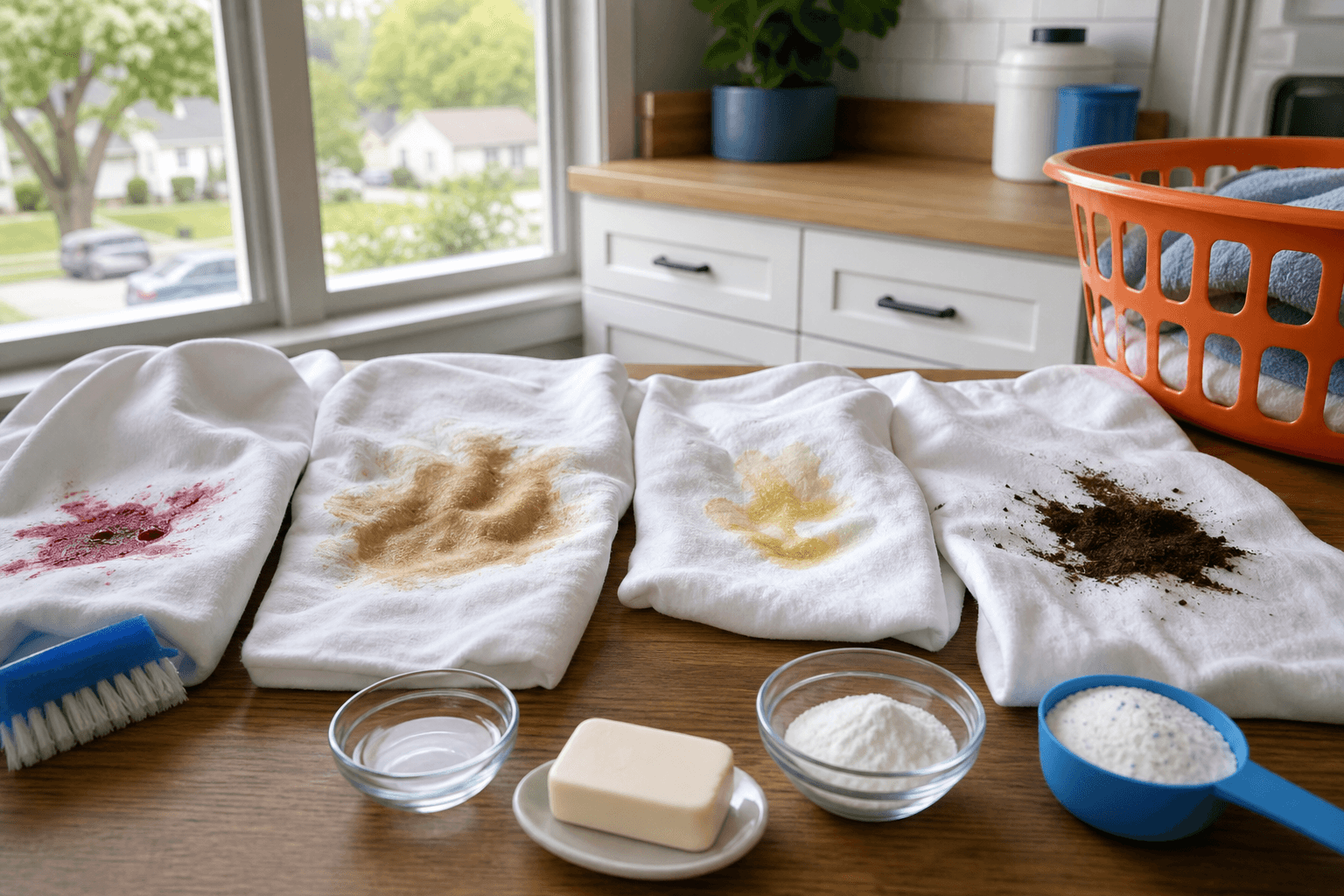
Wine, Tea, Coffee, and Turmeric: Tannin Stains That Linger
Tannin stains come from plant-based compounds in drinks and foods. Red wine, tea, coffee, fruit juice, and many spices can leave strong marks, especially on light fabrics. These stains are often dramatic at first, but many respond well if you act quickly and use the right household products.
With red wine, blot immediately to absorb as much liquid as possible. Do not grind it into the fabric with a towel. After blotting, apply a mixture of hydrogen peroxide and dish soap if the item is washable and color-safe. Patch test first, especially on dark or bright fabrics. Then wash the garment and inspect it before drying. This method is popular because the peroxide helps lift color while the soap loosens residue.
Coffee and tea usually improve with vinegar pre-treatment followed by enzyme detergent or regular liquid detergent. Blot first, rinse with cool or lukewarm water, then apply diluted vinegar. Let it sit for a short period before washing. If milk or cream is present, treat it as a combination stain and include a detergent soak to address the protein and oil components too.
Turmeric is one of the most stubborn kitchen stains because its yellow pigment is powerful and loves to cling. Start with a detergent solution and work it into the area gently. Then wash according to the care label. For white or light washable fabrics, sunlight can help fade the yellow color after treatment. This sunlight trick works because light can help break down some remaining pigment, but it should be used thoughtfully to avoid fading dyed fabrics.
Tannin stains often tempt people to use random cleaners out of panic. A better plan is to stay focused: blot, pre-treat, wash, inspect. If the stain fades but remains, repeat the same process. A steady approach usually beats a rushed mix of products that may react badly with each other or the fabric.
One more tip matters here. Avoid assuming that all brown stains are the same. Tea, coffee, chocolate, gravy, and makeup can look similar, but they do not behave the same. Color is a clue, not an answer. Think about the source before you choose the treatment.
Ink, Pen, and Dye Transfer: Precision Matters
Ink and dye stains are high-risk because they spread easily and can move from one part of the fabric to another during treatment. Pressure direction matters. If you push the stain sideways or rub too hard, you can make a small mark much larger. For these stains, control is everything.
The classic method uses rubbing alcohol and absorbent towels. Place a clean towel or paper towels under the stained area. Then blot from the back or edge of the stain so the ink transfers downward into the towel instead of spreading outward across the garment. Replace the towel sections as they become stained. This slow method works better than soaking the entire area.
Ink removal takes patience because the process is about lifting pigment in stages. You apply a small amount of alcohol, blot, move to a clean section, and repeat. Flooding the stain can drive the dye into neighboring fibers. Small amounts and repeated blotting give more control.
Dye transfer from another garment is a different problem, but the same caution applies. Start cold to avoid setting the stain. Do not use heat early in the process. If color from another item has bled onto the fabric, repeated cold washing with proper stain treatment may help, but success depends on how deeply the dye has moved and what the fabric can handle.
Markers and pens vary widely. Some are water-based, some solvent-based, and some contain intense dyes that are much harder to remove. That is one of the best reasons to patch test first and avoid random scrubbing. A measured method gives you the best chance of reducing the stain without spreading it.
If the garment is expensive, sentimental, or delicate, dye stains are a smart point to stop and reassess. Home treatment can work, but a careless attempt can make professional rescue much harder later. Precision matters more than speed once the stain type is known.
Everyday Oddities: Detergent Marks, Toothpaste, and Random Residue
Not every stain comes from food or drink. Some marks are created by laundry products, personal care items, or residue left behind after washing. These stains can be confusing because they often look like faded spots, chalky streaks, or hardened patches rather than obvious spills.
Detergent buildup is a common example. Too much detergent or poor rinsing can leave marks that attract dirt and make fabrics feel stiff. A warm soak often helps loosen this residue. Follow it with enzyme detergent if the buildup has trapped body soil or other grime. Then wash again with the correct detergent amount. In many cases, the “stain” is really product left behind.
Toothpaste usually responds well to a simple process. Scrape off any dried residue first. Then blot with cool water and a little detergent. Wash the item and inspect the area. Whitening toothpaste or colored formulas may leave more noticeable marks, so a repeat treatment might be needed.
Deodorant, lotion, and cosmetic residue can also act like combination stains. They may contain waxes, oils, pigments, and powdery ingredients all at once. Start by removing surface buildup, then treat the oily part before dealing with any remaining color or chalky residue. Again, a two-step method works well because these are rarely one-note stains.
Some residues need more than one round because the first treatment loosens the surface while deeper material stays behind. That does not mean the method failed. It usually means the fabric needs another pass. Repeating a controlled treatment is safer than escalating too fast with stronger chemicals.
If a stain appears after washing rather than before, stop and think about what changed. Was there too much detergent? Was the machine overloaded? Did a lip balm melt in a pocket? Did a dark item bleed color? Looking at the full laundry process often explains the stain and points to the fix.
Your At-Home Stain Removal Toolkit
You do not need dozens of specialty products to handle most stains well. A small group of proven basics can cover a huge range of problems if you know what each one does. Fresh Spin Laundry’s practical toolkit starts with a few versatile staples and a clear purpose for each.
First is vinegar. It works well on many tannin stains and can help with odors too. Diluted vinegar is often useful for coffee, tea, and mild residue. It is simple, cheap, and easy to keep on hand. Still, it should be used with care and never mixed carelessly with other cleaners.
Next is baking soda. This works best as an oil absorber and fabric refresher. Sprinkle it on fresh grease stains before washing or use it to reduce odor in washable fabrics. It is especially useful at the start of treatment, before liquid products go on.
Hydrogen peroxide is a strong oxidizer for stubborn stains, especially on whites or color-safe washable fabrics. It can help with blood and wine, but patch testing is essential because it may lighten some dyes. Think of it as a targeted helper, not a universal answer.
Lemon juice can brighten whites naturally and support some stain-lifting routines. It is most useful on light-colored fabrics and should be used carefully because natural acids can affect certain materials. It works best as part of a smart process, not as a miracle cure.
Dishwashing liquid is your front-line grease fighter. It breaks down oily stains quickly and is one of the most useful products in any laundry setup. For cooking oil, makeup oil, body oil, and greasy food splatters, few items are more consistently helpful.
Finally, keep an enzyme detergent ready. This is essential for protein stains because enzymes help break large stain particles into smaller pieces the wash can remove. Blood, sweat, food proteins, and some combination stains all respond well to enzyme-based treatment.
Add a few simple tools and you are set. Keep clean white cloths, soft brushes, spoons for scraping, and paper towels nearby. Good stain removal is often less about having rare products and more about using basic ones with good timing and a clear plan.
Advanced Techniques Laundry Pros Use
Professional stain removal works because it isolates the problem, protects the fabric, and applies treatment in stages. One useful method is spot treatment, also called sponging. Instead of soaking the whole garment, the cleaner applies solution directly to the stained area while controlling how much moisture spreads. That limits damage and keeps the stain from traveling.
Soaking is another powerful technique, but it should match the fabric. Durable washable items can handle longer soaks in the right solution. Delicates need shorter, gentler treatment. The goal is to give the stain time to loosen without stressing the fabric structure or color. Pros adjust both the chemistry and the timing.
Solvent methods come into play with wax, heavy grease, and stubborn residue. These products dissolve materials that water-based cleaners struggle to move. They are effective, but they also increase the risk of color loss or fabric damage if used poorly. That is why home care should stay cautious, especially on sensitive items.
Combination stains often require a two-step process. Remove the oil first if grease is present. Then attack the color, tannin, or protein that remains. A food stain from pizza sauce, for example, may include oil, tomato pigment, and protein from cheese. A one-product approach can leave part of the stain behind.
Fresh Spin Laundry handles “impossible” stains by resisting guesswork. Instead of escalating instantly, pros observe the fiber, stain source, color stability, and previous treatment attempts. That matters because a stain that has already been scrubbed, dried, or treated with random products behaves differently than a fresh one. The method changes based on what the garment has already survived.
Advanced treatment is less dramatic than people imagine. It is often about control, sequence, and restraint. The best cleaners do not attack stains wildly. They build a process that gives the fabric the best chance to recover.
Water Temperature Cheat Sheet
Temperature changes the chemistry of stain removal. It affects how oils loosen, how proteins react, and whether dye spreads or sets. Getting this wrong can turn a removable stain into a lasting one. Getting it right often makes the rest of the job much easier.
Use this simple guide as your starting point:
- Protein stains: use cold water only
- Oil stains: use warm or hot water if the fabric allows
- Dye stains: start cold to avoid setting or spreading
- Tannin stains: use cool to lukewarm water based on the source
- Detergent residue: use warm water to help break it down
Blood is the classic example of why this matters. Hot water can make it bond more tightly to fabric. Grease is the opposite. Warmth helps dissolve oily material, so a grease stain often improves with a warmer wash after proper pre-treatment. The trick is matching the temperature to the stain category instead of using one default setting for everything.
Dye stains deserve extra caution. Heat can set loose color or make transfer worse. That is why cold water is the safe first move. Tannin stains need a little more judgment. Tea and coffee may respond well to cool or lukewarm treatment, but creamy coffee may need a combination-stain approach first.
If you do not know the stain type, start cold. Cold water is the lower-risk option for many situations, especially before the source is confirmed. Once you know what you are dealing with and what the fabric can tolerate, you can adjust with more confidence.
The Biggest Stain Removal Mistakes
Many ruined garments are damaged by treatment errors rather than the stain itself. The biggest mistake is scrubbing. People panic, rub the fabric hard, and end up fraying the fibers while spreading the stain. Blotting is slower, but it protects the item and gives better results.
Another common mistake is throwing stained clothes straight into the wash without pre-treatment. Washing can help, but untreated stains often survive the cycle. Worse, if the stain remains and the item goes into the dryer next, the heat can set it. Pre-treatment is the difference between “washed” and actually clean.
Letting stains dry before treatment is also a major problem. Drying gives the stain more time to bind to the fibers. If you cannot wash immediately, keep the stained area damp and return to it as soon as possible. Delay always raises the difficulty level.
Wrong water temperature causes a lot of avoidable damage. Hot water on blood. Cold water alone on heavy grease. Warm water on dye transfer too early. Each mismatch reduces your odds of full removal. A little stain science goes a long way.
Drying too soon is another expensive mistake. Always inspect after washing and before machine drying. If there is any shadow, ring, or patch left, treat again first. Air-drying while you evaluate the garment is much safer than using high heat.
Finally, many people overuse harsh chemicals instead of repeating a gentler process. More product does not always mean more success. Sometimes it means faded color, weakened fibers, or a strange residue. If a stain is fading, that is progress. Repeat the method that is working instead of switching into attack mode.
Fabric Matters: Adjusting the Method to Protect the Item
Every stain has two parts: the mess itself and the fabric holding it. The same cleaning step can be safe for cotton and risky for silk. That is why care labels and fabric type matter so much. Good stain removal is always a balance between effectiveness and protection.
Washable, durable fabrics like cotton, polyester, denim, and many blends can usually handle stronger pre-treatment and fuller washing. These are the items where dish soap, enzyme detergent, vinegar, and controlled use of peroxide are most practical. Even then, you should patch test if color stability is uncertain.
Delicates need a lighter touch. Silk, wool, lace, rayon, and structured garments can lose shape, texture, or color if treated too aggressively. For these items, gentle spot treatment with minimal moisture is usually the safest first step. Scrubbing is especially harmful here because delicate fibers show damage quickly.
Upholstery and carpets follow different rules because they cannot usually be washed through a full laundry cycle. Low-moisture treatment works better. Blot carefully, avoid oversaturating, and focus on lifting the stain upward into a towel rather than pushing it deeper into padding. Too much liquid can create rings, mildew risk, or hidden residue.
Some DIY methods carry real risk. Peroxide may bleach. Lemon juice may affect color. Heat may shrink or set stains. Solvents may damage finish or backing. If the item is valuable, vintage, sentimental, or structurally delicate, home treatment should stay minimal until you are sure the method is safe.
The smartest question is not “How do I remove this stain?” It is “How do I remove this stain from this fabric?” That extra layer of thinking prevents the kind of damage that a good stain treatment should never cause.
When to Call Fresh Spin Laundry Instead of Doing It Yourself
Home methods are useful, but they are not always the best choice. Some garments deserve professional care from the start. Formalwear, delicate dresses, lined jackets, silk blouses, wool items, and anything expensive or sentimental should make you pause before applying household products.
Set-in stains are another sign to get help. If the stain has dried, been washed already, or gone through the dryer, it becomes much harder to remove. Mystery stains also belong in the professional category. If you do not know the source, choosing the right treatment is harder and the chance of making it worse goes up.
Large stains, deep stains, and repeated failed attempts are strong reasons to stop. Each home treatment changes the stain and the fabric a little. By the third or fourth random attempt, the item may be more damaged than the original stain ever was. At that point, expertise saves time and stress.
Fresh Spin Laundry brings professional-grade solvents, controlled spot treatment, and experience with stain identification. That combination matters because some stains are actually removable, but only if the next step is precise. A pro can also tell you when complete removal is no longer realistic, which is useful information before more damage is done.
Calling for help is not giving up. It is a smart choice when the fabric, stain, or risk level goes beyond what basic home treatment should handle. Knowing when to stop is part of good garment care.
How to Prevent Future Stains from Becoming Permanent
The best stain strategy starts before a stain ever happens. Build a quick response routine so you do not freeze or guess in the moment. Keep a few basics at home: clean cloths, dish soap, baking soda, vinegar, and a good detergent. That way, you can act fast instead of hunting for supplies while the stain sets.
After pre-treatment, wash garments while the stained area is still damp if possible. Delay works against you. The sooner the stain goes through the proper washing step, the better the odds of full removal. Waiting until later often turns a simple fix into a much bigger project.
Always inspect before drying. This habit deserves to be repeated because it prevents so many laundry failures. A stain that survives the wash still has a good chance of coming out. A stain that survives the dryer is far harder to treat. Two extra minutes of checking can save a shirt, pair of jeans, or favorite hoodie.
Smart storage helps too. Dirty or lightly worn clothes left in piles can develop oxidized spots, mildew marks, deodorant residue, or mystery stains that are harder to identify later. Store clean clothes dry and fully finished. Store worn clothes separately and wash them before marks settle in for the long term.
Prevention is really about speed and awareness. You do not need perfect habits. You need consistent ones. React early, wash smart, inspect carefully, and your clothes stay in rotation much longer.
Stain Still There? A Smart Troubleshooting Framework
Sometimes a stain survives the first attempt. That does not mean the item is ruined. It means you need to troubleshoot instead of reacting emotionally. Start by asking a few clear questions before changing products or increasing intensity.
First, did the stain dry before treatment? Dried stains are harder to remove and may need several rounds. Second, was heat used by mistake? Hot water or dryer heat can set protein and dye stains. Third, was the stain identified correctly? A coffee-with-cream stain treated like plain coffee may leave oily residue behind. These details change the plan.
Next, assess whether the current method is making progress. If the stain is clearly fading, repeating the same process often works. That is especially true for blood, grass, wine, coffee, grease, and residue stains. Improvement means the chemistry is right; it may just need another cycle.
Switch methods only when the current one stalls. If a grease stain still looks shiny after washing, move back to oil-focused treatment with dish soap or baking soda. If a colored mark remains after oil removal, then shift to the dye or tannin step. The fix may be a sequence problem, not a product problem.
Keep your goal clear. You want the stain gone without damaging the fabric. That means avoiding panic, avoiding harsher chemicals too early, and avoiding the dryer until you are sure the mark is fully removed. Smart troubleshooting protects both the garment and your time.
Fresh Spin Laundry’s Final Word: Clean Clothes Without Guesswork
Great stain removal comes down to three things: speed, strategy, and fabric awareness. If you act fast, identify the stain type, choose the right temperature, and treat the fabric with care, most everyday stains are manageable. That is true for blood, grass, grease, coffee, wine, ink, detergent marks, and many mixed spills.
Fresh Spin Laundry’s approach works because it removes the guesswork. Do not scrub. Do not rush to heat. Do not assume every brown stain is coffee or every red stain should be handled the same way. Classify the stain, use the right tool, wash correctly, and inspect before drying. That process is simple, but it is powerful.
Maytag supports the same core idea: stain removal works best when the treatment matches the stain and starts early. That is the science-backed part people often miss. Success is rarely about finding one miracle product. It is about understanding why the stain behaves the way it does and responding with the right method.
If DIY methods work, great. You save the garment and build useful skill. If the stain is set in, delicate, valuable, or confusing, Fresh Spin Laundry offers the safer path. Either way, you do not have to guess anymore. With a clear system and a little patience, your clothes have a much better chance of staying clean, wearable, and out of the replacement pile.