

Build an outdoor-clothing laundry routine by separating everyday loads from items with special care instructions, scheduling the clothes you need next, and allowing time for the complete wash-and-dry process. A rain shell, wool layer, muddy pair of trousers, and cotton shirt may need different treatment even when they were worn on the same outing.
This guide focuses on organizing mixed everyday and outdoor laundry. It does not assume that a neighborhood name establishes a mountain climate, remote-road conditions, or local service coverage. Fresh Spin’s service information below refers to its Independence, Missouri business; garment care depends on the item, not on a place name.
What are the key decisions?
- Identify care instructions before combining technical clothing with ordinary laundry.
- Separate loads by compatible fabric care, color, and soil level.
- Choose laundry times around actual use and the next date an item is needed.
- Plan drying and putting away, not just the washer cycle.
- Confirm acceptance and handling requirements before requesting help with specialty items.
Why can mixed outdoor and everyday loads be difficult?
The difficulty is the mixture of care requirements. Clothing from one day can include ordinary washable basics, heavily soiled items, and a shell with product-specific instructions. Putting everything in one basket does not make it one compatible load.
Start by identifying which items can follow the same process. Keep uncertain pieces apart while you find their labels or manufacturer instructions. That lets the straightforward laundry continue without making a rushed decision about an unfamiliar garment.
If space or machine access is limited, build those constraints into the schedule. Identify where permitted air-dry items will go before washing them. Do not assume that a larger load or a faster cycle will solve a shortage of drying space.
How should changing clothing needs affect the plan?
Plan from what you actually wore, not a universal seasonal schedule. A week of light shirts creates a different collection from a week involving insulated layers. A rainy outing may add a shell to the laundry decisions without changing how every other item should be washed.
Make a short list of essentials needed next: work clothing, school items, everyday basics, and particular outdoor pieces. Then check whether each needs washing, a manufacturer-directed treatment, or simply an appropriate place in storage. Avoid running a special garment through a cycle solely because it appears on a seasonal checklist.
Keep room for a changed plan. An unexpected activity might create another load, while a canceled trip may remove a deadline. Adjust the schedule to the actual items rather than maintaining a fixed number of washes without regard to need.
What changes when you add bulky or insulated clothing?
Check the machine’s loading instructions and the garment’s drying requirements. Do not choose a load size only by counting pieces: one bulky coat and several lightweight shirts are not equivalent planning tasks. An item that does not fit the available process needs another compatible arrangement.
Keep insulation-specific decisions separate from general scheduling. Our puffer-jacket guide explains the additional questions involved with insulated clothing. This routine guide helps organize the work; it does not replace the exact jacket’s instructions.
Wash what you need soonest first when the required process can be completed in time. If it cannot, arrange alternative clothing rather than shortening drying or substituting an unverified setting to meet the deadline.
How do you protect performance fabrics and specialty gear?
Read the garment’s instructions for washing, cleaning products, drying, and any separate treatment. The FTC’s care-label guidance explains the role of manufacturer-supplied garment care instructions. Our care-label guide can help you organize that check.
Do not assume that every waterproof garment needs cold water or air drying. GORE-TEX outerwear guidance includes product-specific washing and drying directions, including exceptions. Use the garment maker’s instructions for the actual item. Our rain-jacket guide separates cleaning, surface-water-repellency questions, and visible damage.
Leather items, footwear components, gloves, and accessories need their own instructions. Remove a boot liner only if it is designed to be removed. Do not assume a clothing routine applies to a boot, or that every specialty item is suitable for dry cleaning. Ask the manufacturer when the required process is unclear.
How can you build a useful weekly system?
Choose a recurring time to review the laundry, then assign compatible loads to available wash-and-dry windows. A review time is more flexible than a rule that every household must wash twice or three times a week. The amount and type of use determine the actual work.
Families and shared households can give each category a place in the plan. Towels, everyday clothes, and technical garments do not have to share the same cycle or deadline. Write down who starts the load, who handles drying, and where finished clothing belongs.
For a household with frequent outdoor activities, add a short after-activity check. Identify what needs attention while the use history is still fresh. Keep ordinary dirt separate from unknown contamination; do not put an unidentified chemical-soiled item into a general laundry load.
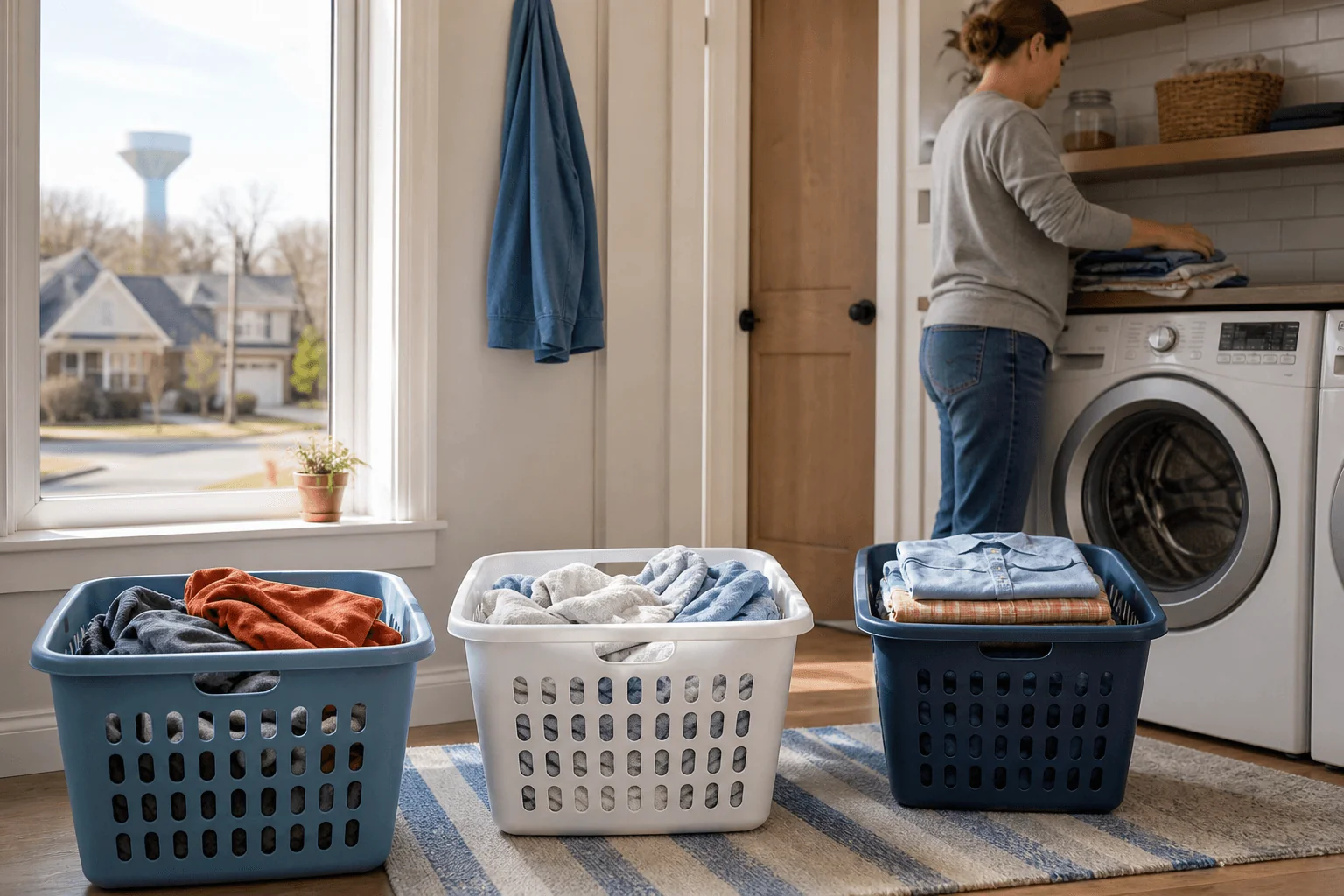
How can you sort before laundry day?
Use labeled places for ordinary compatible laundry, items needing stain assessment, and garments with special care directions. The system can use a few baskets rather than a separate container for every possible fabric. Its purpose is to make the next decision visible.
Check color, fabric, soil level, and care instructions together. The American Cleaning Institute’s laundry basics covers sorting and label-based washing. A heavily soiled item is not automatically a hot-wash item; its care directions still apply.
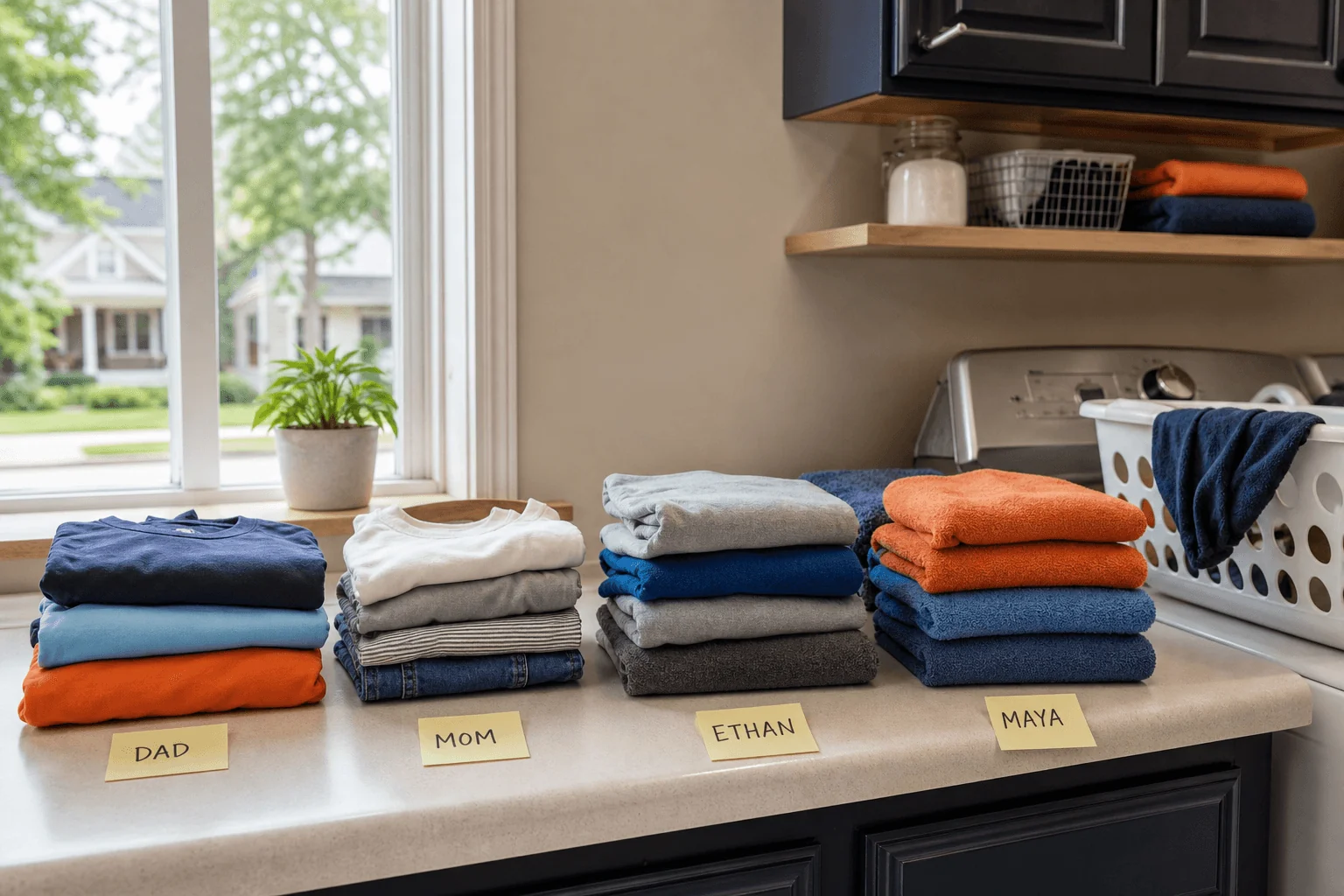
For shared laundry, keep ownership clear without mixing clean and used clothing. A separate clean return basket or a cleaned basket can provide a clear destination after drying. Keep any garment instructions with the item until the person handling it has read them.
If using self-service laundry, organize the groups before the visit and check the available machine instructions. Do not assume a machine can provide a special garment process without confirming the required settings.
How should you choose water temperature and detergent?
Use the fabric-care instructions and the appliance’s guidance rather than a universal temperature for everyday or heavily soiled clothing. There is no single 90-degree or 130-degree rule in this routine. The settings must fit the actual load.
Measure detergent using the product directions for the machine, load, and soil. ACI notes that too much or too little can reduce cleaning effectiveness. Do not automatically reduce the dose because the load contains outdoor clothing, or increase it because one item looks especially dirty.
Load according to the machine instructions. Dividing incompatible items is different from arbitrarily dividing every load into smaller batches. Choose the grouping that meets the garment requirements and works with the equipment, rather than promising that more cycles always save time.
How do you plan drying without overriding garment care?
Read the drying instructions before washing. Some garments require a particular tumble-drying process; others prohibit it. Do not treat all technical clothing as an air-dry category or assume that a higher dryer setting is an acceptable shortcut.
Reserve the permitted drying space and equipment. Keep items needing different methods identifiable when moving them out of the washer. If another person takes over, leave a clear note naming the item and its instructions instead of relying on a general reminder to be careful.
Make sure the process is complete before storing or packing. If clothing is not ready by the planned departure, choose an alternative outfit. The deadline belongs in the schedule, not in a justification for ignoring a care restriction.
How do you finish folding, packing, and storage?
Keep washed clothing separate from used gear and any items still awaiting assessment. Prepare a clean folding area before the load is ready. A small amount of organization at this stage keeps the status of each item clear.
Fold or hang according to the item’s needs and available storage. Do not assume that every knit should hang or every insulated item should be compressed into a small bag. Follow product-specific storage advice when it is supplied.
For an upcoming trip, make a clothing checklist and pack only items that are ready. Note any piece still drying or awaiting care so it is not mistakenly counted as available. The checklist is an organizational aid, not a reason to wash clothing that does not need it.
What extra checks help after an outdoor activity?
Inspect pockets and closures, identify visible soil, and check the garment instructions before selecting a treatment. Use a stain method that fits both the stain and the fabric. Do not assume that one mud-removal or stain-removal technique is suitable for every coated fabric or delicate trim.
Keep a short record when a problem needs advice: the garment model, the substance involved if known, products already used, and photographs of the condition. That is more useful to the manufacturer than an unsupported diagnosis about a failed coating or damaged fiber.
Keep a simple checklist in your laundry area. Include sort, pre-treat, wash setting, drying method, and storage. This works especially well in shared homes or lodge settings where several people may handle laundry. A visible routine keeps standards clear and protects specialty gear from accidental misuse.
Which shortcuts should you avoid?
Do not ignore a label, overload a machine contrary to its instructions, or apply an unfamiliar cleaner simply to finish faster. Those decisions change the care process rather than merely changing the schedule.
Keep uncertain garments out of an ordinary load until you have the necessary information. A missing label, visible damage, or unknown contamination calls for assessment. It does not establish that the strongest available wash is the right option.
A rain shell, wool layer, cotton shirt, and leather accessory should not be combined simply because they belong to one person. Grouping by owner can help with storage, but care compatibility must guide washing and drying.
When can drop-off wash-dry-fold help?
Fresh Spin offers drop-off wash-dry-fold in Independence, Missouri. For service, enter through the Ash Entrance and place your order in the mini-mart. Ordinary household laundry and specialty outdoor garments should be discussed separately when their care needs differ.
Contact Fresh Spin before bringing items with special handling requirements. Explain what the items are, their care directions, and any known soil or prior treatment. This guide does not establish acceptance of every technical fabric, footwear component, commercial load, or contaminated item.
Confirm the relevant service details directly rather than relying on an old article’s provider list or assuming a turnaround time. Keep items that require a separate specialist process out of the general order until their handling is agreed.
How can reminders and handoffs make the plan clearer?
Use a calendar alert for the household laundry review or a planned store visit if it helps. A reminder should identify the task: sort the gear, check the instructions, collect the finished laundry, or put the dry items away.
For shared work, record which step is complete and which remains. Washed is not the same as dry, and dry is not the same as inspected and packed. This is especially important when special items leave the main load for a different drying method.
If questions come up about load prep, service expectations, or practical laundry habits, a solid laundry FAQ reference can help you compare your routine with common best practices and make faster decisions.
How should a seasonal checklist work?
Use seasons as a prompt to review the clothing in use, not as a washing-frequency prescription. When you bring out insulated layers or put away lighter clothing, check the item’s condition and its care and storage directions.
Update the household plan if a change in clothing creates a different drying-space need or a special care task. Do not make claims about local weather or water access to justify the schedule; use the constraints you can actually observe.
A printable routine planner can help tie this together. Create a reusable checklist for sorting, washing, drying, and scheduling. Keep it near the laundry area or on your phone. During busy or unpredictable weeks, a checklist keeps you moving without having to rethink every step.
How do routines differ for individuals and shared households?
An individual can keep a short list of essential items and plan compatible loads around their use. A family or shared household may need named baskets and a handoff note so special garment instructions do not get lost between people.
Agree on where used items, clean items, and unresolved items belong. If a garment requires assessment, leave it out of the normal flow and tell the person who owns it. Do not quietly substitute another cleaning process because the shared machine is available.
Workplace uniforms and business textiles may have requirements beyond a household routine. Ask the responsible provider or organization for its process and confirm what a laundry service can accept. This article does not promise commercial capacity or a specialized sanitation result.
How do you choose between home care and outside help?
Separate two questions: what process the item needs, and who can provide that process. Home equipment may suit ordinary loads but not a particular specialty item. Outside help is useful only when the provider can accommodate the relevant instructions.
For garment-specific decisions, use the rain-jacket, puffer-jacket, and care-label guides linked above. For ordinary laundry support, use Fresh Spin’s current wash-dry-fold and contact pages. Do not treat a general planning article as a substitute for the provider’s current service terms.
What is the next practical step?
Choose the next clothing item you need, identify its care process, and place it in the correct group. Then arrange the washing, drying, and storage steps around that requirement. Repeat for the rest of the load rather than starting with a universal setting.
The useful parts of a routine are clear categories, compatible care, visible handoffs, and realistic deadlines. They work without an assumed mountain location, an unverified provider recommendation, or a promise that the same wash recipe fits every garment.


