
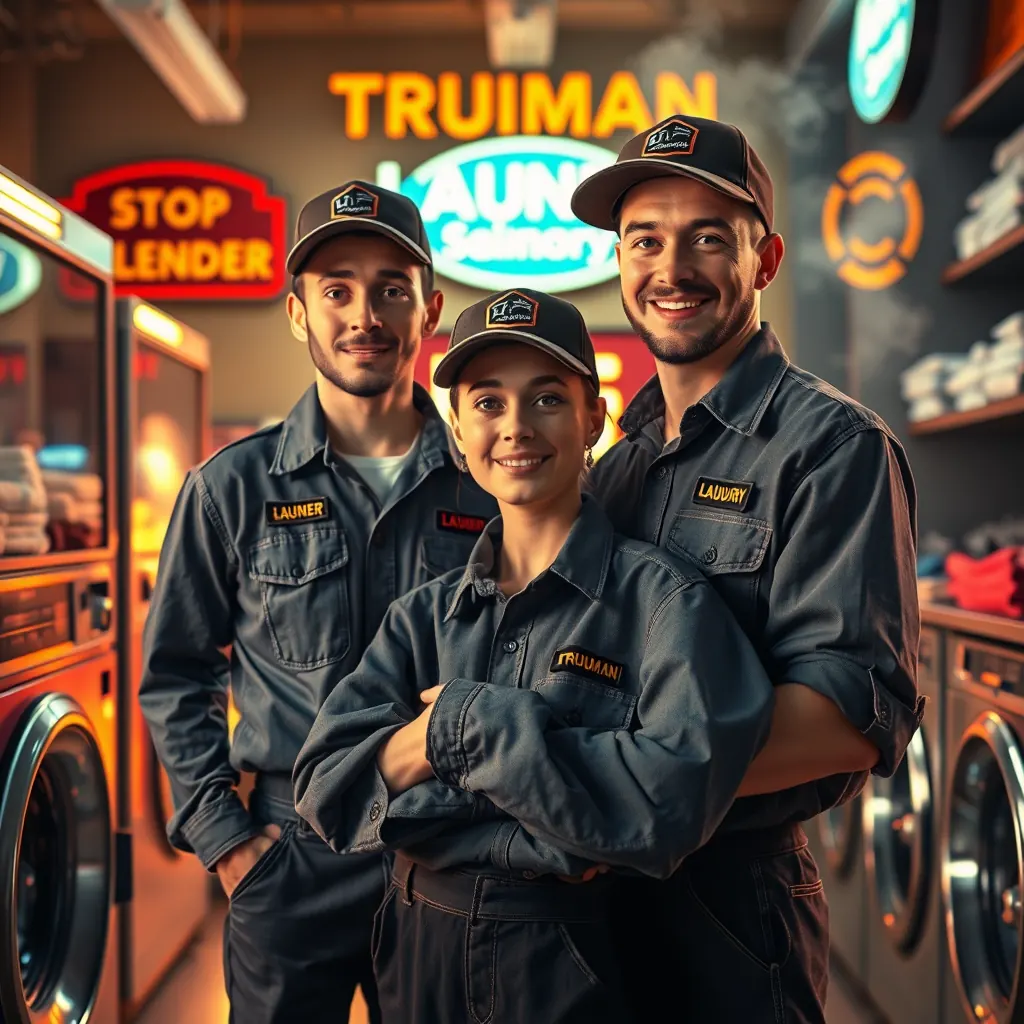
In industrial Youngstown, long before laundry apps and same-day delivery promises, workers coming off steel, mining, and machine shifts often ended the day with one more stop: Truman Dry Cleaners, where oil-soaked uniforms and grime-heavy jackets were handed over for another round of use. The story of Truman Laundry for work clothes is really the story of how a local service became part of blue-collar survival, helping workers protect their gear, their dignity, and the rhythm of daily life in a city built by labor.
Key Takeaways
- Truman Laundry built its name by cleaning workwear that regular home washing could damage or fail to clean.
- Its growth was tied closely to Youngstown industry, union culture, and the daily needs of steelworkers, machinists, and miners.
- Special handling for grease, paint, and protective fabrics helped extend garment life and preserve safety features.
- Beyond cleaning clothes, Truman supported community pride, local routines, and family loyalty across generations.
- Modern pressures like manufacturing decline and sustainability demands have pushed traditional workwear cleaners to adapt or fade.
A Town Built on Steel and the Laundry That Kept It Moving
Youngstown did not grow around soft office jobs or polished storefront careers. It grew through mills, machine shops, mining work, trucking routes, welding stations, and all the hard labor that left clothes stained with grease, ash, metal dust, and sweat. In that setting, Truman Laundry became a practical part of everyday life. It was a place workers trusted to bring heavily used garments back into working shape, ready for another punishing shift.
That role made Truman more than a neighborhood cleaner. Many families likely saw it as an essential service, especially when work clothes were expensive, replacements were hard to justify, and uniforms had to hold up through repeated use. A shirt or coverall was not just fabric. It carried a paycheck, a trade identity, and often a sense of self-respect. Keeping those garments clean and functional mattered in ways that went far beyond appearance.
Plenty of businesses wash clothes. Very few become woven into the daily rhythm of working-class life. Truman earned that place because it served a need that was easy to overlook from the outside but impossible to ignore for people doing physical labor. If your clothes carried oil, paint, chemical residue, or deep-set grime, regular washing could fall short. Worse, it could ruin the gear. Truman stepped into that gap with heavy-duty cleaning shaped around the needs of real workers.
That promise gave the business its identity. Dependability mattered. So did affordability. A cleaner serving blue-collar customers had to understand that these were not occasional specialty garments brought in for rare treatment. They were daily tools. Every cleaned jacket, pair of pants, and uniform shirt was part of a bigger system that helped keep factories staffed, job sites running, and workers presentable and protected.
Why Work Clothes Need a Different Kind of Clean
Workwear looks tough because it is tough. Denim, canvas, duck cloth, thick cotton blends, and treated protective fabrics are built for abrasion, heat, friction, and repeated movement. Even so, strength does not mean invincible. Industrial garments collect contaminants that sit far deeper than surface dirt. Grease, paint, chemical traces, metal residue, and embedded grime can cling to fibers in ways a home washer is rarely equipped to handle.
A basic wash cycle may remove odor and loose dirt, but it often struggles with the full reality of industrial stains. Oil can spread through fabric instead of lifting out. Paint can harden into fibers. Residue from machine shops or construction work can remain trapped in seams and cuffs. Over time, failed cleaning leaves workwear heavier, stiffer, and less comfortable. It can also make garments look worn out long before their true lifespan is over.
The bigger issue is safety. Some work clothes are treated to resist flames or improve visibility. Those features can be weakened by the wrong detergents, high heat, or rough handling. Protective fabrics need care that respects both the fabric itself and the function built into it. Improper cleaning does not just shorten garment life. It can reduce protection on the job, which turns a laundry problem into a workplace risk.
That is where a specialist like Truman stood apart. Its niche was never about making hard-used clothes look fancy. The value came from precision cleaning for garments tied to trades and industrial labor. Every stain type asked for a different response. Every fabric demanded a slightly different process. A cleaner that understood this could save workers and employers money by extending the useful life of expensive gear.
That practical advantage mattered across every pay scale. For an individual worker, getting extra months out of coveralls or flame-resistant shirts could ease a real financial burden. For a company outfitting crews, reducing replacement cycles could cut costs fast. Truman’s service sat at that intersection of economy and care, proving that specialized laundering could be both a protective measure and a cost-saving habit.
Born in the Boom: Truman Laundry’s Rise in Industrial Youngstown
Truman Laundry emerged during the early 1900s, when Youngstown was rising as a major industrial city shaped by steel production and related trades. This was a period when factories and mills were expanding, labor demand was high, and neighborhoods developed around the needs of working families. A laundry focused on heavy workwear made perfect sense in that environment. The city produced the conditions, and Truman answered them.
Its position in a city dominated by steel, manufacturing, and labor-intensive jobs gave the business a steady customer base. Workers in mills, mines, machine shops, rail-linked industries, and construction did not need luxury garment care. They needed a cleaner that respected the reality of their jobs. Truman appears to have understood that from the beginning. The shop was there to support the practical side of industrial life, one load of work clothes at a time.
Family-run roots helped deepen that relationship. A multi-generational business often carries a different kind of accountability. Customers know the names behind the service. Owners know the people bringing in the garments. That kind of connection builds trust in ways large chains often struggle to match. For blue-collar customers, trust matters because the clothes being cleaned are tied directly to work, income, and daily routine.
As the business became a familiar stop for steelworkers, machinists, and miners, it likely moved from useful option to trusted routine. A person finishing a shift could drop off uniforms without much thought because the service had become part of life. That steady habit says a lot about how Truman fit into the city. It was not a rare indulgence. It was infrastructure at the neighborhood scale.
The growth arc reflects the fortunes of the wider region. A simple timeline helps show that connection:
- Early 1900s: Truman Laundry was established during a period of strong industrial expansion in Youngstown.
- 1914–1950s: Demand likely surged alongside union growth, industrial output, and the expansion of workwear use.
- Post-1976: Labor shifts and union consolidations changed the market for traditional uniform and work-clothes cleaning.
That timeline tells a familiar Rust Belt story. As industry grew, service businesses tied to labor grew with it. As conditions changed, they had to adjust or risk fading away. Truman’s history sits squarely inside that pattern, which makes it a useful lens for understanding Youngstown itself.
The Union Effect: How Labor Movements Shaped Laundry Demand
Industrial laundry demand did not rise in isolation. Labor movements helped shape the expectations around workwear, presentation, and daily treatment of workers. As organized labor became more established, standardized clothing and workplace provisions gained greater attention. Uniforms, protective gear, and consistent garment care became part of a broader push for order, fairness, and respect on the job.
That shift mattered for businesses like Truman. Once workwear became more standardized, the need for consistent cleaning increased. Workers and employers had stronger reasons to maintain garments in usable condition. A cleaner that could process uniforms regularly and reliably became an important support service. Laundry work may seem separate from labor politics, but in practice it supported the visible and practical side of worker organization.
The wartime period likely intensified this connection. During World War II, industrial output surged, and cities like Youngstown played a major role in producing the materials and machinery needed for national production. More shifts, more workers, and more heavily used uniforms meant more laundry demand. A cleaner serving industrial customers would have felt that pressure directly, with larger volumes and faster turnaround becoming essential.
After the war, collective bargaining improved working conditions in many sectors, and that could include uniform provisions or stronger expectations around employer support for job-related gear. In that environment, professional cleaning became even more practical. It kept workwear in rotation and supported a cleaner, more professional appearance without forcing workers to shoulder every burden at home.
There was also a dignity factor. Labor movements were about wages and safety, but they were also about respect. Wearing clean uniforms sent a message. It showed discipline, pride, and readiness. Truman helped uphold that image in a quiet but meaningful way. The business did not stand on picket lines, yet it still supported the workers who did by helping them show up ready for the job and visible in their trade identity.
Inside the Operation: What Made Truman Different
What separated Truman from a general cleaner was its understanding of what industrial garments go through. A dress shirt and a mechanic’s coveralls may both be clothing, but they live very different lives. Truman’s value came from treating workwear as a category with its own demands, rather than forcing it through a standard cleaning process that ignored fabric stress, residue type, and protective features.
Heavy-duty stain removal sat at the center of that difference. Oil and grease behave differently from food spills or cosmetic stains. Metal dust can cling to woven fibers. Paint can set hard and crack. Industrial residues often require staged treatment rather than one wash and one dry cycle. Truman built its reputation on this kind of specialized handling, giving workers a better shot at restoring garments that might otherwise seem beyond saving.
Protective clothing added another layer. Flame-resistant garments need careful cleaning because harsh products or poor temperature control can reduce their performance. High-visibility gear also has to maintain reflectivity and structural integrity. A cleaner serving industrial customers must know how to remove grime without wrecking the very features that make the gear useful on the job. Truman appears to have made that understanding part of its core service.
Fabric-specific processes likely played a major role. Canvas can become stiff and worn with rough treatment. Denim can break down at stress points if overprocessed. Heavy cotton blends need enough cleaning power to remove grime but not so much abrasion that seams and knees give out early. Those choices matter because workwear is expensive to replace and hard to break in. Workers often want their gear back clean, but still familiar and functional.
Another advantage was schedule awareness. Industrial labor does not run on a simple nine-to-five routine. Shift work means early mornings, overnight hours, rotating schedules, and short windows for drop-off and pickup. Truman’s service model likely reflected that reality through flexibility. Convenience for workers is easy to dismiss, yet for someone balancing long shifts and family responsibilities, timing can make or break whether a service gets used.
Route-based service for factories and job sites would have added even more value. Bulk pickup and delivery save time for employers and reduce friction for workers. Instead of asking each employee to manage garment care alone, a route service builds laundry into the operating routine of the workplace. That approach also allows a cleaner to handle both individual customer needs and larger company orders.
Cost mattered just as much as process. A service aimed at frequent-use customers had to stay accessible. Truman’s appeal likely rested on a simple equation: pay for cleaning now, avoid paying for replacement sooner. That longevity advantage helped workers stretch budgets and helped employers get more use from uniforms and protective gear. In industrial towns, that kind of savings is not minor. It is part of how households and businesses stay afloat.
Not Just a Laundry: A Pillar of the Local Economy
It is easy to focus on factories when telling the story of industrial cities, but support businesses made that economy possible. Truman Laundry sat in that support layer. It created jobs of its own, kept money circulating locally, and gave working families a service they relied on week after week. That made it part of the economic fabric of Youngstown, even if it stood outside the mills themselves.
During strong manufacturing years, businesses like Truman grew because they served a large labor base. During downturns, their role could become even more visible. When work was less secure and every dollar mattered, extending the life of work clothes had real value. A cleaner that helped preserve a worker’s gear could ease one more pressure in a tough period. That is a quiet kind of economic support, but it is still support.
There is also a cultural layer to this story. Clean uniforms carry symbolic weight. They reflect readiness, discipline, and pride in a trade. For many workers, putting on freshly cleaned gear before a shift is part of preparing mentally as well as physically. Truman helped maintain that ritual. The service was practical, yet it also reinforced a sense of professionalism in jobs that outsiders often reduce to dirt and strain.
Families likely felt that role across generations. A parent drops off uniforms at the same shop for years. Later, a son or daughter working in a different trade does the same. Over time, the business becomes associated with continuity, reliability, and neighborhood memory. That sort of loyalty is hard to buy with marketing. It grows through repeated service, fair treatment, and the sense that a business understands the people it serves.
Through economic highs and lows, Truman appears to have remained a steady presence. In a city where industries expanded, contracted, and sometimes vanished, consistency had value of its own. A local business that stayed familiar through those shifts became a marker of endurance. For many residents, that kind of endurance matters almost as much as the service itself.
Standing Apart in a Crowded Industry
At first glance, laundry businesses can seem interchangeable. In practice, the differences are sharp. Truman’s model centered on cleaning personally owned work clothes. That is very different from uniform rental companies that supply garments, rotate them in bulk, and serve businesses through leasing arrangements. One model starts with the worker’s own gear. The other starts with standardized inventory managed by the provider.
This distinction changes the whole customer relationship. With Truman, the service was often more individual-focused. A worker might bring in favorite coveralls, a specific branded jacket, or flame-resistant gear already broken in for comfort. Cleaning those items meant preserving something personal and practical. Rental systems are efficient, but they often replace that connection with standardized sizing, rotation, and corporate contracts.
Ownership versus leasing also affects expectations. If a garment belongs to the worker or employer directly, the cleaner is expected to protect its lifespan. Every tear, faded strip, or damaged treatment matters. In a rental model, garments are part of a larger pool and are replaced according to system rules. Truman’s approach appears closer to repair-minded care: keep this specific piece usable for as long as possible.
Regional identity gave Truman another edge. A deeply local business tied to Youngstown’s industrial identity can serve customers with a better feel for local habits, trades, and expectations. Larger family-run chains may offer a broader set of services, but they may lack the same concentration on heavy-duty workwear. Specialization matters because industrial clothing is its own category, with its own risks and requirements.
There is also room to clear up the name. “Truman” can point people in several unrelated directions, including household cleaning brands with eco-focused marketing, literary references, or other businesses sharing the same name. Here, the identity is much more specific: Truman as a workwear cleaning specialist tied to local industrial history. That distinction matters because it keeps attention on the company’s actual place in blue-collar life rather than letting it blur into unrelated branding.
Adapting or Struggling: Truman in the Modern Era
Many legacy service businesses face a hard question: adapt, shrink, transform, or disappear. Truman appears to sit somewhere inside that uncertain space. The available picture suggests an evolving status, with the possibility of rebranding, closure, or a major shift in operations. That uncertainty is common for companies rooted in older industrial patterns, especially in regions where manufacturing no longer drives local demand at the same scale.
The Midwest changed dramatically over the late twentieth century and into the twenty-first. As factories closed, downsized, or automated, the customer base for traditional work-clothes cleaning also shifted. Fewer industrial jobs can mean fewer daily uniforms needing heavy-duty care. That pressure is structural. It does not reflect a failure in cleaning quality. It reflects a labor market that no longer looks like the one that built businesses such as Truman in the first place.
Digital change adds another challenge. Customers now expect online access, pickup scheduling, account management, and fast communication. There are hints of digital-era experimentation connected to Truman, including mentions of modern web presence or e-commerce tie-ins. If true, that would show an attempt to stay relevant in a market where convenience increasingly shapes consumer choices. Still, digital tools help only if there is enough demand left to support the business model.
Sustainability pressure raises the stakes further. Industrial cleaning has long depended on chemicals and processes that modern customers and regulators examine more closely. Safer alternatives matter, but shifting away from older solvents can be expensive and technically difficult, especially for garments carrying stubborn industrial contamination. This puts legacy cleaners in a hard position. They need to remain effective on tough stains while also answering calls for greener methods.
That pressure stands in clear contrast with newer consumer brands that market zero-waste or eco-friendly household cleaning products. Those brands usually speak to lighter-duty use cases. Industrial workwear care is a different challenge entirely. A cleaner handling grease-heavy uniforms and protective fabrics cannot simply copy household trends without risking garment performance or sanitation standards. Adaptation in this space demands care, money, and technical knowledge.
Even with these challenges, uncertainty does not erase legacy. A business can struggle in modern conditions and still have played a vital role for decades. Truman’s story becomes more interesting, not less, when viewed through that tension between old industrial demand and new economic realities. It shows how support services rise with a city and then face the same hard transitions when that city changes.
The Human Stories Behind the Service
The strongest part of Truman’s legacy may be the part least visible on paper: the personal memory attached to a dependable neighborhood business. During hard economic times, people remember who stayed open, who treated them fairly, and who helped them stretch what they had. A laundry that kept uniforms wearable could become part of a family’s survival strategy, especially when replacing gear was too costly.
Generational loyalty says a lot about what Truman represented. Parents using the service and later seeing their children do the same suggests more than habit. It suggests trust. In blue-collar communities, trust is earned through consistency. A business gets one chance to ruin a week’s work clothes. It gets many years of loyalty if it handles them right, charges fairly, and respects the customer’s time.
There is a symbolic dimension too. Clean workwear can be a marker of dignity in physically demanding jobs that often leave people exhausted and worn down. It signals that hard labor deserves care and respect. Workers may come home dirty, but they do not have to stay defined by that dirt. Services like Truman help create a reset between one shift and the next, giving workers gear that feels ready again.
That feeling matters more than some people realize. Physically demanding jobs can wear down a person’s sense of control. Freshly cleaned coveralls or a restored work shirt offer a small but real kind of order. They tell the worker, “You are prepared. You can go back out there.” Truman’s role as a quiet constant in an unstable industrial economy likely came from providing that reassurance again and again.
In communities shaped by layoffs, plant closings, and labor uncertainty, small constants take on outsized meaning. A familiar storefront, a known name, a service that still understands what weld spatter and mill grime do to clothing—those things anchor memory. Truman appears to have served as one of those anchors, even if the business itself later had to face the same instability as the workers it served.
What the Future Holds for Workwear Cleaning
Workwear cleaning is not disappearing. It is changing. New materials, shifting labor patterns, environmental rules, and digital habits are all reshaping what customers expect. That means the future belongs to businesses that can combine old-school expertise with modern convenience. The core need remains the same: workers still need garments cleaned safely, effectively, and without unnecessary wear.
One major trend is the rise of smart fabrics and more advanced protective materials. As workwear becomes more technical, cleaning will require better knowledge of coatings, blends, heat limits, and manufacturer guidance. The old idea that a heavy-duty wash solves everything will not hold up. Specialist cleaners with deep fabric knowledge may actually become more valuable as garments become more expensive and more complicated.
Environmental regulation is another force to watch. Rules around solvents, wastewater, and chemical exposure are likely to tighten over time. That can be difficult for older operations, but it can also create openings for businesses willing to invest in cleaner methods that still respect the demands of industrial garments. The challenge is finding a process that protects both the environment and the function of workwear.
Service models are changing too. Younger customers expect flexibility. Pickup and delivery apps, recurring subscriptions, route-based programs for small businesses, and even mail-in garment care are now realistic options. A modern workwear cleaner does not need to abandon its local identity to use these tools. In fact, digital convenience can help a local specialist reach customers who no longer pass the storefront every week.
That creates a possible opening for revival. A niche cleaner focused on tradespeople, independent contractors, repair crews, electricians, welders, mechanics, and small industrial firms could build a strong identity by doing one thing very well. Instead of trying to compete with generic laundry services, a company in Truman’s tradition could focus on specialized care, garment life extension, protective fabric handling, and customer education.
Modern refill and subscription-style service ideas also offer lessons. Predictable service schedules, membership plans, and recurring pickups can turn garment cleaning from an occasional errand into a stable routine. That kind of model fits workwear especially well because the need is recurring and practical. For a legacy brand or its modern equivalent, this could be a path to renewed relevance.
Practical Takeaways for Today’s Workers
If you wear work clothes for construction, mechanical work, industrial labor, utility service, or any hands-on trade, it helps to know when professional cleaning is worth the cost. Home laundering works for lighter dirt and regular sweat, but there are clear moments when a specialist makes more sense. Heavy grease, paint, chemical exposure, embedded grime, and garments with safety treatments all deserve extra care. Choosing professional cleaning in those cases can protect both your gear and your safety.
There are also smart habits that help between cleanings. A few basic steps can keep stains from setting and reduce long-term wear:
- Pre-treat quickly: Blot fresh oil or paint spots and use the right pre-treatment before they harden into the fabric.
- Separate loads: Keep workwear away from regular clothes to avoid spreading grime or damaging lighter fabrics.
- Check labels: Protective garments often include care instructions that matter for flame resistance or visibility.
- Avoid high heat: Excessive dryer heat can damage treatments, shrink fabrics, and weaken fibers.
- Inspect often: Look for seam wear, thinning knees, damaged reflective strips, or broken closures before the next shift.
Cost is always part of the decision. Some workers hesitate to use a professional service because they focus on the short-term bill. A better way to think about it is total garment value over time. If proper cleaning extends the life of expensive coveralls, jackets, or treated shirts, the service may save money over the long run. That is especially true for specialized pieces that are costly to replace and annoying to break in again.
Another useful rule is simple: if the garment protects you, treat it like equipment. We already accept that tools need maintenance. Protective workwear deserves the same mindset. Clean it correctly, store it well, and repair or replace it before it fails. That attitude reflects the same practical wisdom businesses like Truman built their reputation on decades ago.
A Legacy Pressed Into Every Uniform
Truman Laundry stands as an example of the unsung businesses that helped industrial America function day after day. Steelworkers, machinists, miners, and other tradespeople needed more than factories and wages. They needed systems that kept them ready for work, and garment care was one of those systems. By cleaning the clothes that absorbed the hardest parts of the job, Truman supported the people doing the labor that built cities like Youngstown.
Its story also reflects the larger relationship between local business, organized labor, and community identity. As unions grew, workwear standards became more important. As industrial output surged, laundry demand increased. As manufacturing later declined, service businesses like Truman had to face the same contraction and uncertainty that hit the workers they served. That shared fate is part of what makes the company’s history feel so closely tied to the city itself.
There is something powerful in remembering a business like this now, in an era shaped by gig work, automation, remote systems, and disposable habits. Truman represents a more physical, more local, and more visible form of economic support. It reminds us that blue-collar life has always depended on networks of service, trust, and everyday upkeep that rarely get much attention in official histories.
The broader lesson is clear. Workwear care is never just about stain removal. It is about longevity, dignity, safety, routine, and the respect shown to people whose jobs wear down both fabric and body. Truman Laundry’s legacy lives in that idea. Every cleaned uniform tells a story about the worker who wore it and the community systems that helped keep that worker going.
For readers who want a sense of the broader business identity connected with the name, the Truman and Grinnell site offers one point of reference. Even so, the lasting power of Truman in local memory comes less from branding than from service. In Youngstown’s industrial story, that service mattered. It kept clothes in rotation, helped workers show up ready, and pressed a quiet legacy into every uniform that passed through its doors.