
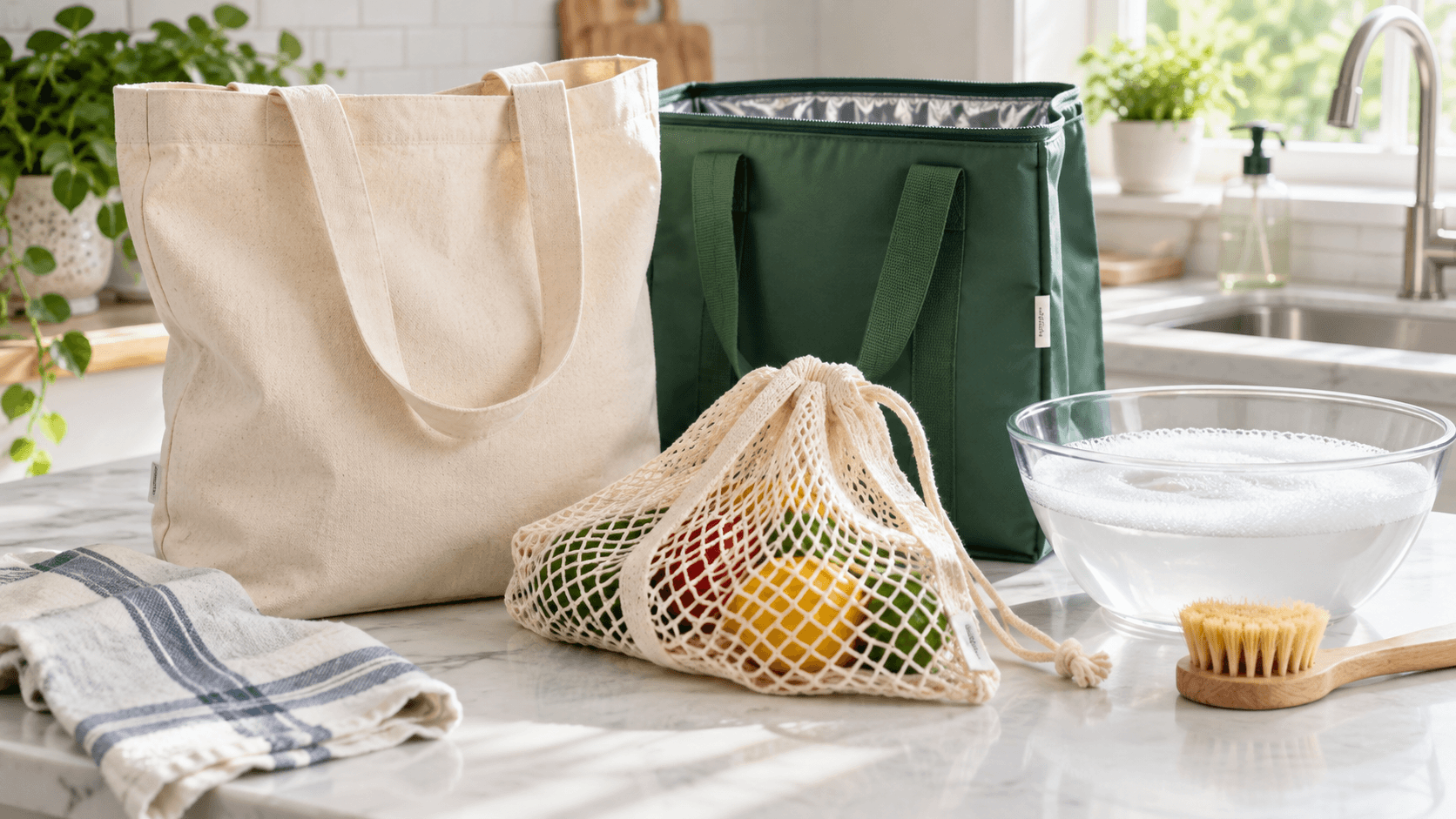
The safest default is to follow each reusable bag’s care label, empty it after shopping, and wash it before you use it again when it carried food or has visible dirt or spills. Cotton and many washable fabric totes may be machine washable when their label allows it; insulated, coated, structured, or nonwoven bags often need gentler care. Keep bags used for raw meat, poultry, or seafood separate from bags used for ready-to-eat foods, and do not guess when the label says otherwise.
Reusable grocery bags make errands easier, but they are not all built the same way. A plain cotton tote, an insulated cooler bag, a mesh produce bag, and a stiff nonwoven bag can each have different construction, linings, coatings, and care instructions. The useful habit is not a one-size-fits-all wash setting. It is a small routine: sort, read the label, clean the bag in the way its maker allows, and let it dry fully before putting it away.
How should you clean reusable grocery bags?
Start by taking everything out of the bag. Shake out crumbs, remove receipts, and look in seams, pockets, and insulated linings for spills. Then use this short decision process:
- Read the care label or product instructions. Look for whether the item is machine washable, hand washable, wipe-clean only, or not meant for machine drying.
- Sort by material and use. Keep washable cotton or fabric totes separate from insulated, coated, structured, or nonwoven bags. Also separate any bag that carried raw meat, poultry, or seafood.
- Use the permitted cleaning method. For a bag labeled machine washable, use the cycle, water temperature, and drying method it specifies. For a wipe-clean bag, clean the inside and outside with warm, soapy water as its instructions allow, then rinse or wipe away soap residue if directed.
- Dry it completely. Turn bags inside out or leave them open so folds, corners, handles, and insulated seams can dry before storage.
- Put dry bags away as a set. Keep a dedicated bag or bin for clean grocery bags so they do not sit in a car trunk or laundry pile with unrelated items.
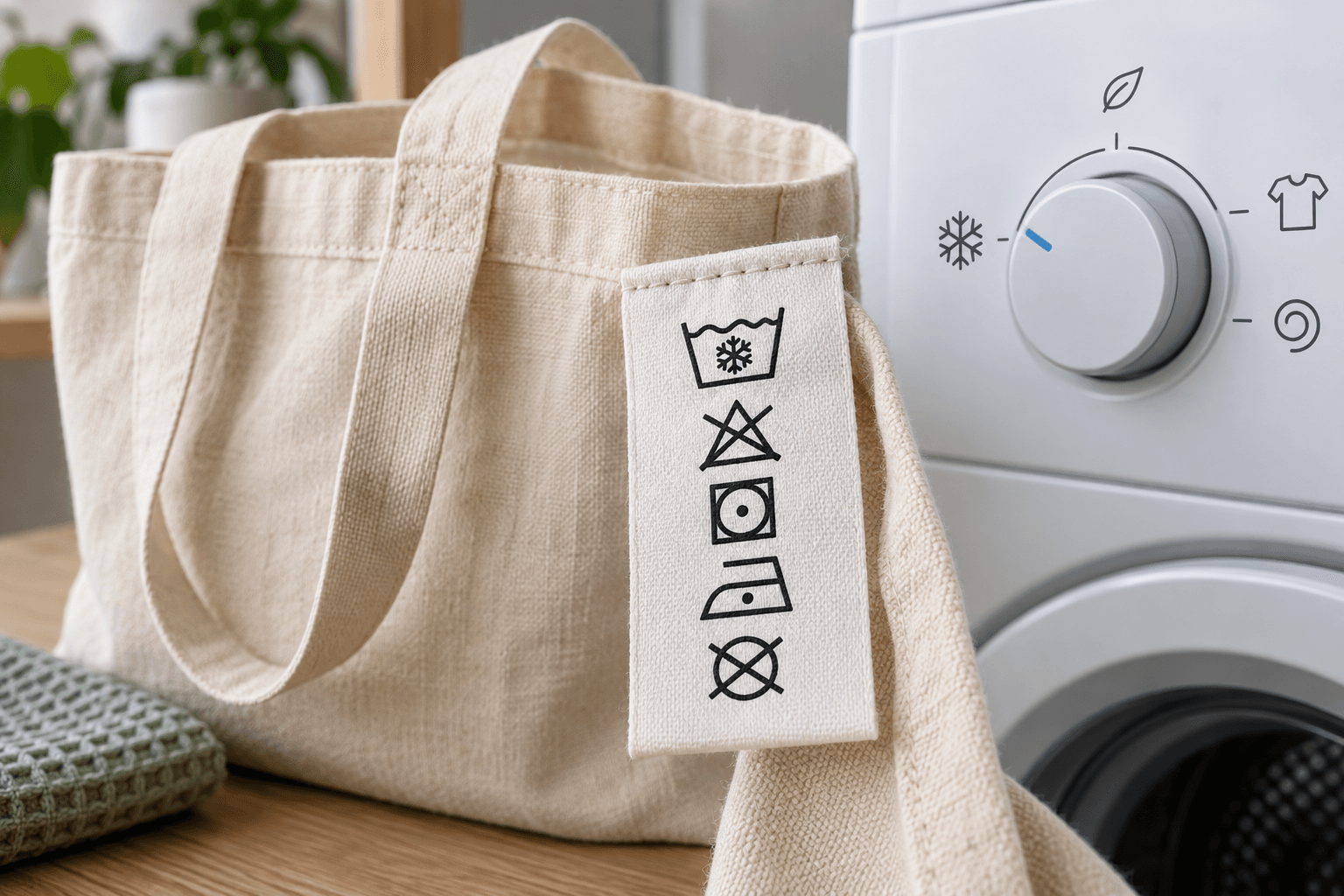
The Federal Trade Commission’s care-label rules explain why the label is the right starting point: care instructions can specify hand versus machine washing, water temperature, drying method, bleaching limits, and warnings such as washing separately. A reusable bag may not always fall into the exact product category covered by those rules, but the same practical principle applies: the manufacturer is the best source for that specific bag’s materials and limitations. Read the FTC care-label guidance.
Why is separating grocery bags useful?
Food-safety guidance focuses on preventing cross-contact between raw animal products and food that will be eaten without further cooking. FoodSafety.gov recommends keeping raw meat, poultry, and seafood separate from other foods while shopping and placing those packages in separate bags when available. A simple reusable-bag routine can support that habit: reserve one washable bag for raw-protein packages, and use other bags for produce, bread, dry goods, and ready-to-eat items.
This is not about making a bag sterile or treating every errand as an emergency. It is about keeping a clear boundary where leaks are most likely to matter. If a package leaks, clean the affected bag promptly using the method its label permits, and clean the surface where you set the bag down. FoodSafety.gov also notes that reusable bags can hold bacteria, dirt, and debris and should be washed frequently with hot water and soap. See FoodSafety.gov’s reusable-bag guidance.
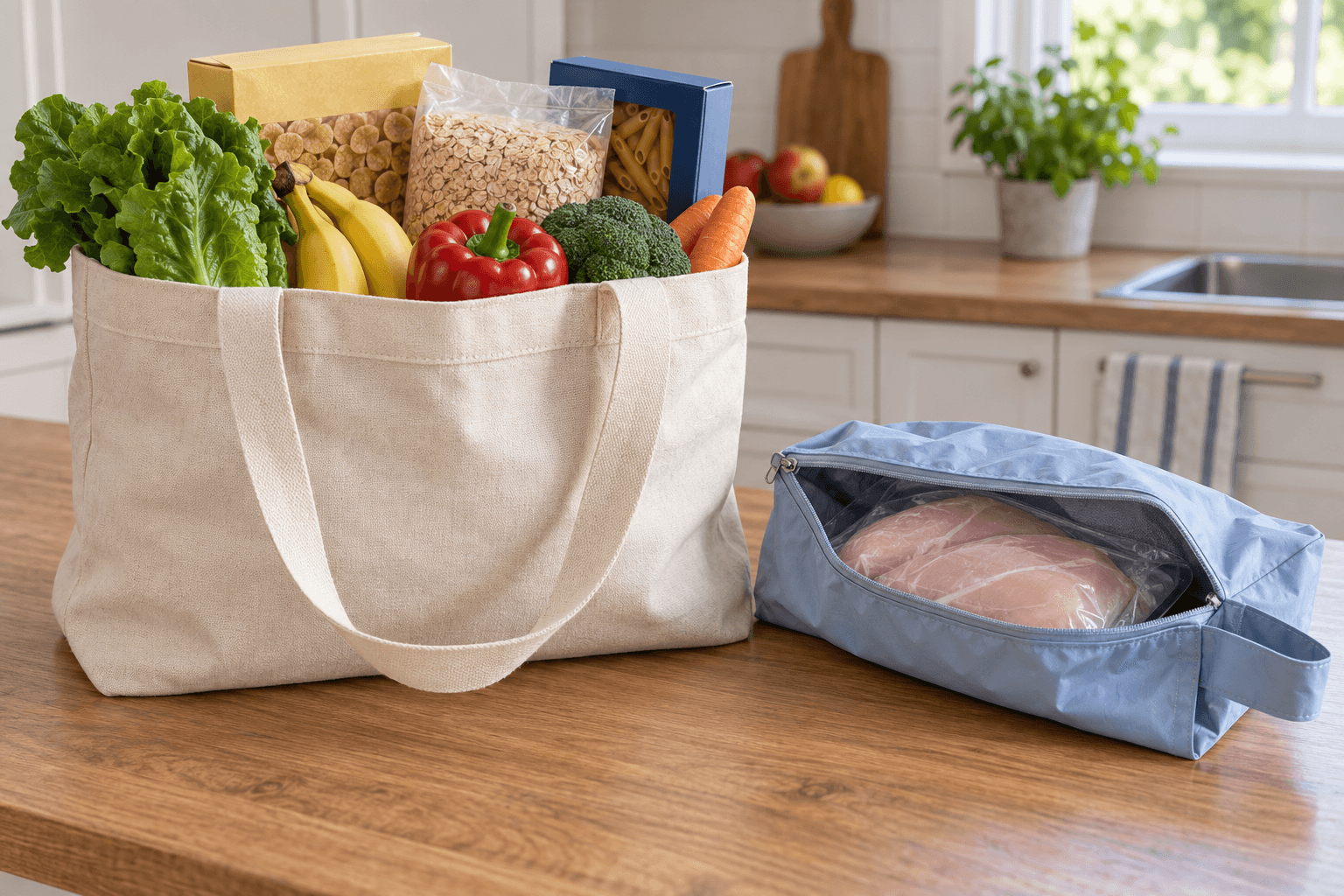
Can you put reusable grocery bags in the washing machine?
Sometimes, but only when the bag’s label or product instructions say machine washing is appropriate. A fabric tote may tolerate a normal or gentle cycle, while an insulated bag may have foam, a waterproof coating, a stiff base, adhesive-backed seams, or hardware that is not designed for agitation or heat. A mesh produce bag can be washable but still need a small garment bag or a lower-agitation cycle to avoid tangling, depending on its closure and construction.
Use the label to make the call. If it says machine wash, follow the listed temperature and cycle. If it says hand wash or wipe clean, do that instead. If there is no care information and the bag has an insulated lining, cardboard-like base, printed coating, or glued seams, use a conservative wipe-clean approach rather than testing it in a washer. When you are unsure, the product maker’s instructions take priority over a general laundry tip.
For items the label permits you to machine wash, keep the load practical. Fasten loose straps, turn the bag inside out if that helps expose the interior, and avoid packing the washer so tightly that the bags cannot move. The goal is to clean the bag, not to force it through a cycle it was never designed to handle. The FTC’s care-symbol chart is useful when a tag uses symbols instead of words. View the FTC care-symbol chart.
What should you do with insulated or wipe-clean bags?
Insulated bags deserve their own routine because the liner and seams are often more important than the outer fabric. Empty the bag, wipe the interior and exterior with warm, soapy water when the instructions allow it, and pay attention to the bottom corners and zipper or hook-and-loop areas where residue can collect. Do not soak a bag or apply a strong cleaner unless the manufacturer specifically permits it. Then leave it open until the lining and seams are dry.
If the liner is cracked, peeling, has a persistent odor after appropriate cleaning, or cannot be cleaned according to its instructions, check with the manufacturer about replacement. A bag that is visibly damaged may not be a good candidate for carrying food, especially if it was intended to be wipe-clean only.
How do common bag materials change the cleaning decision?
Material is a useful clue, but it never outranks a label. The same material can be finished, lined, coated, printed, or reinforced in different ways. Use the list below as a way to decide which instruction to look for, not as a substitute for the bag’s own care information.
- Plain woven cotton or canvas: These are often the bags people expect to machine wash. Confirm the tag first, especially if the bag is printed, dyed, stiffened, or has a separate base insert. If machine washing is allowed, follow the stated cycle and drying directions.
- Mesh produce bags: Check the closure, drawstring, and label. A mesh bag may be washable but can tangle around other laundry. Treat a care label that specifies a gentle cycle, small load, or air drying as a requirement, not a suggestion.
- Nonwoven or stiff-sided bags: These may look fabric-like but can be made from polypropylene, laminated layers, or a bonded material. Look for wipe-clean instructions before putting one in a washer.
- Insulated bags: A lining, padding, zipper, or sealed seam can change the recommended method. Wipe-clean care and thorough air drying are common-sense defaults only when the manufacturer’s instructions support them.
- Leather, cork, paper, or mixed-material handles: Mixed materials are a reason to slow down. One machine-washable fabric panel does not mean the entire bag is machine washable.
When there is no tag, avoid using a high-heat dryer or strong bleaching product as a test. A cautious wipe-clean method may be appropriate for a bag that is designed for it, but only the manufacturer can confirm whether a coating, handle, lining, or adhesive will tolerate a particular product or temperature.
How often should you wash reusable grocery bags?
Wash a bag after a spill, after it carried a leaking package, or when it is visibly soiled. Beyond that, a frequent routine is sensible for bags used for food. FoodSafety.gov describes reusable bags as able to hold bacteria, dirt, and debris and recommends washing them frequently with hot water and soap. The exact washing schedule still depends on the bag’s material and how it is used.
A workable household approach is to use a small reset point: after a grocery trip, inspect the bags before folding them away. If a bag carried raw-protein packages or shows a spill, move it to the cleaning area. If it carried sealed dry goods and looks clean, store it dry and keep it assigned to that use. The inspection takes less time than trying to remember what happened on the last shopping trip.
What should you check before storing a cleaned bag?
Before you fold a bag into the clean stack, check four places: the bottom seam, the inside corners, the handles, and any insulated lining. Those areas are easy to miss when a bag is open on a counter. They also are the places where a small spill can remain hidden. If the bag is still damp, leave it open. If you smell soap, follow the label’s rinsing instructions or wipe again with clean water when that is appropriate for the material.
Storage is part of the cleaning routine. A bag that dries fully and is stored in an open bin, on hooks, or in a dry tote is easier to inspect before the next trip. If you keep bags in the car, bring any damp or soiled one inside rather than leaving it closed in the trunk. That keeps the clean group distinct from the bags waiting for attention.
What is a simple reusable-bag system for a household?
You do not need a complicated color code or an expensive organizer. A simple three-group system is enough for many households:
- Everyday bags: clean, dry totes for produce, pantry goods, bread, and general shopping.
- Raw-protein bag: one washable bag used only for sealed meat, poultry, or seafood packages. Clean it promptly if anything leaks.
- Insulated bag: a separate cooler-style bag for temperature-sensitive groceries, cleaned according to its own instructions and stored open until dry.
Keep the bags near the door, in a car organizer, or in another dry place that makes them easy to grab. The important part is that clean bags stay separate from bags waiting to be cleaned. A small hanging hook or open bin can prevent a damp bag from getting folded into the clean stack.
Can a laundromat help with washable bags?
If a bag’s label permits machine washing and you have a batch of washable cotton totes or fabric bags, a laundry trip can be a convenient way to handle them with other label-compatible household textiles. Keep bags that need wipe-only care out of that load. If you are preparing a larger wash-day load, Fresh Spin’s self-serve laundromat page explains the available self-service option, and the care-label guide can help you interpret the instructions before you start.
For bags with stains, residue, coated interiors, or uncertain care instructions, do not treat a general washing tip as permission to use a machine. Read the label first. If the bag has no label, use the manufacturer’s product page or customer support guidance before trying a high-heat or high-agitation method.
What should you avoid when cleaning reusable bags?
- Do not assume a bag is machine washable because another tote is.
- Do not use a machine dryer when the label calls for air drying, drying flat, or wipe-only care.
- Do not mix a bag used for raw-protein packages with ready-to-eat groceries before it has been cleaned and dried.
- Do not store a damp bag folded shut; moisture can leave odors and make the next cleanup harder.
- Do not use cleaners or bleach that the bag’s label warns against.
- Do not wash food itself with soap or detergent. FoodSafety.gov advises rinsing produce under running water rather than using soap, bleach, or commercial produce washes.
Frequently asked questions about reusable grocery bags
Should reusable grocery bags be washed after every use?
Follow the bag’s label and clean it after spills, leaks, visible dirt, or use with raw-protein packages. FoodSafety.gov recommends washing reusable bags frequently with hot water and soap because they can hold bacteria, dirt, and debris.
Can you wash insulated grocery bags in a washing machine?
Only if the bag’s label or manufacturer says you can. Many insulated bags have materials or construction that call for wipe-clean care instead of a machine cycle.
What is the best way to dry reusable bags?
Use the drying method on the care label. For wipe-clean or air-dry bags, leave the bag open so the interior, bottom seams, and handles can dry before storage.
Should you use one reusable bag for raw meat and another for produce?
That is a practical way to support food-safety separation. FoodSafety.gov recommends keeping raw meat, poultry, and seafood separate from other foods while shopping and placing those packages in separate bags when available.
Sources
- FoodSafety.gov: Shopping at the Farmers Market with Food Safety in Mind
- FoodSafety.gov: 4 Steps to Food Safety
- Federal Trade Commission: Care Labeling Rule
For more practical wash-day planning, visit Fresh Spin’s laundry FAQ or contact page.
Leave A Comment