
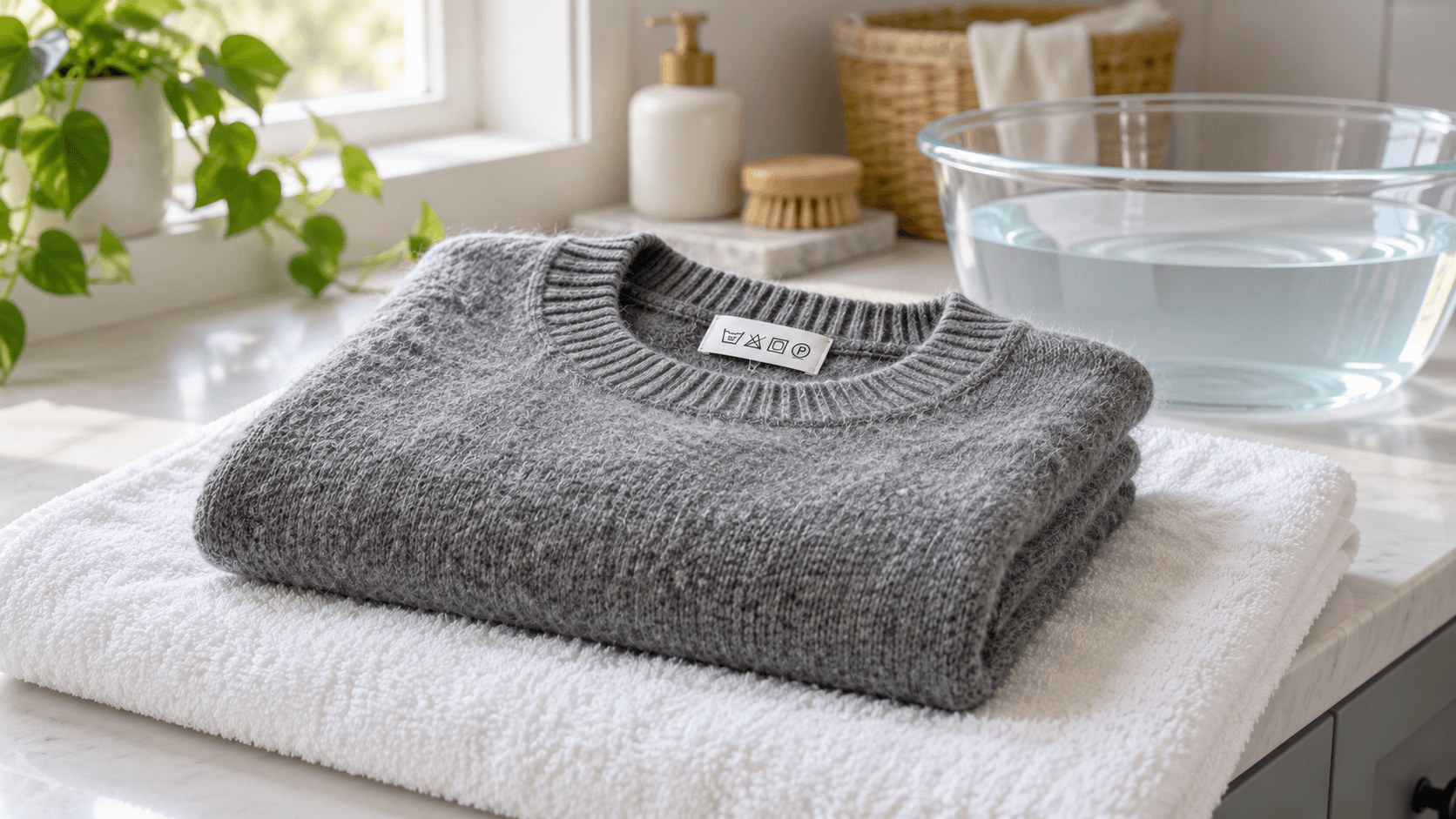
To wash a wool sweater without shrinking or stretching it, start with its care label, then use the gentlest method the label permits: cool or lukewarm water, a mild wool-safe cleanser, minimal agitation, and flat drying after reshaping. The label decides whether the sweater can be machine washed, must be hand washed, or needs professional dry cleaning.
Wool is not one uniform fabric. A machine-washable Merino base layer, a hand-wash-only knit, and a structured sweater marked dry clean only should not be treated as the same load. The safest habit is to read the fiber content and care symbols before water touches the garment. This guide explains how to make that decision, how to wash a sweater gently when home washing is allowed, and how to dry it without stretching the shoulders or body.
What should you check before washing a wool sweater?
Read the sewn-in care label first. Look for the required cleaning method, water-temperature guidance, and whether the garment may be tumble dried. A label that says dry clean only is not a suggestion to hand wash at home. A label that says hand wash calls for a basin method. A label that permits machine washing may still specify a wool, delicate, cool, or low-spin setting.
Also inspect the sweater before washing. Treat a small food spot separately if the label allows it, close buttons or zippers, turn the garment inside out if friction is a concern, and empty pockets. If there is a loose seam, a hole, or a decorative element that could catch, repair or protect it before it goes into water. Separating dark colors from pale colors remains sensible, even on a gentle cycle.
Can you machine wash a wool sweater?
Only machine wash a wool sweater when its label permits machine washing. Many washable wool and Merino garments can be cleaned on a wool or delicate setting, but the label remains the authority for that specific item. Use cool or lukewarm water, select the gentlest available cycle, and avoid overfilling the machine. A crowded wash creates more rubbing between garments.
Choose a mild product intended for wool or delicate fabrics when the garment instructions allow it. Avoid bleach. Smartwool also advises against fabric softener for its Merino garments; that is a useful reminder that product directions are part of garment care, not an afterthought. Do not assume every detergent or add-on is appropriate merely because it is marketed for laundry.
A mesh bag can reduce snagging for a small, machine-washable sweater, but it does not turn a hand-wash-only or dry-clean-only item into a machine-washable one. If the machine does not offer a genuine wool or delicate option, hand washing is usually the more controlled home method for a label that permits hand washing.
How do you hand wash a wool sweater?
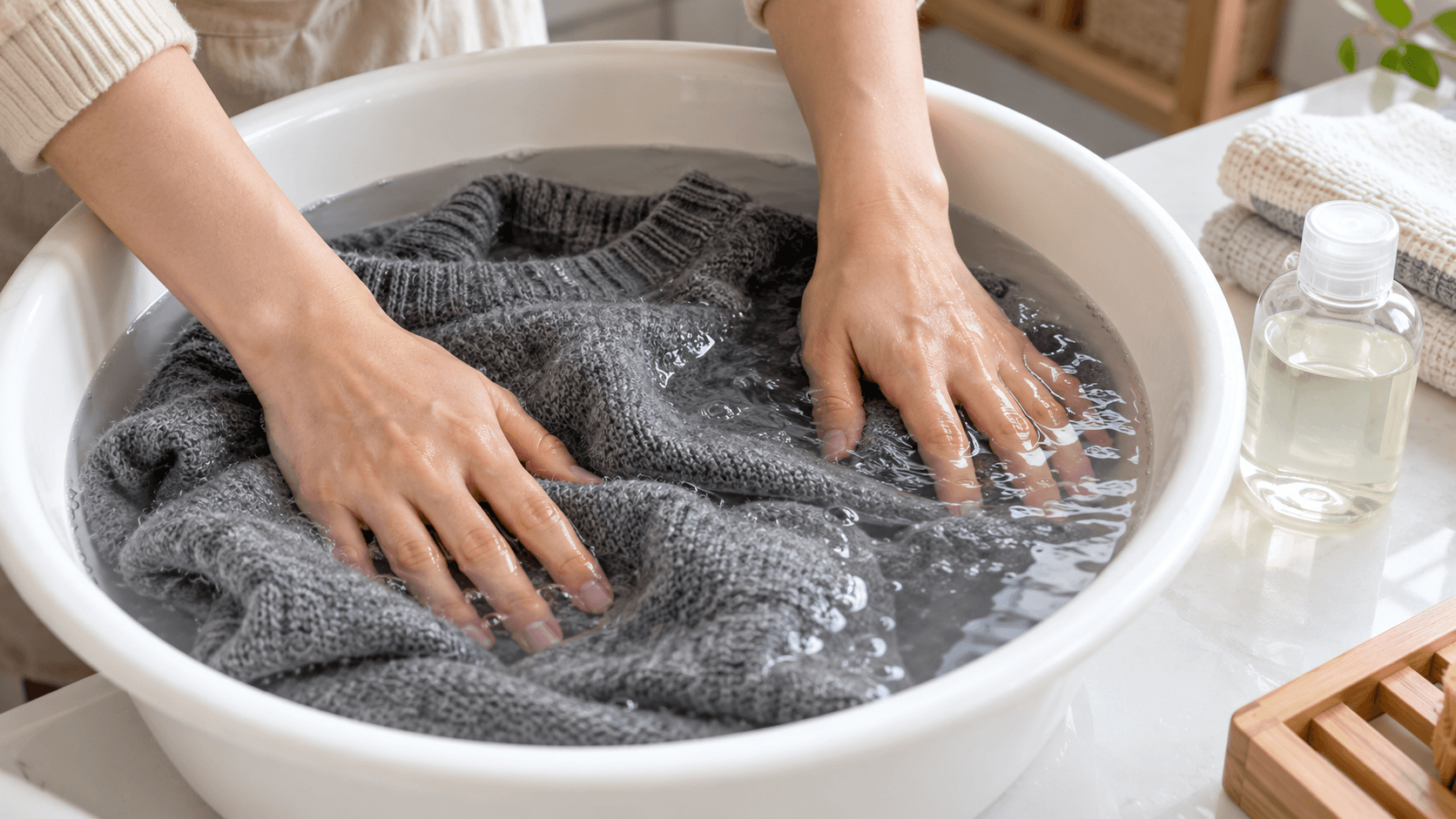
Hand washing is a useful option for sweaters labeled hand wash or for machine-washable wool you would rather handle more carefully. Begin with a clean basin and cool or lukewarm water. Woolmark describes about 30 C, or roughly 86 F, as a hand-wash reference for garments labeled for that care. Add the cleanser according to its directions before adding the sweater.
- Turn the sweater inside out if the label permits and place it in the water.
- Press it under the surface and gently move the water through the knit. Do not scrub a spot with a brush unless the label and stain-treatment directions specifically support it.
- Allow the sweater to soak only as directed by the product and label. Woolmark’s hand-wash guidance uses a short soak rather than prolonged agitation.
- Drain and refill with clean water at a similar temperature. A sharp water-temperature change can be hard on delicate fibers.
- Press out rinse water with open hands. Do not wring, twist, or pull the sweater lengthwise.
The goal is controlled movement. Rubbing, hot water, heavy spinning, and twisting are the habits most likely to create unwanted changes in a knit. If a stain remains after a gentle wash, stop before escalating to a harsh product. Recheck the label or seek professional advice for that garment.
Why should you avoid wringing a wool sweater?
A wet knit is heavier than a dry one. Twisting it can distort the shape, and lifting it from one point can stretch the shoulders, sleeves, or hem. Instead, support the sweater with both hands while moving it out of the basin. Lay it on a clean towel, roll the towel loosely with the sweater inside, and press to transfer excess water. Unroll it promptly rather than leaving it bundled.
This method removes some water without asking the fabric to carry its own weight. It also makes the drying step shorter without using high heat. If the towel becomes saturated, move the sweater to a second dry towel rather than squeezing the garment itself.
How should you dry a wool sweater?
Flat drying is the default for knitwear unless the label specifically says otherwise. Woolmark recommends laying knitwear flat and gently returning it to its intended shape. Smooth the body, align the sleeves, and check that the cuffs and hem are not folded underneath. A white or light, lint-free towel is a practical surface for this step.
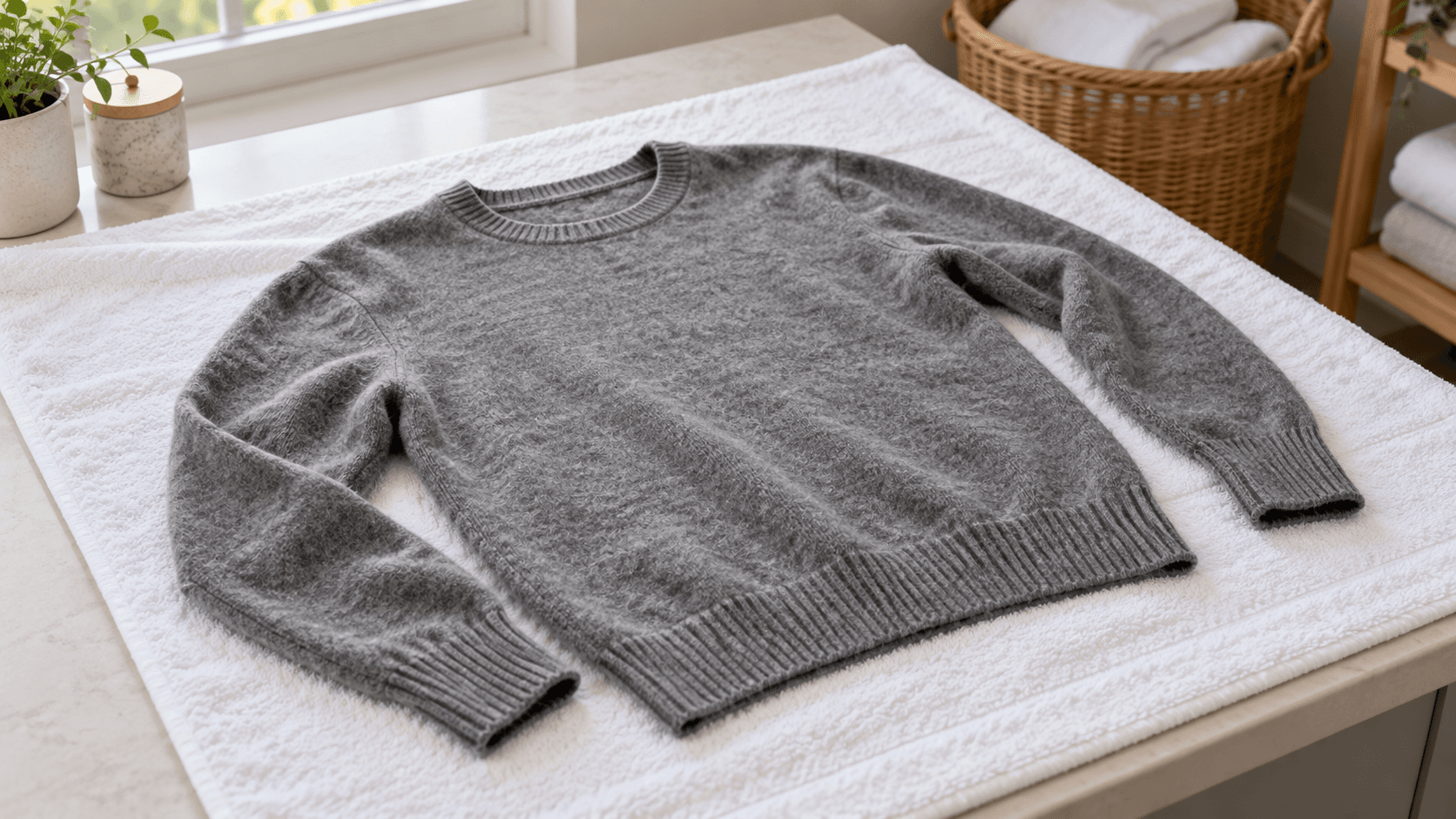
Avoid hanging a damp sweater from a clothes hanger. The moisture weight can lengthen the body and pull at the shoulders. Keep it away from radiators, direct heat, and intense direct sunlight. If the care label explicitly permits tumble drying, follow its heat and cycle instructions exactly. A low-heat or wool/delicate dryer setting may be appropriate for some labeled garments, but it is not a universal wool rule.
What mistakes can shrink or stretch wool?
- Ignoring the care label: A dry-clean-only, hand-wash-only, and machine-washable garment need different decisions.
- Using heat by default: Hot water or an unapproved dryer setting can be too aggressive for a particular sweater.
- Over-agitating: Vigorous scrubbing, rubbing, or long wash cycles add unnecessary friction.
- Twisting out water: Wringing can change the shape of a wet knit.
- Hanging while wet: A wet sweater can stretch under its own weight.
- Adding products without checking: Bleach, softener, and stain products may conflict with the label or fiber care guidance.
Can you wash a wool sweater at a laundromat?
Yes, but only if the sweater’s label permits home or machine laundering and the available machine can follow that instruction. Bring the sweater in a separate bag, select the approved gentle setting, and avoid mixing it with heavy items such as towels, jeans, or shoes. If the label calls for hand washing, use a basin method at home rather than improvising with a standard wash cycle. If it says dry clean only, choose professional care instead.
Before any wash, review the garment’s symbols using Fresh Spin’s laundry care label guide. For loads that are truly machine washable, a visit to a self-serve laundromat can be useful when you need access to an appropriate machine, but the garment label still governs the temperature, cycle, and drying method.
How often should you wash a wool sweater?
Wash frequency depends on the garment label, how it was worn, and whether it is actually soiled. Wool garments may not need washing after every wear. Airing a clean, dry sweater between wears can sometimes be enough. Wash when there is visible soil, an odor that does not air out, or a specific spill that needs attention. Less frequent, careful laundering can mean less fiber friction over the life of the garment.
How should you store a clean wool sweater?
Store a sweater only after it is completely dry. Fold it rather than hanging it for long periods, because knitwear can gradually lose shape on a hanger. A clean, dry drawer or shelf is usually a better resting place than a damp basement or a sealed bag containing residual moisture. Before packing seasonal sweaters away, inspect them for food residue or stains and follow the label’s cleaning instructions. Good storage does not replace care-label guidance, but it helps preserve the shape you restored during flat drying.
Frequently asked questions about washing wool sweaters
Can you use regular detergent on a wool sweater?
Use the garment label and cleanser directions as the deciding factor. A mild wool or delicate-fabric cleanser is commonly recommended for garments that allow home washing. Avoid bleach, and do not assume a fabric softener is suitable.
Should wool be washed in cold water?
Many wool-care instructions use cool or lukewarm water, but the care label is specific to the garment. Keep wash and rinse temperatures consistent rather than switching abruptly between hot and cold water.
Can you put a wool sweater in the dryer?
Only when the label says it may be tumble dried and you can use the stated low-heat, wool, or delicate setting. Otherwise, dry it flat after reshaping.
What if a wool sweater says dry clean only?
Do not substitute a home method. Follow the dry-clean-only instruction and consult a professional cleaner if you need help with a stain or repair.
Leave A Comment