
How to Wash Cashmere Without Shrinking It or Making It Rough
Quick answer: start with the garment’s care label. When washing is allowed, hand-wash cashmere in cool water with a small amount of detergent made for delicates, rinse gently, press out water without twisting, reshape the knit, and dry it flat. Do not treat every cashmere garment as interchangeable: some labels require dry cleaning, and details such as embellishment, lining, or construction can change the right method.
Cashmere is valued for its soft, fine fibers, but that does not make it impossible to care for at home. The practical goal is to clean only when needed while limiting heat, friction, stretching, and harsh chemicals. This guide is label-first: manufacturer instructions for the exact garment override general advice. Patience is part of the care routine.
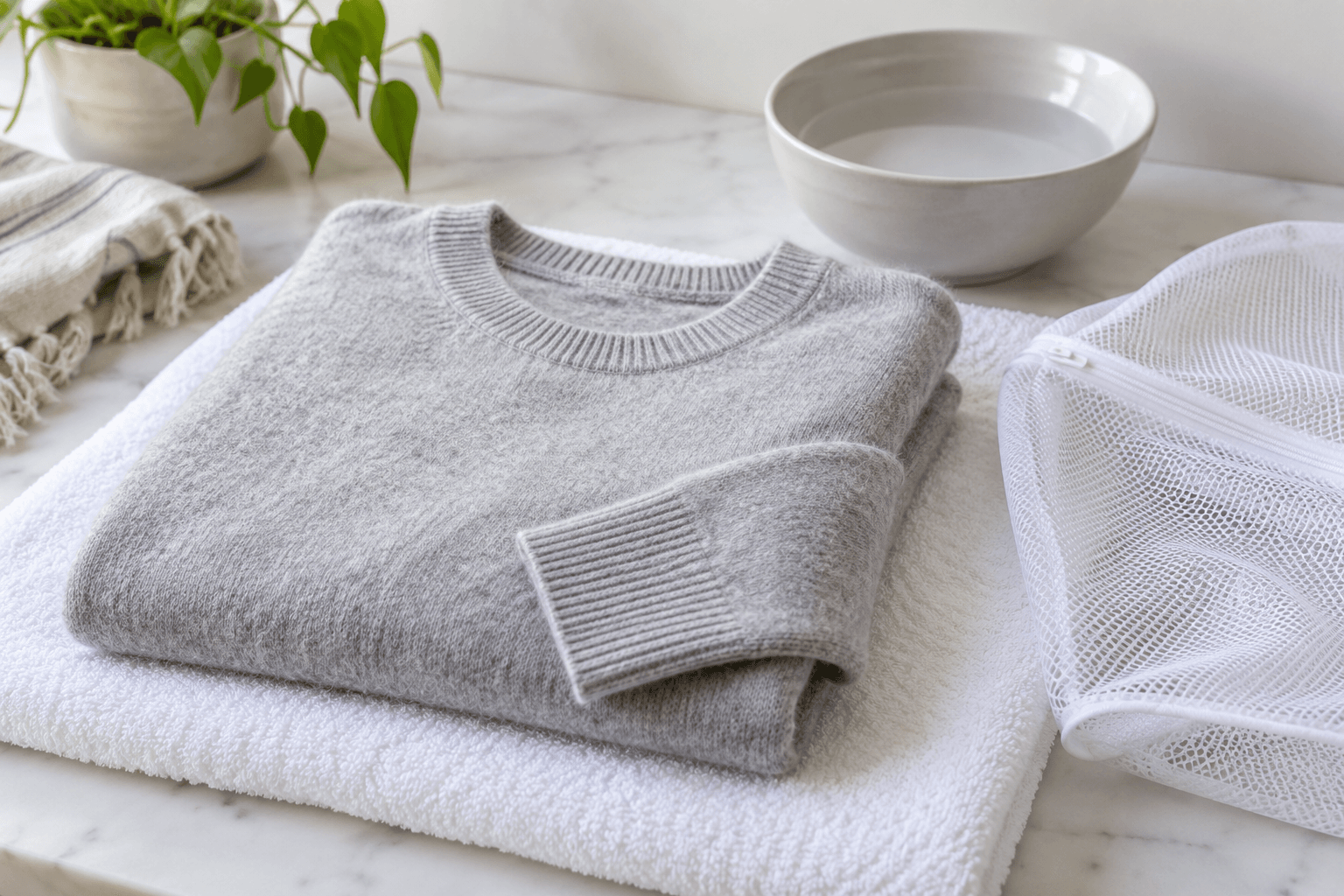
What should you check before washing cashmere?
Read the fiber-content and care labels, then look at the whole garment. A 100% cashmere sweater may have a different instruction from a cashmere blend, a lined garment, a cardigan with decorative buttons, or an item with leather trim. If the label says dry clean only, follow that instruction. If it permits hand washing, use that as the baseline. If it permits a washing machine, follow the exact temperature, cycle, and drying instruction supplied by the maker.
Product care directions vary by brand and construction. Several NAADAM cashmere product pages specify hand wash cold, do not bleach, lay flat to dry, low iron, and dry clean as an option. Those are useful examples of the conservative pattern, not permission to ignore a different label on another garment.
How do you hand-wash a cashmere sweater?
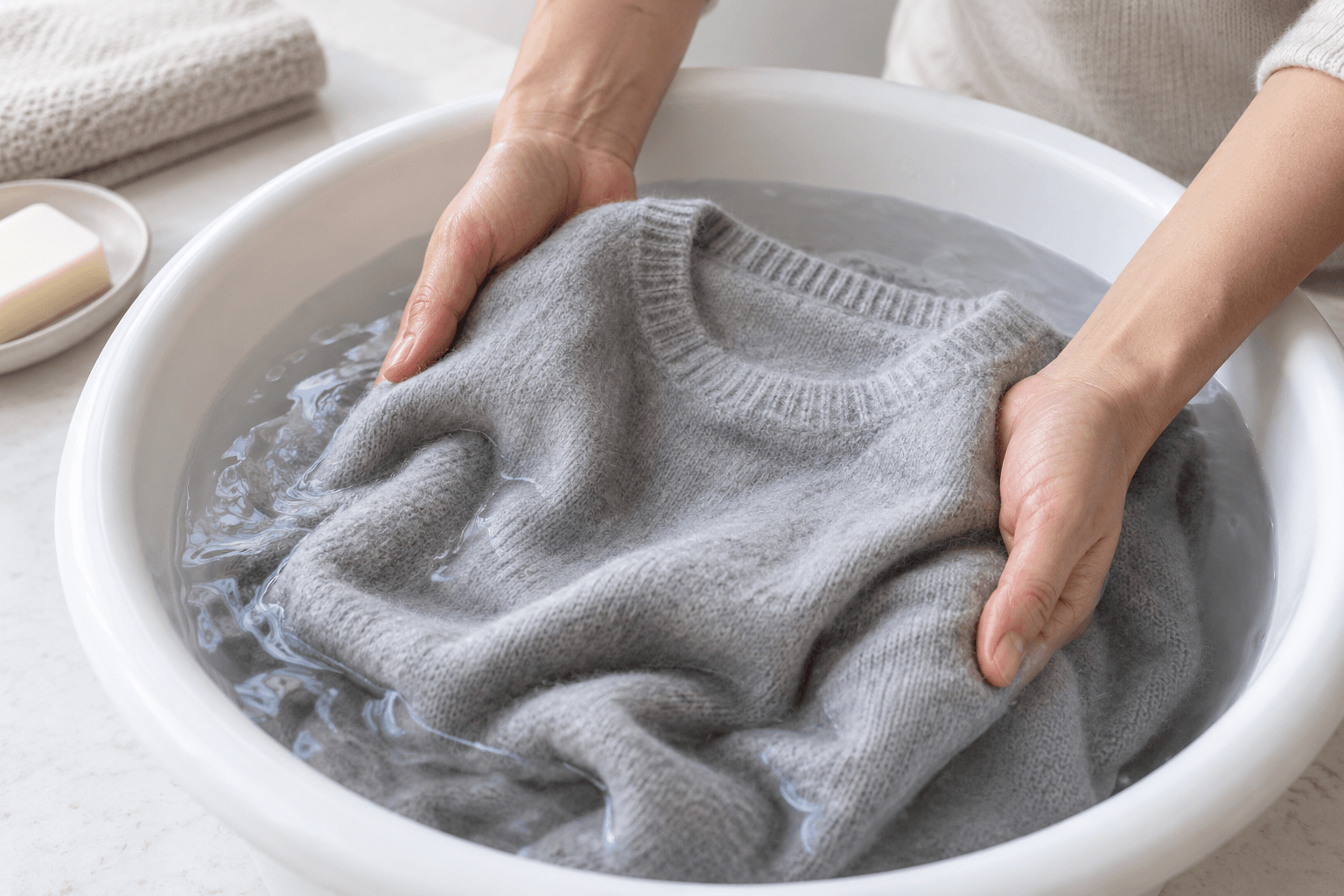
- Fill a clean basin with cool water. Hot water and abrupt temperature changes are not a default choice for cashmere.
- Add a small amount of compatible detergent. Choose a detergent labeled for wool, cashmere, or delicate fabrics and follow its dosage. Skip bleach and heavy-duty additives unless both the garment and product instructions allow them.
- Submerge and move gently. Support the sweater in the water and lightly press or swish it. Do not scrub cuffs, rub the knit against itself, or use a brush.
- Rinse carefully. Replace the water with clean cool water and support the garment during rinsing. Repeat if needed until detergent is removed.
- Press out water. Lift the sweater with both hands so its weight is supported. Press it gently against the basin side, then place it on a clean towel and roll or press the towel. Never wring or twist the knit.
Can you machine-wash cashmere?
Only when the exact label or manufacturer says you can. A machine-approved item still needs a deliberate setup: use a delicate or hand-wash cycle, cold water, a compatible detergent, and a mesh bag if the garment instructions allow it. Keep the load small and separate it from towels, denim, hooks, zippers, and other abrasive items.
Do not assume that a machine’s “wool” setting makes every cashmere item safe. The label answers whether machine washing is permitted; the careful setup reduces avoidable friction when it is.
Why do cashmere sweaters pill, and what should you do?
Pilling is the small cluster of loose fibers that can form in high-friction areas such as under the arms, at the sides, or where a bag strap rubs. It is not automatically evidence that a garment is ruined. The White Company’s cashmere-care material describes pilling as loose fibers rubbing together and recommends laying knitwear flat, holding an area taut, and using a cashmere comb carefully.
Address pills only when the sweater is clean and dry. Use a tool designed for knitwear, work slowly, and avoid pulling loose fibers by hand. Do not shave a sweater aggressively or use a rough brush; thinning the surface to chase every pill can create a different problem.
How should you dry and reshape cashmere?
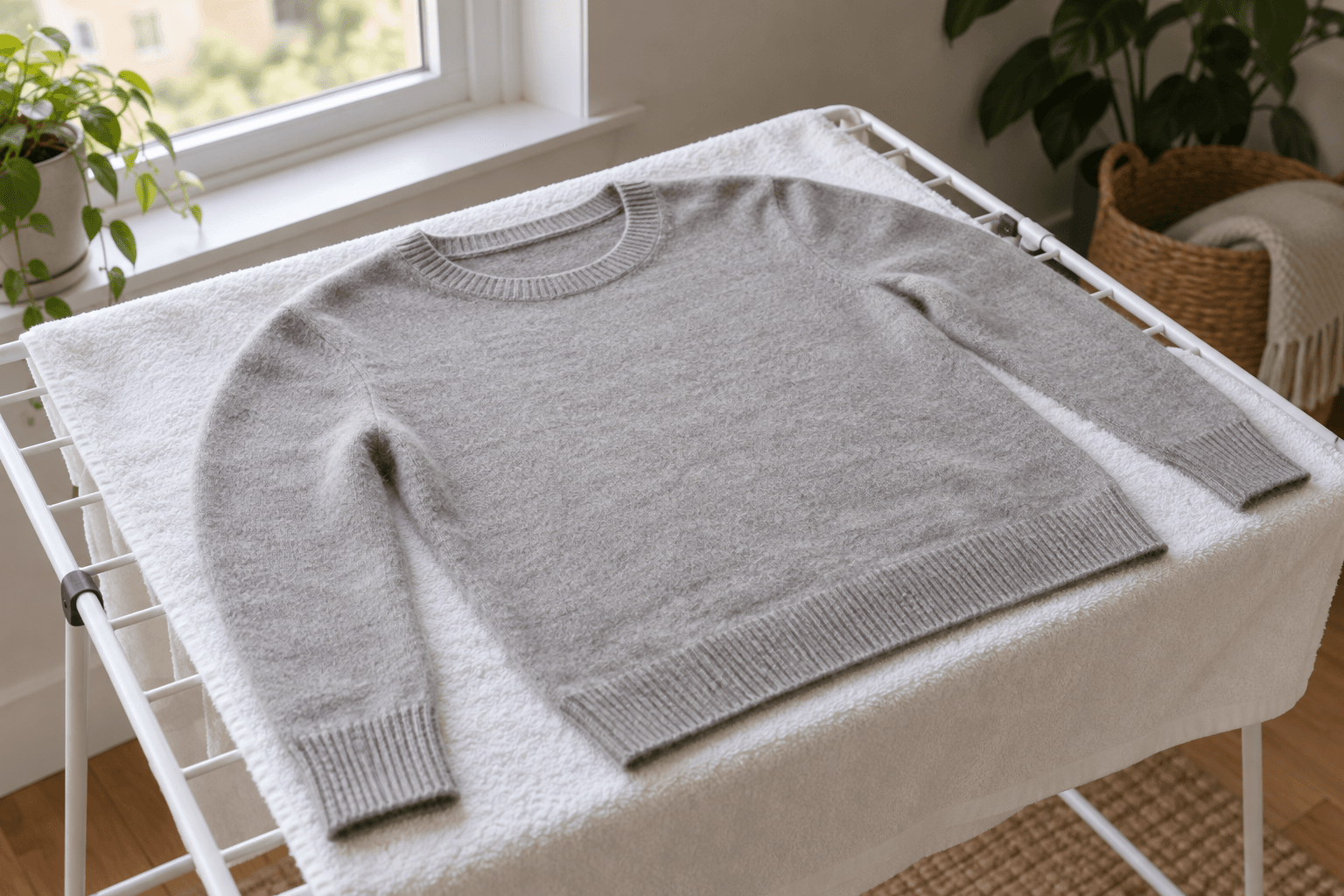
Flat drying is the conservative choice when the label permits home washing. Lay the sweater on a clean, dry towel or a flat drying surface, then gently return it to its approximate original shape. Smooth the neckline, sleeves, and hem with your hands; do not stretch the fabric to force a fit. Keep it away from direct heat, radiators, and strong sun.
Do not hang a wet cashmere sweater from a hanger. Water adds weight, and a hanging garment can stretch at the shoulders or lengthen under its own weight. A dryer is not a safe default either; use it only if the label expressly allows it.
How often should you wash cashmere?
Wash based on actual wear, odor, and stains rather than a fixed calendar rule. Airing a sweater between wears can be reasonable when it is clean and dry. When it needs laundering, use the label-approved routine rather than extending the time between washes with fragrance products or spot treatments that are not safe for the fabric.
If you wear cashmere over a shirt or layer, the garment may need washing less often than an item worn directly against skin. That is a personal use consideration, not a guarantee. Stains, sweat, and care-label instructions should guide the decision.
What should you do about a stain on cashmere?
Start with the label before applying a product. For an item that can be washed at home, address a fresh spill by blotting gently with a clean absorbent cloth. Do not rub the spot, because rubbing can push residue into the knit and roughen the surface. Work from the outside of the stain toward the center so the mark is less likely to spread.
If the garment label permits it, use a very small amount of compatible delicate-fabric detergent diluted in cool water, and test it on an inconspicuous area first. Press, rinse, and then wash the whole garment only when the label supports that approach. Strong stain removers, bleach, and unverified home remedies can create a more permanent problem than the original stain. A dry-clean-only garment, an oil-based stain, or a set-in mark is a sensible point to consult a professional cleaner.
Can you iron or steam cashmere?
Use the care label as the decision point. Some manufacturer instructions allow low heat, while other garments may have details that need a different approach. If ironing is allowed, use the low setting appropriate for the garment and avoid pressing directly on textured areas, seams, or embellishment. A pressing cloth can create a useful barrier when the label permits ironing. Never use high heat in an attempt to flatten a pill or reshape a stretched section.
For a sweater that is only lightly wrinkled, laying it flat and allowing it to rest after washing may be enough. The aim is to preserve the knit’s shape, not to make cashmere behave like a crisp woven shirt.
How should you store cashmere after washing?
Store cashmere only after it is completely dry. Fold it instead of hanging it for long periods, and use a clean, dry drawer or storage container. Before seasonal storage, check the label for any garment-specific guidance. Avoid sealing a damp sweater in plastic, and do not rely on scented products as a substitute for cleaning.
Cashmere care checklist
- Read the care label and confirm that home washing is allowed.
- Use cool water and a small amount of compatible delicate-fabric detergent.
- Keep agitation low: do not scrub, twist, or wring.
- Press out water with a towel and reshape while damp.
- Dry flat away from direct heat and sun.
- Remove pills gently from a dry garment, then store it clean and fully dry.
For general help understanding a garment’s symbols before you begin, see Fresh Spin’s laundry care labels guide. Larger ordinary loads can be planned using Fresh Spin’s self-serve laundromat information, but a cashmere garment should always follow its own label rather than a standard mixed-load routine.
Frequently asked questions
Can I wash cashmere with other clothes?
Keep it separate from rough fabrics and hardware. If its label allows machine washing, use a small delicates load and a mesh bag only where appropriate.
Can I use regular detergent on cashmere?
Use a detergent labeled compatible with cashmere, wool, or delicate fabrics, and follow the garment label. Avoid bleach and harsh cleaners unless expressly approved.
Can I dry cashmere on a hanger?
Flat drying is the safer general approach for a washable cashmere knit because a wet garment can stretch when hung. Follow the exact label if it provides a different instruction.
Does pilling mean cashmere is poor quality?
Not necessarily. Pilling can develop where loose surface fibers experience friction. Treat it gently on a clean, dry garment rather than pulling the pills off by hand.
Choose the care path that matches the label
“Cashmere care” is not one universal instruction. The label tells you which path is appropriate for the garment in front of you. Begin there, then choose the least aggressive method that can do the job.
| What the label indicates | Practical next step | What not to assume |
|---|---|---|
| Hand wash or wash by hand | Use the cool-water, low-agitation method in this guide and dry flat. | That a machine’s wool setting is an equivalent substitute. |
| Machine washable | Use only the permitted cycle, water temperature, and drying method. Protect the garment from rough mixed loads. | That every cashmere item can be machine washed. |
| Dry clean only | Use a professional cleaner and point out stains or delicate trim. | That a gentle home method is worth testing. |
| No legible label | Seek the brand’s care information or choose professional care if the item is valuable, lined, embellished, or sentimental. | That fiber feel alone identifies the correct method. |
The table is deliberately conservative. A cashmere blend may contain nylon, silk, cotton, or other fibers; a sweater may contain a separate lining or trim; and a garment can have a maker-specific finish. Each of those details can change the label’s instructions. When an online listing conflicts with the sewn-in label, the item in your hands is the source of truth.
How can you prepare cashmere for washing?
Preparation prevents many avoidable problems. Start with a clean, uncluttered surface and assemble the items you need before the sweater gets wet: a basin, cool water, compatible detergent, two clean towels, and a flat space for drying. If the label permits a mesh bag, use one only for the machine path; a mesh bag is not needed for careful hand washing.
Empty pockets, button buttons, close zippers, and turn the garment inside out where the label and construction make that sensible. Look over cuffs, elbows, the neckline, and underarms for loose threads, makeup, deodorant residue, or pills. A small inspection is useful because a loose thread can catch during laundering, and a set-in stain may need different treatment. Do not trim a loose thread close to the knit unless you know it is safe to do so; catching the wrong thread can open a seam.
Separate cashmere from lint-producing towels, rough fleece, denim, garments with metal hardware, and hook-and-loop fasteners. Even a gentle detergent cannot protect a fine knit from an abrasive companion in the same load. This matters most for machine-washable cashmere, but it also applies when a sweater is laid near other laundry while wet.
How much detergent and agitation does cashmere need?
More detergent and more movement do not mean a cleaner sweater. Use the quantity on the detergent label for a small delicates wash, not a full bulky load. If the garment is lightly worn, extra soap can create a rinsing problem without offering a benefit. The rinse is important because detergent left in a knit can make the surface feel less soft or attract soil during the next wear.
Think of hand washing as supporting the fabric rather than working against it. Hold the sweater under the water, allow it to become evenly wet, and press it gently through the wash water. A few slow movements are enough for a normally worn item. Avoid a long soak unless the garment’s label or manufacturer specifically allows it; a long soak is not automatically safer simply because it is gentle.
When you lift the sweater, slide both hands beneath it. Wet cashmere is heavier than dry cashmere, and supporting the whole piece limits pulling at the shoulders and sleeves. If your basin is too small to support the garment comfortably, choose a larger clean container or seek professional help rather than forcing the sweater into a cramped wash.
What does careful rinsing look like?
Drain the wash water without letting the sweater fall against a rough drain or faucet. Refill with clean cool water that is close to the wash-water temperature. Support the garment while you press water through the knit, then repeat with fresh water as needed. The aim is to remove detergent, not to scrub the fibers clean by force.
Do not hold a wet sweater by the shoulders, cuffs, or a single corner under running water. Concentrated water and the garment’s weight can stretch a section before you notice. If a rinse still feels soapy, use another basin of clean water. The extra few minutes are safer than squeezing and twisting to accelerate the process.
How do you reshape cashmere without stretching it?
Reshaping is easiest while the sweater is damp, after excess water has been pressed out. Lay it flat on a towel and use the seams as landmarks: line up the shoulders, straighten the sleeves, smooth the side seams, and settle the hem into its normal width. Work with small adjustments instead of pulling the fabric outward. If you have a similar dry sweater or a product photo, it can help you remember the intended proportions, but do not stretch the wet garment to match a measurement that no longer feels natural.
A towel roll is a useful low-force method. Place the sweater flat on a dry towel, roll from one end with the garment inside, and press the roll gently. Unroll it, move the sweater to a second dry towel or a flat drying rack, and reshape again. Replace a towel that becomes saturated so the sweater is not left sitting in moisture.
Flat drying takes longer than applying heat, so plan for it. Choose an area with normal air circulation, away from a radiator, a heating vent, direct sun, pets, and food preparation. Turn the sweater only if the label permits and it can be done without disturbing its shape. The fabric should be completely dry before folding or wearing it.
What should you do if cashmere feels stiff after washing?
First, do not try to fix stiffness with high heat, aggressive brushing, or a heavy dose of fabric softener. Check whether detergent may remain in the knit. If the label allows home washing, a careful cool-water rinse followed by flat drying may be appropriate. If the garment feels rough, matted, or distorted after a wash, pause rather than repeating treatments. Review the label and consider professional advice for a valuable garment.
Stiffness can also be a sign that the product used was not suited to the garment, that too much detergent was added, or that the sweater was dried with heat. The corrective step depends on the specific garment and product instructions. A conservative response is better than trying multiple remedies at once, since that makes it difficult to know what changed the fabric.
How can you reduce pilling between washes?
Pilling is connected to friction, so the most useful prevention happens during wear and storage. Rotate sweaters instead of wearing the same item continuously, and be aware of repeated contact from cross-body bags, seat belts, rough outerwear, desk edges, and the inside of a coat. This does not mean a sweater must be treated as fragile at all times; it means high-friction areas deserve attention before they turn into dense pills.
When you remove pills, place the dry sweater on a flat, clean surface. Hold a small area taut with one hand and use a dedicated cashmere comb or other manufacturer-approved tool with gentle strokes. Check the tool often and stop if it begins to pull at the knit. A fabric shaver may be suitable for some garments, but use it only if the garment maker approves it and you can control it carefully. Never use a disposable razor or pull pills away with your fingers.
Do not confuse normal surface pills with holes, thinning, or a loose seam. If light is visible through an area or the knit appears damaged, stop combing and consider a repair professional. Removing more surface fiber will not repair a weakened section.
How should you pack and store cashmere for a season?
Seasonal storage begins with a clean, completely dry sweater. Folding is usually safer than hanging because a long period on a hanger can distort shoulders. Store it in a clean, dry place away from sunlight and humidity. If you use a storage container, make sure the garment is dry before closing it. A container that traps moisture can create odor or mildew concerns regardless of fabric type.
Before putting cashmere away, inspect it for stains and food residue. Storing a stain for months can make it harder to address later. Avoid relying on perfume, fragranced sachets, or an unverified pest treatment as a substitute for proper cleaning and dry storage. Follow any manufacturer guidance for long-term storage, especially for blended garments or pieces with trim.
When you take a sweater out again, unfold it and allow it to air briefly in a clean, dry space. Check the seams and surface before wearing. If it needs a refresh, begin with the label, not a routine designed for cotton or synthetics.
Common cashmere-care mistakes and safer alternatives
- Mistake: washing every wear by default. Safer alternative: assess actual soil, odor, stains, and the label, then air the garment between wears when appropriate.
- Mistake: treating a machine’s delicate setting as blanket permission. Safer alternative: machine wash only when the exact garment allows it.
- Mistake: wringing water out to speed drying. Safer alternative: press with towels and dry flat.
- Mistake: hanging a wet sweater. Safer alternative: reshape on a flat surface.
- Mistake: removing every pill aggressively. Safer alternative: use a knit-care tool gently on a clean, dry garment and stop at signs of thinning.
- Mistake: using a strong stain product without a label check. Safer alternative: blot, test where permitted, and consult a professional for difficult or dry-clean-only items.
When is professional care the better choice?
Professional care is a good option when the label requires it, when a sweater is lined or heavily embellished, when a stain is set or oil-based, when the knit has an unusual finish, or when the item has significant financial or sentimental value. Tell the cleaner about the fiber content and stain, and show the care label if possible. Professional care is not a failure of home laundry; it is a way to follow a garment’s stated requirements when the details call for it.
For an item that is merely delicate but washable, there is no need to make a store-specific claim or promise. The reliable guidance is to read the label, choose the appropriate method, and avoid treating the item as an ordinary mixed load.
How should you care for a cashmere blend?
Cashmere blends deserve their own label check. A blend can pair cashmere with wool, cotton, silk, nylon, or another fiber to change the garment’s feel, durability, or shape. A familiar care routine for one 100% cashmere sweater may not apply to a blend. The blend label can also reflect a lining, stretch fiber, printed design, dye, or finish that needs a different temperature or cleaning method.
Do not use percentage alone to decide how to wash a blend. A garment with a small cashmere percentage can still have a delicate construction, and a mostly cashmere garment can have trim that determines the care path. Read all care symbols and any written directions. If the label is unclear, a conservative method or professional cleaning is wiser than testing a machine setting.
Can you freshen cashmere without washing it?
Sometimes the garment does not need a complete wash. After a normal wear, lay it flat or hang it briefly on a broad, supportive hanger only long enough to air in a clean, dry room, then fold it for storage. Keep it away from steam from a shower, cooking odors, pets, and direct sun. Letting a clean sweater rest between wears can be part of a practical rotation.
Freshening is not a substitute for cleaning a stain, strong odor, or visible soil. Avoid spraying an untested fabric product over the sweater to hide an odor. Added fragrance or treatment can be harder to remove and may not match the maker’s care guidance. When laundering is necessary, return to the label-first wash or professional-care path.
What should you do before taking cashmere to a laundromat?
First decide whether the garment is actually machine washable. A self-serve laundry location can be useful for ordinary loads, but it does not override the label. Bring the garment in a clean bag, keep it separate from rough laundry, and bring any mesh bag or compatible detergent that the label-approved method requires. Choose the permitted cycle and water temperature, then stay with the garment so it can be removed promptly.
Do not add cashmere to a large load just to fill a washer. Bulky towels, denim, and garments with hardware create unnecessary friction. If the machine’s available settings do not match the label or you cannot dry the item flat afterward, choose a different care method. The best laundry decision is the one that protects the garment’s stated requirements, not the one that makes the load most convenient.
How can you inspect a sweater after it dries?
When the sweater is fully dry, check it in good light before folding it away. Look at the shoulders, cuffs, side seams, elbows, neckline, and areas where pills were removed. The knit should feel dry throughout, not just on the surface. Check that the sleeves and hem still sit evenly and that no part of the garment has stretched while drying.
If you notice a minor shape change, compare the two sides and make small adjustments while the sweater is only slightly damp, if the label permits. If it is already dry and noticeably distorted, avoid rewetting and stretching it repeatedly. Review the label or seek professional advice. Repeated corrective washing can add more wear than it solves.
Cashmere care decision checklist
- Identify the garment. Confirm fiber content, blend details, lining, trim, and readable care directions.
- Decide whether laundering is needed. Consider soil, odor, stain type, and the garment’s actual use.
- Select the allowed method. Hand wash, machine wash, dry clean, or wait for more information; never choose a method just because it is convenient.
- Prepare a low-friction setup. Use a clean basin or permitted machine cycle, compatible detergent, towels, and a flat drying place.
- Handle wet cashmere with support. Lift it with both hands, press water out, and reshape rather than pull.
- Dry completely and inspect. Store only when fully dry, folded, and free of unresolved stains or damage.
This checklist does not promise that a home method will save every garment. It makes the decision points visible so the care label remains in control. That is especially important with cashmere, where a small construction detail can matter more than a generic online recommendation.
Keep a brief care note with a particularly valuable sweater if its label is difficult to read. A photo of the label and a record of the detergent or professional cleaner used can make future decisions simpler. The note is not a substitute for the label, but it can prevent guesswork when the garment is brought out months later.
How do you make a repeatable cashmere-care routine?
A repeatable routine makes delicate care less intimidating. Keep the same few verified supplies together: a small basin, a compatible detergent, two clean absorbent towels, a mesh bag for items whose labels permit machine washing, and a clear flat space for drying. Using a consistent setup reduces the temptation to substitute a strong cleaner, a cramped sink, or a high-heat shortcut when time is limited.
It also helps to separate the routine into three decisions. First, decide whether the sweater needs washing at all. Second, decide what its label permits. Third, make sure you have time and space to dry it flat completely. If any answer is uncertain, pause rather than starting a wash cycle. That pause is practical: once a knit is wet, it needs support and a proper drying surface.
For a household with more than one cashmere item, wash only a few compatible pieces at once and keep each one identifiable. Do not assume that sweaters in the same color family have the same care label. Fold the clean pieces separately after they are dry, and note a recurring issue such as pilling at a bag-strap area or a stain that needs professional advice. This creates useful care history without turning a simple laundry task into a complicated process.
Finally, reassess the routine if the garment changes. A repaired seam, a new lining, a fresh stain, or a fading label can change which method is sensible. The durable rule is not a particular temperature or detergent brand; it is to start with the specific garment’s instructions and choose the lowest-risk option that satisfies them.
Leave A Comment