

If you live in Sugar Creek and want help with everyday laundry, a drop-off wash-and-fold service can replace several household chores with one organized trip. This guide explains how to prepare washable items, communicate care needs, complete the drop-off, and return to collect the finished order from Fresh Spin in Independence.
Fresh Spin does not offer residential pickup or delivery. Customers bring laundry to the laundromat and return to pick it up, so the best experience begins with a clear plan for both trips.
Key Takeaways
- Check labels, pockets, stains, and special-care items before leaving home.
- Separate anything that should not be washed or dried with the main order.
- Discuss detergent preferences and unusual items at the counter before accepting service.
- Keep your order information and plan to return for pickup; there is no home delivery.
- Use self-service when you want direct control over every machine setting or item.
What Drop-Off Wash and Fold Means at Fresh Spin
Drop-off wash and fold is an in-store laundry service. You bring an order to Fresh Spin, provide the information needed to identify and process it, and leave the everyday washing, drying, and folding to the laundry team. When the order is ready under the terms confirmed at drop-off, you return to the location and collect it. The current wash-and-fold service page is the right place to review the service description and any current options before a trip.
That definition matters because several different services are sometimes described with similar phrases. Fresh Spin offers drop-off wash-dry-fold, not a route service. A driver does not collect bags from a Sugar Creek home, and completed laundry is not delivered to a porch or workplace. In this guide, “pickup” always means the customer’s return to the laundromat to retrieve a finished order.
The service is designed around washable household laundry that can be handled according to its labels and the information you provide. It is not permission to place every textile in one bag and assume that every item can follow the same process. Garments marked dry-clean-only, hand-wash-only, line-dry, or otherwise restricted need to be identified before drop-off. Valuable, sentimental, fragile, heavily embellished, or unfamiliar pieces also deserve separate attention.
A useful way to think about wash and fold is as a handoff of routine work, not a handoff of judgment you have not shared. You know which sweater has changed shape before, which shirt has a stubborn stain, and which child is sensitive to a product. The attendant sees the order for the first time. A few minutes of preparation lets you transfer the information that protects the clothing and helps the counter conversation stay focused.
When Wash and Fold Is the Better Fit
Choose drop-off service when the main problem is the time and attention required by routine loads. A week can fill with work, school, caregiving, appointments, home repairs, or recovery from illness. Even when washing is familiar, sorting, transferring, drying, folding, and putting away several loads can occupy the parts of the day that are easiest to lose. Handing off compatible everyday laundry can make the remaining household work more manageable.
Volume is another reason to consider the service. Laundry can accumulate after travel, a busy work period, a child’s return from camp, or a change in household routine. The order still needs to be inspected and sorted, but you do not have to personally supervise each machine cycle. That distinction can be valuable when the household needs a reset more than another complicated project.
Mobility, energy, and attention also matter. Moving wet loads, bending repeatedly, keeping several timers, and folding for a long period may be difficult for some customers. Drop-off service can reduce those repeated tasks. It does not remove the need to carry the order into and out of the store, so plan bags and basket sizes that you can control safely, and ask someone you trust for help if the physical part of the trip remains difficult.
Wash and fold is not automatically the right choice for every load. Use the self-service laundromat when you want to select every cycle, keep a specialty item in sight, test a stain treatment, or separate garments in a way that is difficult to explain as a service order. Direct machine control may also feel better when an item has an uncertain label or a history of bleeding, shrinking, snagging, or reacting to products.
You can use both approaches without contradiction. A household might drop off towels, sheets, casual clothing, and other straightforward items while handling delicate garments separately. The goal is not to maximize the size of the service order. It is to place each item in the care path that makes sense.
Start with a Home Inspection, Not a Stuffed Bag
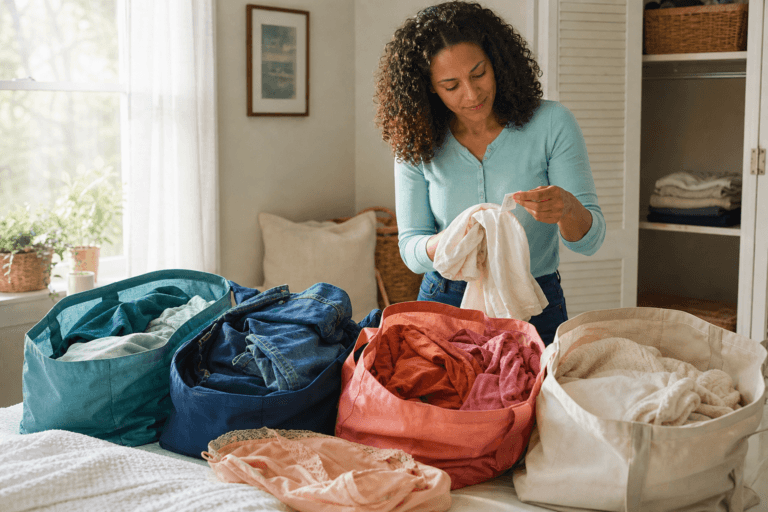
Preparation should happen where you have good light, enough room, and access to the garment history. Empty the laundry bag onto a clean surface or inspect one basket at a time. Look at each item long enough to answer a few questions: Is it washable? Can it be tumble dried? Does it have a stain, loose part, sharp object, or special instruction? Does it belong to this order?
Empty every pocket. Receipts can break apart and spread paper across a load. Pens, lip products, gum, crayons, tools, and markers can damage their own garment and nearby fabric. Earbuds, keys, coins, jewelry, and identification cards can damage a machine or disappear into a fold. Turn pockets out when practical, then return them to their normal shape after checking so small items do not become trapped in the lining.
Fasten or contain hardware that could snag another garment. Close zippers when the care instructions support it, secure hooks, and place small or strappy washable items in a suitable mesh bag if that is part of your normal care method. Do not use a mesh bag as a way to force an unsuitable item into the order. A beaded top or structured undergarment may still need a different care path even if it fits inside the bag.
Look for loose seams, failing hems, peeling decorations, unstable buttons, and pre-existing tears. Washing and tumbling place movement and friction on fabric. If an item already has damage, set it aside for repair or discuss it explicitly before the order is accepted. A bag is not a protective container once its contents enter a wash process.
Count items that would be difficult to replace or easy to overlook, such as uniforms, work shirts, children’s school clothing, or matching pieces. You do not need an inventory of every sock for an ordinary load, but a short phone note can help when a particular garment must return. Keep unmatched pieces out if finding the mate first would prevent confusion.
Read Care Labels Before the Counter Conversation
The care label is the best starting point for deciding whether a garment belongs in a routine wash-and-fold order. The Federal Trade Commission explains that garment labels provide a regular care method and may include directions for washing, bleaching, drying, and ironing. Review the FTC’s Care Labeling Rule guidance when symbols or wording are unfamiliar.
Separate anything marked dry-clean-only, do-not-wash, hand-wash, line-dry, lay-flat-to-dry, or do-not-tumble-dry. These instructions are not minor preferences. They define care conditions that differ from a routine wash-and-fold process. If an item offers several allowed methods, decide which method you actually want before handing it over rather than expecting the attendant to guess.
Labels can be faded, cut out, hidden, or printed in a language you do not read. Treat missing information as uncertainty, not permission. Consider the fiber, construction, decorations, color history, and previous care. A plain cotton T-shirt with a missing tag presents a different decision from a lined jacket, wool sweater, silk blouse, vintage garment, or item with glued ornamentation. Set uncertain pieces aside and ask whether the service can accept them.
Take a clear phone photo of a small label when you may need to enlarge the text or symbol. Keep the garment with the photo by naming or numbering the image in a way you can recognize. Do not research while rushing at the counter. If a care method remains unclear, delay that item and complete the rest of the order.
Children’s sleepwear, protective workwear, athletic gear, waterproof items, and fabrics with special coatings may have performance features that depend on correct care. Follow their labels and manufacturer guidance. Avoid assuming that a stronger product, hotter setting, or longer cycle will improve cleanliness without affecting the garment’s intended properties.
Sort for Compatibility and Clear Communication
Home sorting does not require a dozen tiny bags, but it should prevent obvious incompatibilities. Separate strongly colored new items, lint-producing towels, lint-attracting dark garments, heavy jeans, lightweight knits, bedding, and anything with unusual soil or odor. Consider color, fabric weight, soil, lint, and care instructions together instead of relying on color alone.
Use sturdy bags that close or can be controlled during transport. Avoid overfilling them until seams strain or clothing falls out. If two groups must stay separate, use two bags and make the distinction obvious. A small note attached to the outside can help you remember what to discuss, but do not place sensitive personal information on a bag where it is visible to others.
Keep damp items out of a closed bag whenever possible. Moisture trapped against fabric can create odor, color transfer, or other damage before the order is processed. If you must transport something damp, isolate it, disclose it immediately, and do not leave it stored in a vehicle or entryway. Heavily soiled or contaminated items require an honest conversation about whether they can be accepted.
Do not conceal sharp objects, bodily fluids, oils, chemicals, pests, or hazardous contamination. A wash-and-fold team needs accurate information to protect people, equipment, and other laundry. If an item may create a health or safety risk, keep it separate until the business confirms an appropriate next step. Routine laundry service is not a substitute for hazardous-material handling.
Stains need their own review. Identify what caused the stain when you know, what products have already been applied, and whether the garment has been washed or dried since the stain occurred. Do not combine household chemicals or arrive with an item saturated in an unknown mixture. Some stains become harder to remove after heat, while some treatments can affect color or fiber. Set expectations around careful handling rather than a guaranteed outcome.
Decide What to Say at Drop-Off
A good counter conversation is brief because the preparation already happened. Start by stating that the bags are a wash-and-fold order and whether separate bags represent different care groups. Point out stains, air-dry items, product sensitivities, or unusual pieces before the order is accepted. Ask rather than assume if you are uncertain about an item.
Confirm the current service terms at the store. These may include how the order is identified, how completion is communicated, what information you need to retain, which product choices are available, and when you should return. Do not rely on an old screenshot, a social post, or a remembered price. The service page and the information provided at drop-off should control the current transaction.
Ask focused questions. “Can this labeled air-dry shirt be handled separately?” is more useful than “Can you be careful?” “These towels are separate from the dark work shirts; can the order keep those groups apart?” is clearer than leaving two bags without explanation. Specific information lets the attendant say what is possible before you leave.
If you have a fragrance preference, skin sensitivity, or product restriction, describe it directly. Do not use broad terms such as “hypoallergenic” as if they guarantee a reaction-free outcome. Ask what options are currently available, and decide whether they meet your needs. The EPA’s Safer Choice program can help consumers understand a federal product-labeling program, but an EPA label does not replace your knowledge of a personal allergy or the product’s directions.
Make sure the contact information associated with the order is accurate. Keep the receipt, ticket, message, or other identifying information the store provides. Photographing a paper ticket can create a backup, but keep the original until the order is complete. Do not post order details or customer identifiers publicly.
Plan the Sugar Creek-to-Independence Trip Practically
Fresh Spin is located on East Truman Road in Independence, and Sugar Creek is one of the nearby communities represented in the site’s local navigation. Use the current contact page to confirm the address and contact method before leaving. Site pages currently display inconsistent hour details, so confirm current availability instead of repeating a time from this article.
Choose bags that fit your transportation. If you are driving, keep detergent or other liquids upright and separate from clothing. Do not place damp laundry against a seat, important paperwork, groceries, or finished clean items. If you are walking, using transit, or sharing a ride, reduce the order to an amount you can carry without blocking movement or losing control of a bag.
Combine errands only when the laundry remains protected. Fresh Spin’s on-site mini-mart may make the stop useful for another basic need, but product availability can change. Do not leave dirty laundry in a warm vehicle for an extended period while completing unrelated errands, and do not place food directly against soiled fabric.
Plan the return trip when you plan the drop-off. A service order does not end when you leave the bags. Decide who can return, where you will keep the order information, and how the completed laundry will travel home clean and dry. If another person may collect it, ask the store what identification or order information is required rather than assuming anyone can take the order.
Use Product Preferences Carefully
Some customers bring a familiar detergent or choose among available service options. The current wash-and-fold page says customers may bring their own detergent, but confirm that policy and the container requirements at drop-off. Keep a product in its original labeled container whenever practical. A mystery liquid in an unmarked bottle creates avoidable uncertainty.
Read the product label before selecting it. Concentrated detergents, powders, liquids, and packets have different directions. More detergent is not automatically cleaner, and a product’s fragrance does not prove that fabric is clean. If you bring a product, do not pre-measure it into an unlabeled cup or combine it with bleach, softener, stain remover, or another chemical unless the labels clearly permit the combination and the store agrees to the request.
Fragrance-free and dye-free are specific product descriptions, not universal medical promises. A customer with eczema, allergies, asthma, or another health concern should follow guidance from a qualified healthcare professional and verify the product information. If avoiding cross-contact is essential, ask what the service can and cannot guarantee before leaving the order.
Laundry packets require special storage. The U.S. Consumer Product Safety Commission warns that concentrated liquid packets can seriously harm children and advises keeping them sealed in their original packaging, locked up, and out of children’s sight and reach. Review the CPSC’s laundry-packet safety guidance and do not let children handle packets during preparation or drop-off.
Prepare Family Laundry Without Losing Track of People
Family orders become easier when each person’s essential items are identified before everything enters the same bag. Set aside tomorrow’s uniform, medication-related textile, favorite comfort item, or required work garment if you cannot risk being without it. Do not assume a completion time; ask at drop-off and plan around the answer you receive.
Use a simple household system for items that look alike. Different colored mesh bags, initials on existing garment labels, or separate outer bags can help, provided the system does not damage clothing. Avoid permanent markers on visible fabric. Count matching school or work pieces when a missing item would interrupt the week.
Inspect children’s pockets at their height and from their perspective. Small toys, crayons, snacks, paper, stones, and classroom supplies can hide in small compartments. Check detachable accessories and confirm that decorative pieces are secure. Keep laundry products away from children during the entire sorting process, not only after supplies return to a cabinet.
Talk about the service in practical terms. Children can help identify whose clean shirt belongs to whom after the order comes home, but they should not handle detergent or climb on bags. Keep full laundry bags away from infants and young children because any large flexible bag can create a hazard when used for play.
Handle Bedding, Towels, and Bulky Items as Separate Decisions
Bedding and towels may form a large part of a household order, but volume alone does not tell you how an item should be handled. Check every label. A washable blanket, a weighted blanket, an electric blanket, a foam-filled item, and a decorative quilt can have entirely different restrictions. Do not place them in one bag under the single label “bedding.”
Look for pet hair, heavy soil, bodily fluids, damaged seams, and objects caught inside duvet covers or fitted-sheet corners. Shake out dry loose debris outdoors when appropriate, but do not create dust exposure or spread contamination. Disclose unusual conditions before acceptance. Remove removable duvet inserts only when that matches the product’s directions and your established care routine.
Towels are durable in many households, yet they may shed lint onto dark or synthetic garments. Keep them separate when practical. Avoid placing wet towels in a sealed bag. If a towel was used with a chemical, automotive product, cooking oil, or another unusual substance, separate it and ask whether it can be accepted.
Bulky items can also affect how you transport the order. Use multiple controllable bags instead of one oversized bundle that blocks your view or strains your grip. Do not tie bags so tightly that staff cannot open them without cutting near fabric. If an item is too large to carry safely, call before the trip and ask about current acceptance rather than improvising at the door.
Know What Should Stay Out of a Routine Order
Keep dry-clean-only and hand-wash-only items out unless the business explicitly confirms a suitable service. Set aside leather, suede, fur, structured hats, shoes, memory foam, electronic or heated textiles, and items with rigid inserts until you have verified the manufacturer’s directions and service acceptance. The same caution applies to wedding clothing, formalwear, vintage textiles, heirlooms, and garments with fragile ornamentation.
Do not include anything with an unknown chemical, fuel, solvent, pesticide, or concentrated oil exposure. Washing can create hazards and may spread residue. Contact an appropriate local authority or the product manufacturer for disposal or decontamination guidance when necessary. A routine laundry counter should not be the first place the risk is disclosed.
Items associated with pests need isolation and a specific control plan. Do not carry a suspected infestation into a public laundromat without first asking for professional guidance. Bagging and heating decisions depend on the pest and material, and careless transport can spread the problem.
When the decision is uncertain, leave the item at home. Completing a smaller compatible order is better than pressuring an attendant to make an immediate decision about a valuable or hazardous piece. You can research the item and return later if an appropriate method is confirmed.
What Happens After You Leave the Order
Follow the order instructions provided at drop-off. Keep the identifying information accessible and monitor the contact channel you supplied. Do not infer that an order is complete from a general estimate or another customer’s experience. Return only according to the current instructions or after confirming status through the store’s approved contact method.
Use the time saved for the purpose that made the service worthwhile. That might be work, family time, rest, errands, or simply reducing the number of tasks competing for attention. Avoid replacing the laundry work with repeated status checks that the business did not request.
If you realize that an important item or instruction was omitted, contact the store promptly. Explain the order identity and the exact concern. Do not assume a process can be interrupted or changed after it begins, and do not send several conflicting messages. The team can tell you what is still possible.
Return for Customer Pickup and Check the Order
Fresh Spin’s wash-and-fold service requires the customer to return for the completed order. There is no home pickup and no delivery. Bring the order information or identification requested at drop-off, and confirm that the bags or packages you receive belong to your order before leaving.
Transport finished laundry in a clean, dry area of the vehicle or in bags you can keep off wet pavement and dirty surfaces. Do not place it back into a soiled basket without a clean liner. If rain or snow is possible, use a cover that protects the folded items during the walk between the store and transportation.
At home, unpack the order reasonably soon. Confirm that counted uniforms, matching pieces, and other priority garments are present. Put clothing away in clean, dry storage rather than leaving it compressed in a bag. If something seems incorrect, preserve the order information and contact Fresh Spin through the current channel with a calm, specific description.
Separate any item that needs follow-up. A remaining stain is not a reason to apply a random product and immediately use high heat. Review what you know about the stain and label. A piece that feels damp should be removed from the stack and dried according to its instructions before storage.
Compare Drop-Off Service with Self-Service Honestly
Drop-off service prioritizes delegation. Self-service prioritizes direct control. Neither is automatically superior. The right choice depends on the garments, your available time, your comfort with the machines, and the amount of explanation an order would require.
Choose self-service for a load that needs a setting you want to supervise, a stain you plan to inspect before drying, or a set of garments you do not want combined under a service process. Choose wash and fold for compatible routine laundry when the repeated work is the main burden. Split the household laundry when that produces a safer and clearer result.
First-time self-service customers can use Fresh Spin’s laundromat checklist to prepare for their visit. Whichever path you choose, care labels, pocket checks, product safety, and honest disclosure remain useful.
Common Drop-Off Mistakes to Avoid
The first mistake is treating the laundry bag as a decision-making device. A garment does not become routine laundry because it fits in the bag. Inspect labels and conditions first.
The second is using vague instructions for a complex order. “Keep everything nice” does not identify an air-dry shirt, fragrance restriction, unstable dye, or pretreated stain. Make the order simpler or provide specific information.
The third is hiding unusual soil or contamination out of embarrassment. Accurate disclosure protects staff, equipment, and other customers. The store can decide whether the item can be accepted; it cannot make a sound decision about a condition it cannot see or has not been told about.
The fourth is assuming old operational details are permanent. Prices, options, acceptance policies, and availability can change. Verify the current service page and counter information.
The fifth is expecting residential pickup because the completed order is described as ready for pickup. At Fresh Spin, you drop the laundry off and return to pick it up. Build both trips into the plan.
The sixth is leaving finished laundry packed for days. Unpack it, check priority items, and place it in clean storage. The service has handled washing, drying, and folding; the household still needs a final check and put-away routine.
Build a Repeatable Household Handoff
After the first order, keep the parts of the process that reduced confusion. Store clean laundry bags in one place, keep a small mesh bag available for compatible small items, and maintain a phone note with the questions you want to ask at drop-off. Do not save temporary operational details such as an old estimate as if they were permanent policy. Save the preparation routine, then confirm the current service terms each time they matter.
Create a holding area for items that are not ready for the main order. A small labeled basket can collect garments that need a stain decision, repair, label check, or special-care method. That prevents an uncertain sweater or damaged uniform from disappearing into a routine bag during a rushed morning. Review the holding area regularly so it does not become long-term storage.
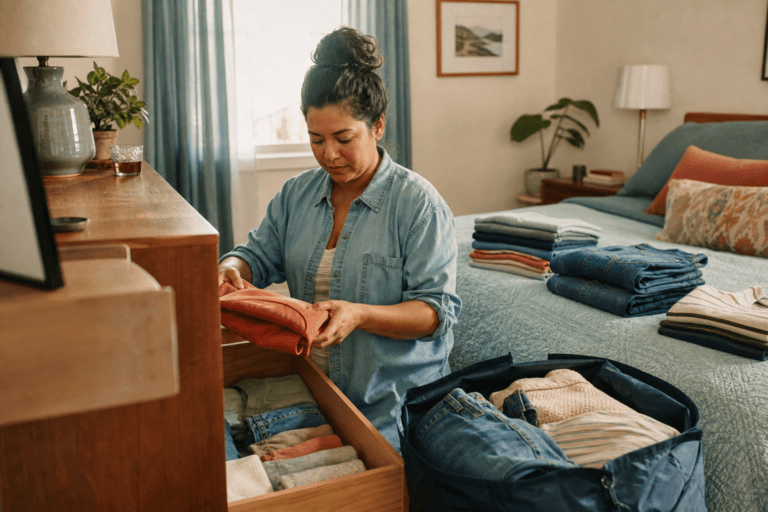
Decide how clean laundry will move from the return-trip bag into closets and drawers. Clear a surface before pickup, make room in storage, and ask household members to identify anything that belongs elsewhere. A service order saves washing and folding work, but the value is easier to feel when the completed clothes reach their final homes instead of becoming another clean pile.
Notice which loads are genuinely easy to hand off and which ones require so many exceptions that self-service would be clearer. Use that information to shape the next order. A repeatable system should become simpler over time without becoming careless about labels, stains, product safety, or changing household needs.
Sugar Creek Wash-and-Fold Questions
Does Fresh Spin pick up laundry from Sugar Creek homes?
No. Fresh Spin offers in-store drop-off wash-dry-fold. Customers bring laundry to the Independence location and return to collect the completed order. The service does not include residential pickup or delivery.
How should I prepare my first order?
Empty pockets, read care labels, separate special-care and hazardous items, identify stains, and use sturdy bags. Keep dry-clean-only, hand-wash-only, line-dry, and uncertain items separate until the store confirms an appropriate method.
Can I bring my own detergent?
The current service page says customers may bring their own detergent, but confirm the option and container requirements at drop-off. Use the original labeled container and discuss fragrance or sensitivity needs before the order is accepted.
Can bedding go in a wash-and-fold order?
Some washable bedding may be appropriate, but every item needs a label check. Weighted, electric, foam-filled, decorative, damaged, or otherwise unusual bedding requires separate review. Ask about current acceptance rather than assuming all bulky items follow the same process.
What if I have one delicate item mixed into the bag?
Remove it before drop-off. Review the label and decide whether it needs hand washing, air drying, professional care, or direct self-service control. Do not rely on staff finding an undisclosed delicate item inside a large order.
How do I know when to return?
Use the completion method and instructions provided when the order is accepted. Keep your order information and accurate contact details. Do not rely on an old estimate or another customer’s experience.
What if I need direct control over settings?
Use self-service for that load. You can supervise the machine, select settings according to the labels, inspect stains before drying, and keep special items separate. A household can combine self-service with drop-off service for different groups.
A Simple Two-Trip Plan
Before the first trip, inspect, sort, and bag compatible everyday laundry. Check the current Fresh Spin service and contact pages, prepare specific questions, and keep special-care or uncertain items at home. At the counter, explain the groups and concerns, confirm current terms, and retain the order information.
Before the return trip, confirm the order through the method provided at drop-off and bring the required information. Carry the finished laundry home in a clean, dry space, unpack it, check priority items, and put it away. That simple structure turns drop-off wash and fold into a dependable household process without pretending the service includes residential transportation.
For Sugar Creek households, the value is practical: routine washable laundry can be prepared at home, handed to Fresh Spin in Independence, and collected on a return visit. Clear sorting and communication protect the clothes, while the correct service expectations protect your schedule.
Helpful Fresh Spin Resources
Keep exploring related Fresh Spin Laundry guides and local service pages.
Leave A Comment