
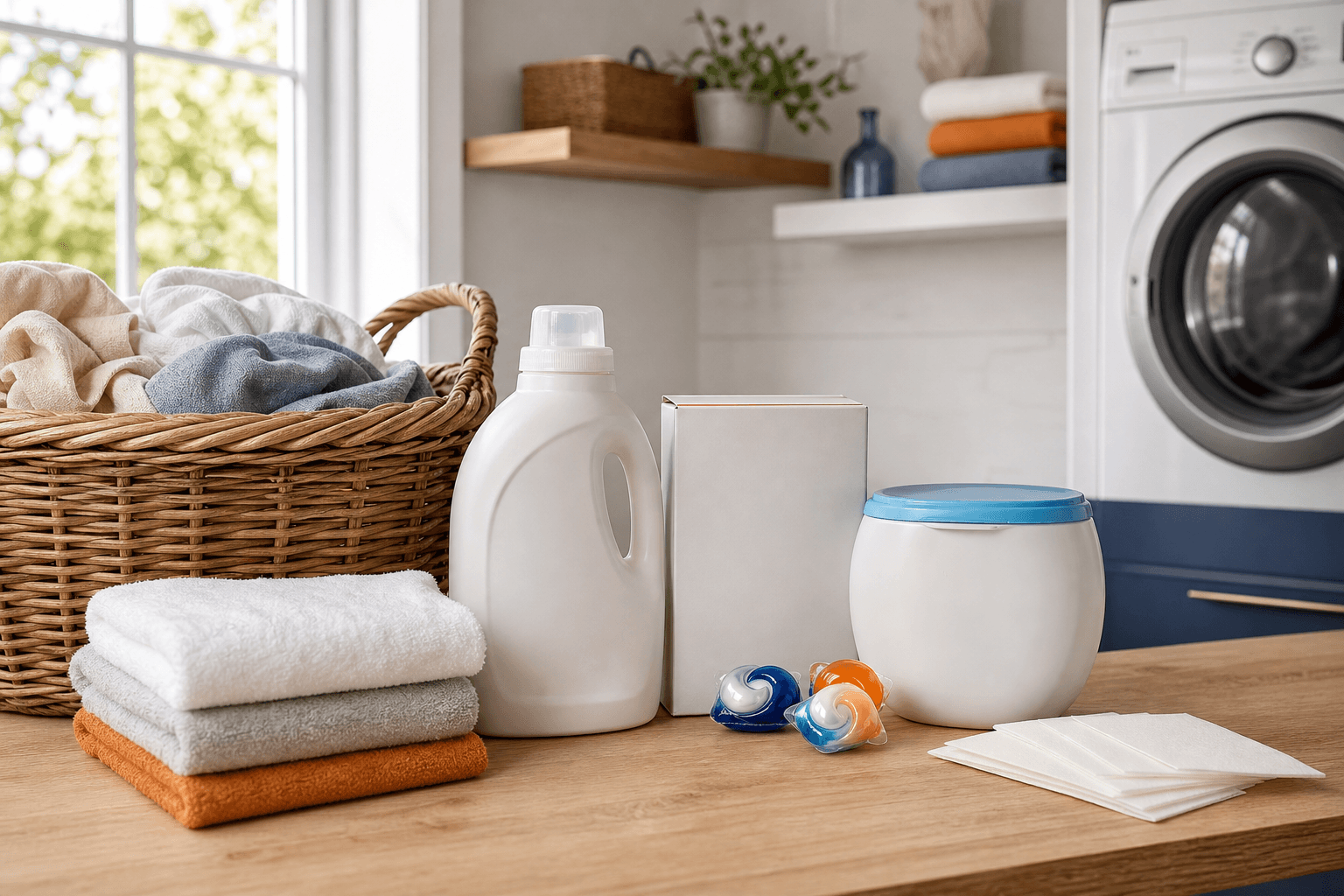
Choosing detergent for a Manor Oaks household in Independence, Missouri is less about finding one universal “best” bottle and more about matching the product to your washer, fabrics, typical stains, skin sensitivities, storage needs, and budget. For most mixed family loads, a properly dosed HE-compatible liquid is a flexible starting point, while powder, packets, fragrance-free formulas, and sheets can make more sense in specific situations.
Quick answer: check the washer and garment labels first, compare the cost per labeled load rather than package price, and buy the smallest size that lets you test performance before committing. This guide uses familiar products as comparison examples—not endorsements or guarantees—because formulas, package sizes, availability, and prices change.
Key Takeaways
- Start with compatibility: use detergent labeled for an HE washer when the machine requires it.
- Match the formula to the load: oily stains, clay or mud, odors, delicates, and sensitive skin can call for different choices.
- Measure every load: more detergent does not automatically mean cleaner clothes and can leave residue.
- Compare current cost per labeled load: package price alone can hide concentration and dose differences.
- Store packets securely: keep them in their original closed container and away from children.
Why Detergent Choice Matters in Manor Oaks
Manor Oaks homes often reflect an active lifestyle. Many properties have larger lots, and plenty of families spend time outside with kids, pets, yard projects, and weekend sports. That means the average laundry basket does not just hold office wear and towels. It often includes grass-streaked socks, muddy jeans, food-stained shirts, dog blankets, and bedding that gets washed often.
At Fresh Spin’s self-serve laundromat in Independence, customers bring many kinds of everyday household loads. Local loads tend to be heavier, more frequent, and more mixed than what a basic detergent formula handles well. One wash may include school uniforms, workout gear, kitchen towels, and a hoodie covered in dirt from the backyard. Another may include pet fabrics and bedding that hold onto odor. In homes like these, detergent has to do several jobs at once.
Machine differences also matter. Some Manor Oaks households still use older washers, while others have switched to modern HE machines. A detergent that creates too many suds can leave buildup in HE equipment. A weak detergent can leave stains behind in either machine. The right product needs to work across wash settings, temperatures, and machine styles without causing extra wear.
Skin sensitivity is another common issue. Families with children often want a detergent that lifts stains but does not trigger irritation. That creates a real need for formulas that balance cleaning power, fabric care, and gentleness. In short, detergent choice matters here because local laundry is practical, high-volume, and rarely simple.
The Best Detergents for Manor Oaks Homes
If you want a fast answer before comparing every detail, Fresh Spin Laundry has already narrowed the field to a few top performers. These picks cover the main needs in Manor Oaks, from everyday family washing to heavy-duty stain cleanup and lower-cost options.
Tide Original Liquid is a familiar all-purpose liquid that shoppers may want to compare with similar HE-compatible formulas. Its flexible dosing and ability to pretreat stains can suit mixed household loads, but current formula details, fragrance preference, washer directions, and cost per labeled load should drive the decision.
Persil ProClean Stain Fighter is the standout for tough messes. Grease, mud, food, and pet-related stains are where it shines. If your laundry pile often includes sports uniforms, yard work clothes, or heavily used towels, Persil offers serious deep-cleaning strength. Compare its current label and price with other heavy-duty liquids before deciding.
Arm & Hammer Clean Burst leads on price. It is often positioned as a value option, but the current cost per labeled load should decide whether it is actually the better buy. That makes it useful for larger families, renters, students, or anyone trying to keep laundry costs down without dropping to a poor-quality formula.
For skin concerns, Tide Free & Gentle and Seventh Generation Free & Clear are smart choices. These formulas skip dyes and fragrance, which helps reduce irritation. They also appeal to shoppers who prefer products with a more eco-conscious profile for everyday use.
Tide PODS 4-in-1 bring convenience. They are pre-measured, easy to toss in, and reduce the chance of overpouring. Packets often trade dosing flexibility for convenience, so compare the current cost per load and package safety features.
Then there are detergent sheets, the emerging pick for shoppers who want less plastic and less clutter. They are compact, mess-free, and easy to store. Their cleaning performance can vary by brand, so they make the most sense for lighter loads, smaller households, or buyers who care strongly about packaging waste.
What Makes a Detergent Worth Buying
A good detergent has to do more than create foam. Fresh Spin Laundry highlights several traits that separate a smart buy from a disappointing one. If you understand these points, it becomes much easier to choose the right bottle, pod, or sheet for your home.
First is cleaning power. For Manor Oaks homes, that means handling real stains instead of just freshening clothes. Enzyme blends matter here. Protease helps break down protein-based stains, amylase targets starches, and lipase works on oils and grease. These ingredients are a big reason enzyme-based liquids perform so well on family laundry.
Next comes fabric protection. Strong cleaning should not ruin shirts, bedding, or everyday basics after repeated washing. Better detergents help reduce fading and fiber breakdown. This matters a lot in homes that wash frequently, because savings disappear fast if clothes wear out early.
Cost efficiency is another big factor. Sticker price alone can be misleading. A cheaper bottle may require more detergent per load, while a higher-quality formula may use less and clean better. Fresh Spin points buyers to the more useful number: cost per load. In this guide, the practical price range changes with package size, concentration, sales, and the labeled dose.
Machine compatibility should never be ignored. Many newer washers require HE-compatible detergent. Low-sudsing formulas help prevent buildup and keep the machine running better over time. Even if your detergent cleans well, it becomes a poor choice if it causes maintenance issues.
Skin safety also matters. Households with kids or sensitive skin often do better with hypoallergenic and fragrance-free options. A powerful detergent is not helpful if it leaves someone itchy or uncomfortable after every wash.
Finally, there is environmental impact. Many shoppers now consider biodegradable formulas, phosphate-free ingredients, recyclable packaging, or plastic-free products like sheets and cardboard-box powders. That does not always mean sacrificing performance, but it does require looking closely at product claims and real-life results. The EPA’s searchable Safer Choice product list is a stronger verification tool than an unsupported “green” claim on a package.
Best Overall: Tide Original Liquid
Tide Original Liquid wins the broadest recommendation because it handles the daily mix that defines laundry in Manor Oaks. It works across water temperatures, performs well on common stains, and fits both standard and HE machines. That kind of flexibility matters when one household may wash school clothes in cold water one day and muddy workwear in warm water the next.
Its biggest strength is consistency. Some detergents do very well on one type of stain and fall off sharply on others. Tide Original stays useful across food, dirt, body soil, and general everyday buildup. If you want one bottle that can stay in the laundry room all month and handle almost everything, this is the one most people can trust.
Value depends on the current package, concentration, recommended dose, and how well the detergent performs on your actual loads. Start with a smaller container when possible, follow the label, and compare results before buying in bulk.
Another plus is stain pretreatment. Liquid detergent gives you the option to apply a little directly to a spot before washing. That simple step can improve results on collars, food splashes, grass marks, and greasy fingertips. Tide Original’s liquid format makes that easy.
For most Manor Oaks homes, this is the detergent that balances power, value, and simplicity best. If you are unsure where to start, start here.
Best for Tough Stains: Persil ProClean Stain Fighter
Persil ProClean is the heavy hitter in this guide. Fresh Spin Laundry recommends it for families dealing with recurring grease, mud, pet messes, and other hard-to-remove stains. It is especially useful in homes where outdoor activity creates a steady stream of dirty clothes.
Its edge comes from a strong enzyme formula. Those enzymes help break apart oils, proteins, and starches that cling to fabric after a regular wash. That makes Persil a smart choice for sports uniforms, grass-streaked pants, kitchen towels, and work clothes with oily residue.
Rewashing can quietly raise the cost of a load, so stain performance matters. Compare a heavy-duty liquid on the stains your household actually produces, pretreat when the garment label permits it, and do not assume a higher shelf price guarantees a better result.
There is also a practical emotional benefit. Nobody wants to wonder if a favorite hoodie or a child’s uniform is permanently stained after one messy day. With Persil, you get more confidence on high-stain loads. That makes it a great fit for pet owners, active families, and anyone whose laundry usually looks rougher than average.
Best Budget Choice: Arm & Hammer Clean Burst
Arm & Hammer Clean Burst is one example in the value tier. Compare its current cost per labeled load, dose, scent, and performance with store brands and other mainstream formulas instead of relying on package price alone.
This detergent makes the most sense for everyday clothing, casual wear, and loads that are lightly to moderately soiled. It may not match Persil on deep grease or heavily ground-in mud, but it offers a solid baseline clean for routine laundry. If most of your loads are T-shirts, socks, towels, and basic household fabrics, it can do the job well.
Budget detergents often tempt people to pour extra product, thinking more soap equals better cleaning. That can backfire. Overuse can leave residue on clothes, stress fabrics, and create machine buildup. With Arm & Hammer, the real value shows when you use the correct amount and match it to the size of the load.
Large families may especially appreciate this option. If you run the washer several times a week, small price differences add up quickly over a month or year. Arm & Hammer offers a practical route for keeping laundry costs manageable while still avoiding bargain-bin formulas that disappoint.
Best for Sensitive Skin: Tide Free & Gentle and Seventh Generation Free & Clear
Some homes need a detergent that does less. That sounds strange, but for people with irritation issues, fewer added fragrances and dyes can mean a much better wash experience. Tide Free & Gentle and Seventh Generation Free & Clear are the main picks here.
Fresh Spin Laundry recommends these formulas for households with children, sensitive skin, or anyone who finds standard scented detergents too harsh. Their fragrance-free, dye-free approach reduces common triggers while still offering useful daily cleaning performance.
Tide Free & Gentle works well for buyers who want a familiar brand with broad machine compatibility and dependable stain handling for normal loads. It feels like the skin-conscious version of a mainstream workhorse.
Seventh Generation Free & Clear appeals to people who care about ingredient profile and environmental choices along with skin comfort. It brings an eco-conscious angle while staying safe for routine use in many family homes.
These detergents are often the right answer for bedding, baby clothes, sleepwear, and anything that sits against the skin for long periods. If your laundry goal includes comfort as much as visible cleanliness, a free-and-clear formula deserves serious consideration.
Best Convenience Option: Tide PODS 4-in-1
Tide PODS 4-in-1 are about speed and consistency. You do not measure, guess, or wipe up spills. You simply toss in the right number of pods and start the machine. For busy students, young professionals, parents, or shared households, that convenience can make laundry much easier to stay on top of.
The biggest practical benefit is consistent dosing. Liquid detergent is flexible, but it is also easy to overpour. Pods reduce that risk and help keep each load close to the intended amount. That can mean fewer residue issues and more predictable results.
The tradeoff is flexibility and cost. A packet fixes the dose, which is convenient but may be more product than a small or lightly soiled load needs. Compare the current cost per labeled load and decide whether simpler measuring justifies the difference for your household.
Pods are often a strong match for moderate loads and routine use. They are less ideal if you frequently pretreat stains or want fine control over detergent amount. Still, for people who want easy laundry habits with less mess, Tide PODS remain a strong option.
Best Eco-Friendly Alternative: Detergent Sheets
Detergent sheets have become more popular for good reasons. They are light, compact, and usually come in plastic-free packaging. That makes them appealing for apartments, dorms, travel, and smaller laundry areas where every shelf matters.
Fresh Spin Laundry notes that sheets are best for eco-conscious households and homes with limited storage. They are also far less messy than liquid detergent. There is no pouring, no dripping cap, and no bulky bottle taking up room. Those are real advantages for people who want a simple setup.
Performance, though, depends heavily on brand. Some sheets do well on regular clothing and small loads, while others struggle on thick fabrics or heavy soil. For that reason, sheets are usually best seen as an emerging option rather than the default answer for every Manor Oaks household.
Use matters too. Fresh Spin recommends placing detergent sheets directly in the drum for better dissolving. That small step can improve wash results and reduce the chance of product sticking in the dispenser. If you want lower-plastic laundry without a lot of storage fuss, sheets are worth trying.
Liquid vs. Pods vs. Sheets: Which Format Fits Your Home
Choosing a detergent brand is one step. Choosing the right format is another. The best option depends on your stain level, machine, storage space, and how much control you want over each load.
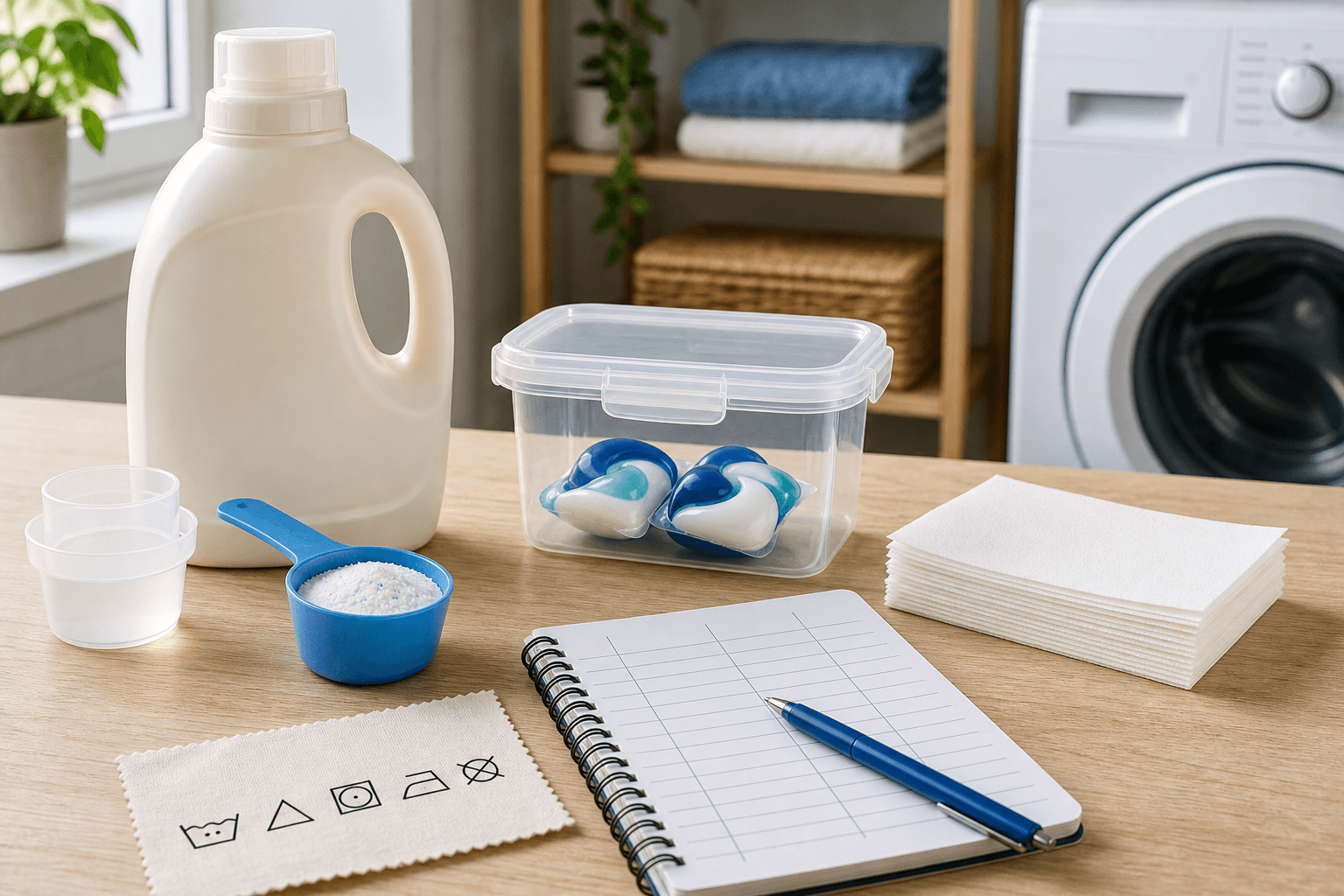
Fresh Spin Laundry breaks the decision down clearly. Here is the practical comparison:
- Liquid detergent: Best for flexibility, stain pretreatment, and heavily soiled loads.
- Pods: Best for convenience, speed, and consistent dosing.
- Sheets: Best for plastic reduction, tight storage, and lighter everyday use.
Liquid remains the top recommendation for Manor Oaks families because it covers the widest range of laundry situations. It handles larger loads better, works well for pretreating, and usually delivers the strongest balance of cleaning power and cost efficiency.
Pods make life easier, especially if multiple people in a home share laundry duties. There is less guessing, and the process feels faster. That said, they cost more and offer less flexibility for unusual loads or spot treatment.
Sheets fit a more specific buyer. If your priorities are low waste, easy storage, and a less cluttered laundry space, they can be great. If your weekly loads include caked mud and sports gear, a stronger liquid detergent is usually the safer bet.
For most Manor Oaks homes, the answer stays simple: liquid detergent gives the best mix of power, practicality, and value.
How to Match Detergent to Your Washer Type
Your washer has a direct effect on which detergent will work best. Manor Oaks homes often include a mix of older standard machines and newer HE models, so it helps to know what your setup needs before buying in bulk.
HE washers need low-sudsing detergent. Too much foam can lead to residue, poor rinsing, and machine buildup over time. If your machine says HE, choose a detergent clearly marked as HE-compatible. Tide Original Liquid, Persil ProClean, and many free-and-clear options fit that need well.
Standard top-load washers are a little more forgiving, but that does not mean any product is a good fit. Overly sudsy formulas can still create extra rinse issues, and low-performing detergent can still leave grime behind. A quality formula remains the smarter choice even in an older washer.
Some buyers assume stronger scent means stronger cleaning. Washer type proves why that is not true. A good detergent needs to rinse clean, dissolve properly, and work with your machine’s cycle patterns. Those points matter more than perfume intensity.
If you are unsure, start with an HE-compatible liquid. It offers the broadest machine flexibility and lowers the chance of performance issues across washer styles.
Why Enzyme-Based Liquids Work So Well in Manor Oaks
Fresh Spin Laundry’s strongest local insight is that most Manor Oaks households benefit from enzyme-based liquid detergents. That recommendation connects directly to the kind of dirt and stains seen in the area.
Outdoor life creates a mix of stain types. Grass and food bring proteins and plant matter. Mud leaves behind ground-in dirt. Grease from cooking, garages, or tools adds oily residue. Pet fabrics hold odor and body soil. Enzymes help split these materials into smaller pieces so the wash cycle can remove them more effectively.
Liquids make those enzymes especially practical. They dissolve well, spread quickly in the wash, and can be dabbed directly on stains before washing. That gives them a big advantage over formats that are harder to use as a pretreatment step.
Cold-water performance is another reason these detergents fit local life. Many households want lower energy use, and modern enzyme-rich liquids often still clean well in cooler temperatures. That means you can cut energy costs without giving up strong stain removal.
For mixed family loads with different fabrics and different kinds of mess, enzyme-based liquids remain the most useful all-purpose solution.
How Cost Per Load Helps You Buy Smarter
Detergent shopping gets easier once you stop focusing only on bottle size or sale stickers. Fresh Spin Laundry emphasizes a more useful number: cost per load. That is where real value shows up.
Cost per load changes with package size, concentration, sales, and the manufacturer’s labeled dose. Value-oriented liquids often sit below premium liquids and packets, while packets may charge more for convenience. Recalculate whenever the package or formula changes.
A big bottle can look like a bargain while hiding weak value. If the formula is diluted or requires extra product, your actual cost rises. In the same way, a premium detergent can justify its price if it prevents rewashing and handles stains in one cycle.
Using too much detergent also hurts your budget. Extra soap does not guarantee cleaner clothes. It can leave residue, trap odor, and wear down fabrics faster. Better habits make a difference. Measure carefully and match the amount to the load size and soil level.
To shop more effectively, keep these quick rules in mind:
- Compare cost per load instead of shelf price alone.
- Avoid overpouring liquid detergent.
- Buy in bulk if you already know the product works for your home.
- Rewash less by picking stronger formulas for heavy stains.
Smart detergent buying is really about total wash value, not just the price tag you see at checkout.
Where to Buy Detergent in Independence, MO
Manor Oaks residents have several good options for buying detergent locally. Fresh Spin’s on-site mini-mart can be useful when you need a basic laundry supply without making a separate stop; current availability can vary. Other local retailers suit different shopping styles, from quick brand comparisons to bulk buying and specialty products.
Home improvement stores can be useful for bulk sizes and heavy-duty options. If you wash a lot of work clothes, pet fabrics, or larger household loads, these stores may carry larger containers that lower cost per load.
Local hardware stores can help with specialty items. That may include niche cleaners, utility-focused products, or practical laundry extras that big box stores do not always highlight well. They are also useful if you need something quickly and want a more focused shopping trip.
Target and grocery stores offer variety and convenience. These are often the easiest places to compare mainstream brands like Tide, Persil, Arm & Hammer, and free-and-clear formulas in one stop. They are also reliable for finding HE-compatible labels on common detergents.
Before buying, keep a few store-level tips in mind:
- Check labels for HE compatibility.
- Compare sizes to see the real cost per load.
- Look for refill options or recyclable packaging when available.
- Consider powders in cardboard boxes if reducing plastic matters to you.
The best place to shop depends on whether you care most about price, convenience, or product variety. Still, buyers who compare cost per load and machine compatibility usually make better choices no matter where they shop.
Special Laundry Needs for Family, Pet, and Outdoor Loads
Manor Oaks living creates a very specific laundry pattern. Clothes and fabrics often move between indoors and outdoors all week, which means detergent has to tackle more than average body soil. Fresh Spin Laundry sees that reality in the loads people bring in every day.
Family laundry usually means volume and variety. One basket can include activewear, school clothes, socks, towels, and bedding. That mix calls for a detergent that works across different fabrics and stain levels without causing fading or stiffness.
Pet laundry raises the bar further. Blankets, beds, and couch throws can collect odor, hair, oils, and paw dirt. Enzyme-heavy detergents help with this because they target organic residue more effectively than simple fragrance-focused formulas.
Outdoor laundry includes grass, mud, and grease from sports, gardening, yard cleanup, or garage work. These stains often need pretreatment plus a formula strong enough to lift what gets ground into the fabric. Tide Original and Persil ProClean are especially useful here.
For homes with all three challenges, the best strategy is usually simple. Keep one strong main detergent and, if needed, one gentler skin-safe option for selected loads. That approach avoids clutter while still giving you real flexibility.
Protecting Clothes and Home Fabrics Over Time
Strong cleaning matters, but so does keeping your wardrobe and household fabrics in good shape. A detergent that strips color, leaves residue, or weakens fibers can cost you more over time than a slightly pricier formula that washes more gently.
Fresh Spin Laundry stresses the value of formulas that reduce fading and fiber wear. This matters in Manor Oaks homes because frequent washing is common. Bedding, towels, school clothes, and everyday basics often go through the machine again and again each week.
Liquid detergents with balanced formulas are often the safest bet for routine fabric care. They clean thoroughly without relying on an overly harsh approach. Using the right dose matters too. Excess detergent can cling to fibers and make clothes feel rough or look dull after repeated washes.
Temperature also affects fabric life. Cold water, paired with a detergent that performs well at lower temperatures, helps preserve color and can reduce stress on many fabrics. That is one reason modern enzyme-based liquids are such a practical fit for everyday wear.
If your goal is clean clothes that still look good months from now, choose a detergent with balanced performance rather than the strongest smell or the cheapest bottle.
Energy Efficiency Without Giving Up Clean Results
Lowering energy use does not have to mean accepting mediocre laundry. Fresh Spin Laundry points out that modern detergents can perform well in cold water, which helps households save energy while still getting solid results.
This matters in Independence, MO, where larger households may run multiple loads a week. Heating water for every cycle adds cost quickly. A detergent that cleans well in cooler temperatures gives you a simple way to cut utility use without changing your whole laundry routine.
Tide Original Liquid and many other current enzyme-based formulas remain effective in cold washes. That makes them a smart match for regular clothing, bedding, and mixed family loads. Very heavy grease or extreme stains may still benefit from warmer settings, but cold water covers much more laundry than people often assume.
Energy-smart washing works best with a few habits:
- Use cold water for regular loads.
- Pretreat stains before washing instead of relying only on heat.
- Choose enzymes for better low-temperature cleaning.
- Avoid rewashing by using the right detergent the first time.
Better detergent choice can support lower energy bills just as much as washer settings do.
Fresh Spin Laundry Pro Tips for Better Results Every Load
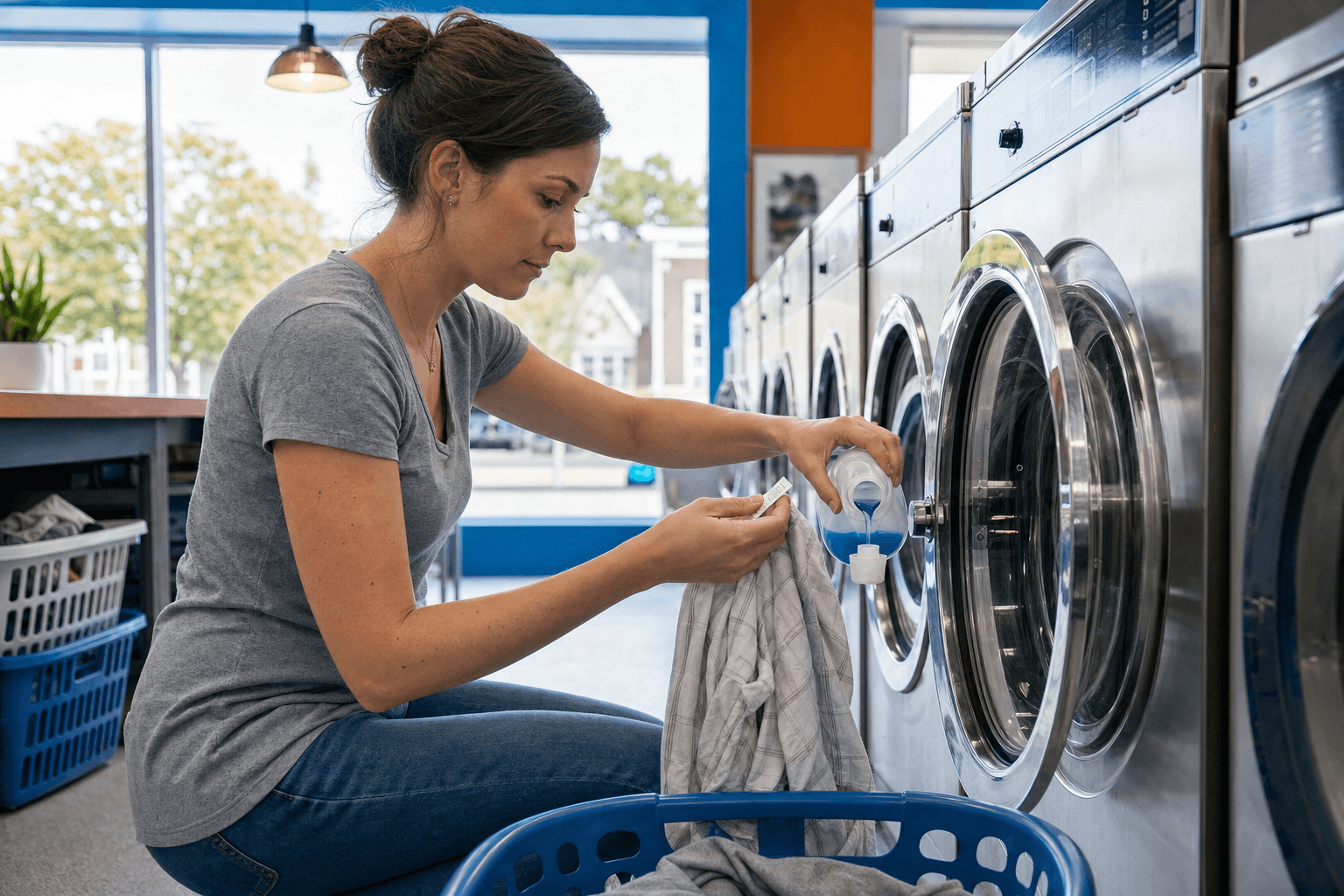
Even the best detergent works better with good habits. The American Cleaning Institute’s detergent guidance recommends using the proper amount and following garment-care instructions. If you are preparing for a laundromat visit, use the first-time laundromat checklist to organize loads and supplies before leaving. Fresh Spin Laundry shares a few practical steps that help Manor Oaks households get more value from every wash.
Start with the right amount of detergent. Many people use too much, especially with liquid formulas. That can leave residue on fabrics, trap odor, and create buildup in the washer. Follow the product directions and adjust based on load size and how dirty the items are.
Pretreating is one of the easiest ways to improve stain removal. Apply a small amount of liquid detergent directly to problem spots before washing. Give it a little time to work, then run the normal cycle. This step helps a lot with grass, food, and grease marks.
Storage matters more than some buyers realize. Keep detergent in a proper place, especially detergent sheets, which need dry conditions. Humidity can affect performance and make sheets harder to use.
Washer maintenance also affects clean results. A machine with soap buildup or lingering odor can make fresh laundry smell less fresh. Clean your washing machine regularly so detergent can do its job properly.
Safety matters too. Keep all detergent products away from children and pets. Keep packets sealed in their original container and out of children’s sight and reach. The U.S. Consumer Product Safety Commission warns that exposure to concentrated single-load packets can cause serious injury. These habits support cleaner clothes, safer use, and better long-term results.
Frequently Asked Questions
Fresh Spin Laundry hears a lot of the same detergent questions from local customers. These quick answers cover the most common ones.
Are eco-friendly detergents HE-compatible?
Yes. Fresh Spin Laundry notes that most modern eco-friendly options are made for HE machines. Always confirm on the label before buying.
What works best for grease and food stains?
Fresh Spin points to Persil ProClean and Tide Original as the most reliable choices for these stain types.
Can detergent sheets work in any machine?
Yes. Sheets can work in both front-load and top-load washers. For best results, place them directly in the drum.
What is the cheapest effective detergent?
Arm & Hammer Clean Burst is commonly sold as a value-oriented option, but current cost per labeled load should be verified.
What is the best overall detergent for Manor Oaks homes?
For most households, Tide Original Liquid is the most balanced choice because it combines strong everyday cleaning, machine compatibility, and reasonable cost.
The Fresh Spin Laundry Recommendation for Manor Oaks Homes
After comparing performance, price, fabric care, skin safety, and convenience, the main recommendation is straightforward. Most Manor Oaks households will do best with Tide Original Liquid or Persil ProClean. These detergents fit the local pattern of active families, frequent stains, and mixed load types.
If budget is the top concern, Arm & Hammer Clean Burst offers the best low-cost value. If skin comfort or a lower-fragrance routine matters more, Tide Free & Gentle or Seventh Generation Free & Clear are smart choices. If your schedule is packed and you want less measuring, Tide PODS 4-in-1 bring the easiest day-to-day use.
Fresh Spin Laundry’s bottom line is clear: Manor Oaks homes need detergent that can keep up with larger loads, regular outdoor stains, and repeated washing. For current service details and common planning questions, review Fresh Spin’s laundry FAQ. In most cases, that means choosing a high-quality enzyme-based liquid detergent that balances cleaning power, fabric care, and cost efficiency.
Let Fresh Spin Laundry Handle the Hard Work
If detergent shopping still feels like too much trial and error, Fresh Spin’s in-store drop-off wash-dry-fold service offers a simpler path. Customers bring laundry to the store and return to collect it; Fresh Spin does not offer pickup or delivery. Their local experience with Manor Oaks laundry habits gives them a strong sense of what works and what wastes time.
Visit Fresh Spin Laundry in Independence, MO if you want professional-grade machines and wash performance that helps you get more from every load. Whether you bring your own detergent or use the products available there, you can skip the guessing and focus on getting consistently clean results.
Helpful Fresh Spin Resources
Keep exploring related Fresh Spin Laundry guides and local service pages.
- Ultimate 2026 Guide To Top Laundry Detergent Winners
- Kansas City Detergent Buying Guide For Shoppers
- Your Guide To The Top Proctor Gamble Laundry Products To Use
- Truman Laundry Supplies Guide The Ultimate Home Care Manual
- The Ultimate Truman Laundry Supplies Guide For Independence
- The Ultimate Guide To Top Performing Laundry Detergents Winners And Analysis For 2026